
Kyoto 2026: Japan’s Cultural Capital (And One of the Best Value Cities on Earth)
Ancient temples lit by lanterns at dawn. A living geisha district. The world’s most beautiful bamboo grove. A city where the best experiences cost nothing — and the paid ones cost almost nothing.
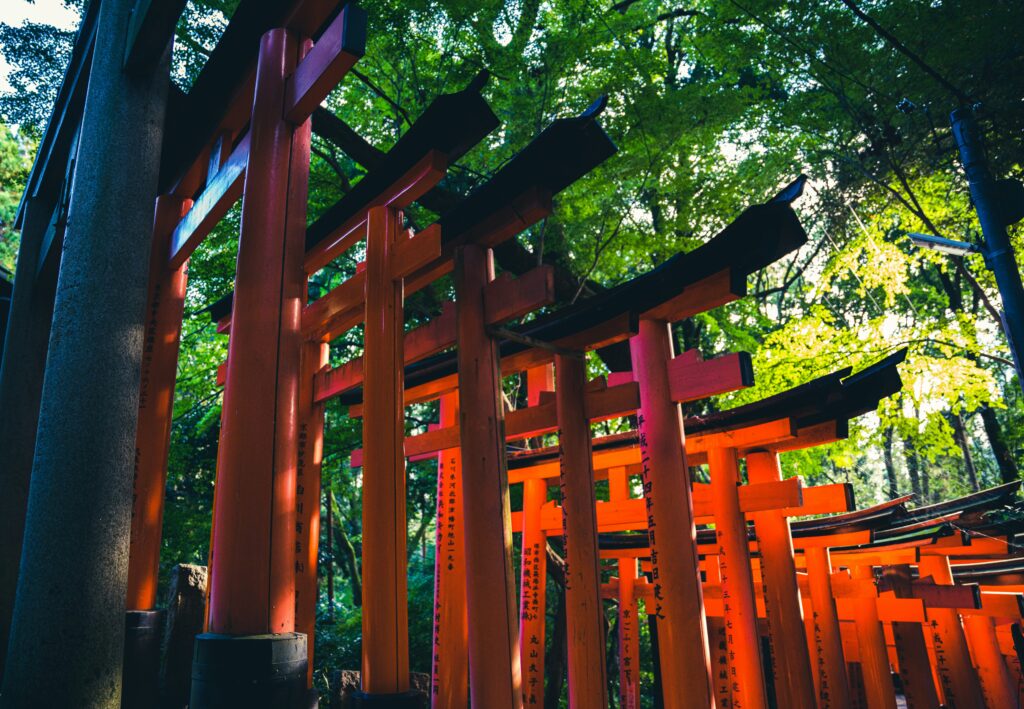
It’s 5:30am and you’re at Fushimi Inari before the first tour bus. The thousands of vermilion torii gates wind up the mountain in near-darkness, just enough light filtering through to turn the path into something from a Miyazaki film. You are almost alone. The whole thing costs nothing. This is what people mean when they say Kyoto is special — the moments you pay nothing for end up being the most extraordinary of the trip.
Kyoto was Japan’s capital for over a thousand years, and it shows — 17 UNESCO World Heritage Sites, 1,600 temples and shrines, and a cultural depth that makes most cities feel like they were built yesterday. It’s also one of the best value cultural destinations on earth. The most iconic temples charge $3 admission. The bamboo grove is free. The geisha district is free to walk through. Kyoto rewards the traveler who shows up early, walks slowly, and understands that the best things here are available to everyone.
What’s In This Guide
📅 Best Time to Visit Kyoto
Sweet spot: May, October, and November. Perfect temperatures, excellent light, and Kyoto at some of its most beautiful — fresh greenery in May, gold and crimson in autumn. Cherry blossom season (late March–April) is transcendent but requires booking months ahead and accepting premium prices.
Where to Stay in Kyoto
Downtown Kyoto (around Kawaramachi and Gion) is the best base — central, walkable, transit-connected, and close to both the temple districts and the best restaurants. Kyoto hotels offer genuinely excellent value compared to Tokyo. Prices verified March 2026 for dates 2–3 months out.
Piece Hostel is consistently ranked one of the best budget stays in Kyoto — a lively social property that works well for both solo travelers and couples, with private rooms available alongside dorms. The ground-floor café and bar is a legitimate gathering point for travelers rather than an afterthought. Central location near Kyoto Station makes the entire city accessible. At $55–$90/night for a private room, this is genuinely difficult to beat anywhere in Japan.
Rinn operates a collection of beautifully renovated machiya townhouse properties in the Gion district — traditional Kyoto architecture with modern amenities. Staying in Gion puts you in the most atmospheric neighborhood in the city, a 5-minute walk from Hanamikoji Street, Yasaka Shrine, and the Kamo River. The machiya style means tatami-influenced interiors, wooden beams, and a sense of genuine place rather than a generic hotel room. For the price, the experience is exceptional.
A traditional ryokan night is the single most culturally immersive experience available in Kyoto. Tatami floors, futon bedding, seasonal kaiseki dinner served in-room or in a private dining space, and morning breakfast prepared with extraordinary care. Recommended mid-range ryokan in the $250–$400 range include Ryokan Yachiyo (near Nanzenji), Nishiyama Ryokan (central), and Gion Yoshiima (Higashiyama). Most guests say one or two ryokan nights transforms the entire trip. Price includes dinner and breakfast, making the actual food premium smaller than the sticker price suggests.
Get the Budget Travel Cheat Sheet
Booking shortcuts, packing hacks, and money-saving moves our readers use on every trip — free when you subscribe.
15 Best Kyoto Experiences
Kyoto is remarkable for how much is free. Fushimi Inari — one of the most visually stunning sites in Japan — costs nothing. The bamboo grove costs nothing. Most of the best neighborhoods cost nothing. The paid temples rarely exceed $3–$9. This is a city that rewards the early riser and the slow walker above all else.
Fushimi Inari Taisha is the most visited site in Japan — a Shinto shrine at the base of Mount Inari, famous for its thousands of vermilion torii gates winding 4km up the mountain. The full hike takes 2–3 hours. The first 30 minutes through the densest part of the gates is the most photogenic. Open 24 hours, every day of the year, with no admission fee. Come at 5–6am to be alone in one of the most visually extraordinary places on earth. Come at midnight for a completely different and equally remarkable experience.
💡 The crowds arrive around 9am and don’t leave until 5pm. There is no substitute for an early alarm — the difference between dawn and 10am at Fushimi Inari is the difference between a life memory and a crowded tourist experience. JR Inari Station is 2 minutes from Kyoto Station, direct.
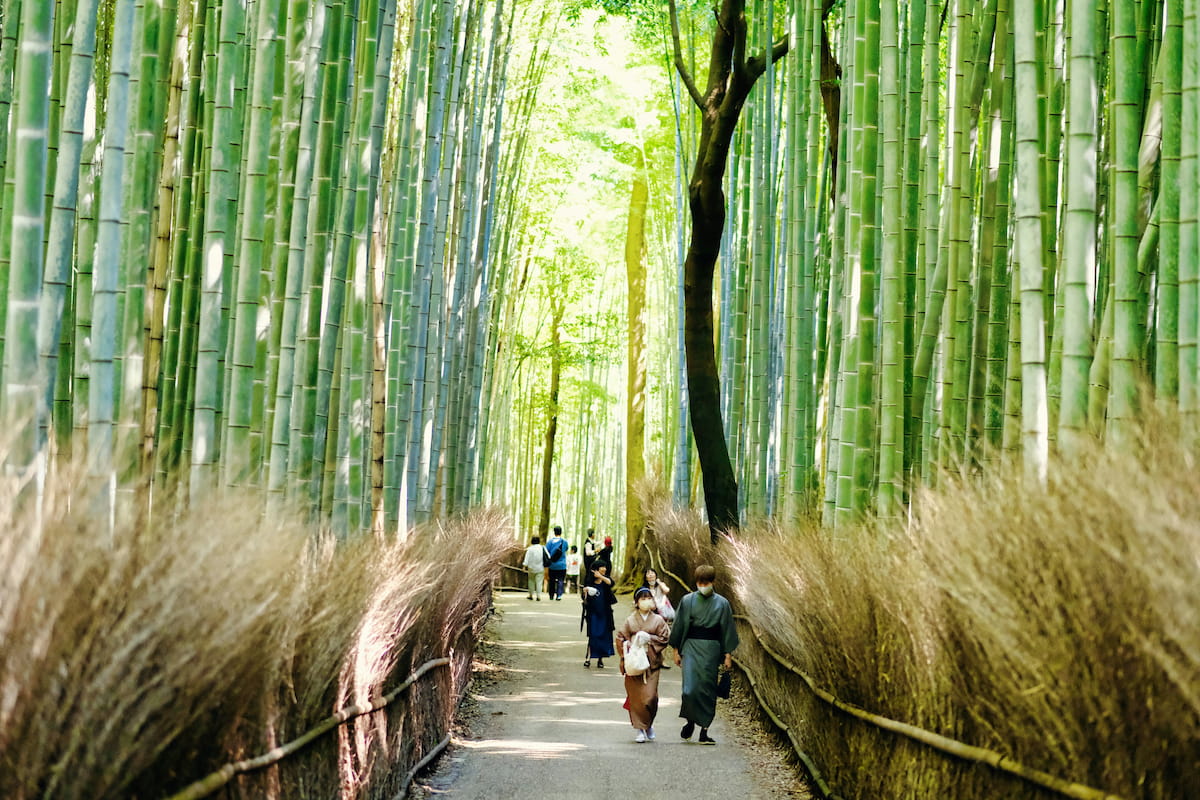
The Sagano Bamboo Grove is a 400-meter path through towering bamboo that produces one of the most distinctive sounds in nature — the clacking and rustling of thousands of stalks in any breeze. The experience is genuinely otherworldly and completely free. Adjacent to the equally free Tenryu-ji temple gardens approach (the garden itself has an entrance fee). The walk through takes about 10 minutes at pace, but the photography and atmosphere invite much longer. Combine with the Arashiyama district’s temples, monkey park, and Togetsu-kyo bridge for a full day.
💡 Same crowd dynamic as Fushimi Inari — arrive before 8am for the uncrowded experience most of the famous photos depict. The grove is lit beautifully at golden hour in late afternoon if early mornings aren’t feasible.
A 2km stone path along a canal in northern Higashiyama, flanked by hundreds of cherry trees and lined with small cafes, temples, and independent shops. Named after philosopher Nishida Kitaro who reportedly walked it daily to contemplate. In cherry blossom season it’s one of the most beautiful walks in Japan. Outside of peak season it’s quieter and deeply pleasant — connecting Ginkaku-ji (Silver Pavilion) to Nanzenji and passing a dozen temples worth ducking into along the way.
💡 Start at Ginkaku-ji and walk south to Nanzenji — the light comes from behind you in the morning and the walk ends at the striking stone torii gate of Nanzenji’s aqueduct, one of Kyoto’s most photographed structures.
Gion is Kyoto’s preserved geisha district — narrow lanes of traditional wooden machiya townhouses, hanging lanterns, and tea house fronts that have looked essentially unchanged for two centuries. Hanamikoji Street is the most famous stretch: maiko (apprentice geisha) and geiko (Kyoto term for geisha) can still occasionally be seen in the early evening walking to their engagements, elegant and unhurried against the lantern-lit backdrop. The entire district is free to walk through and most beautiful after dark.
💡 The best sighting chances are between 5:30–8pm on weekday evenings when geiko are heading to engagements, not weekends when tourists are most present. Keep a respectful distance and never block their path for photos — it’s considered deeply rude.
Nishiki Market is a narrow 400-meter covered arcade in central Kyoto, crammed with vendors selling tofu, pickled vegetables, fresh mochi, skewered food, sake, and specialty Kyoto ingredients. It’s been a food market for over 400 years. Walk it end-to-end eating as you go — grilled octopus, tamagoyaki, sweet potato cakes, fresh yudofu — and you’ve eaten a full lunch for $10–$15. One of the most legitimate food experiences in Japan that involves no reservation, no planning, and no expense beyond what you choose to eat.
💡 Come for late breakfast (10–11am) or early lunch (11am–noon) when the stalls are fully stocked and the crowd is manageable. Late afternoon sees the best deals as vendors discount near closing. Near Shijo-Kawaramachi — walk the entire length even if you’re not hungry.
The Kyoto Imperial Palace grounds (Kyoto Gyoen National Garden) cover 65 hectares in the center of the city — a vast, forested park that once housed the Imperial court. The outer gardens are free to enter and walk through anytime. The Imperial Palace itself requires a free reservation through the Imperial Household Agency, available online or at the gate. Unlike many palace complexes, the guided tour (free, 50 minutes) is excellent and provides genuine historical context for 1,000 years of Japanese imperial history.
💡 The outer gardens are worth visiting simply as a quiet park in the middle of a busy city. In cherry blossom season they’re spectacular and significantly less crowded than Maruyama Park. Free palace tours run several times daily in English — book through kunaicho.go.jp.
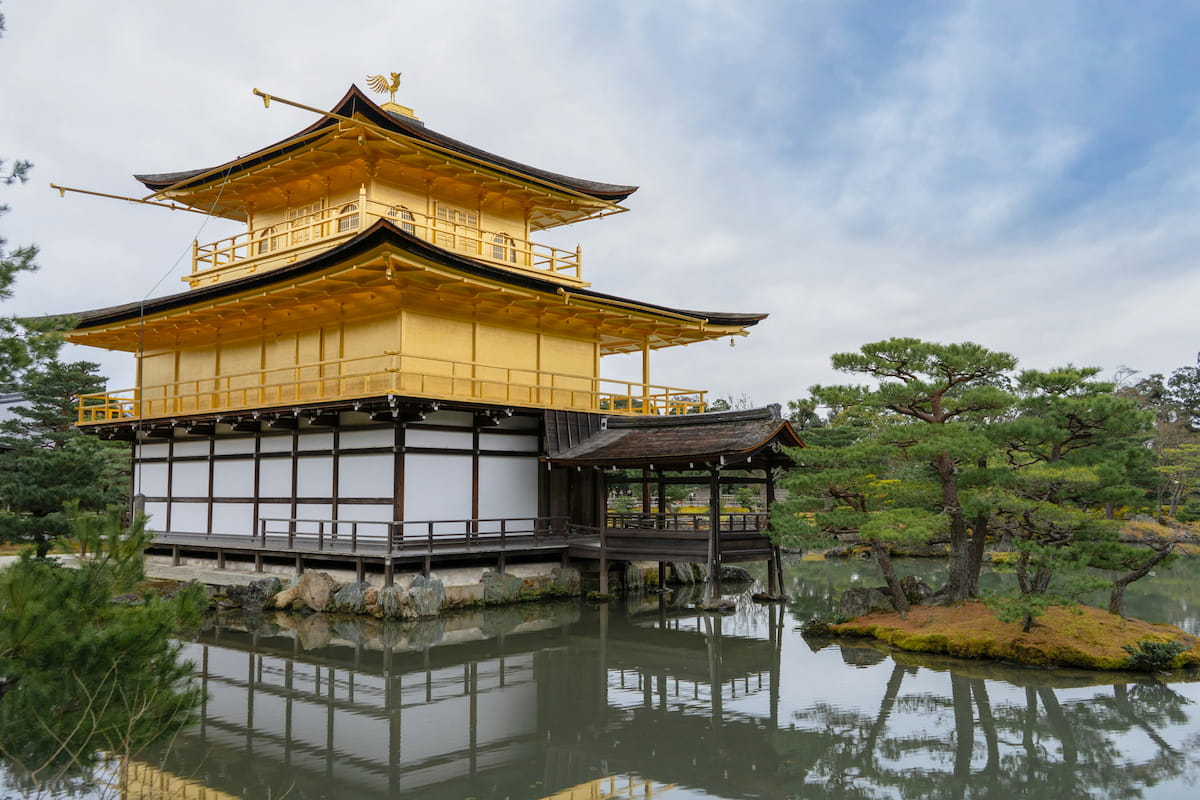
Kinkaku-ji is the single most iconic image in Kyoto — a three-story Zen temple with its upper two floors completely covered in gold leaf, reflected in the Mirror Pond before it. The reality genuinely lives up to every photo you’ve seen. The ¥400 admission (verified at official Shokoku-ji Foundation site) gets you into the garden loop that circles the pavilion. You cannot enter the building itself but the exterior from the garden path is the experience everyone comes for. Cash only, no advance ticket, open daily 9am–5pm.
💡 Open at 9am and arrive by 8:45am — the first wave of tour buses arrives around 9:30am and the experience changes entirely. The garden path is one-way and takes 20–30 minutes. On snowy winter days it’s possibly the most beautiful sight in Japan.
Kiyomizu-dera is a UNESCO World Heritage Site perched on the hillside above Higashiyama — a massive wooden stage built without a single nail, jutting 13 meters over a forested cliff with panoramic views of Kyoto. Founded in 778 AD and rebuilt in its current form in 1633. The sacred Otowa waterfall below the stage has three streams said to grant longevity, academic success, or love. The approach streets (Ninenzaka, Sannenzaka) are among the best preserved traditional shopping lanes in Japan and completely free to walk. Admission ¥400, verified at Kiyomizu-dera official site.
💡 Open from 6am — come at opening before the day visitors arrive. The approach streets are more pleasant before 10am when shops start to fill. Evening illumination events in spring and autumn (same ¥400 admission) are among the most beautiful spectacles in Kyoto.
Nijo Castle was built in 1603 as the Kyoto residence of Shogun Tokugawa Ieyasu — the most powerful man in Japan at the time, and he wanted architecture to prove it. The Ninomaru Palace inside is the finest surviving example of feudal Japanese castle palace architecture, with painted sliding doors (fusuma), elaborately decorated ceilings, and — most famously — the nightingale floors that squeak like birds when walked on, an anti-infiltration measure against assassins. Combined admission to the castle and Ninomaru Palace is ¥1,300 (~$9), verified at the official Nijo Castle website.
💡 The English audio guide (additional ¥600) is genuinely worth it — without context, the painted rooms and architectural details are beautiful but opaque. With it, they become a window into a specific moment of Japanese history. Open 8:45am–5pm.
Tenryu-ji is the most important Zen temple in the Arashiyama district — and the garden, designated a UNESCO World Heritage Site, is considered one of Japan’s finest. The central pond garden was designed by master gardener Muso Soseki in the 14th century and has barely changed since. Raked gravel, carefully placed rocks, a pond reflecting the borrowed scenery of the Arashiyama mountains behind — it’s an hour of extraordinary calm. ¥500 admission covers the garden; the main building costs extra.
💡 Combine with the bamboo grove directly behind the temple grounds (the north gate exit connects directly to the grove). Garden admission ¥500, verified at the Tenryu-ji official website. Early morning has the best light and fewest visitors.
Renting a kimono for a day is one of Kyoto’s most popular and genuinely enjoyable activities — dozens of rental shops in Higashiyama and Gion offer everything from basic yukata to elaborate traditional kimono with hair styling included. Walking the lanes of Gion, Ninenzaka, and Higashiyama in kimono is a different experience from walking them in regular clothes — you’re participating in the aesthetic rather than observing it. Most rentals include obi dressing assistance. Three to four hours in kimono through the historic neighborhoods is time well spent.
💡 Price varies dramatically by shop and quality. Basic yukata starts around ¥3,000 including obi. Full kimono with hair styling runs ¥6,000–¥8,000 and takes longer to dress. Book online the day before peak season — shops fill quickly on weekends and holiday periods.
Kaiseki is Kyoto’s defining culinary art — a multi-course meal built around seasonal ingredients, traditional preparation techniques, and presentation that treats each dish as a small aesthetic experience. Kyoto has more Michelin-starred kaiseki restaurants than any comparable city. The entry level (¥10,000–¥15,000, ~$70–$110) delivers the full ritual — seasonal soup, sashimi, steamed dish, grilled dish, rice — with ingredients sourced that morning from Kyoto’s famously refined vegetable tradition. At the upper end, meals become multi-hour explorations of Japanese culinary philosophy at prices that still undercut comparable European tasting menus significantly.
💡 Book through Tableall or directly with the restaurant’s website — English reservations are increasingly available. Lunch kaiseki runs 30–40% cheaper than dinner for equivalent quality. Wear smart-casual; nothing formal required.
The Japanese tea ceremony (chado) is a meditative ritual built around the preparation and presentation of matcha — every gesture, every utensil, every spatial arrangement carrying meaning accumulated over 500 years of practice. Kyoto has dozens of venues offering accessible tea ceremonies for visitors, ranging from tourist-oriented 30-minute introductions to more formal 1.5-hour experiences in a dedicated tea room. The Urasenke Foundation (one of the three main tea schools, headquartered in Kyoto) offers authentic experiences. Even a basic version creates a stillness that is unlike anything else in travel.
💡 En tea ceremony at Nishiki, Ju-An at the Tawaraya, and the Urasenke Foundation all offer well-regarded English-accessible experiences. Avoid the tourist-oriented 15-minute ceremonies near Kinkaku-ji — they’re rushed and lack genuine atmosphere.
As discussed in the hotel cards above, a traditional ryokan night is the most culturally immersive lodging experience in Japan. But it’s also an experience in its own right beyond accommodation — the arrival ritual, the yukata provided for the evening, the in-room kaiseki dinner, the communal or private onsen bath, the futon laid out while you dine, the traditional breakfast. Even travelers who’ve visited Japan multiple times cite their first ryokan night as among the most memorable moments of any trip. Once is mandatory.
💡 Mid-trip rather than at the end is the ideal placement — the ryokan experience changes how you see the rest of Kyoto. Many travelers report wishing they’d done it on the first or second night to recalibrate their sense of pace and attention.
Nara is 45 minutes from Kyoto by Kintetsu Express (¥1,130 one-way, ~$8) and contains some of the oldest and largest wooden Buddhist structures in the world — including Todai-ji, housing Japan’s largest bronze Buddha. The 8th-century capital is also home to over 1,200 freely roaming sika deer considered sacred messengers, which wander the park, the shopping streets, and occasionally into temple grounds with complete casualness. Feeding crackers (sold for ¥200 / ~$1.50) to an ancient deer in front of a 1,300-year-old temple is a peculiarly perfect Kyoto-region experience.
💡 Buy the Kintetsu Tourist Pass (¥1,500 for 1-day unlimited) if combining Nara with Osaka. Todai-ji admission is ¥800 (~$6). Avoid Golden Week and cherry blossom weekends when Nara Park becomes extremely crowded. Weekday mornings in shoulder season are exceptional.
Worth It / Skip It
Don’t Make These Mistakes
Not using the IC card for buses. Kyoto’s bus system is the primary way to reach temples that aren’t near subway stations. Without an IC card, bus payment requires exact change — causing delays, confusion, and missed connections. With an IC card (Suica or ICOCA, load at Kyoto Station), every bus is a tap-and-ride. A one-day bus pass (¥700 from the bus center at Kyoto Station) is worth buying for heavy temple days covering the northern and eastern districts.
Packing in too many temples per day. Temple fatigue is real and it sets in faster than most visitors expect. After the third or fourth site, the aesthetic and spiritual impact of each subsequent temple diminishes significantly. Plan 2–3 major sites per day maximum, grouped geographically, with walking time and food built in between. Kyoto rewards depth over breadth — one temple understood is worth five temples photographed.
Staying near Kyoto Station instead of downtown or Gion. Kyoto Station is convenient for transport but the area around it has limited charm. The best Kyoto experience comes from being based in central Kawaramachi, Gion, or Higashiyama — neighborhoods you can walk from at dawn without transport logistics. The extra few hundred yen per night for a more central hotel pays back in time and atmosphere immediately.
Not carrying cash. Like all of Japan, Kyoto remains significantly cash-dependent. Temple admissions, bus fares, smaller restaurants, market stalls, and many traditional shops are cash only. Withdraw ¥20,000–¥30,000 from a 7-Eleven ATM on arrival (reliably accepts foreign cards) and carry it with you. Running out of cash at the entrance to Kinkaku-ji is an entirely avoidable problem.
VacayValue Scorecard — Kyoto
Packing List — Kyoto
Every Sunday: One Destination. One Honest Take.
Join travelers who plan smarter. One email per week — real costs, specific advice, no filler.
Kyoto Is What Travel Is For. The Value Is Almost Embarrassing.
The most iconic shrine in Japan is free and open at midnight. The most famous bamboo grove is free at 6am. Temple admissions run $3. The food is extraordinary and costs almost nothing. By the time you account for what Kyoto charges for its best experiences, you’ve spent less on a full day of world-class cultural immersion than you’d spend on lunch in most European cities.
The honest caveat is the flight — it’s long and it costs money. But once you’ve landed and loaded your IC card, Kyoto delivers a quality and depth of cultural experience that is genuinely without parallel at this price. The travelers who get the most out of Kyoto are the ones who slow down, go early, and let the city show them what it is rather than rushing through a checklist.
Go in October or November. Stay near Gion or Kawaramachi. Set your alarm for 5:30am at least once. Book one night in a ryokan. Eat something at Nishiki Market you can’t identify. Stay three days longer than you planned.