
Banff 2026: Canada’s Most Spectacular National Park (And How to Afford It)
Turquoise lakes ringed by glaciers. Elk wandering the streets at dusk. One of the world’s great scenic drives just outside the door. The honest guide to Banff in 2026 — real costs, best hikes, when to go.
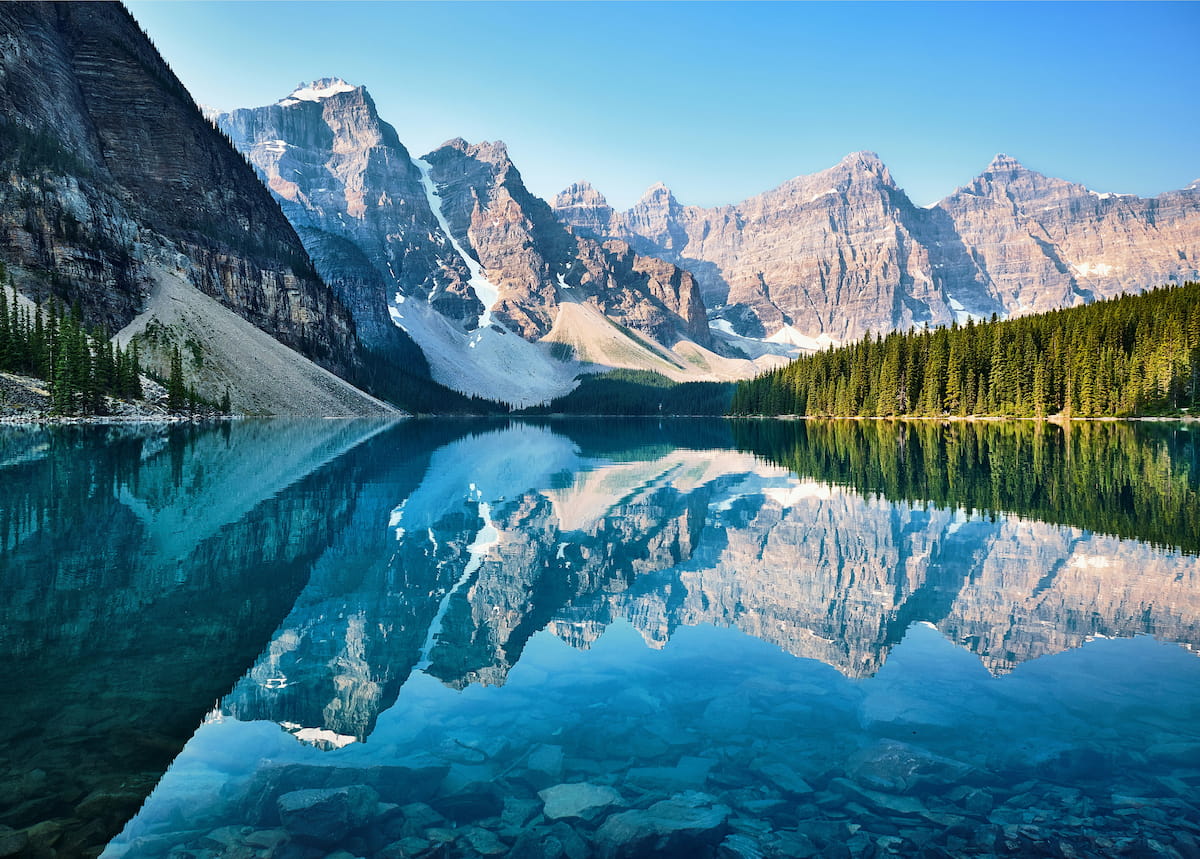
You’re standing at the shoreline of Moraine Lake at 7am, before the first shuttle arrives. The water is the kind of turquoise that makes you think the photo must be edited — then you’re there, and you understand it’s actually real. Ten snow-capped peaks reflect in water that shouldn’t exist in that color. A ground squirrel investigates your boots. This is why people come back to Banff every year for the rest of their lives.
Banff has a reputation for being expensive, and there’s truth to it — resort pricing, limited accommodation inventory, and a dollar-sign reputation keep some travelers away. But here’s what those travelers miss: the best things in Banff cost nothing. The hiking network is free. The wildlife views are free. The Icefields Parkway drive is free. If you plan strategically, Banff delivers world-class mountain experiences at a cost that’s more manageable than its reputation suggests — especially with the US dollar’s current strength against the Canadian dollar.
What’s In This Guide
Best Time to Visit Banff
Sweet spot: May, September, and October. Shoulder pricing, far fewer crowds, and Banff at some of its most beautiful — wildflowers in May, golden larches in October. If you must go in summer, September after Labor Day is the smartest move. Note: Park entry is completely free June 19–September 7, 2026 under the Canada Strong Pass initiative — no pass needed during that window.
Where to Stay in Banff
Banff townsite is the best base — walking distance to restaurants, transit connections to every major attraction, and no need for a car once you’re in. The honest reality is that Banff hotels are expensive by most standards, especially in July and August. Prices below are verified April 2026 for summer season; shoulder season (May, September) runs roughly 30–40% lower. All prices converted from CAD at 1.37.
The Moxy Banff — Marriott’s design-forward budget brand, formerly the Banff Voyager Inn — is one of the most sensibly priced options in the townsite. Free parking is genuinely valuable here, where lot fees add up fast in peak season. The ROAM transit stop directly nearby connects you to the gondola, hot springs, and park shuttles without a car. Rooms are compact but well-designed, and the location puts you within easy walking distance of Banff Avenue’s restaurants and shops. For a Banff base that keeps the daily rate manageable and earns Bonvoy points, this is the right call.
The Moose Hotel is one of the most recommended mid-range stays in Banff for good reason. The rooftop hot pools with mountain views are a genuine highlight — sitting in warm water surrounded by the Rockies at sunset is a memory you don’t forget. Central location on Banff Avenue makes the whole townsite walkable. Rooms are comfortable and well-appointed without trying to compete with the Fairmounts. For the price, it’s exceptional value by Banff standards.
The Fairmont Banff Springs is one of Canada’s most iconic hotels — a castle-like property built into the mountainside above the Bow River valley, surrounded by peaks in every direction. Seven restaurants, a world-class spa, and a golf course that ranks among the most spectacular settings to play in North America. At $380–$620/night it’s not a value play — it’s a bucket-list property. The views from the upper floors are extraordinary, and the sense of place is unlike anywhere else in the country. Note: the neighboring Rimrock Resort is currently closed for renovations until July 2026.
Get the Budget Travel Cheat Sheet
Booking shortcuts, packing hacks, and money-saving moves our readers use on every trip — free when you subscribe.
15 Best Banff Experiences
Banff is one of the most accessible wilderness destinations on earth — the park’s 1,600km of trails, wildlife corridors, and scenic drives are largely free. Grouped below by cost so you can build your days around your budget.
Moraine Lake is arguably the most beautiful lake in North America — ten snow-capped peaks reflected in water so blue it seems painted. Private vehicles are not permitted on Moraine Lake Road; you must take the Parks Canada shuttle from the Lake Louise Park and Ride. The shuttle season runs from early June through mid-October. Getting there on the first shuttle of the morning (typically 6am) puts you at the lake before the crowds and in the best light of the day. This is the single experience in Banff that most justifies the entire trip.
💡 Shuttle reservations sell out within minutes of opening each spring — often within seconds. Set a reminder for the reservation opening date and have multiple devices ready. Weekday slots go slightly faster than weekends. Alternatively, the Via Via shuttle company offers a paid option when Parks Canada slots are sold out.
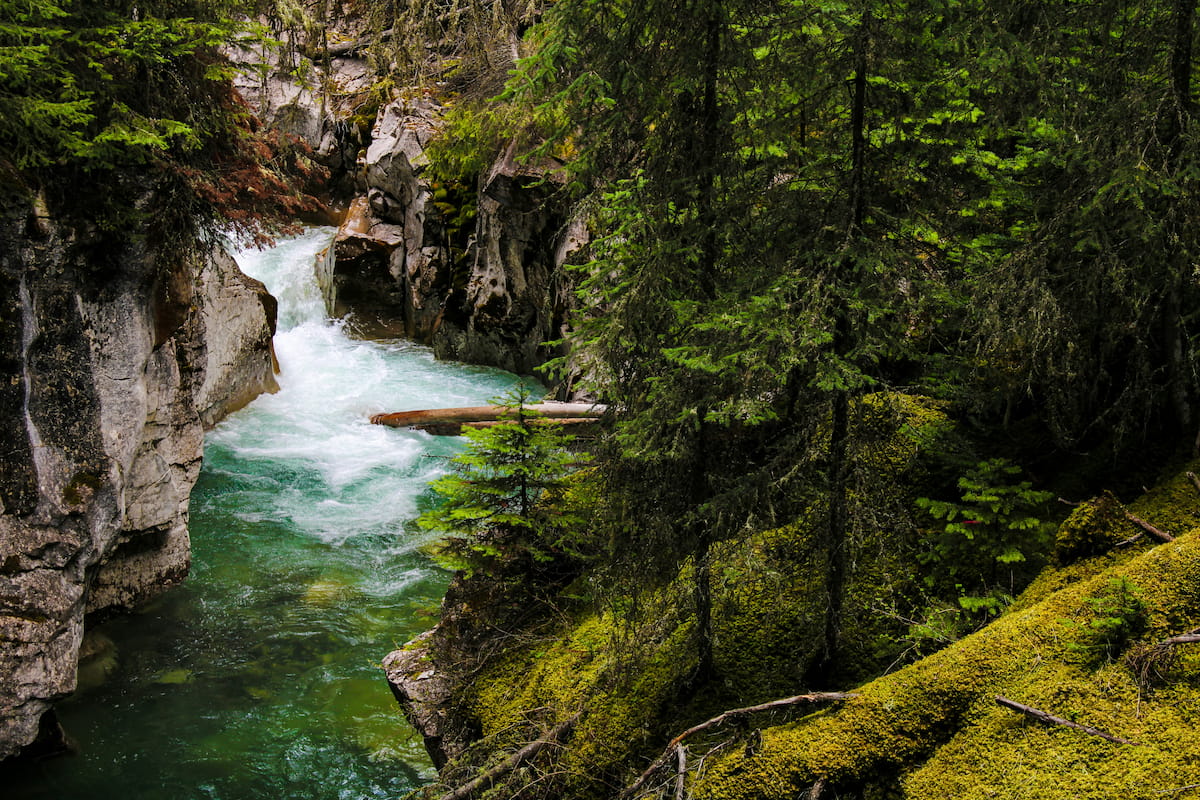
Johnston Canyon is one of the most dramatic short hikes in the park — a paved boardwalk carved into the canyon wall above a rushing river, leading first to the Lower Falls (1.1km one-way) then the Upper Falls (2.7km one-way). The walls close in around you as the canyon narrows, with water thundering below and the smell of spray filling the air. In winter, the falls freeze into massive ice columns and the canyon becomes one of the most popular ice walk destinations in Canada. Summer or winter, this is a legitimately spectacular piece of geography.
💡 Go early — the parking lot fills by 8am in summer. The Parks Canada free shuttle also connects to Johnston Canyon from Banff townsite, making a car unnecessary. Combine with Castle Mountain viewpoint on the return.
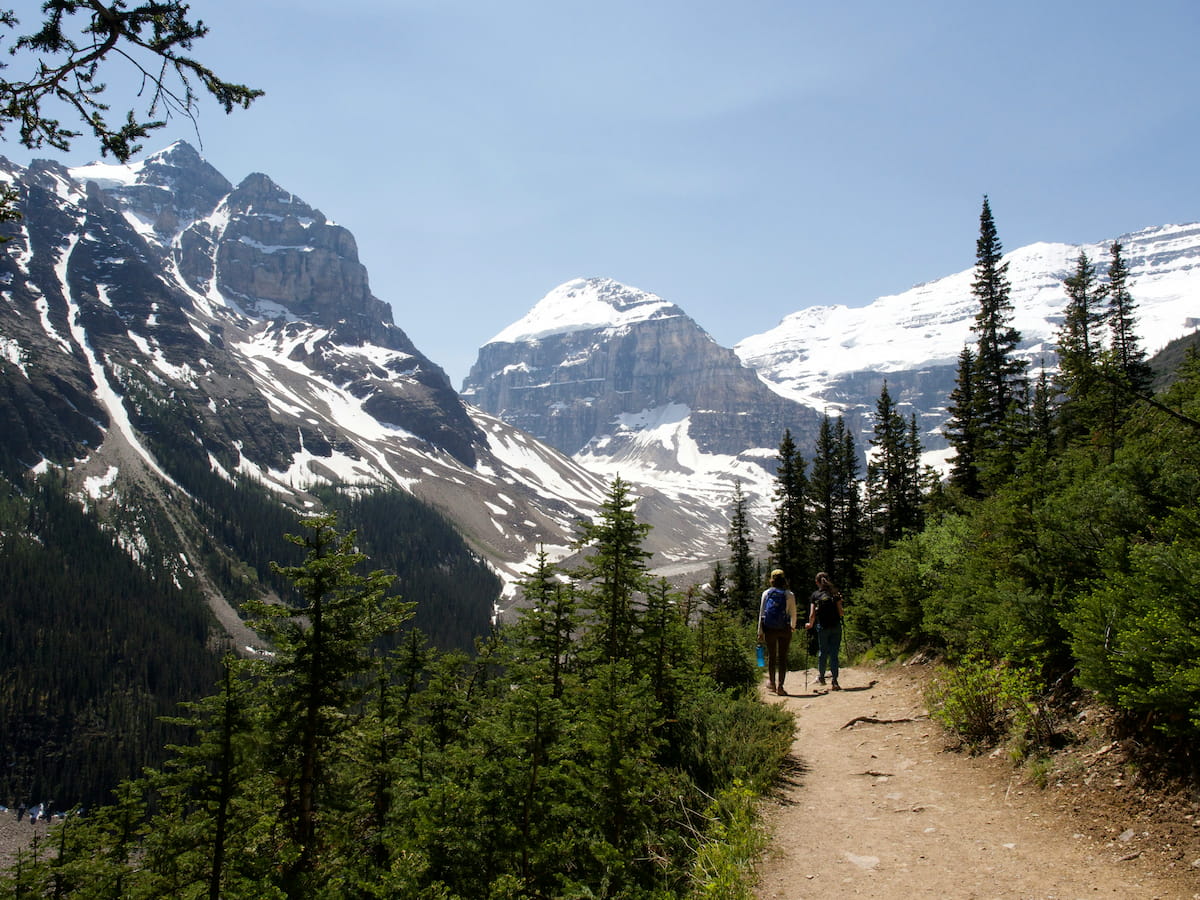
Lake Louise is one of the most-photographed places in Canada, and the reality lives up to every photo — the Victoria Glacier at the far end, turquoise water of impossible depth of color, and the Fairmont Château framing the near shore. The 4km lakeshore trail is flat, accessible, and free once you’re there. In peak season (mid-June through mid-October), parking is severely limited and paid; the Parks Canada shuttle from the Lake Louise Ski Resort is the recommended approach. The tea house hike to Lake Agnes above the lake is one of the best moderate hikes in the park.
💡 The Lake Agnes Tea House (4km round trip, 385m elevation gain) sits above Lake Louise at a tiny backcountry hut serving tea, soup, and baked goods. It’s one of the most rewarding tea breaks in North America — cash only, earned through your legs.
The 230km Icefields Parkway connecting Banff and Jasper is consistently ranked one of the world’s most scenic drives — glaciers, icefields, turquoise lakes, and waterfalls visible from the road the entire way. Peyto Lake viewpoint alone justifies the drive: a sweeping lookout over a wolf-head-shaped lake in a glacially carved valley. Budget a full day with stops at Bow Lake, Crowfoot Glacier viewpoint, the Columbia Icefield, and Athabasca Falls. You don’t need a tour — just a car, a park pass, and time.
💡 The Icefields Parkway requires a park pass (daily adult CAD $12.25 / ~$9 USD) for all stops even if you’re just driving through. Note that the Bow Glacier Falls Trail is closed following a 2025 rockslide — check Parks Canada for trail conditions before you go.
Banff townsite has one of the most surreal wildlife viewing situations in the world: a herd of elk regularly walks directly through the streets, grazes on lawns, and beds down near hotels. Especially common at dawn and dusk in autumn, the sight of a massive bull elk standing between parked cars on a town street while tourists photograph him from a respectful distance is uniquely Banff. Beyond elk, the park has grizzly and black bear, bighorn sheep (often visible from the road near Lake Minnewanka), and coyotes on the Vermilion Lakes flats.
💡 Keep a minimum 30-meter distance from all wildlife — elk are dangerous, particularly bulls in rut (September–October). Vermilion Lakes Road at sunrise is one of the best spots in the park for reflected mountain photography and early-morning wildlife encounters.
Tunnel Mountain is the most accessible summit hike in the park — a 2.3km trail from the Banff townsite rising 298m to a viewpoint over the Bow River valley, Mt. Rundle, and the townsite below. You don’t need a shuttle, a car, or much fitness. It’s genuinely rewarding rather than just “the easy option” — the 360-degree view at the top shows the full scale of the valley and the surrounding peaks. A perfect half-day hike before or after exploring Banff Avenue. Especially beautiful in morning light when the valley is still in shadow.
💡 The trailhead is walkable from anywhere in the townsite. Evening hikes give outstanding light across the valley. Allow 1–2 hours round trip depending on pace — it’s steeper than it looks in the first section.
The Banff Gondola takes you to the summit of Sulphur Mountain in 8 minutes — panoramic views of six mountain ranges, a ridgeline boardwalk, an interpretive center, and two restaurants including the celebrated Sky Bistro. Dynamic pricing means tickets bought midweek in advance cost less than weekend walk-ups. Children 5 and under ride free. The gondola uses dynamic pricing (CAD $60–$88 depending on date and demand — book online for the best rate and skip the line). If you’re visiting Banff for the first time, this is the experience that gives you the full context of the park’s geography in one view.
💡 Book online in advance — prices increase as the date approaches and peak-day tickets can sell out. Early morning (first gondola up) gives the softest light and fewest crowds at the summit. Sunset is also exceptional and some evenings include live entertainment at the summit.
A Parks Canada daily pass (CAD $12.25 / ~$9 USD per adult, CAD $24.50 / ~$18 USD per vehicle group of up to 7) is required to stop anywhere in the park. Youth 17 and under are always free. If you’re visiting for 7+ days or planning multiple national park trips in Canada, the annual Discovery Pass (CAD $83.50 / ~$61 USD per adult) covers all Canadian national parks for one year. For 2026, the Canada Strong Pass makes entry completely free from June 19 to September 7 — no pass needed during that window.
💡 Buy your daily pass online before arriving — it saves time at the gate. If visiting in summer 2026, check whether your dates fall within the free June 19–September 7 window before purchasing anything.
Lake Minnewanka is the largest lake in Banff National Park — 24km long, surrounded by peaks, and home to one of the most scenic boat tours in the Rockies. The 1-hour cruise (CAD $72 / ~$52 USD per adult) takes you deep into the lake with mountain views in every direction and the chance to spot bighorn sheep on the slopes above. A peaceful counterpoint to the intense crowds at Moraine Lake and Lake Louise. The lake is a 15-minute drive from Banff townsite or accessible via the Parks Canada shuttle.
💡 Book tickets in advance during summer — the cruise is popular but rarely sells out as quickly as the mountain lake shuttles. Morning cruises give the best light for photography. The lakeshore trail (15km round trip) is also excellent for wildlife viewing if you prefer to hike.
In winter, Johnston Canyon transforms. The falls freeze into columns of ice rising 30 meters, the boardwalk becomes an ice walk through a frozen canyon, and guided tours (CAD $75–$95 / ~$55–$70 USD per adult, 3–4 hours) take you safely through conditions that require microspikes and a guide. It’s one of the most popular winter experiences in the Canadian Rockies and genuinely unlike anything in the lower 48. The guides provide all equipment and the context of the canyon’s geology and ecology. Available roughly December through March depending on freeze conditions.
💡 Book guided ice walk tours through Banff Adventures or similar operators — don’t attempt the ice walk without microspikes, which guides provide. The falls are most dramatic in January and February when the freeze is most complete.
Banff has a long history of trail riding, and several outfitters offer guided horseback trips through the park — including routes along the Bow River valley with mountain backdrops that have remained unchanged for a century. One-hour rides (CAD $75–$95 / ~$55–$70 USD) are beginner-friendly. Half-day and full-day options go deeper into backcountry terrain unavailable by foot trail. Timberline Tours and Warner Stables are the two main operators in the townsite, both long-established and well-regarded.
💡 Book at least a few days ahead in summer — the best time slots go quickly. Half-day rides offer significantly more scenery per dollar than hourly rides if budget allows. Closed-toe shoes required; everything else is provided.
Three world-class ski resorts sit within 45 minutes of Banff townsite. Sunshine Village has the longest season in Canada — typically November through late May — with 3,300+ acres straddling the Continental Divide. Lake Louise has the most vertical and the most varied terrain. Mt. Norquay is closest to town and the most accessible for beginners. Multi-day passes give access to all three. The combined SkiBig3 pass offers the best value for anyone skiing three or more days. No resort in the lower 48 matches this combination of terrain, snow reliability, and scenery.
💡 Lift ticket prices vary significantly by date and advance booking window. Buying online at least 2–3 weeks ahead saves 10–20% versus day-of window prices. The SkiBig3 multi-day pass is the best value if you’re skiing three or more days.
Via ferrata (literally “iron way”) is a hybrid between hiking and climbing — a fixed route on a mountain face with iron rungs, cables, and bridges that allows non-climbers to experience vertical terrain safely. Mt. Norquay’s via ferrata (CAD $179–$219 / ~$130–$160 USD, half-day guided) takes you across the face of a Banff mountain with exposure and views that would otherwise require technical rock climbing skills. Appropriate for reasonably fit people with no climbing experience. One of the most distinctive adventure experiences available anywhere in the park.
💡 All equipment is provided — harness, helmet, and cable attachment. A moderate fitness level is required (comfortable with ladders and heights). Book through Mt. Norquay’s official site for the best rate and guaranteed availability in summer.
Sky Bistro sits at the summit of Sulphur Mountain — a gondola ride up and dinner 2,281m above sea level with unobstructed views across the Bow Valley and into the Rockies. The menu focuses on Alberta beef and Canadian ingredients prepared to a high standard. Your gondola admission is included with a dinner reservation. The experience of watching alpenglow fade across the mountains while eating above the clouds is genuinely memorable and justifies the price for a special occasion. Note: Sky Bistro was closed for renovations until April 27, 2026 — it is fully open for summer season.
💡 Request a window table when booking. Sunset seatings (July–August roughly 8:30–9:30pm) are the most spectacular but book weeks in advance. The gondola ride up and down is included with your dinner reservation — you don’t pay separately for the gondola.
The Columbia Icefield is one of the largest accumulations of ice in the Rocky Mountains — remnant glaciers from the last ice age, visible from the Icefields Parkway. The Pursuit Glacier Adventure takes you onto the Athabasca Glacier on purpose-built Ice Explorers (CAD $75–$119 / ~$55–$87 USD depending on date). The Skywalk (CAD $32–$35 / ~$23–$26 USD) is a glass-floored walkway over a 280m glacial canyon. Combo tickets offer the best value. Located 2.5 hours from Banff; best combined with a full Icefields Parkway day trip.
💡 Book both the Ice Explorer and Skywalk together online — combo pricing saves 10–15% versus buying separately at the site. The glacier has receded significantly in recent decades; signs along the route mark where the ice edge stood in past years — a sobering and important perspective.
Worth It / Skip It
Don’t Make These Mistakes
Not booking accommodation far enough in advance. Banff in July and August is one of the most in-demand national park destinations in North America. Budget hotels sell out 4–6 months ahead. Mid-range hotels sell out 3–4 months ahead. If you’re planning a July trip and it’s already April, your options are limited — and whatever’s left will be expensive. Book the moment your dates are confirmed, with free cancellation if available.
Trying to drive to Moraine Lake without checking the current access rules. Personal vehicles are prohibited on Moraine Lake Road during peak season. The Parks Canada shuttle requires advance reservation and sells out within minutes of opening each spring. Showing up without a reservation or shuttle ticket means you simply won’t see the lake. Check pc.gc.ca/banff for current season access rules and shuttle reservation opening dates before planning.
Underestimating the altitude and sun exposure. Banff sits at 1,383m (4,537ft) and many trails climb well above 2,000m. Exertion at altitude hits harder than at sea level, especially on the first day. The Rocky Mountain sun reflects off snow and water with intensity that’s easy to underestimate — sunscreen and sunglasses are non-negotiable even on overcast days. Drink more water than you think you need.
Treating wildlife viewing casually. Banff’s wildlife is wild. Elk in the townsite look approachable — they are not. Parks Canada requires a minimum 30-meter distance from elk and bison, and 100 meters from bears and wolves. Every year visitors are injured by wildlife they approached too closely for a photo. Carry bear spray on any trail (available to rent in town), know how to use it, and respect distance requirements without exception.
VacayValue Scorecard — Banff
Packing List — Banff
Every Sunday: One Destination. One Honest Take.
Join travelers who plan smarter. One email per week — real costs, specific advice, no filler.
Banff Is Expensive — But the Best of It Is Free. That’s the Whole Game.
The hotels cost more than you want to pay. The restaurants are mountain-resort priced. And none of that matters, because the thing that makes Banff extraordinary — the lakes, the peaks, the 1,600km of trails, the wildlife walking through town at dusk — costs nothing beyond a park pass and the effort to show up early.
The visitors who leave disappointed are the ones who stayed in town and spent money on the paid attractions without first doing the free ones. The visitors who leave converted — who start planning a return trip on the flight home — are the ones who were at Moraine Lake at 6:30am, hiked to the Lake Agnes Tea House for lunch, and watched elk graze outside their hotel window at sunset.
Go in September if you can. Book accommodation the moment you know your dates. Get the Moraine Lake shuttle reservation the day reservations open. And give yourself more days than you think you need — this place rewards time.