
Bali 2026: The World’s Best Value Wellness Destination (And It’s Not Close)
A private pool villa for $80/night. A yoga class for $8. A Balinese cooking school for $35. Ancient Hindu temples that cost $3 to enter. Bali has been the world’s most complete wellness destination for decades — and it remains the most accessible at any price.
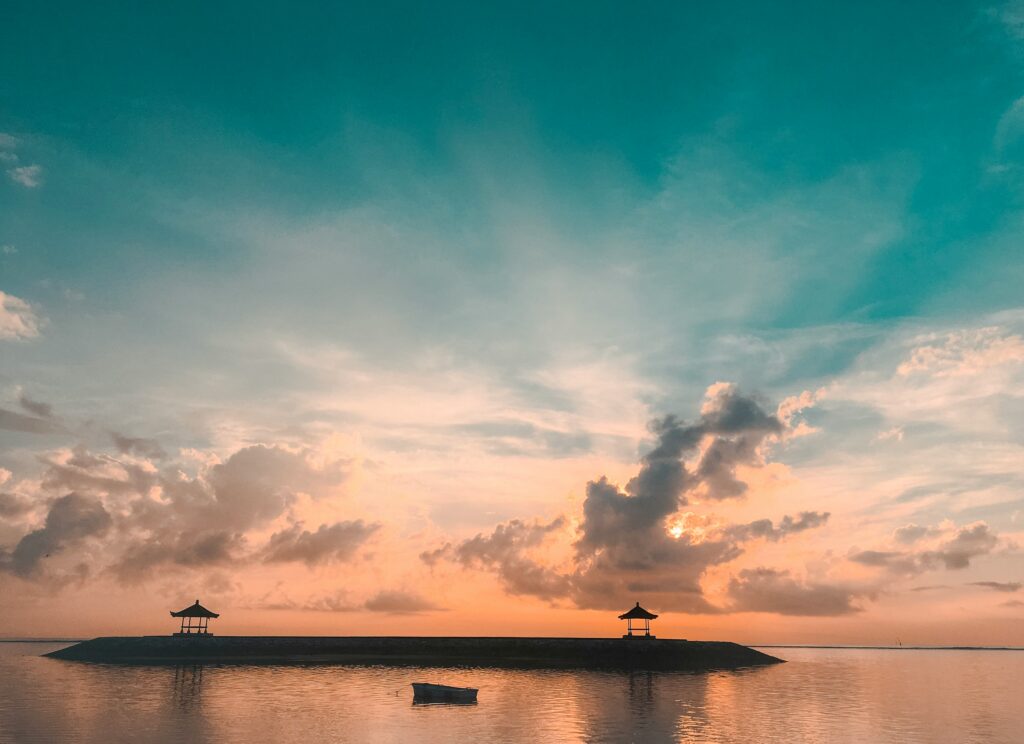
It’s 6am and you’re on a bamboo platform above a rice terrace in Ubud, the valley below still in shadow, the first light catching the tops of the palms. The yoga teacher has been practicing for twenty years and charges $8 for the class. Tonight you’ll eat nasi goreng at a warung for $3 and watch the sunset over the Indian Ocean from a clifftop temple where the offering ceremony has been happening every day for four hundred years. No other destination on earth delivers this combination at this price. Bali is genuinely in a category of its own.
Bali is a small Hindu island in majority-Muslim Indonesia — 5,780 square kilometers of rice terraces, volcanic mountains, ancient temples, surf breaks, and a spiritual culture so woven into daily life that every morning begins with handmade offerings and every ceremony draws the full village. The wellness infrastructure — yoga studios, healing centers, meditation retreats, cooking schools, Balinese massage — has been built around this culture rather than imported over it, which is why it feels earned in a way that purpose-built wellness destinations don’t. A budget traveler spends $35–$50/day here. A mid-range traveler spends $75–$120/day. For the experience quality and cultural depth Bali delivers, no comparable destination comes within striking distance at these prices.
What’s In This Guide
📅 Best Time to Visit Bali
The honest take: May–June and September are the sweet spots — dry season conditions with pre or post-peak prices and crowds. The wet season (November–March) is far more manageable than its reputation suggests: rain arrives in afternoon bursts rather than all-day downpours, the island turns deeply green, and accommodation costs drop 20–35%. If your goal is Bali on a real budget, the wet season in Ubud is a smart choice. Don’t let the seasonal label put you off.
Where to Stay in Bali
The neighborhood decision changes your entire Bali experience. Ubud is the cultural and wellness heart — rice terraces, temples, yoga studios, healing centers, cooking schools, and the most intact version of Balinese daily life. Canggu is the surf-and-café scene — creative, young, and deeply caffeinated. Seminyak is boutique-hotel Bali — polished, beachside, more expensive. Uluwatu is clifftop surf culture with dramatic ocean views. A classic 10-day trip typically combines 4–5 nights in Ubud with 4–5 nights in one of the south Bali areas. All rates verified March 2026.
Guesthouses and homestays along the Bisma and Monkey Forest Road area of Ubud offer clean, well-kept rooms with garden or rice field views at $22–$45/night — frequently with breakfast included. The family-run properties here are the backbone of budget travel in Ubud: not flashy, but genuinely comfortable, managed by people who know every temple ceremony happening that week and will tell you without being asked. The Yoga Barn, Campuhan Ridge Walk, and Ubud Market are all within easy walking distance. For a budget traveler whose priority is cultural immersion over resort amenities, this is where Bali delivers its greatest value.
A village of traditional antique Javanese joglo houses relocated to a lush garden in Canggu — each villa is a genuine piece of Indonesian architectural history, furnished with antiques and opening onto tropical gardens. The daily yoga program features qualified instructors rather than resort-grade placeholders, the kitchen sources from the property’s own organic garden, and the spa focuses on Balinese healing methods. In a neighborhood that has progressively shifted toward Western expatriate living, Desa Seni stays resolutely Balinese in its culture. Echo Beach and its surf break are a 10-minute walk.
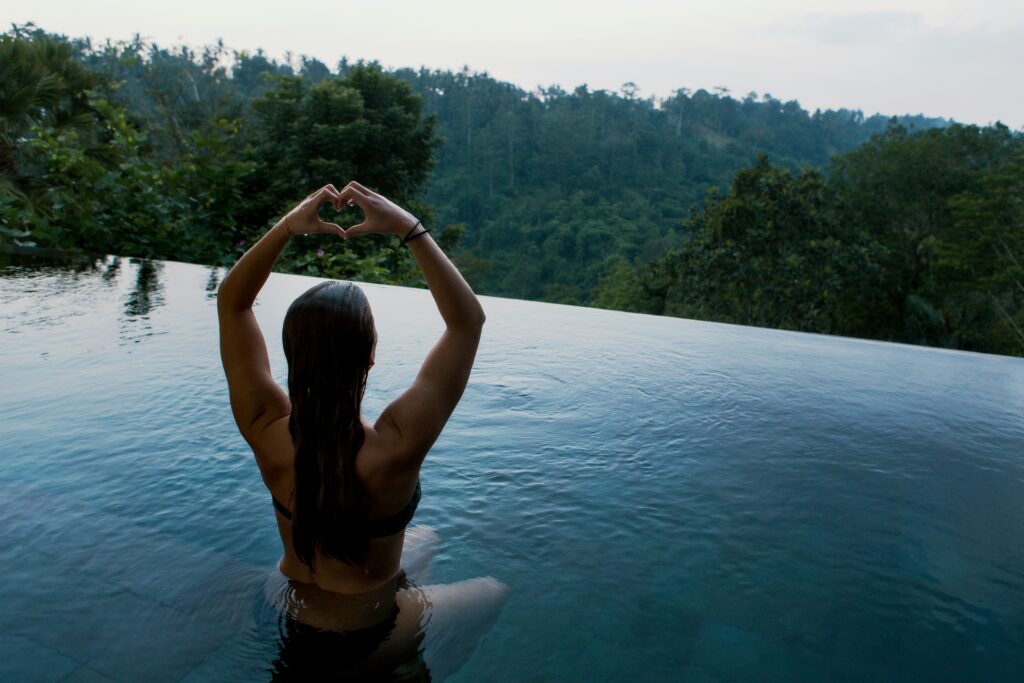
Perched on the limestone cliffs of the Bukit Peninsula with the Indian Ocean visible from virtually every point on the property, Alila Uluwatu is the correct answer when someone asks what Bali looks like at its most dramatic. The infinity pool appears to pour directly into the ocean 150 feet below. Spa treatments draw from traditional Balinese healing at a depth of quality that would cost $500+ in most Western luxury wellness destinations. At $180–$320/night — still a fraction of equivalent-experience pricing in the Maldives or Fiji — this is Bali’s most compelling luxury argument: you’re getting the experience before the markup.
Get the Budget Travel Cheat Sheet
Booking shortcuts, packing hacks, and money-saving moves our readers use on every trip — free when you subscribe.
15 Best Bali Experiences
Bali’s strongest experiences span the spiritual, the physical, the culinary, and the purely visual — and almost all of them cost significantly less than comparable moments anywhere else in the wellness world. The free tier alone contains some of the most profound travel experiences in Southeast Asia.
The UNESCO-listed Tegallalang terraces north of Ubud are the island’s most iconic landscape — stepped green paddies cascading down a river valley, irrigated by the ancient subak system that has maintained Balinese agriculture for a thousand years. Arriving at 6am means the mist is still in the valley, the light is golden on the paddies, and the Instagram crowd hasn’t materialized. The 15-minute walk down from the road passes directly between the terraces — you’re moving through them rather than observing from above — with water sounds and birdsong carrying the whole way. There is no gate or ticket. Some farming families along the path have a small donation box for subak upkeep; contributing is genuinely appreciated but entirely your choice.
💡 By 9am the terraces are busy with tour groups and content creators. The entire experience is transformed by arriving before 7am. Same landscape, completely different morning.
The Campuhan Ridge Walk is a 2-kilometer trail along a jungle ridge above Ubud with views over two river valleys and the town behind you. The walk takes 45–60 minutes and costs nothing. In the early morning, light comes through the grass at an angle that makes the whole ridge glow, the birds are active, and the valley mist hasn’t cleared. This is where Ubud’s resident artists and writers go before the day starts. The trail begins at Warwick Ibah hotel just north of the Campuhan bridge and ends at Bangkiang Sidem village.
💡 Best before 8am or after 4pm. A morning coffee at Bridge Coffee Shop at the trail’s start is the right beginning — the bridge view over the river junction is worth the stop on its own.
Temple ceremonies happen somewhere in Bali every single day — odalan (temple anniversaries), cremation processions, tooth filing ceremonies, and the countless daily offerings that structure Balinese Hindu life. When a procession moves through Ubud’s streets — women in ceremonial dress carrying elaborate fruit and flower towers on their heads, gamelan musicians leading the way — you’re watching a living culture, not a performance organized for visitors. Ask your hotel each morning if there are ceremonies nearby. Your driver will know. The answer is almost always yes.
💡 The Ubud Royal Palace (Puri Saren) hosts traditional dance performances most evenings. The courtyard gates are open and the palace can be viewed from the street entrance for free — the performances require a ticket, but the architecture and ambient activity are accessible without cost.
Bali’s west-facing beaches catch the Indian Ocean sunset directly — the sun drops into the water rather than behind land — and the sky on a clear evening turns the full spectrum from gold to orange to deep red as the waves catch the last light. Seminyak and Petitenget beaches are the best positions in South Bali: wide, long stretches of dark volcanic sand with consistent surf and consistently extraordinary light. No entrance fee, no reservation required. Dozens of beachside warungs sell Bintang beer and fresh coconut for $1.50–$3 if you want to extend the evening.
💡 Petitenget is slightly less crowded than Seminyak proper and has better sunset angles. The stretch in front of the Petitenget Temple is particularly atmospheric — the temple silhouette against an orange sky is one of Bali’s great free photographs.
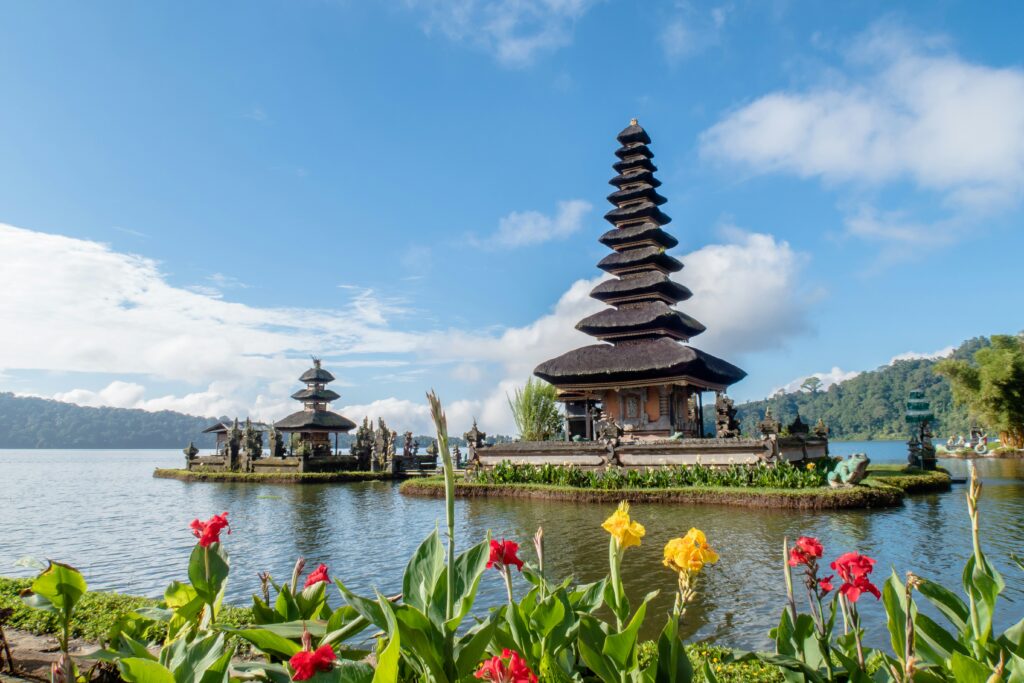
A sea temple on a rocky outcrop 300 meters offshore, accessible on foot at low tide and surrounded by ocean on three sides — Tanah Lot is one of Bali’s most important sea temples and its most visually striking. The sunset view from the headland above, with the temple silhouette and the orange sky reflected in tidal pools below, is the most photographed scene in Bali for good reason. Entry is 50,000 IDR ($3). Arrive 45 minutes before sunset to claim a position on the headland before it fills, and stay 20 minutes after the sun drops for the light in the remaining sky.
💡 The oceanfront warung stalls at Tanah Lot sell young coconut for $2 — the best refreshment after a warm afternoon. Skip the sit-down restaurants near the entrance and eat at the stalls with the view.
Besakih is Bali’s largest and most sacred temple complex — 23 separate temples on the southern slopes of Mount Agung, the island’s highest and most sacred volcano, with more than a thousand years of continuous Hindu worship. The scale is extraordinary: hundreds of stone shrines ascending the volcanic hillside, meru towers with tiered thatched roofs, offerings of flowers and incense everywhere, the summit of Agung occasionally visible through the clouds above. Entry requires a sarong and a genuine respect for the space — this is a functioning sacred site, not an archaeological exhibit.
💡 The Besakih entrance scam is well-documented: unofficial guides insist you need them to enter. You don’t. Pay the official fee at the proper ticket booth, put on your sarong, and walk in independently. Report any aggressive behavior to temple security staff.
A Balinese cooking class is one of the highest-value experiences in Southeast Asian travel. The best programs start with a morning market visit to source ingredients, then teach you to make 5–6 dishes from scratch in a traditional kitchen: nasi goreng, mie goreng, satay with peanut sauce, tempeh manis, lawar, and a sambal that will permanently recalibrate your standards. Casa Luna Cooking School in Ubud — founded by Janet DeNeefe — is consistently the strongest on the island. Paon Bali, run from a family compound north of Ubud, offers the most authentic village-level setting. Both run $35–$55 and include the market visit, the class, and eating what you made.
💡 Book the morning class — it starts at the market around 8am, which is at its most alive before 10am. Afternoon classes skip the market entirely and you lose half the education. The market portion is where you understand how Balinese cooking actually works at its source.
Ubud has more yoga studios per square kilometer than almost anywhere on earth, and the instruction quality is genuinely high — the town has attracted serious international practitioners and teachers for decades. Yoga Barn, the largest and most established studio, runs classes from 7am to 9pm across every tradition — Hatha, Vinyasa, Yin, Restorative, Ashtanga — with drop-in rates of $12–$15. Radiantly Alive is preferred by serious Ashtanga practitioners. Intuitive Flow, set in a bamboo pavilion above the Petanu River, has the most striking setting. All run daily drop-in classes. For reference: a comparable class in Los Angeles or London costs $30–$45.
💡 Book Yoga Barn classes 24 hours ahead online during peak season — popular teachers fill morning sessions fast. The 7am Hatha class is the best-value morning in Ubud: one hour of solid instruction, then breakfast on Jalan Hanoman for $4, then the rest of the day opens up.
Traditional Balinese massage combines deep pressure, long strokes, skin rolling, and reflexology in a sequence that takes 90 minutes to feel complete. At reputable Ubud spas — Karsa Spa, Nur Salon, and the spa at Alaya Resort are the standard references — a 90-minute Balinese massage runs $15–$25. Even the most polished hotel spas on the island rarely charge more than $45–$60. Getting one daily during a Bali trip is financially rational and physically cumulative — the effect builds across the week in a way one or two sessions anywhere else doesn’t replicate. The most common feedback from first-time Bali visitors is a variation of: “I didn’t realize how much I needed that many massages.”
💡 Avoid street-side shops in Kuta and Legian offering $3 massages — quality and hygiene are inconsistent. In Ubud, a reputable spa charging $12–$20 for 90 minutes is the right middle ground. The quality difference is not subtle.
Mount Batur is an active volcano in central Bali — 1,717 meters, 2–3 hours to the summit on a well-maintained trail, starting at 2am to reach the top before sunrise. The crater lake below and the surrounding caldera emerge from darkness as the sky lightens; on clear mornings the distant Lombok islands appear on the horizon. The trail is manageable for anyone in reasonable fitness with proper footwear — no technical climbing required. Guided tours ($40–$60 all-in from Ubud) include transport, guide, and breakfast cooked on the volcanic steam vents at the summit.
💡 Clouds build from mid-morning — the summit view is clear roughly from 5:30am to 8am. Arrive before first light and stay through the full sunrise rather than descending immediately. The descent takes 90 minutes and the whole experience wraps by 10am.
Tirta Empul is a Hindu water temple built around a natural spring used for purification rituals since 962 AD. Balinese Hindus come from across the island to participate in the melukat ritual — moving through a series of holy spring fountains in prayer as part of a purification ceremony. Visitors may participate with a sarong and guidance on protocol from the priests at the entrance. This is one of the most spiritually active temples in Bali — not a cultural display but a living practice that you are invited to observe or join with genuine respect.
💡 If you participate in the bathing ritual, wear a light-colored sarong over your swimwear and follow the priests’ instructions. Don’t photograph the bathing ritual closely — read the situation and act accordingly. The depth of the experience tracks directly with the respect you bring to it.
Bali has world-class surf across two very different contexts. Canggu’s Echo Beach is a reef break suited to intermediate surfers — consistent, well-shaped waves with a surf culture built over decades. Uluwatu is genuinely elite: a long left-hander breaking over a reef at the base of a limestone cliff, considered one of the best waves in Southeast Asia. Beginner lessons at Kuta or Seminyak beachbreaks ($20–$30 for two hours) reliably produce first-timers who stand up; board rental at Canggu for the day runs $8–$12. The cost of getting into surfing in Bali is a fraction of equivalent lessons anywhere on the West Coast.
💡 Kuta Beach is the best learning environment — the slow beach break is forgiving, surf schools are licensed and experienced, and the crowd is less intimidating than reef breaks. Move to Canggu once you’re comfortable. Leave Uluwatu to those who know what they’re doing — the reef is unforgiving and the paddle-out is demanding.
Bali is the world’s most established dedicated yoga retreat destination — a concentration of qualified teachers and well-developed programs built over 30+ years. The Yoga Barn in Ubud, Fivelements Retreat (river-edge bamboo architecture, transformational healing programs), and Radiantly Alive all run multi-day immersions in jungle and rice field settings. All-inclusive 3-day programs run $120–$200 at established mid-tier retreats; premium 5-day programs at Fivelements run $250–$350. These are genuine practice environments with resident teachers, decades of curriculum development, and settings that do meaningful work before you’ve attended a single session.
💡 Fivelements is the most architecturally and energetically designed retreat property in Asia — built from bamboo directly on the Ayung River with the sound of the water constant throughout. Book 4–6 weeks ahead for peak season programs; mid-week arrivals have significantly better availability.
Nusa Penida is a rugged limestone island 45 minutes by fast boat from Bali’s southeast coast — significantly less developed, with dramatic cliff formations, crystal-clear snorkeling at Crystal Bay (manta rays year-round), and the iconic Kelingking Beach viewpoint: a T-Rex-shaped headland above a turquoise cove. The fast boat from Sanur runs $15–$20 round trip. An overnight on the island ($20–$40 for a guesthouse) transforms the experience — the beaches before the day-trippers arrive from Bali are a completely different place from the crowded viewpoints at 11am.
💡 The Kelingking Beach descent to the beach itself is steep, unstable, and takes 45 minutes down and 60 minutes back up. The viewpoint from the top is extraordinary and worth the trip. The descent requires appropriate footwear and physical confidence. Many visitors take the viewpoint photo and wisely turn around.
The Kecak dance is performed every evening at Uluwatu Temple — 100+ bare-chested male dancers arranged in concentric circles, chanting the “cak-cak-cak” rhythm while enacting the Ramayana epic, with the Indian Ocean and the sunset visible behind them. The performance unfolds on a stone stage at the cliff edge, the temple lit by dying light as the sun drops into the ocean behind the stage. At $15 for 60 minutes with one of the world’s great sunsets as the backdrop, this is an extraordinary ratio of experience to cost.
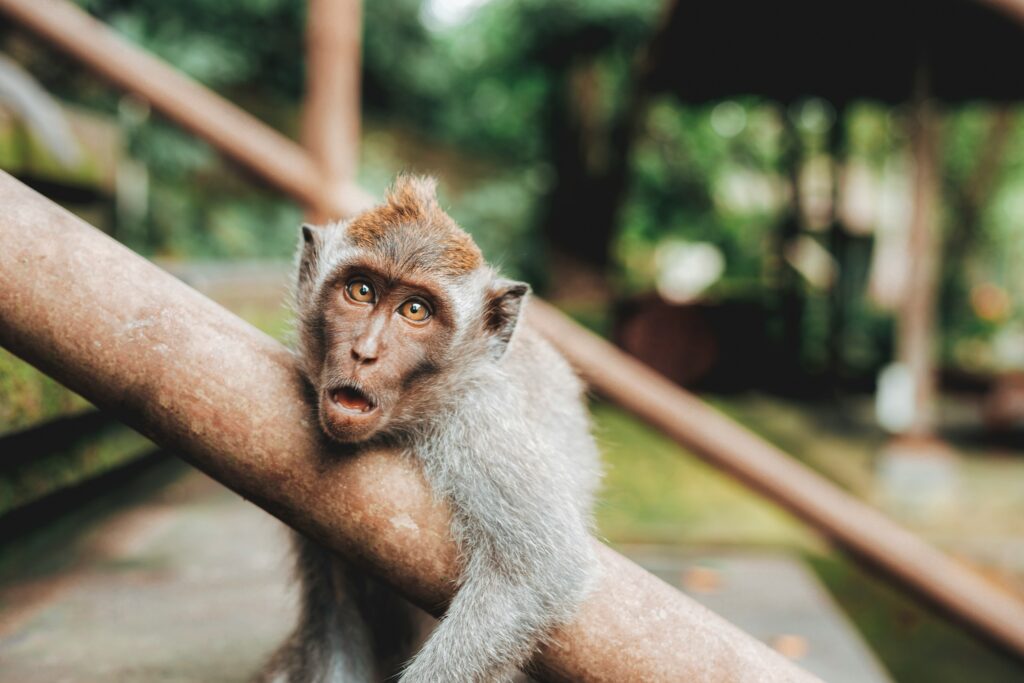
💡 Arrive 45 minutes before the performance (usually 6pm) to secure a front position in the stone amphitheater — outer rows are significantly further from the stage and the fire ceremony at the end. Bring a light layer for cliff-edge winds after sunset. Watch your bag: monkeys live in the temple grounds and are genuinely enterprising.
Worth It / Skip It
Don’t Make These Mistakes
Spending your entire trip in Seminyak or Canggu and calling it “doing Bali.” The south Bali café and beach scene is excellent — but it’s essentially a well-designed expatriate enclave with Balinese weather. The version of Bali that draws travelers back year after year — the temples, the ceremonies, the rice terraces, the offerings left at every crossroads before dawn — is in Ubud and the villages north and east of it. A trip that skips Ubud has skipped the heart of what makes this island different from every other place you’ve been.
Using ATMs from non-bank storefronts or accepting “no foreign transaction fee” offers from local machines. Credit card and ATM skimming is a documented problem in Bali, particularly at standalone ATMs in tourist areas. Always use ATMs inside or directly attached to bank branches (BNI, BCA, Mandiri, BRI). The “skip the foreign transaction fee” option offered by some local ATMs is a dynamic currency conversion scam with a poor exchange rate disguised as a favor — always choose to be charged in IDR and let your own bank handle the conversion.
Disrespecting temple dress codes or photography rules. Bali’s temples are functioning places of Hindu worship, not attractions with a spiritual theme. Entry requires covered shoulders and knees — sarongs are available at most temple entrances for $1–$2 to borrow or buy. Photography inside inner temple sanctuaries is often restricted. Read the signage at each entrance and follow it without needing to be told twice. The respect you bring directly determines the quality of what you receive.
Booking only one week. Bali is the most common example of the “I wish I’d stayed longer” phenomenon in Southeast Asian travel. One week is enough to see the highlights; it’s not enough to find your rhythm or slow down enough to stop counting the days — which most people report as the island’s actual transformative experience. If you can book 10–14 days on your first visit, do it. If you can only do a week, come back — almost everyone does.
VacayValue Scorecard — Bali
Packing List — Bali
Every Sunday: One Destination. One Honest Take.
Join travelers who plan smarter. One email per week — real costs, specific advice, no filler.
Bali Is the World’s Best Value Wellness Destination. A Decade of Competition Has Not Changed This.
The wellness travel industry spent the 2010s trying to build alternatives to Bali — Tulum, Nosara, Sedona, Rishikesh — and all of them are excellent in their own right. None of them are Bali. None of them combine a thousand-year Hindu spiritual culture with world-class yoga for $8, therapeutic massage for $12, private pool villas for $80/night, rice terrace landscapes that recalibrate your sense of beauty, ancient temple ceremonies that happen daily because they have been happening daily for centuries, and food that costs $2–$3 at its most authentic. This combination does not exist anywhere else on earth at this price.
The honest caveat is the flight — getting from the US to Bali requires 20+ hours of travel and $800–$1,200 in airfare. That is the real cost of Bali. Everything on the ground is extraordinary value by any objective standard. The flight is the investment; the 10 days on the island are the return.
Fly into Denpasar. Go to Ubud first — always. Walk the Campuhan Ridge at 6am. Book the cooking class. Take the yoga class. Find a driver for temple day. Watch the Kecak dance. Get the massage every day. Move to the coast for the second half. Come back in two years and it will be different enough to surprise you again.