
Hoi An 2026: The World’s Most Magical Small Town (And It Costs Almost Nothing)
A UNESCO Ancient Town lit by a thousand silk lanterns. Custom-tailored clothing in 24 hours. The best $1 food on earth. And a beach 15 minutes away by bicycle.
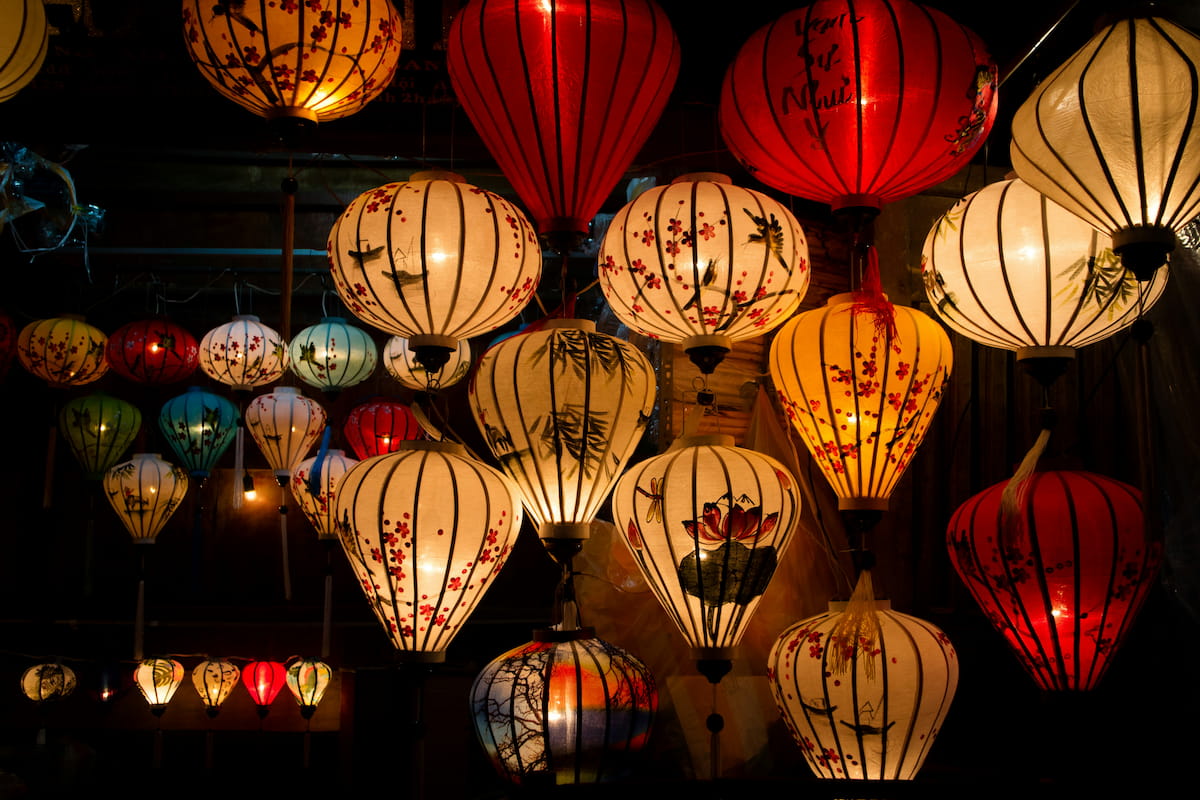
It’s 7pm on the night of the full moon and the electricity in Hoi An Ancient Town has been cut. Every building in the old quarter is now lit entirely by hundreds of silk lanterns — red, gold, green, blue — strung from eaves and doorways and floating on the Thu Bon River below. The streets are full of people. It costs nothing to be here. A bowl of cao lau noodles costs $2. You are paying for a world-class experience at local prices, and that is the essential promise of Hoi An.
Hoi An was a major Southeast Asian trading port from the 15th to 19th centuries, receiving merchants from China, Japan, Portugal, and the Netherlands. The result is an architectural palimpsest unlike anywhere else — Chinese merchant houses, Japanese covered bridges, French colonial facades, and Vietnamese tube houses all compressed into a few walkable blocks beside a river. UNESCO recognized it in 1999. The tourism industry followed. But the prices, remarkably, have not caught up with the reputation. Hoi An remains one of the most extraordinary value destinations on earth.
What’s In This Guide
📅 Best Time to Visit Hoi An
Sweet spot: February, March, and April. The dry season delivers clear skies, comfortable heat, and the best conditions for both the Ancient Town and An Bang Beach. December and January are also excellent and quieter. October and November carry real flood risk — Hoi An’s Ancient Town streets regularly fill with ankle-to-knee-deep water during typhoon season.
Where to Stay in Hoi An
The best base is within walking distance of the Ancient Town — the area between the old quarter and Cam Nam Island. Beach-adjacent hotels (An Bang / Cua Dai) are an alternative for beach-first travelers but require a Grab or bike to reach the town. Rates verified March 2026.
Hoi An’s budget hotel market is genuinely remarkable — $15–$35/night regularly gets you a private room with air conditioning, hot water, WiFi, and often breakfast included. Hoi An Chic Hotel represents the category well: clean, centrally located, friendly staff, and five minutes on foot to the lantern-lit streets of the Ancient Town. The free bicycle rental is significant — cycling to An Bang Beach and through the rice paddies is one of the best free activities in town. Search the current rate on Hotels.com for the best available price on your dates.
Anantara Hoi An sits on the Thu Bon River, a five-minute walk from the heart of the Ancient Town. The $40–$80/night range gets you a proper boutique resort experience — pool, restaurant, professional service — that would cost three times as much anywhere in Europe or the US. Vietnamese boutique hotels in this price band are genuinely among the best value accommodation on earth: beautifully designed spaces with attentive hospitality at prices that make the spending feel almost implausible. The riverside location means the lantern glow over the water is visible from the property at night.
The Nam Hai is consistently rated among the best resorts in Southeast Asia — a 35-villa property on Ha My Beach with three infinity pools, direct beach access, four restaurants, and the kind of service that makes luxury travelers willing to pay far more than $100–$200/night for the experience. The fact that it’s available at this price range (off-peak, off-season) is a genuine value anomaly. It’s about 20 minutes from the Ancient Town by taxi, making it practical to combine resort days with evening Ancient Town visits. This is what makes Hoi An’s luxury tier so compelling — world-class resort quality at a fraction of comparable properties in Thailand or Bali.
Get the Budget Travel Cheat Sheet
Booking shortcuts, packing hacks, and money-saving moves our readers use on every trip — free when you subscribe.
15 Best Hoi An Experiences
Hoi An’s experiences split cleanly across three tiers. The Ancient Town streets, the Full Moon Lantern Festival, the riverside, and the beach are all free. The $5 Heritage Ticket unlocks 22 historical buildings. The paid and signature experiences — cooking classes, tailors, boat trips — are all priced at Vietnamese rates that will surprise most Western visitors.
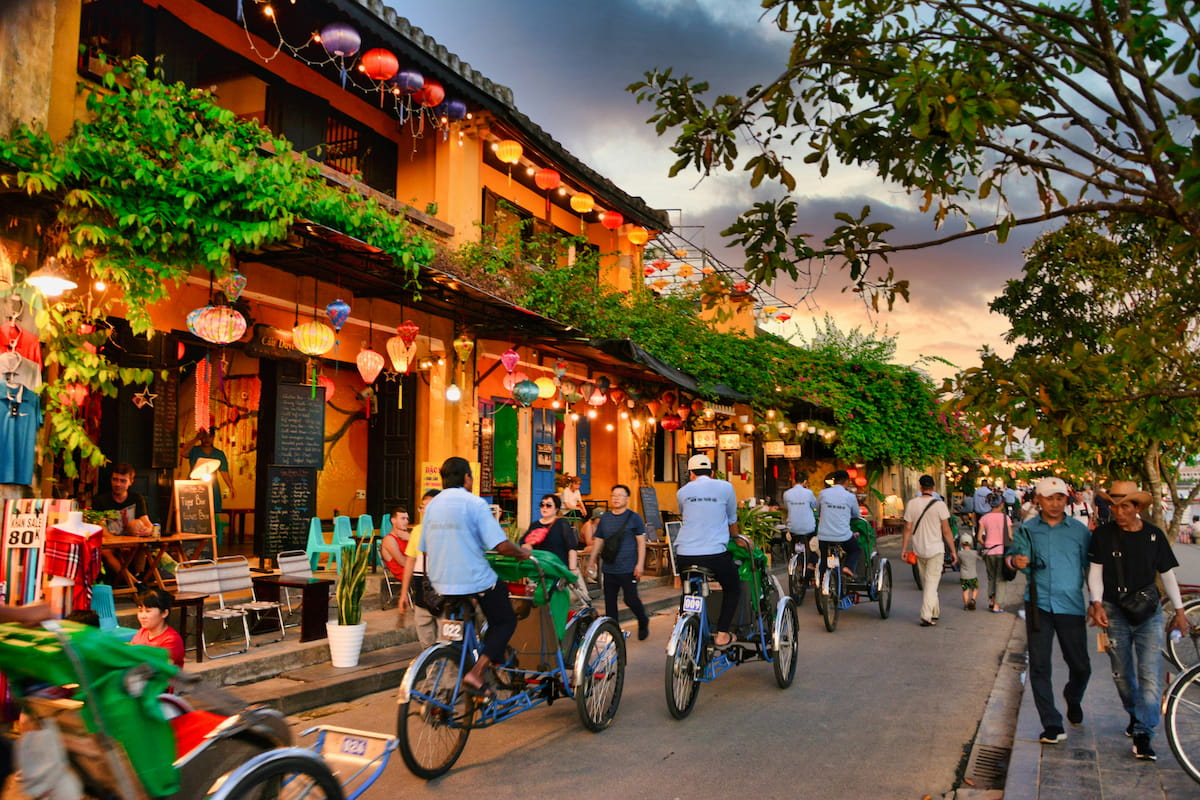
The streets of Hoi An Ancient Town are freely walkable without a ticket — you only need the Heritage Ticket (see below) to enter the buildings. The streets themselves, lit by hundreds of silk lanterns hanging from every eave and doorway, are one of the most beautiful urban experiences in Southeast Asia and cost nothing. Come at 6pm when the lanterns are lit and the day-trippers are still around, or at 10pm when most have gone and the light off the river is at its most atmospheric. The Thu Bon riverside is free to walk at any hour.
💡 The Ancient Town is most photogenic in the early morning (before 8am) and after 8pm. The hour between dusk and dark — when the lanterns compete with the fading sky — is when most of the great Hoi An photos are taken.
On the 14th day of each lunar month, Hoi An cuts the electricity in the Ancient Town and lights it entirely by lantern. Paper lanterns are released on the Thu Bon River. Traditional music performances happen on multiple stages. The transformation is extraordinary — the same streets you walk every day become something out of a different century. This happens every month, not just once a year. The festival runs from approximately 6pm to 10pm. Getting your dates right to coincide with a full moon is one of the most impactful pieces of Hoi An trip planning, and it costs nothing to attend.
💡 The exact date shifts monthly with the lunar calendar — Google “Hoi An Full Moon Festival [month] 2026” for your specific dates. Plan your Hoi An nights around it if at all possible. It doesn’t matter how many times you’ve heard it described — being in the Ancient Town during the festival is different from anything you can read.
An Bang Beach is 4km from the Ancient Town — a 20-minute bicycle ride through rice paddies and small villages. It’s one of the most pleasant urban-to-beach rides in Southeast Asia: flat, low-traffic, lined with banana trees and traditional houses. The beach itself is free. Most Hoi An hotels provide free bicycles or rent them for $2–$3/day. An Bang has excellent beach bars and restaurants at Vietnamese prices ($2–$5 for a beachside meal). This is the combination that makes Hoi An so compelling — a UNESCO World Heritage Town and a good beach, 20 minutes apart by bicycle.
💡 Start early (before 9am) on the ride to avoid the heat. Cua Dai Beach is slightly closer but An Bang is better — wider, less eroded, better beach bars. The route through Cam Nam Island adds 10 minutes and is worth it for the village views.
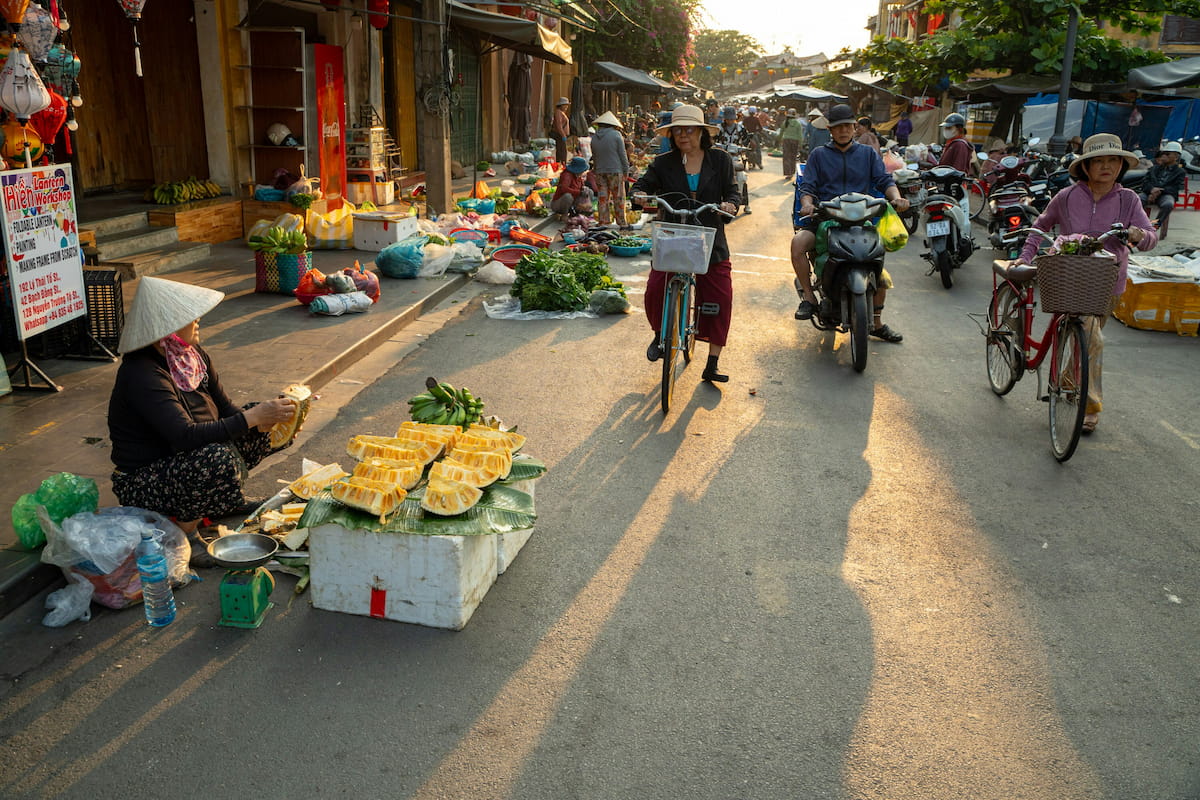
Hoi An has its own regional dishes worth specifically seeking out: cao lau (thick noodles in a broth that can only be made correctly with water from a specific local well), white rose dumplings (steamed shrimp dumplings unique to Hoi An), bánh mì from Bánh Mì Phượng (considered by many food travelers to be the best in Vietnam), and fresh spring rolls from street vendors. None of these cost more than $1–$3. Eating Hoi An’s signature foods in the town where they were invented, on the streets they’ve been served on for generations, is a genuine cultural experience that costs almost nothing.
💡 Bánh Mì Phượng at 2B Phan Chau Trinh is the famous one. Expect a small queue. Cao lau is best at Trung Bac, 87 Tran Phu. White rose dumplings at Bale Well, 45/51 Tran Hung Dao. Do all three in one afternoon for under $10 total.
The Thu Bon River at dawn is one of the quieter and more beautiful moments Hoi An offers. Fishing boats head out. Mist hangs over the water. The Ancient Town is still mostly asleep. Walking the river path from the An Hoi Bridge to the market takes about 30 minutes and costs nothing. The same walk at midday is pleasant. At 6am it’s something else entirely — the photogenic emptiness and quality of light that make travel photographers set their alarms for absurd hours.
💡 The An Hoi Bridge (the pedestrian bridge across the island) is the best vantage point for river and town reflections. Arrive at the waterfront between 5:30–6:30am for the golden hour light on the yellow buildings.
Tra Que is a small organic farming village 3km from the Ancient Town, cultivating the herbs and vegetables that define Hoi An’s cuisine. The paths between the fields are free to walk and give a perspective on the agricultural life immediately surrounding the tourist center that most visitors never see. Organized farm experiences (plowing, planting, cooking) are available for around $5 and take about two hours. The vegetables grown here — including the specific herb varieties used in Hoi An’s dishes — genuinely taste different from what you get anywhere else, and the locals are proud of it.
💡 Bicycle from the Ancient Town in 15 minutes. Go early morning before the day gets hot. The village is most active between 6–9am when farmers are working. The organized experience is worth the $5 if you have the time — it provides context for why Hoi An’s food tastes the way it does.
The Heritage Ticket (120,000 VND / ~$5 for international visitors, verified March 2026) covers entry to five heritage sites from a list of 22 — including historic merchant houses, Chinese assembly halls, temples, and museums. You cannot enter any of the specific buildings without it, but the streets themselves are freely walkable without a ticket. The ticket is sold at small yellow booths around the outer edge of the Ancient Town and is valid for 24 hours from purchase. Recommended combination: Japanese Covered Bridge area (note: bridge itself is currently under renovation), Phuc Kien Assembly Hall, Tan Ky Old House, Hoi An Folklore Museum, and one more of your choice.
💡 The ticket is one of the best $5 spends in travel. The Phuc Kien (Fujian) Assembly Hall alone — with its ornate ceremonial architecture and incense-heavy atmosphere — is worth the full price. Note that the iconic Japanese Covered Bridge is currently undergoing restoration works; check current status before specifically planning your visit around it.
Hoi An has been a tailoring center since its days as a trading port and remains the best place in Southeast Asia to have clothing custom-made. Tailors will measure, cut, and complete garments in 24–72 hours from your own designs, reference photos, or garments you bring. A basic dress or shirt runs $25–$50. A well-made suit runs $100–$200. The quality varies dramatically between shops — this requires research and realistic expectations. Good tailors include Yaly Couture, A Dong Silk, and Bebe Tailor, all with long-standing reputations. Bring reference images, communicate precisely, and do a fitting before the final pickup.
💡 Budget two fittings and allow 48–72 hours minimum for anything complex. Avoid agreeing to “same day” for anything beyond a simple item. The cheapest tailors are not the best value — a garment that falls apart in six months is not a bargain. Read recent TripAdvisor reviews of specific shops before committing.
The water coconut forest at Cam Thanh is 6km from Hoi An — a dense waterway of nipa palms that sheltered Viet Cong during the war and now hosts one of Vietnam’s more joyful tourist experiences: small circular basket boats (thung chai) piloted through narrow channels, with local boatmen performing the spinning boat dance for tips. The 90-minute experience includes a boat ride, crab fishing demonstration, and a basket boat ride through the forest. Entrance fee is approximately 30,000 VND (~$1.30) and the basket boat tours run $8–$15/person through local operators. Worth it for the genuine interaction with a traditional craft and a completely different landscape 15 minutes from the Ancient Town.
💡 Book through your hotel to avoid commission middlemen. Morning sessions (before 10am) have better light for the forest and cooler temperatures. The boat dancers work for tips — bring small VND notes. This experience is far more authentic than it sounds from a description.
The Marble Mountains are five limestone and marble peaks 20km north of Hoi An (30 minutes by Grab or motorbike taxi, ~$8–$12 one-way). They contain Buddhist shrines, caves, and a staircase climb to viewpoints over the coastline and Da Nang Bay. The 40,000 VND (~$2) admission is one of the cheapest entrance fees for a genuinely spectacular site anywhere in the world. A lift runs for 15,000 VND (~$0.65) if the climb is not practical. Combine with a beach stop on the way back along Da Nang’s long urban beach for a full half-day.
💡 Non Nuoc Mountain (the largest) is the main peak to ascend. Allow 2 hours minimum for the caves, shrines, and summit views. Morning is best — the caves are cooler and the light through the natural skylights is more dramatic. Entrance fee verified at the official gate.
Hoi An’s silk lanterns are not mass-produced imports — they are made in the town by local artisans using bamboo frames and coloured silk, a tradition that’s been continuous since the trading port era. Lantern-making workshops run about 90 minutes and teach you to construct a small lantern to take home. Multiple workshops operate in the Ancient Town; Reaching Out Arts & Crafts (which employs hearing-impaired artisans) is particularly well-regarded. The activity is genuinely hands-on and produces something you’ll actually want to keep. At $8–$15/person it is one of the better-value cultural craft experiences available anywhere.
💡 Book the session for early afternoon — the lanterns dry and are ready to carry by the time you head out for the evening. They pack flat in checked luggage. Reaching Out at 103 Nguyen Thai Hoc is the best option for quality and ethics.
Hoi An cooking classes are among the most consistently praised travel experiences in Southeast Asia — typically beginning with a market tour of Hoi An Central Market, followed by a 3–4 hour hands-on cooking session producing 4–6 traditional dishes including cao lau, white rose dumplings, and fresh spring rolls. You eat everything you make. Highly recommended operators include Morning Glory Cooking School and Red Bridge Cooking School (includes a boat trip to the school). At $35–$60/person for a half-day that includes market tour, instruction, and a full meal, this is exceptional value by any global standard.
💡 Book at least 2 days ahead during peak season — these classes are genuinely popular and sell out. The Red Bridge school’s boat transfer adds atmosphere that’s worth the slight premium. Either school will teach you techniques you’ll actually use at home.
The Hoi An Memories Show is a large-scale outdoor performance featuring over 500 local performers — a theatrical retelling of Hoi An’s 500-year history as a trading port through dance, music, and lighting on a dedicated river island stage. It’s the largest outdoor performance in Vietnam and runs most evenings at 7:30pm. At $20–$30/person it’s the most expensive experience on this list and represents the least essential of the recommendations — but for visitors interested in a theatrical overview of Hoi An’s cultural history, it delivers genuine production value at a price that remains very reasonable by Western standards.
💡 Book through your hotel for the best price. VIP seating is worth the premium for the unobstructed views. The show runs approximately 60 minutes. Go on a non-Full Moon night since the competing evening’s atmosphere is arguably better spent in the Ancient Town by lantern light.
My Son is a ruined Hindu temple complex 60km from Hoi An — the religious capital of the ancient Champa kingdom, built between the 4th and 14th centuries. It’s a UNESCO World Heritage Site and one of the most significant archaeological sites in Southeast Asia. The entrance fee is 150,000 VND (~$6) and includes a golf cart transfer and a Champa dance performance. Most visitors combine this with a half-day Hoi An Ancient Town visit as part of a guided day tour ($15–$30/person through local operators). Note that significant portions were bombed during the Vietnam War — the site is evocative and historically important rather than pristine.
💡 Go early (doors open at 7am) before the heat and tour bus congestion. The sunrise over Group B ruins is specifically worth the early alarm. Bring insect repellent — the jungle setting means mosquitoes. Hire a local guide at the site for genuine historical context beyond the signage.
A one-hour boat trip on the Thu Bon at sunset puts you on the water as the lanterns come on in the Ancient Town behind you — the full Hoi An postcard from the river perspective. Multiple operators run wooden boat trips from the An Hoi Bridge and the central market waterfront. Prices are negotiable at $10–$20/person for a private or small group boat. Some trips include fishing net demonstrations. The view of the Ancient Town from the water at dusk — yellow buildings fading to lantern orange as the sky turns pink — is legitimately one of the most beautiful things travel delivers.
💡 Negotiate the price before boarding. $15/person for a private 1-hour boat is a fair rate. Confirm the route and duration in advance. Time the boat to leave at 5pm to catch the last light and the lanterns coming on simultaneously — roughly 5:30–6:30pm in winter months.
Worth It / Skip It
Don’t Make These Mistakes
Not checking the Full Moon Festival dates before booking. This is the single most impactful planning decision for a Hoi An trip and it costs nothing to align with it. Check the lunar calendar, confirm which night the festival falls on your travel dates, and if possible book your accommodation to be in Hoi An on that night. Missing it by one day is genuinely painful in retrospect.
Booking tailoring with no time for a fitting. The most common Hoi An complaint on TripAdvisor and travel forums is tailoring that came out wrong because there wasn’t time for a second fitting or revisions. If you want custom clothing, arrive in Hoi An early in your stay, not at the end. Budget at minimum 48 hours between first measurement and final collection, and plan for a fitting in between.
Staying at the beach and day-tripping to the Ancient Town. An Bang and Cua Dai beaches are worth visiting but shouldn’t be your base. The Ancient Town at 6am, before the day visitors arrive — when it’s quiet enough to hear the roosters — is one of the specific experiences that makes Hoi An worth the flight. You can’t access that from a beach resort 4km away without logistical friction.
Underestimating the Da Nang airport transfer. Da Nang Airport (DAD) is the gateway to Hoi An — there is no airport in Hoi An itself. The transfer is approximately 45 minutes by taxi ($18–$22 one-way) or 60–75 minutes by shuttle. Factor this into your arrival and departure timing. Book a transfer or Grab in advance for early morning or late night arrivals — Da Nang taxis at 2am are available but benefit from pre-arrangement.
VacayValue Scorecard — Hoi An
Packing List — Hoi An
Every Sunday: One Destination. One Honest Take.
Join travelers who plan smarter. One email per week — real costs, specific advice, no filler.
The Flight Is the Budget. After That, Hoi An Costs Almost Nothing for What It Delivers.
Once you’ve landed in Da Nang, Hoi An is one of the most affordable extraordinary places on earth. The Ancient Town is free to walk. The Full Moon Festival is free to attend. The best food in Vietnam costs $1–$3. The Heritage Ticket that unlocks 22 historical buildings costs $5. The hotels that would be $200+/night in Europe or the US cost $40–$80 here, and they’re genuinely lovely.
The flight from the US is the main budget commitment — $700–$1,100 economy RT — and it’s roughly equivalent to Tokyo, Kyoto, or Bangkok. The difference is that everything after landing costs a fraction of what it does in those cities. A mid-range traveler in Hoi An spends less per day than a budget traveler in most European capitals, while getting a better meal, a more beautiful setting, and an experience that’s harder to find anywhere else.
Go in February, March, or April. Time it for a Full Moon Festival. Stay near the Ancient Town. Eat everything at the places two streets back from the main tourist strip. Book one cooking class. Leave extra room in your luggage.