
Williamsburg, Virginia: Where Colonial Cobblestones Meet World-Class Coasters
Nowhere else in the US can you watch a musket drill in the morning, board a replica 1607 settler ship at noon, and scream down a wooden roller coaster by 3pm. Williamsburg earns its place on the short list of genuine American family bucket-list destinations — but only if you know how to play the costs right.
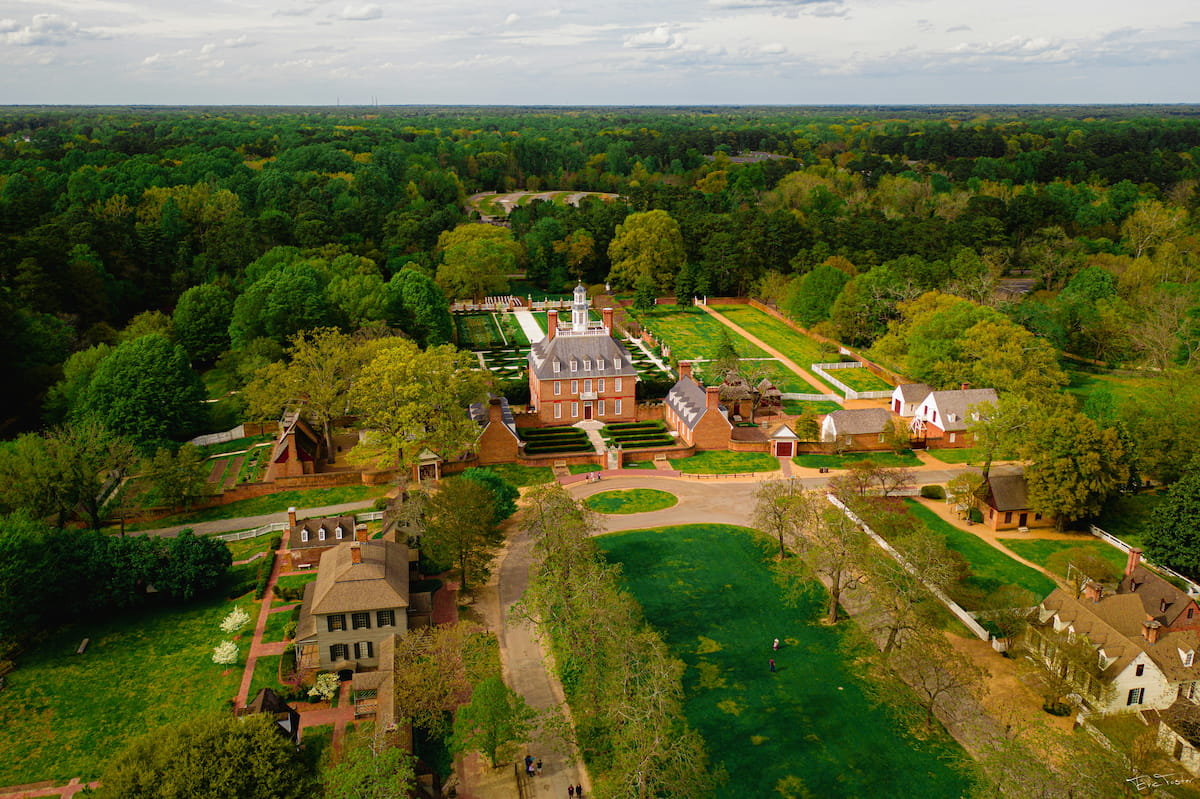
“Standing on Duke of Gloucester Street while a fife-and-drum corps rounds the corner — the kids completely silent, watching like they’ve stepped into a textbook — I understood why families keep coming back year after year. Williamsburg doesn’t just teach history. It lets you inhabit it.”
Most American family vacation destinations offer one compelling reason to visit. Williamsburg offers three that reinforce each other: Colonial Williamsburg (the only full-scale, living 18th-century capital anywhere), the Historic Triangle linking Jamestown and Yorktown into one continuous American origin story, and Busch Gardens — consistently ranked among the most beautiful theme parks on earth. The challenge isn’t finding things to do; it’s budgeting intelligently across a destination where costs range from genuinely free to surprisingly steep. This guide breaks down every dollar.
What’s In This Guide
📅 Best Time to Visit Williamsburg
April–May and October are the sweet spot for families: pleasant temperatures (50–75°F), manageable park queues, and hotel rates 20–35% lower than summer. If summer is your only option, late August (once local schools restart) offers the best conditions within the peak window.
Where to Stay in Williamsburg
Williamsburg has two distinct accommodation zones: the Historic Area (walkable to Colonial Williamsburg, quieter, higher rates) and the Richmond Road / Busch Gardens corridor (closer to theme parks, more chain options, lower rates). Families with children under 10 benefit most from the Busch Gardens corridor — it eliminates driving after long park days. All rates verified April 2026 and represent 2-months-ahead advance booking; summer weekends can run 30–50% higher than listed.
Consistently rated 9.0+ by guests and located two miles from Busch Gardens, the Holiday Inn Express delivers exactly what families need after a 10-hour park day: clean rooms, hot breakfast, an indoor pool, and zero nickel-and-diming. Rooms are standard IHG quality — comfortable and well-maintained rather than memorable — but the free breakfast alone saves a family of four $50–$80 per morning. Connecting rooms available for larger groups.
An official Colonial Williamsburg property and Marriott Autograph Collection member, the Williamsburg Lodge strikes the right balance between character and comfort. Its Americana folk-art décor sets the mood before you’ve even stepped into the historic area — which you can reach on foot in minutes. Two restaurants, a spa, and both indoor and outdoor pools make it genuinely self-contained. Families using Marriott Bonvoy points will find this among the best redemption values in the Williamsburg market. Virginia state tax of 13% applies.
The only Forbes Travel Guide Four-Star resort in the Historic Triangle, the Williamsburg Inn was designed by John D. Rockefeller Jr. and has hosted every US president and Queen Elizabeth II — twice. Sixty elegantly appointed rooms done in Regency style, three restaurants including the acclaimed Regency Room, a full-service spa, indoor and outdoor pools, and six clay tennis courts. Complimentary Colonial Williamsburg admission is typically included in packages, and the location puts guests 500 feet from the historic area. This is where Williamsburg stops being a family trip and becomes a family memory.
Get Our Best Williamsburg Family Tips
Ticket strategies, seasonal deals, and honest money-saving advice — straight to your inbox before you book.
15 Best Williamsburg Experiences
Williamsburg’s greatest trick for budget-conscious families: a meaningful chunk of the destination’s best content is genuinely free. Duke of Gloucester Street is yours to wander without a ticket. The Art Museums are always free. The campus of America’s second-oldest university is open to anyone curious enough to walk through. Of the 15 experiences below, five cost nothing, seven carry modest to moderate admissions, and three belong in the bucket-list category that families plan entire vacations around.
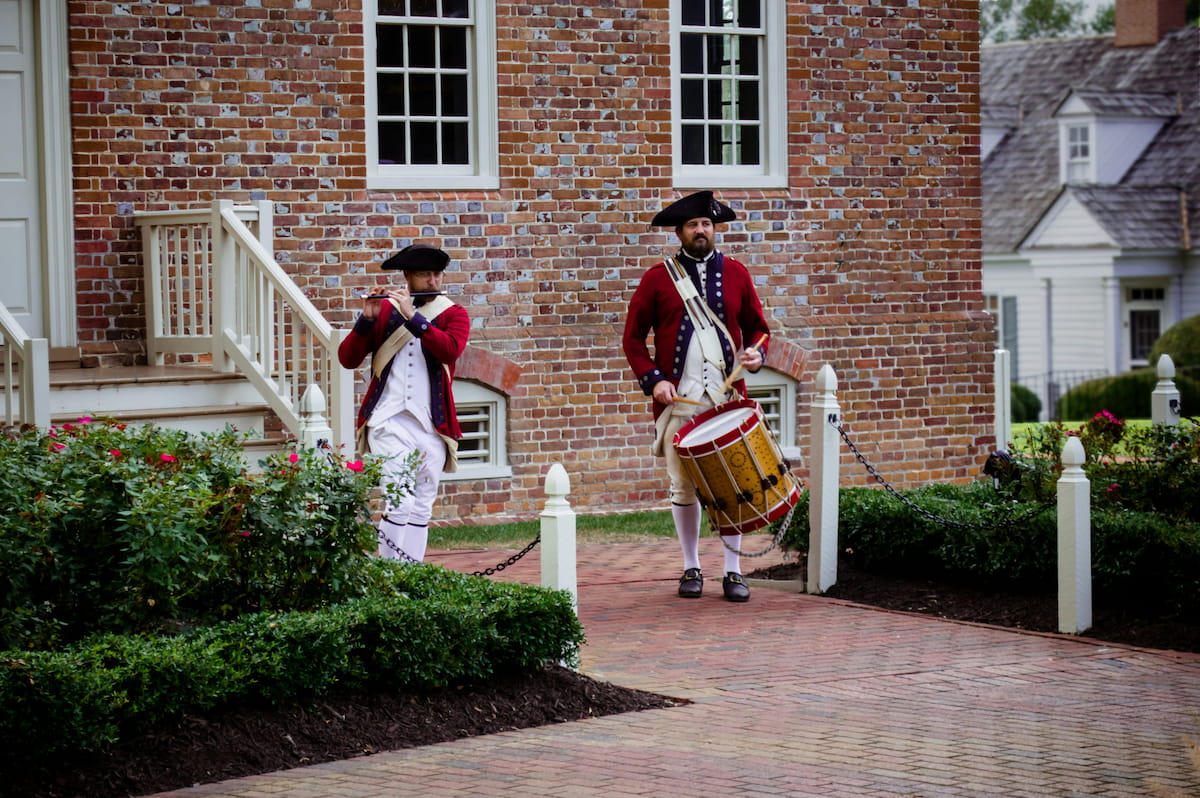
The “Main Street” of Colonial Williamsburg’s 301-acre Historic Area is free to walk without any admission ticket. You’ll stroll past the Capitol, the courthouse, trade shops staffed by working craftspeople visible through open doorways, and performers conducting militia drills on the greens. The outdoor experience alone — the architecture, the costumed interpreters, the livestock, the colonial garden scents — is substantive enough to occupy two to three hours. Paid admission gets you inside the buildings; the street itself belongs to everyone.
💡 Arrive early morning (9–10am) for the quietest, most atmospheric walk. The militia muster on the Palace Green typically runs mid-morning and draws a crowd — position yourself at the Green end of Duke of Gloucester for the best vantage.
Two world-class institutions — the DeWitt Wallace Decorative Arts Museum and the Abby Aldrich Rockefeller Folk Art Museum — share one building and charge zero admission, full stop. The Rockefeller collection alone is the oldest and most comprehensive American folk art museum on the planet. The DeWitt Wallace holds one of the finest decorative arts collections in the hemisphere, including furniture, metalwork, and ceramics from 17th and 18th-century America and Britain. These are not “nice for a free museum” — they’re genuinely excellent by any standard.
💡 The museums connect underground to the Colonial Houses historic lodging area. If you’re visiting with younger children, the folk art museum’s accessible imagery and familiar subjects hold attention far better than the decorative arts collection — start there.
Founded in 1693, William & Mary is America’s second-oldest college, and its campus is free to walk and explore. The Sir Christopher Wren Building — the oldest college building still standing in the US — anchors one end of the historic campus, and the entire grounds are open to visitors. For families with college-bound teenagers, it doubles as a college tour. For everyone else, it’s a beautiful, historically layered 1,200-acre campus that sits immediately adjacent to Colonial Williamsburg’s historic area.
💡 The Wren Building is open to visitors most days. Pick up a campus map at the welcome desk and do the self-guided walking tour — it takes about 45 minutes and covers the most historically significant buildings.
Tucked into Freedom Park, the Williamsburg Botanical Garden is a 300-species living collection open to the public at no cost. It’s one of those genuinely local discoveries that most tourists miss entirely because it’s not in the theme park zone. The garden is best from April through October and particularly stunning during spring bloom — a calming counterweight to a trip heavy with historic sites and adrenaline. The adjacent trails through Freedom Park pass remnants of a Civil War earthworks and a reconstructed 18th-century African American community site.
💡 Freedom Park’s main trail system is stroller and wagon accessible on the wider paths. Bring water — there are no concession stands on site. The park is at 5537 Centerville Road, about a 10-minute drive from the historic area.
The open-air shopping and dining district immediately adjacent to Colonial Williamsburg’s historic area is free to enter and wander, with no ticket or wristband required. Merchants Square has a handful of quality restaurants, an ice cream shop, specialty shops, and one of the better bookstores in Virginia. It’s where you’d go for lunch between morning and afternoon activities, or to cool down with ice cream after the historic area. The weekly Farmer’s Market (Saturdays, seasonal) adds local produce and artisan goods to the mix.
💡 The Cheese Shop on Merchants Square is a Williamsburg institution and worth the stop. Their sandwiches and deli counter are genuinely excellent and far better value than theme park dining.
A ticket unlocks what the free street experience can’t: access to the Capitol, the Governor’s Palace, the Courthouse, working trade shops (silversmith, wigmaker, printer, blacksmith), guided tours with knowledgeable interpreters, and ticketed theatrical performances. The multiday ticket ($49.50/adult) is the obvious play for anyone staying three or more days — it covers the same three consecutive days of full access at a meaningful per-day discount. Children 5 and under are always free. Prices verified at colonialwilliamsburg.org, April 2026.
💡 The Governor’s Palace fills up fast — add yourself to the guided tour list at the Visitor Center the moment you arrive. Tour slots are distributed on a first-come basis and the 1pm and 3pm sessions are typically the last to fill.
Operated by the Jamestown-Yorktown Foundation (a separate entity from Colonial Williamsburg), Jamestown Settlement tells the story of America’s first permanent English colony through immersive gallery exhibits and outdoor living-history areas. Visitors can board full-size replicas of the three ships that carried colonists across the Atlantic in 1607, explore a recreated Powhatan Indian village, and walk through the fort as it appeared in the early 17th century. The 180-degree introductory film alone is worth the admission for school-aged children. Prices verified at jyfmuseums.org, April 2026.
💡 The combination ticket covering both Jamestown Settlement and the American Revolution Museum at Yorktown ($34/adult, $17/ages 6–12) is better value than two separate admissions and allows seven consecutive days of use — ideal for a 5-day family itinerary.
While Jamestown Settlement (#07) is a living-history recreation, Historic Jamestowne is the actual island where the original 1607 fort stood — an active archaeological site administered by the National Park Service and Preservation Virginia. Ongoing digs continue uncovering artifacts and structural remains of James Fort, and visitors can watch archaeologists work in real time. The Archaearium museum houses over 2,000 recovered artifacts with compelling interpretive displays. The distinction between these two Jamestownes confuses first-time visitors — both are worth visiting, but they tell different parts of the same story. Prices verified at historicjamestowne.org, April 2026.
💡 The America the Beautiful National Parks Pass ($80/year) covers the NPS portion of Historic Jamestowne for the entire year. If your family visits any other national parks, this pass pays for itself quickly — and kids under 16 are free regardless.
The sister museum to Jamestown Settlement sits at the other end of the Historic Triangle in Yorktown, telling the story of the American Revolution through gallery exhibits, an outdoor Continental Army encampment, and living-history programs. Children can handle period weapons, march with colonial soldiers, and experience 18th-century camp life firsthand. The combination ticket covering both Jamestown Settlement and this museum ($34/adult, seven-day access) is the most efficient way to cover the full 167-year arc from founding colony to new nation. Prices estimated — verify at jyfmuseums.org before visiting.
💡 The Colonial Parkway connects Williamsburg, Jamestown, and Yorktown in a 23-mile scenic loop — the drive itself is free, gorgeous, and gives families a sense of the geographic relationship between all three sites. Plan it as a morning drive before the museums open.
Virginia’s largest water park, operated by the same company as Busch Gardens and located just two miles away, anchors the summer season for families. Wave pools, a lazy river, body slides, and family raft rides make it a full-day destination on its own. The combination Fun Card covering both Busch Gardens and Water Country USA for unlimited visits is the best value for families staying five or more days in summer. Water Country is seasonal — it doesn’t operate in fall or winter — so visit timing matters. Advance online ticket pricing significantly beats gate rates. Verify current pricing at watercountryusa.com before visiting.
💡 On hot summer days, arrive at rope drop (10am) and hit the slides immediately. By noon the lines grow significantly. Beat the heat by coming back late afternoon (3–6pm) after a midday hotel pool break.
Colonial Williamsburg’s after-dark programming is some of the most memorable content the destination offers — ghost walks through lantern-lit streets, militia performances, “Cry Witch” dramatic re-enactments of the colonial justice system, and historical theatrical productions in the Hennage Auditorium. Evening programs are separately ticketed from daytime admission and run most nights throughout the year. The haunted history walks are particularly popular with families who have older children (10+). Prices and specific programs vary seasonally — check the events calendar at colonialwilliamsburg.org and book in advance, as popular programs sell out.
💡 The “Other Half Tour” — exploring Colonial Williamsburg’s history through the experiences of enslaved people and the working poor — is one of the most powerful programs offered and appropriate for children 10+. It’s typically less crowded than the ghost tours and more historically substantive.
Horse-drawn carriage rides through the historic area are available seasonally and offer a genuinely different perspective on the 18th-century streetscape. The rides cover a portion of the historic district with narration from the driver and last approximately 15–20 minutes. This is one of those small, atmospheric experiences that younger children remember for years — the sound of hooves on brick, the clip-clop rhythm, the view from the carriage seat. Book at the Visitor Center on arrival as slots fill quickly on busy days. Pricing approximate — verify at colonialwilliamsburg.org before your visit.
💡 Late afternoon (4–5pm) is the most atmospheric time for a carriage ride — the light is golden, the crowds have thinned slightly, and the interpreters are still working their trades in the shops. Morning rides can feel rushed as visitors are still arriving.
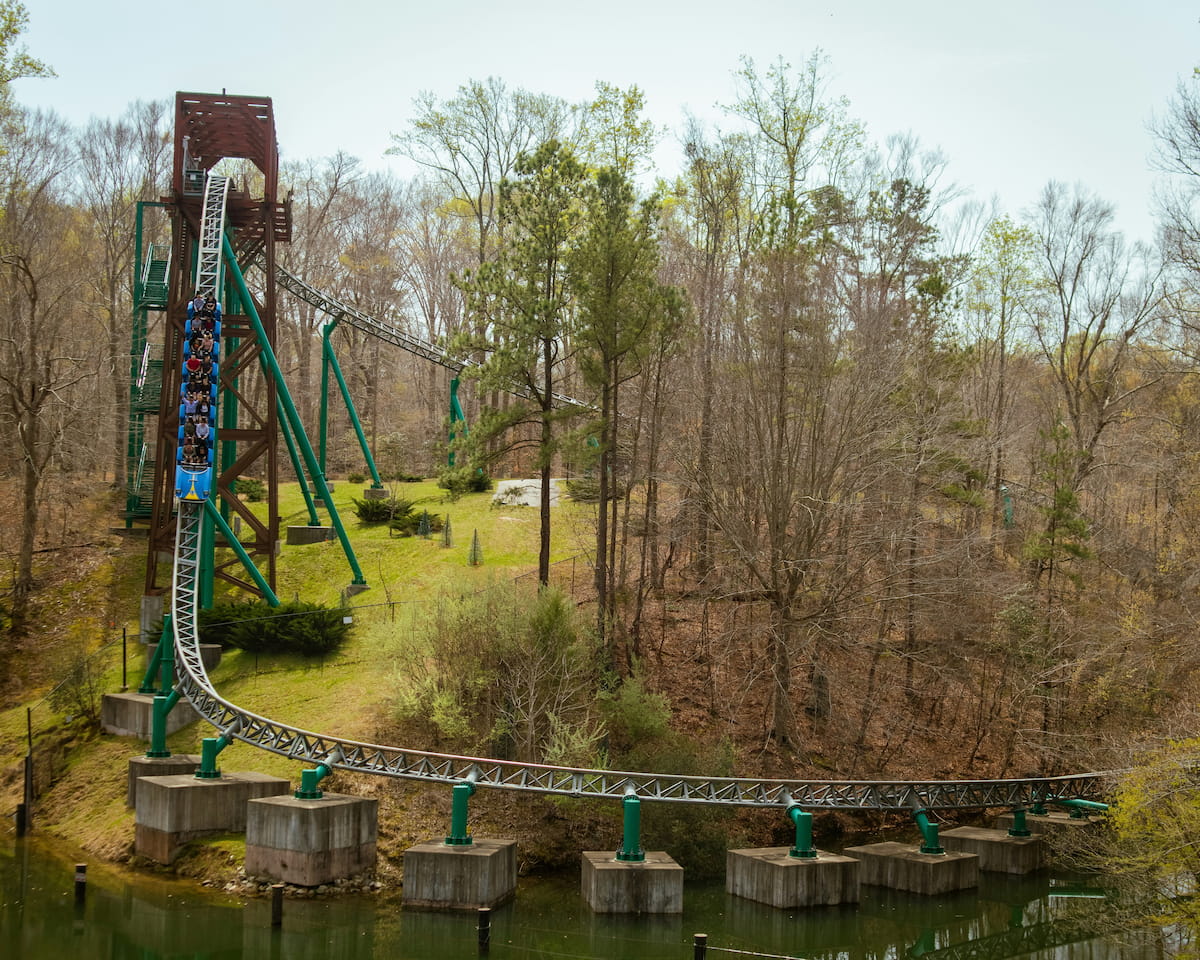
Repeatedly voted one of the most beautiful theme parks on the planet, Busch Gardens Williamsburg is organized into European “countries” — Germany, France, England, Scotland, Italy, Ireland — each with its own architecture, food, entertainment, and rides. The coaster lineup is legitimately world-class: Griffon (305-foot dive coaster), InvadR (Great Coaster International wooden coaster), Alpengeist (inverted), and Apollo’s Chariot (hypercoaster). Families with younger children gravitate toward the Sesame Street Forest of Fun, while teens will want to do the thrill coasters back to back. Gate admission is $117.99 — advance online tickets run $85–$90 for standard dates, a $28–$33 per-person saving that adds up fast for a family of four. Prices verified at buschgardens.com, April 2026.
💡 The Summer Concert Series (included with park admission) has featured headliners from country, rock, and pop — check the Busch Gardens calendar before you book dates, as a concert evening adds real value to a day otherwise ending with dinner and fireworks.
Held on the first Saturday of December, Grand Illumination is Colonial Williamsburg’s signature holiday event and one of the genuinely unmissable family experiences in the Mid-Atlantic region. Thousands of candles illuminate the buildings simultaneously at dusk, followed by a fireworks display over the historic area. The outdoor celebration is free to attend — no Colonial Williamsburg ticket required — though premium seating for some programs carries an additional charge. If your family’s schedule can accommodate a December visit, Grand Illumination alone justifies the trip. Separate holiday programming at Busch Gardens (Christmas Town) runs concurrently.
💡 Grand Illumination draws enormous crowds — arrive by 3pm to claim a viewing position along the Palace Green. The lighting happens at dusk (around 5:30pm in early December), and the entire green fills shoulder-to-shoulder well before then. Book your hotel months in advance for this weekend.
Virginia’s only AAA Four Diamond condominium resort sits directly adjacent to Busch Gardens on 2,900 acres along the James River. The resort offers a private white-sand beach, kayaking and paddleboarding, four on-site restaurants, a full-service spa with 50+ treatments, and two championship 18-hole golf courses. For families, a day at Kingsmill offers a deliberate counterweight to the high-stimulation theme park experience — the river views are genuinely beautiful, the spa provides adult respite, and the lazy river and seasonal pools entertain younger guests. Golf on the River Course runs $85–$150/round depending on season; spa treatments from $95. Verify current pricing at kingsmillresort.com.
💡 Kingsmill operates an excellent children’s program during summer months, allowing parents to book spa or golf time while kids are supervised and entertained. Call ahead to confirm program availability for your dates.
Worth It / Skip It
Don’t Make These Mistakes
Paying gate price at Busch Gardens. At $117.99 per person, gate admission is one of the most expensive entry points for any theme park in Virginia. Advance online tickets run $85–$90 for standard dates, seasonal promotions regularly drop to $70–$82, and the Busch Gardens website always has better pricing than third-party ticket sites. There is no scenario where showing up and paying at the gate makes financial sense. Plan ahead, buy online, save $100+ for a family of four.
Treating Colonial Williamsburg’s Historic Area as a single half-day activity. Most families allocate one morning to CW and spend the rest of the week at Busch Gardens and Water Country. The historic area warrants at least two full days — one for the outdoor streetscape, trade shops, and militia demonstrations, another for the Governor’s Palace, Capitol, Courthouse, and a longer evening program. Families who rush through in a morning consistently report it felt underwhelming. The depth is there, but it requires time to find.
Visiting in July or August without booking hotels 6–8 weeks out. Williamsburg is one of the most popular summer family destinations on the East Coast, and the corridor between Colonial Williamsburg and Busch Gardens fills up fast. Families who book two to three weeks before a peak summer visit frequently find rates 40–60% above what was available six weeks earlier — or no availability at all near the parks. Spring and fall visitors have far more flexibility; summer families need to move early.
Confusing Historic Jamestowne with Jamestown Settlement — and visiting only one. These are two distinct sites, operated by different organizations, telling different parts of the same story. Historic Jamestowne (NPS) is the actual archaeological site on the original island — active digs, real artifacts, real ground. Jamestown Settlement (state museum) is a few miles away and focuses on living-history recreation with replica ships and costumed interpreters. Both are excellent. Both take roughly two hours. Budget a full day for Jamestown if you want to experience both without rushing.
VacayValue Scorecard — Williamsburg, Virginia
Packing List — Williamsburg, Virginia
Never Overpay on a Family Trip Again
VacayValue delivers verified cost breakdowns and budget strategies for the best family destinations in the US and beyond.
Williamsburg Delivers on the Promise — If You Play the Costs Right
No American family destination packs this much genuine substance into a single geography. Colonial Williamsburg is the only living 18th-century colonial capital in existence. Busch Gardens is legitimately world-class. The Historic Triangle connects America’s founding story across three sites in a single scenic drive. The experience quality here is unambiguously 5.0 — the kind of trip where the kids come home having actually learned something they’ll carry for years.
The honest caution: Williamsburg rewards planning and punishes impulsiveness at the ticket booth. Buy Busch Gardens tickets in advance every single time. Use the Colonial Williamsburg multiday ticket if you’re spending more than one day in the historic area. Eat the free breakfast at your hotel. Walk Duke of Gloucester Street before buying a ticket. None of this is sacrifice — it’s the difference between a $2,500 family trip and a $4,000 one for the same five days.
Spring and fall are the seasons of maximum value: mild temperatures, manageable crowds, and hotel rates 20–35% lower than peak summer. If summer is your window, book early and buy every theme park ticket in advance. Either way, Williamsburg stands as one of the few family vacation destinations where the history and the thrills genuinely reinforce each other — neither feels like a compromise on the other.