
Washington DC with Kids 2026: The World-Class Family Trip That Costs Almost Nothing Once You Arrive
19 Smithsonian museums. All free. The Lincoln Memorial at dawn. Free. The National Zoo. Free. Washington DC has the greatest concentration of free world-class experiences of any city in America — and most families don’t realize it until they get there.
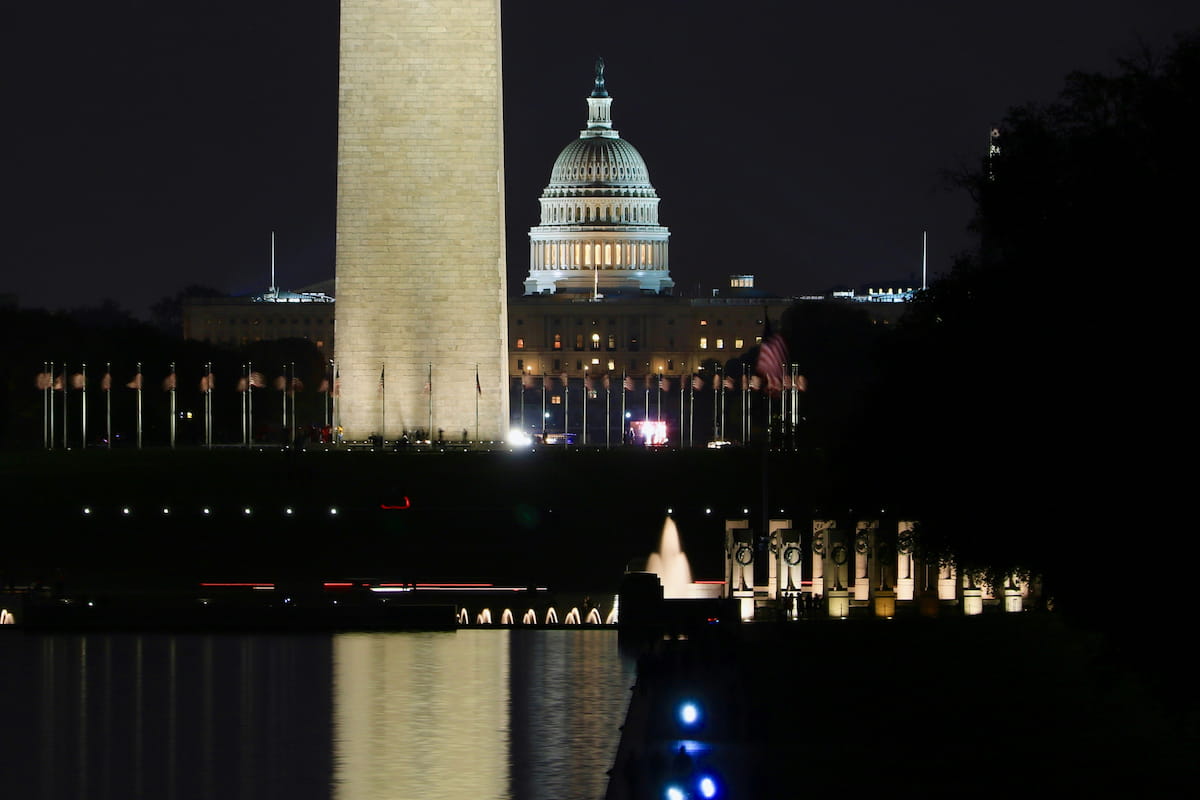
It is 7am at the Lincoln Memorial and the city is still quiet. The Mall stretches out below, the Washington Monument reflected in the pool, the Capitol at the far end. Your kids are standing at the spot where Martin Luther King Jr. delivered “I Have a Dream.” They are looking at the words carved into the stone. Nobody is charging you anything. This is just Tuesday morning in Washington DC, and it costs nothing.
Washington DC has a cost structure unlike any other major city in the world. The Smithsonian Institution — 19 museums including the National Air and Space Museum, the National Museum of Natural History, the National Museum of African American History and Culture, and the National Zoo — is entirely free. The monuments and memorials on the National Mall are free. The National Gallery of Art is free. The US Capitol tour is free. The Bureau of Engraving and Printing is free. The single biggest line item on a DC family trip budget is the hotel, because once you’re in the city, the attractions barely cost anything. That is an extraordinary and underappreciated fact about one of the most culturally significant cities in the world.
What’s In This Guide
📅 Best Time to Visit Washington DC
Best months: May, September, and October. Comfortable temperatures, no extreme crowds, and reasonable hotel rates. Cherry blossom season (late March–April) is spectacular but requires booking months ahead and paying premium prices. July 4th on the National Mall is a once-in-a-lifetime experience worth the summer heat — but book the hotel a year in advance.
Where to Stay in Washington DC
For families, proximity to the National Mall is everything. The ability to walk to the Smithsonian museums, monuments, and the Mall means no transit logistics, no waiting for Metro, and the ability to return to the hotel for a midday break without losing the afternoon. Hotels in this zone are more expensive — but the time savings and the quality of having the Mall as your backyard justify the premium. Prices verified March 2026 on Kayak and TripAdvisor.
citizenM consistently delivers well-designed, compact but comfortable rooms at the most competitive price point near the National Mall corridor. At $135–$200/night it’s among the best-rated budget options in the area — clean, modern, with the essentials families need (good WiFi, comfortable beds, efficient layout). The Capitol Hill location puts you a short Metro ride or 20-minute walk from the Smithsonian cluster. It’s not the Marriott — it’s a smart, efficient base that keeps your budget for the things that matter, which in DC are the free museums you’re going to spend all day in anyway.
The Hyatt Place National Mall sits four blocks from the Mall, between L’Enfant Plaza and Federal Center SW Metro stations, putting every Smithsonian within walking distance. Free breakfast is meaningful for a family — two adults and two kids eating a full hotel breakfast saves $40–$60 off the daily food budget compared to finding breakfast elsewhere. Rooms are modern, spacious by DC standards, and well-suited to families. This is consistently the best-reviewed mid-range option in the immediate Mall corridor — not flashy, but exactly right for a family that plans to spend most of their time walking between free museums.
The Wharf is DC’s most dynamic newer neighborhood — a revitalized waterfront strip along the Potomac with excellent restaurants, waterfront access, and a distinctly un-touristy energy compared to the Mall corridor. The InterContinental is the flagship property, with an outdoor pool, multiple restaurants, and Potomac views. It’s a 10-minute Metro ride or pleasant 25-minute walk to the Mall — slightly less convenient than Mall-adjacent hotels but significantly more interesting as a neighborhood. For families who want a hotel that’s part of the experience rather than just a place to sleep, The Wharf is the best DC option at this tier.
Get the Family Travel Budget Cheat Sheet
Real costs, booking shortcuts, and tips our readers use to plan better family trips. Free when you subscribe.
15 Best DC Experiences for Families
The most important thing to understand before planning a DC family itinerary: you cannot see everything. The Smithsonian alone contains 19 world-class museums. Families who try to do all of them leave exhausted and remember nothing. Pick two or three museums per day, slow down inside them, and let kids lead at the exhibits that capture their attention. The museums are free — you can always come back. The exhausted march between exhibits is what to avoid.
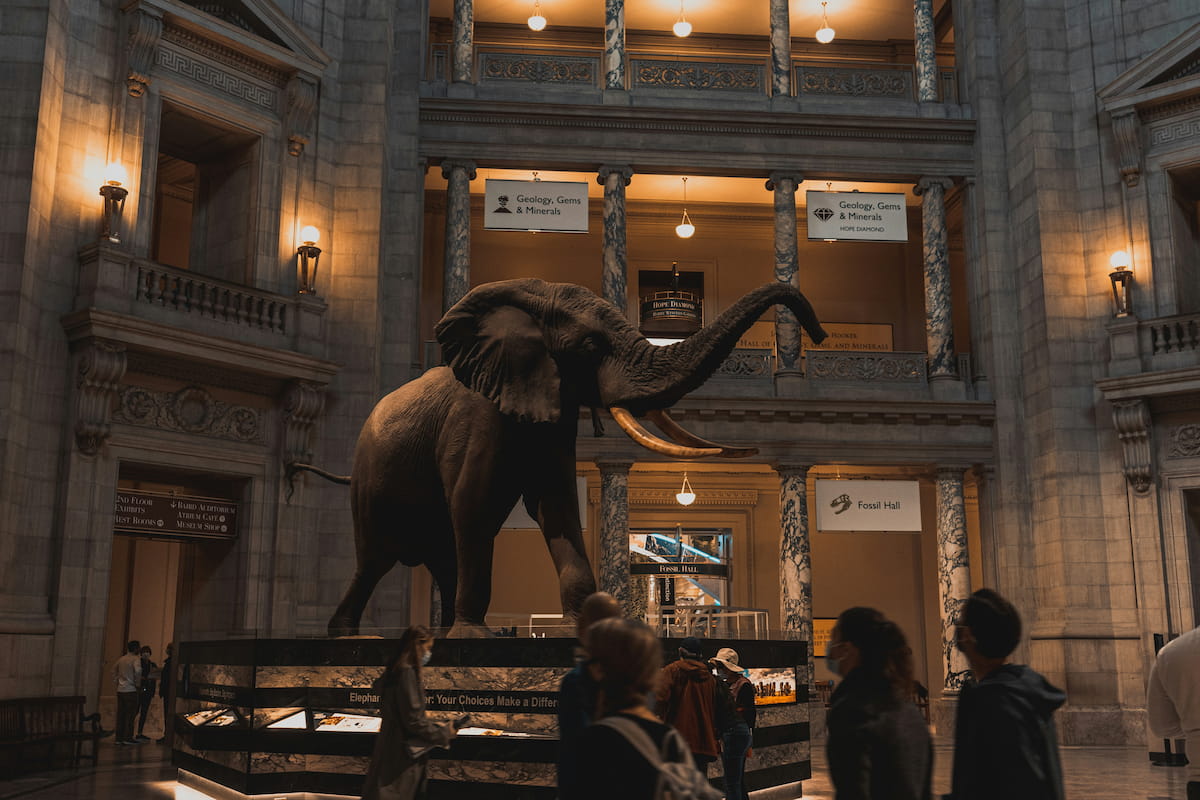
The Natural History Museum’s centerpiece is the Sant Ocean Hall — a 45-foot blue whale skeleton suspended overhead, surrounded by coral reef ecosystems, deep sea creatures, and a live coral display. Beyond it: the Hall of Human Origins with an actual fossil record of human evolution, the Hall of Geology with the Hope Diamond (the largest blue diamond in the world at 45.52 carats, literally just sitting there in a case), and the dinosaur hall recently renovated around a new Nation’s T. rex fossil. All free. No timed pass required for general entry. Allow a full day — the museum is genuinely enormous and deeply rewarding for kids of all ages from 4 to adult.
💡 The Butterfly Pavilion inside the museum is one of the few paid experiences within a Smithsonian — $7/person, timed entry, worth it for younger kids who will experience live butterflies landing on them. The Ocean Hall is free. Dinosaur Hall is free. The Hope Diamond is free. The Pavilion is an optional add-on.
The Lincoln Memorial is open 24 hours a day, every day of the year, and the experience at dawn before the crowds arrive is one of the most powerful things travel offers in the United States. Standing on the steps where Martin Luther King delivered “I Have a Dream,” reading the Gettysburg Address carved into the wall, looking down the reflecting pool toward the Washington Monument — this is the American civic experience at its most elemental and it costs nothing. At 6am on a Tuesday there are maybe twenty other people there. By 10am there are thousands. The alarm clock is the entire investment.
💡 The steps at dawn are also the best place to photograph the Washington Monument reflection — the light is soft, the pool is still, the crowds are absent. The walk from the Lincoln to the WWII Memorial to the Washington Monument takes about 45 minutes at a leisurely pace and covers the core of the National Mall in one sweep.
The Star-Spangled Banner — the actual 30 x 34-foot flag that inspired the national anthem — is on display here, in a specially climate-controlled gallery designed around its scale and fragility. It’s one of the most quietly affecting museum moments in DC. The rest of the museum covers American history with the original Julia Child kitchen, the First Ladies’ gowns, pop culture artifacts, and the history of democracy. For families, the “American Stories” exhibition is the most accessible — it threads major moments in American history through cultural objects kids recognize. Free, no timed pass required.
💡 The Star-Spangled Banner gallery is often overlooked in favor of flashier exhibits — don’t miss it. The scale of the flag, and the context of where it flew and when, lands differently than any description prepares you for. Combine with the Constitution and Bill of Rights documents at the National Archives (free, a 5-minute walk east).
The National Cherry Blossom Festival centers on the 3,000 cherry trees around the Tidal Basin, planted as a gift from Japan in 1912. When peak bloom hits — typically late March to early April, exact dates variable — the Jefferson Memorial and FDR Memorial are surrounded by pink-white canopies that reflect in the water. It is genuinely one of the most beautiful seasonal events in the United States. Entry is free, the area is outdoors and open 24/7, and peak bloom lasts roughly 4–7 days. The trade-off: hotel prices around cherry blossom season are the highest of the year, and the crowds around the Tidal Basin at midday can be extreme.
💡 Sunrise at the Tidal Basin during peak bloom is the move — the light is extraordinary, the crowds are minimal, and the Jefferson Memorial reflection in the still water with pink blossoms overhead is the image everyone is trying to get. By 10am the Tidal Basin is packed. Plan the sunrise visit and then reward the family with breakfast in Penn Quarter.
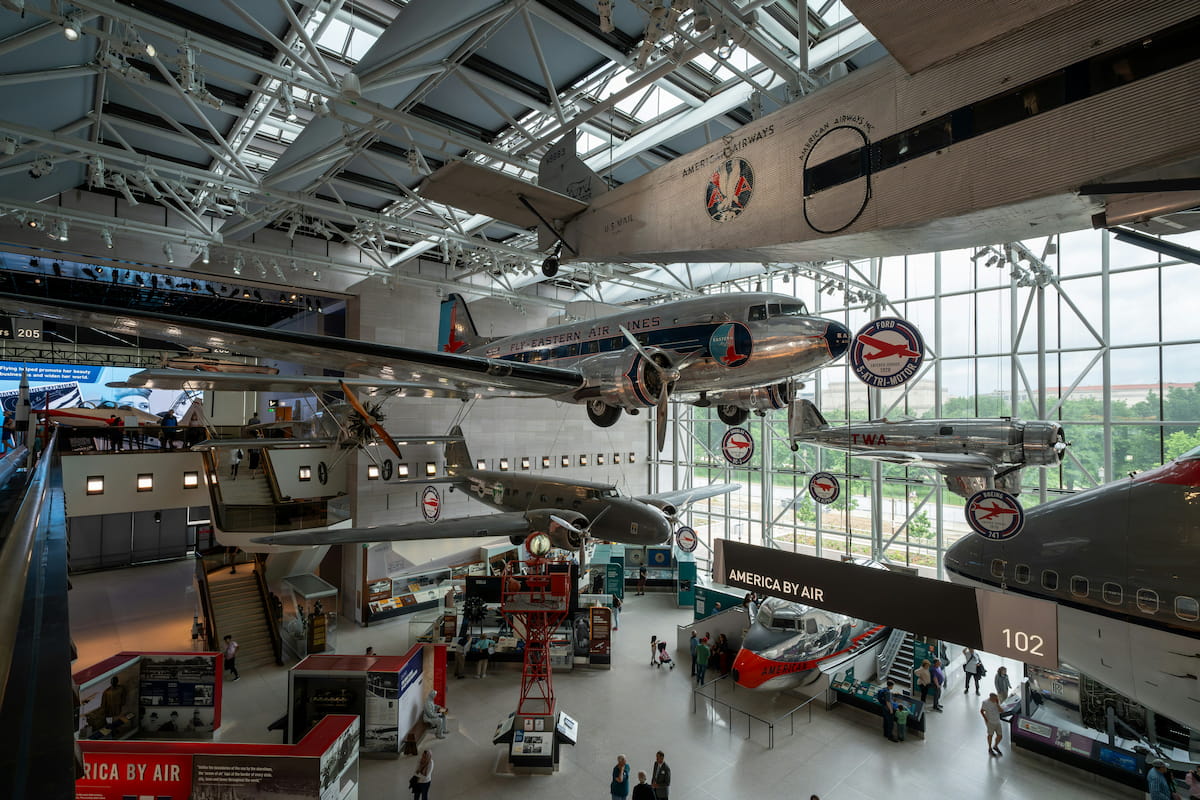
The Air and Space Museum on the National Mall is the most visited museum in the United States — and for good reason. The Wright Brothers’ 1903 Flyer hangs from the ceiling. Apollo 11’s Command Module Columbia is right there at eye level. Lindbergh’s Spirit of St. Louis. A full-size lunar module. The sheer density of original artifacts from the history of flight and space exploration, all free and all accessible to kids who can see them 10 feet away, makes this genuinely irreplaceable. Entry is free but timed passes (also free) are required and released for six-week windows — book well ahead during peak season. IMAX films inside the museum cost extra but are optional.
💡 Book timed passes immediately after the release date opens on the Smithsonian website — they go fast for weekends and school holiday periods. Arrive at opening for the most immersive experience before the school groups arrive. Allow 3+ hours and don’t try to see everything.
The National Zoo is free, world-class, and covers 163 acres in Rock Creek Park — a welcome contrast to the flat formality of the Mall. Giant pandas, African elephants, great apes, lions, and over 2,700 animals total. The zoo is free but timed passes are required and released in advance. It’s a full-day destination for families with younger children — allow 5–6 hours minimum to cover the major exhibits without rushing. The Amazon Trails exhibit and the Elephant Trails habitat are the most popular with kids. It’s about a mile from the nearest Metro (Woodley Park/Zoo/Adams Morgan station on the Red Line).
💡 The zoo is significantly hillier than you’d expect — the main path climbs and descends throughout. Bring a stroller for kids under 5. Pack lunch and snacks — the zoo food is expensive and the lines are long in peak season. Arrive early on weekends; even with timed entry the zoo fills to capacity quickly in spring and summer.
The US Capitol tour is free but requires advance tickets through your Member of Congress or directly via the Capitol Visitor Center website. The tour covers the Rotunda, the National Statuary Hall, and the Crypt, with a guided explanation of the building’s history and the legislative process. For families with kids aged 10 and up, the combination of the architectural scale and the living-history context — this is where laws are actually made, where the nation’s history has played out in this specific building — is genuinely educational in a way that no museum exhibit replicates. The line for walk-up visitors without advance tickets can be very long; book ahead.
💡 Contact your Congressional representative’s office 2–3 months in advance to arrange a tour — they can often facilitate both Capitol and White House tours. The Capitol Visitor Center itself (underground entrance on the east side) is free to enter without a tour and contains significant exhibits on the building’s history.
The NMAAHC is the newest and most in-demand Smithsonian museum — opened in 2016 and immediately became one of the most significant cultural institutions in the country. The building itself, designed by David Adjaye, is a visual statement before you even enter. Inside: a comprehensive history of African American experience in America, from slavery through the Civil Rights Movement to contemporary culture, told through artifacts, oral histories, and immersive design. Timed passes are free but routinely booked weeks to months ahead. Same-day passes are released at 6am and are gone within minutes during peak season. This is the single most important advance booking action for a DC family trip.
💡 Set a calendar reminder for 6am exactly 30 days before your planned visit — that’s when the advance passes open. Check the Smithsonian website the morning of your visit for any released same-day passes. If you can’t get passes for your specific dates, check every morning of your DC stay for last-minute availability.
The Washington Monument observation deck — 554 feet up, offering 360-degree views of the city, the Mall, and Virginia — is free but requires a timed ticket. Tickets are released on a rolling basis and available at the monument’s ticket kiosk beginning at 9am for same-day entry, or in advance through recreation.gov. The view from the top contextualizes everything else you’ve seen on the Mall — the Mall’s full length, the Capitol at one end and the Lincoln at the other, the White House, the Potomac — in a single panorama. For kids who’ve been walking the Mall all day, the elevator ride up and the view out are worth the wait for tickets.
💡 Same-day tickets at the kiosk are distributed starting at 9am and often go quickly on spring and summer weekends. Arriving early (before 8:45am) positions you well. Advance tickets via recreation.gov charge a small booking fee. The elevator ride takes 70 seconds — the view at the top is entirely worth it.
The Bureau of Engraving and Printing is where US currency is printed — billions of dollars per day, on the floor below where you’re standing on a guided walkway. The tour is free but runs on a timed-ticket system from March through August: tickets are distributed at the visitors entrance beginning at 8am for same-day tours, and lines form well before that during peak season. From September through February, tickets are not required. The tour takes 40 minutes and includes the printing floor viewing gallery, where you watch currency being produced, cut, and inspected. Kids find the “how money is made” concept genuinely fascinating at a visceral level that abstract explanations never achieve.
💡 Arrive by 7:30am during peak season for same-day tickets — by 9am they’re frequently gone. The gift shop sells uncut currency sheets and other unique souvenirs. The facility is on 14th Street SW, a 10-minute walk from the Mall and close to several Smithsonian buildings for a combined morning.
The National Archives Rotunda houses the Declaration of Independence, the US Constitution, and the Bill of Rights — the original documents, under argon gas in titanium cases, in a room specifically designed around their preservation and presentation. They are dimly lit and the text is faded, but standing in front of the actual Declaration of Independence — the piece of parchment that started it all, signed by the actual people — produces a feeling that has nothing to do with whether you can read the words. For families with children studying American history, this is the document-level primary source that no reproduction or photograph conveys. Admission is free; timed entry is recommended and reservable at archives.gov.
💡 The Rotunda is the primary draw, but the rest of the Archives building contains rotating exhibits of American historical documents that are often overlooked by visitors focused on the main event. Allow 90 minutes for a full visit. The building is on Constitution Avenue between the Capitol and the Mall museums.
The International Spy Museum at L’Enfant Plaza is one of the few paid attractions in DC that genuinely warrants the admission price — particularly for families with kids aged 8 and up. The museum uses a cover-identity narrative thread (you adopt a spy alias at entry and use it throughout) to guide visitors through the history of espionage, with a genuinely impressive collection of original artifacts: James Bond’s Aston Martin, actual KGB spy equipment, Cold War dead drop devices, cipher machines. The interactive elements hold kids’ attention well. At $25–$34/person the price reflects dynamic demand-based pricing — booking 2+ weeks in advance typically saves 20–30% versus walk-up rates.
💡 Book tickets at least two weeks in advance through the official spymuseum.org website for the plan-ahead discount. Skip if visiting with children under 8 — the conceptual complexity and some of the heavier historical content are best suited to older kids. A family of 2 adults + 2 kids (8+) budgets $100–$125 total; allow 2.5–3 hours inside.
Ford’s Theatre is where Abraham Lincoln was assassinated on April 14, 1865 — the actual theatre, preserved essentially as it was that night, with Lincoln’s box still intact above the stage. Entry to the historic site and museum is free but requires a timed ticket (available online with a $3 convenience fee, or free at the box office subject to availability). The combination of the museum’s artifacts — Lincoln’s blood-stained collar, John Wilkes Booth’s diary — and then standing in the actual theatre where it happened produces one of the most viscerally affecting history-lesson moments available in any American city. For families with Lincoln-curious kids, this is mandatory.
💡 Book tickets online ($3 fee) at least a week ahead — the same-day box office tickets run out quickly during peak season. The Petersen House across the street (where Lincoln actually died) is included with the ticket and is a separate, powerful experience — the room where he died is open to walk through.
The paddle boat rental on the Tidal Basin is one of DC’s most underrated family activities — you’re pedaling on the water between the Jefferson Memorial and the Martin Luther King Jr. Memorial, with the Washington Monument visible across the Basin. The boats are pedal-powered (no prior experience needed), stable enough for children, and the perspective from the water looking back at the monuments is completely different from anything you see on the walking paths. Boats hold 2 or 4 people; the 4-person version has a child seat. Seasonal operation roughly April through October.
💡 The best time is early morning on a weekday when the Basin is calm and the crowds are still at the Smithsonian. Cherry blossom season paddle boats are booked weeks ahead — reserve online. The 90-minute rental is the sweet spot for families: enough time to circle the Basin and stop for photos at the Jefferson Memorial side.
The Fourth of July fireworks over the Washington Monument, watched from the National Mall surrounded by hundreds of thousands of people in the city where the Declaration of Independence was written — this is the American civic experience at maximum intensity. The fireworks display is one of the best in the country, launched from the Lincoln Memorial side of the Mall and visible for miles. Everything is free: the concert, the fireworks, the monuments lit at night. The cost is in the hotel: July 4th week DC hotels book out months in advance and prices are significantly elevated. But for families who can plan ahead, there is no more American experience in travel.
💡 Book your July 4th hotel a full year in advance — this is not an exaggeration. Arrive at the Mall by 2–3pm to secure a good spot for the evening fireworks (show starts around 9pm). Bring blankets, food, and patience. Metro will be packed at every station after the fireworks; expect 60–90 minutes to get back to your hotel. Worth every minute of it.
Worth It / Skip It
Don’t Make These Mistakes
Not booking NMAAHC passes in advance. This is the number one planning failure for DC family trips. The museum is free. The passes are free. They are gone within minutes of release. Book the moment they open — 30 days before your visit, at 6am if necessary. Families who arrive in DC without passes spend valuable trip time trying to get same-day tickets and often fail. This is entirely avoidable with a single calendar reminder set right now.
Underestimating museum distances on the Mall. The Smithsonian museums are spread across the full length of the National Mall — from the Capitol end to the Lincoln Memorial end is approximately 2.3 miles. Walking between the Air and Space Museum on the east end and the Lincoln Memorial on the west end with kids, in summer heat, is a significant undertaking. Plan geographically — cluster museums by location each day rather than bouncing across the full Mall length.
Skipping the gift shop conversation before entering each museum. Smithsonian gift shops are excellent and every kid will want something. The “one small souvenir per museum” conversation before entering — and a defined budget — prevents the end-of-visit negotiation that derails the exit from every museum. A $10–$15 per-kid per-museum budget, agreed in advance, keeps the experience positive.
Not bringing food for Mall days. The Smithsonian cafeterias are convenient but expensive — $15–$20/person for a lunch that isn’t particularly good. Packing sandwiches, snacks, and drinks for Mall days dramatically reduces the daily food budget, and the Mall’s open lawn areas are perfect for a picnic lunch between museums. Many families cut $40–$60/day off their DC food budget this way.
VacayValue Scorecard — Washington DC
Packing List — Washington DC
Every Sunday: One Destination. One Honest Take.
Join travelers who plan smarter. One email per week — real costs, specific advice, no filler.
The Hotel Is the Budget. Everything Else Is Free. That’s the DC Advantage.
Washington DC has an activity cost structure unlike any other city. The museums are free. The monuments are free. The archives are free. The Capitol tour is free. Most families planning their first DC trip don’t fully grasp this until they arrive and realize they’ve been standing in front of the actual Apollo 11 command module for forty-five minutes and haven’t spent a dollar on admission. The budget goes to the hotel and the food — and if you’re strategic about both (stay near the Mall, pack lunch, do breakfast at the hotel), a DC family trip delivers a density of world-class experience per dollar spent that is genuinely extraordinary for an American city.
The honest caveat: hotels near the Mall are expensive, and DC hotel prices have not softened in recent years. This is the primary budget reality, and it’s worth acknowledging plainly. A family spending $200–$320/night on a well-located hotel for four nights is spending $800–$1,280 on accommodation alone. But they’re then spending almost nothing on admission to institutions that any other major world city would charge $20–$40/person per museum to enter. The math works decisively in the traveler’s favor.
Go in October for perfect weather. Go in late March for cherry blossoms if you book months ahead. Book NMAAHC passes the day they open. Stay near the Mall. Wake up early. Slow down in the museums rather than rushing through them. And at least once, stand at the Lincoln Memorial at dawn and let the silence of it do its work.