
New York City 2026: The Expensive City That’s Cheaper Than You Think
Pizza for $3. A free skyline view from 45 floors up. Broadway tickets for half the box office price. NYC rewards the prepared traveler more than almost anywhere else — here’s exactly how to do it.
It’s 9pm on a Tuesday and you’re walking across the Brooklyn Bridge. Lower Manhattan is lit up ahead of you — every tower, every window, every bridge cable caught in orange light. You had a $3 pizza slice for dinner and you’ve spent $42 today, total. You’ve been in New York for three days. You haven’t touched a tourist trap once. This is the city most people never find.
New York has the most undeserved reputation for being impossibly expensive of any major city on earth. The hotels are genuinely pricey — there’s no getting around that. But the food, the views, the culture, the neighborhoods? The city hands most of it to you for free or nearly free, if you know where to look. A well-planned NYC trip runs $150–$250/day all-in. A week at a comparable European capital runs the same or more. The difference is that in New York, people assume they can’t afford it and never try to find out.
What’s In This Guide
📅 Best Time to Visit New York City
Sweet spot: April–May and September–October. The city is at its most beautiful, the weather is walkable, and you avoid both the summer humidity crush and the holiday price spike. Central Park in October with fall foliage is one of the best free experiences in any city in the world.
Where to Stay in New York City
NYC hotels are the one area where the city genuinely doesn’t give you a break. The honest move is to find the best value at the lower end and put the savings into food and experiences. Midtown is the classic first-timer base; Brooklyn gives you better rates and a more interesting neighborhood in exchange for a 20-minute subway ride. Both work — and both are reflected in the calculator above.
Pod Hotels figured out something most NYC hotels haven’t: compact rooms designed well beat large rooms designed poorly. Everything you actually need in a Manhattan hotel room — a good bed, strong WiFi, a decent shower, smart storage — is here. The rooftop bar is a genuinely useful amenity for under $200/night in Midtown, which is as close to a miracle as NYC hotel pricing gets.
citizenM’s Bowery location puts you in the most interesting part of Manhattan — steps from Chinatown, the Lower East Side food scene, and easy subway access everywhere. The rooms are small but the design is genuinely excellent, the communal lounge is a real amenity (not a lobby), and the art collection throughout the building is worth a slow walk on arrival. This is what a premium budget hotel looks like when the execution is right.
If your budget has room for one proper NYC hotel splurge, this is it. The location in DUMBO gives you the Manhattan skyline from across the water — the same view that costs $43 from the Top of the Rock, visible from your room for free every morning and night. The rooftop pool in summer is the best hotel amenity in Brooklyn. The restaurant doesn’t mail it in. And staying in Brooklyn means you experience the city like a local rather than a tourist.
Get the Budget Travel Cheat Sheet
Booking shortcuts, packing hacks, and money-saving moves our readers use on every trip — free when you subscribe.
15 Best NYC Experiences
New York’s best experiences are disproportionately free. The skyline views, the bridges, the neighborhoods, the parks — the city’s most essential character costs nothing. Grouped by cost so you can plan your budget and know exactly where it’s worth spending.
Walk the bridge from Manhattan to Brooklyn, not the other way. You want Manhattan’s skyline in front of you, not behind you. The pedestrian path runs above the traffic lanes and the views are completely unobstructed. It takes 40 minutes at a relaxed pace. Arrive in DUMBO, have a coffee at one of the cafes on Washington Street, then turn around and look back at Manhattan through the arch of the Manhattan Bridge. That photo is one of the most taken in New York for a reason.
💡 Go at dusk on a weekday. The bridge is walkable at any time, but the light at sunset on the Manhattan side is genuinely extraordinary and crowds are lighter mid-week.
A 25-minute ferry ride past the Statue of Liberty, with unobstructed Manhattan skyline views on the return trip — completely free, running 24 hours a day, seven days a week. This is one of the best deals in any city in the world. Buy a coffee at the terminal, get on the front deck, and watch New York shrink and grow as the ferry crosses the harbor. The Statue of Liberty is close enough to see in full detail without paying for the tour boat.
💡 The best Manhattan skyline views are on the return trip from Staten Island. Stand on the upper deck, starboard side. The sunrise return is genuinely worth an early alarm if you’re up for it.
A decommissioned elevated freight railway transformed into a linear park running 1.45 miles through the West Side of Manhattan. The landscaping is genuinely extraordinary — native plants, public art installations, and constantly changing views of the city from 30 feet up. The neighborhoods it passes through (Meatpacking District, Chelsea, Hudson Yards) give you a moving cross-section of New York’s current personality. Start at the south end, Gansevoort Street, and walk north.
💡 The 10th Avenue Square seating area at 17th Street has some of the best people-watching in the city. Bring coffee and stay longer than you planned.
Most visitors walk to Bethesda Fountain, take a photo, and leave. The park rewards deeper exploration. The Ramble — a 36-acre woodland in the middle of the park — feels nothing like Manhattan 50 feet outside its borders. The North Woods in the upper park sees almost no tourists. Strawberry Fields, the Conservatory Garden, the Harlem Meer — these are all free and all excellent. Rent a rowboat on the lake for $20/hour if you want a single paid experience in the mix. The park is 843 acres and most of it is not a tourist destination — it’s just a beautiful park.
💡 The Conservatory Garden on the east side at 104th Street is the most formal and most beautiful section of the park. Almost no one goes there and it’s worth the subway ride to the north end to see it.
Grand Central is not primarily a tourist attraction — it’s a functional transit hub that happens to be one of the most beautiful interiors in America. The main concourse ceiling (turquoise constellation map, cathedral light shafts) earns the detour. The lower concourse has the Whispering Gallery: stand in the corner of the curved corridor outside the Oyster Bar and whisper to the wall. Someone standing in the diagonal corner 40 feet away will hear you clearly. It works because of the arched tile acoustics and it will surprise you every time.
💡 The Vanderbilt Hall events space off the main concourse sometimes hosts free exhibitions. Worth checking what’s on before you visit.
Twenty minutes from Midtown by L train and a completely different city. Bedford Avenue is the main artery — independent restaurants, vintage stores, galleries, record shops, and coffee that takes itself seriously. The East River State Park has waterfront access and direct Manhattan skyline views at no charge. On weekends, Smorgasburg (April–October) sets up in the park with the best food market in the city. Williamsburg is what people mean when they say New York has neighborhoods that feel like their own cities.
💡 Take the L train to Bedford Ave and walk north toward the waterfront. The neighborhood gets better the further you get from the subway stop.
These two neighborhoods together contain the highest density of excellent cheap food in Manhattan. Chinatown: $1 pork buns, $3 dumplings (10 for $3 at Prosperity Dumpling on Eldridge Street), fresh roast duck hanging in windows, bubble tea shops, herbal pharmacies. Cross into the Lower East Side: Jewish delis with mile-high pastrami sandwiches, $3 pizza slices, knish vendors, Katz’s Delicatessen if you’re willing to spend on a pastrami sandwich that’s worth every dollar. This is the New York that’s been here for a hundred years.
💡 Prosperity Dumpling on Eldridge Street — 5 dumplings for $1.75, fried or steamed. They’ve been there for decades and they’re as good as they’ve ever been. Don’t skip it.
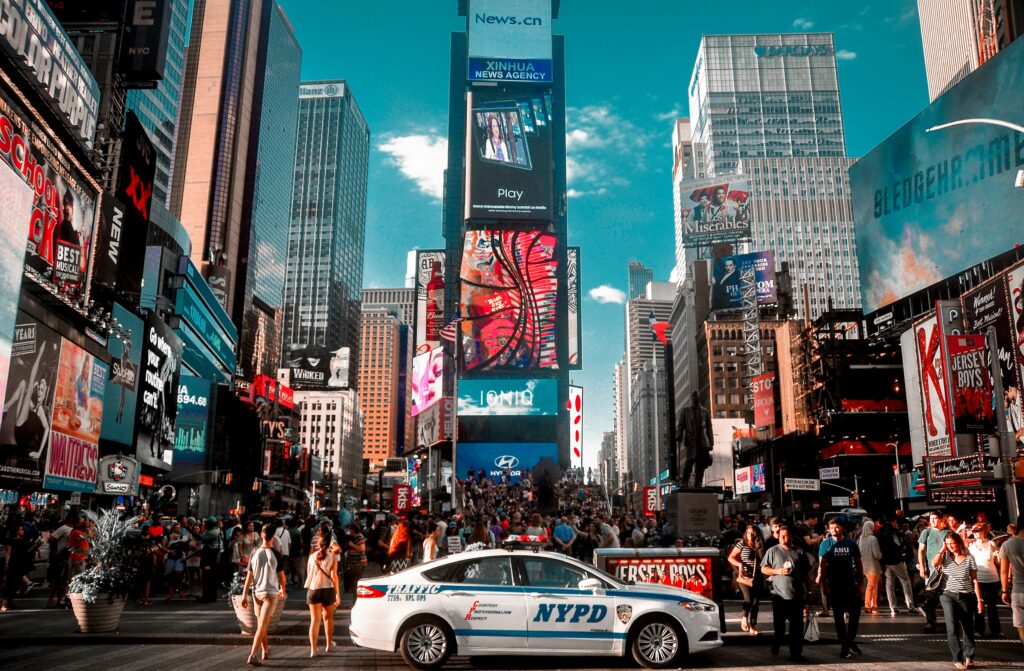
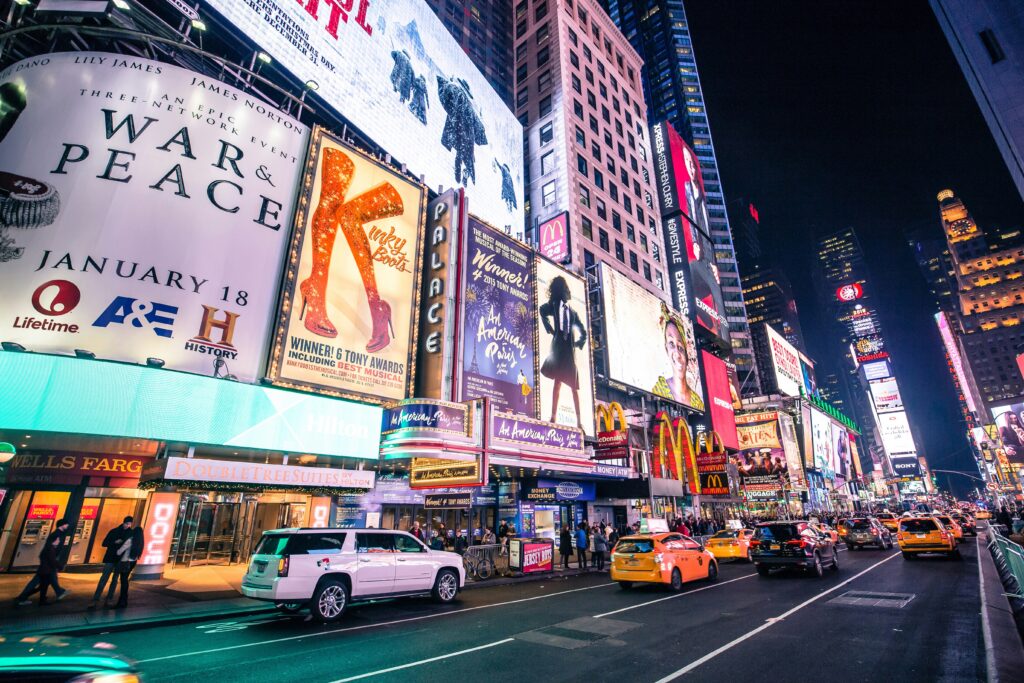
The TKTS booth in Times Square sells same-day and next-day Broadway tickets at 20–50% off box office prices. The booth opens at 3pm for evening shows, 10am for matinees. The selection varies by day — bigger hits discount less, but you can usually find something genuinely good for $70–$90. Off-Broadway shows through the same booth frequently run $40–$60. This is the single most effective way to see a Broadway show without paying full price.
💡 Download the TKTS app before you go — it shows same-day availability in real time so you can plan before walking to the booth. Tuesday and Wednesday evening shows have the best availability.
The Metropolitan Museum of Art is the largest art museum in the United States and one of the finest in the world — 17 acres of galleries holding over two million works across every period of human history. The $30 admission is suggested, not mandatory, for New York State residents; visitors from outside the state pay the suggested rate. Either way it’s one of the best museum values in any city. Set aside a minimum of three hours and use the app to plan which galleries to prioritize — you cannot see everything in a day.
💡 The rooftop sculpture garden (open May–October) has 360-degree views of Central Park and the Manhattan skyline. It’s included with admission and is one of the best free views in the city.
A former Nabisco factory turned into a covered food market that does everything a food hall should do — genuinely good vendors, no tourist-grade mediocrity, walkable layout. The Lobster Place seafood market is the anchor and serves the freshest raw bar in Midtown at reasonable prices. Los Tacos No. 1 consistently has the best taco in Manhattan. Amy’s Bread, the creperie, the wine shop — budget $25–40 and eat well. The market connects to the High Line entrance at 16th Street, so combine both in a single West Side afternoon.
💡 Come hungry and treat it as a lunch destination, not a snacking stop. The full Chelsea Market experience — one main dish, one dessert, one drink — runs $25–35 and outperforms any sit-down restaurant in the neighborhood at that price.
Harlem has two kinds of jazz venues: the celebrated institutions (Minton’s, Ginny’s Supper Club) and the neighborhood spots that have been doing this for decades without much tourist traffic. Both are worth your time and money. The Apollo Theater does not have jazz every night but check the calendar — a show at the Apollo is the kind of New York experience that is genuinely unrepeatable. Showman’s Cafe on 125th Street has live jazz most nights and a $10 cover that is not a tourist price.
💡 Sunday gospel brunch at Sylvia’s runs $35–50 all-in and is a completely different experience from anything else on this list. Book ahead — tables go fast for the 11am and 1pm seatings.
The largest open-air food market in America runs every Saturday at Marsha P. Johnson State Park in Williamsburg and every Sunday at Prospect Park. Eighty vendors representing the full breadth of New York’s food culture — ramen burgers, Taiwanese popcorn chicken, proper Nashville hot chicken, wood-fired pizza, artisan ice cream. Budget $20–25 for a lunch and two snacks. The Manhattan skyline view from the Williamsburg location adds something that no indoor food hall can replicate.
💡 Arrive at opening (11am) to avoid the 1pm crowds and have first access to vendors who sell out. Come with cash — most vendors take cards but cash moves faster.
The Empire State Building gets the reputation, but Top of the Rock at 30 Rockefeller Plaza is the better observatory. The three outdoor observation decks have unobstructed 360-degree views and — critically — you can see the Empire State Building from here, which you cannot see from the Empire State Building. The view of Central Park stretching north with Midtown surrounding it is the most iconic aerial view of New York. Open until midnight, so the nighttime option is always available.
💡 Book the sunset time slot — arrive 30 minutes before sunset, watch the city go from daylight to blue hour to full neon. One ticket covers two scenes for the price of one.
Every major city has a handful of restaurants that are the reason people visit. New York has more than most: Peter Luger Steakhouse in Williamsburg (cash only, reservations weeks ahead, the finest dry-aged porterhouse in America); Katz’s Delicatessen on the Lower East Side (pastrami sandwich, full stop); Rao’s in Harlem if you can get a reservation (nearly impossible, but worth trying). These aren’t just good restaurants — they’re New York institutions in the same category as the museums and the skyline. One dinner that costs real money and is worth every dollar.
💡 Peter Luger accepts reservations via phone and OpenTable. Go with two people minimum — the porterhouse is ordered by size and serves two. Bring cash for the final bill.
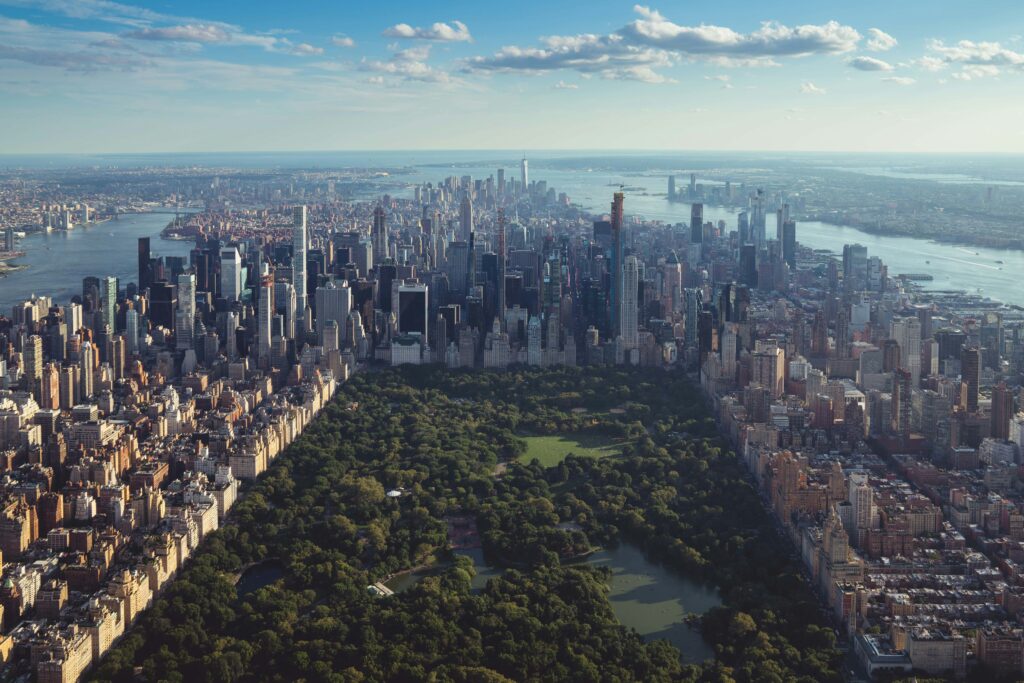
The most expensive item on this list and the most unambiguously worth it if your budget allows one serious splurge. Manhattan from a helicopter at dusk — the grid of streets, the rectangle of Central Park, the bridges, the two waterfronts — is a perspective that reframes everything you’ve seen at ground level. FlyNYON operates from the Downtown Manhattan Heliport with doors-off options for photographers. Blade runs more standard closed-door tours. Both are legitimate. A 12–15 minute flight covers all the major landmarks.
💡 Book the dusk window (roughly 45 minutes before sunset) for both the best light and the transition to city lights. The doors-off option from FlyNYON costs more but the photo results are incomparable if you have a decent camera.
Worth It / Skip It
Don’t Make These Mistakes
Booking the wrong airport without checking transit. JFK, LaGuardia, and Newark all serve New York. LaGuardia has no direct train link — ground transportation can take 90 minutes in traffic. EWR (Newark) requires a train to Penn Station. JFK has the AirTrain + subway connection that, at $11.50 total, is the cheapest and often fastest option. Always check which airport has the AirTrain connection before booking the cheapest flight. Saving $40 on the flight and spending $70 on an Uber is not saving anything.
Planning too many neighborhoods in a single day. The subway map looks compact. The city is not. Walking from the Upper West Side to the Lower East Side takes the better part of an hour on foot and 30+ minutes by train. Plan your days by geography: the Upper West Side + Central Park + Harlem is a day. DUMBO + the Brooklyn Bridge + Lower Manhattan is a day. Mixing Brooklyn with Midtown in a single itinerary costs you two hours in transit and leaves you exhausted instead of exploring.
Visiting in late July or August without a specific plan for the heat. NYC in peak summer is hot, humid, and at maximum tourist capacity. Subway platforms reach 100°F+. Hotel rates stay high regardless. If you’re visiting in summer, plan mornings around outdoor activity (before 11am), afternoons around indoor destinations (museums, galleries, markets), and evenings around the neighborhoods that come alive after dark. Pushing through the heat without a plan is a reliable way to have a bad trip.
Not eating in the outer boroughs at least once. The best food in New York is not in Midtown or the tourist-heavy areas of Manhattan. It’s in Flushing (Queens) for the most authentic Chinese and Korean food in the city, Jackson Heights (Queens) for Colombian and Indian, Arthur Avenue in the Bronx for old-school Italian, and all of Brooklyn. A subway trip to Flushing’s Main Street for hand-pulled noodles or dumplings will be the best $12 meal of your trip. Don’t leave without going at least once.
VacayValue Scorecard — New York City
Packing List — New York City
Every Sunday: One Destination. One Honest Take.
Join travelers who plan smarter. One email per week — real costs, specific advice, no filler.
New York Is the Most Misunderstood Budget City in America. Most People Overpay Because They Don’t Know Where to Look.
The city’s reputation for being unaffordable is earned in one category only: hotels. Everything else — the food, the culture, the neighborhoods, the views, the energy — is either free or far cheaper than the city’s mythology suggests. The subway costs less than $3. The best pizza in the world is $3 a slice. The Statue of Liberty sails past you on a free ferry. The most iconic skyline in the world is visible from a bridge that’s been open since 1883 and costs nothing to walk across.
What separates a $200/day NYC trip from a $400/day one isn’t the quality of the experience — it’s knowing which two or three things are worth paying for and finding the free version of everything else. The answer is almost always: pay for one show, one observatory, one institution restaurant. The rest of the best of New York doesn’t require a credit card.
Go in May or October. Stay in Brooklyn for better rates. Tap your contactless card or grab an OMNY card at the airport. Eat pizza before you eat anything else. Walk across the Brooklyn Bridge at dusk. Save one evening for a show. Come back with a longer plan.