
Bangkok 2026: The Best Value City on Earth (It’s Not Close)
A $5 Pad Thai from a street cart that a Michelin inspector ate at twice. A $70/night hotel with a rooftop pool and city views. Temples that make the Louvre look modest. Bangkok gives more per dollar than any city in the world — here’s how to do it right.
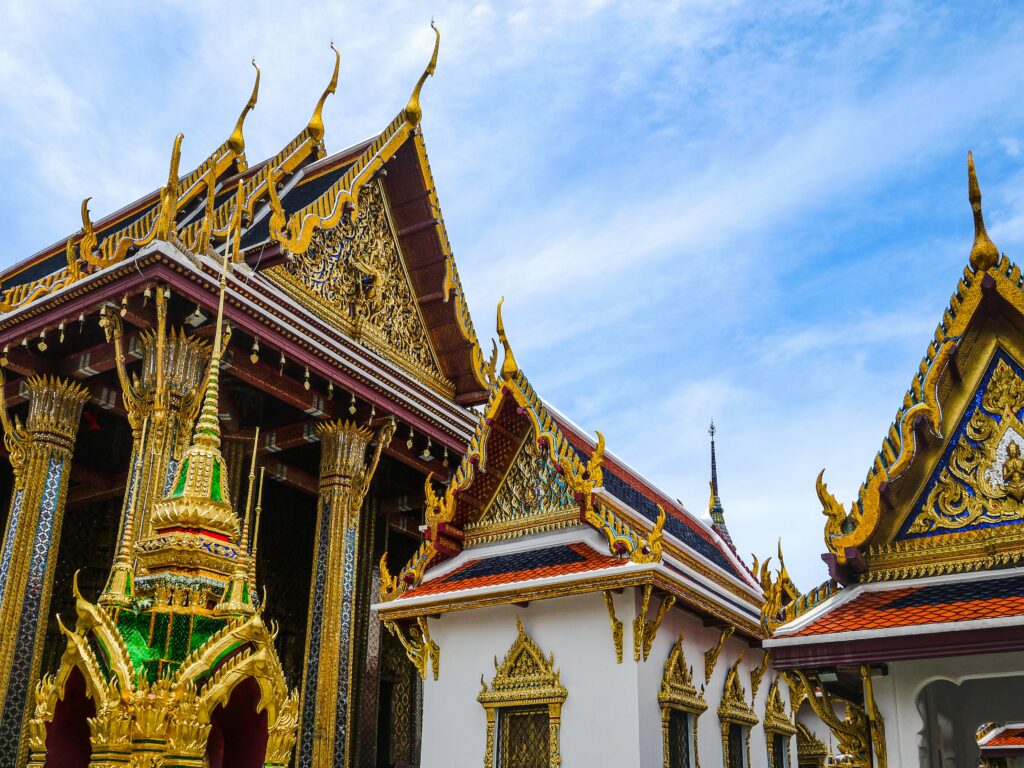
It’s 7pm and you’re sitting on a plastic stool on a side street near Yaowarat, eating the best bowl of noodles you’ve ever had in your life. It cost $2.50. This morning you visited a temple so ornate and gold-covered that it made you feel small in the best way possible. Tomorrow you’re taking a $20 day trip to a city that was the capital of a kingdom that predated the United States by 500 years. You have spent $45 today. You have not compromised on a single thing.
Bangkok is not a budget city in the way that phrase usually implies — it’s not about settling for less or roughing it. It’s a genuinely world-class city where an extraordinary experience costs a fraction of what it would anywhere else. The temples are legitimately among the most impressive structures on earth. The food is among the best in the world. And a very good 3-star hotel with a pool, a great location, and excellent service runs $60–$80 a night. There is no other city in this class at this price.
What’s In This Guide
📅 Best Time to Visit Bangkok
Sweet spot: November through February is Bangkok’s dry, cool season — the most comfortable weather and the most popular period. October is an underrated value pick: dry season is beginning, hotel rates haven’t spiked yet, and the Loy Krathong lantern festival falls in November. The monsoon months (June–August) are the budget traveler’s secret — rates drop 25–40% and the rain mostly falls in afternoon bursts, not all day.
Where to Stay in Bangkok
Bangkok’s neighborhoods have completely different personalities and prices. The single most important rule: stay near a BTS Skytrain or MRT station. The city is enormous and traffic is brutal — a hotel 5 minutes from a BTS station is worth more than an extra star on a hotel 20 minutes from transit. All prices verified March 2026 for standard non-festival periods.
A rooftop pool and BTS access for under $55/night is the Bangkok value proposition in a single hotel. Ibis Styles delivers consistent quality at a price point that seems impossible to travelers used to Western hotel costs. Phra Khanong is a local neighborhood with excellent street food, real markets, and none of the tourist markup of central Sukhumvit — while being 10 minutes on the BTS from anywhere you want to go.
Set in a leafy compound in the Langsuan neighborhood — central Bangkok, but quieter than the Sukhumvit strip. The infinity pool is legitimately beautiful and the service standard at this price would cost three times as much in any comparable global city. Positioned between the upscale Lumpini Park area and the Skytrain, it’s the best base for first-time visitors who want quality, location, and value in the same property.
Bangkok’s best hotel by a margin — and at $200–$350/night, it’s a fraction of what a comparable property in Paris, New York, or Tokyo would cost. The infinity pool extending over the Chao Phraya River at sunset is one of the great hotel views in Southeast Asia. The Auriga Spa, the riverside restaurant, and the private boat service to the Grand Palace area make this one of the few genuine luxury hotel bargains left anywhere. For a special occasion, this is the right call.
Get the Budget Travel Cheat Sheet
Booking shortcuts, packing hacks, and money-saving moves our readers use on every trip — free when you subscribe.
15 Best Bangkok Experiences
Bangkok’s greatest advantage is that its most extraordinary experiences — the temples, the food, the river, the markets — cost almost nothing. Where a signature section exists, it’s not because those activities are expensive by global standards — they’re not — but because they’re significantly pricier than the Bangkok norm and are optional rather than essential.
Bangkok’s Chinatown is the best urban food experience in Southeast Asia. The main street (Yaowarat Road) transforms after dark into a continuous corridor of street food vendors, neon signs in Thai and Chinese, roasting ducks hanging in windows, and elderly vendors who have been cooking the same dish from the same cart for decades. The food quality at street prices is extraordinary — seafood, dim sum, noodle soups, mango sticky rice, grilled meat skewers, and dishes that don’t exist anywhere outside this neighborhood. Budget $10–$15 and eat for two hours.
💡 Take the MRT to Hua Lamphong station (about 10 minutes walk) or a Grab from anywhere in the city. Arrive after 6pm — the vendors set up in the late afternoon and the energy peaks around 8–10pm.
142 acres of parkland in the middle of central Bangkok, ringed by skyscrapers and home to an improbable population of monitor lizards (some over 6 feet long) in the central lake. Early mornings in Lumpini are one of the genuinely unexpected Bangkok experiences — dozens of outdoor exercise groups doing tai chi and aerobics, older Thai residents playing Chinese chess under the trees, joggers on the lake path, and the strange peace of being surrounded by green while glass towers reflect the sunrise above you. Free, completely accessible from the BTS, and one of the best free hours in the city.
💡 The monitor lizards are most visible in the morning along the lake edges. They’re completely harmless and completely enormous — bring a camera with a zoom.
The largest weekend market in the world — 15,000 stalls spread across 35 acres, open Saturday and Sunday. Antiques, vintage clothing, plants, handmade ceramics, street food, live animals, handcrafted furniture, Buddhist art, Thai silk, electronics, and a thousand categories that don’t fit neatly into anything. It’s not primarily a tourist market — most of the customers are Bangkok residents. The prices reflect it. Budget an entire morning or afternoon; a quick visit doesn’t do it justice.
💡 The market is directly adjacent to Mo Chit BTS station. Go Saturday morning — Sunday afternoons are the most crowded. The map available at the entrance gates is worth grabbing; the market is genuinely large enough to get lost in.
The Chao Phraya Express Boat is Bangkok’s river transit system — and also one of the best cheap experiences in the city. The orange-flag and yellow-flag boats run the length of the river connecting the old city temples, Chinatown, the business district, and the riverside hotels. A single journey costs $0.50–$2 and gives you a completely different perspective of the city — the temples and skyline visible from the water, the riverside communities and markets that you wouldn’t find from the BTS. This is how Bangkok residents move, and it’s better than any organized river tour at any price.
💡 Board at Sathorn/Central Pier (connected to Saphan Taksin BTS) and ride north to Tha Chang Pier for the Grand Palace and Wat Pho. Round trip with a stop is about $2 total and 45 minutes of river views each way.
Wat Arun sits on the west bank of the Chao Phraya directly across from Wat Pho — its central prang (tower) is one of the most recognizable silhouettes in Bangkok, particularly at dawn when the rising sun lights its porcelain-mosaic surface gold and pink. The $2 admission is the best value temple ticket in the city. You can climb partway up the main prang on steep ladder-like steps for views across the river toward the Grand Palace. The riverside location makes it best visited by river boat rather than land — the approach from the water is the definitive Bangkok temple moment.
💡 Take the cross-river ferry from Tha Tian Pier (adjacent to Wat Pho) for $0.15. Best photographed from the Wat Pho side at sunrise, or from the boat itself at dusk.
The oldest and largest temple complex in Bangkok, home to a 150-foot gold-plated reclining Buddha that is genuinely difficult to comprehend at human scale until you’re standing in front of it. Wat Pho predates Bangkok itself — built in the 16th century and expanded under Rama I, it holds over 1,000 Buddha images and the temple architecture sets the standard for everything else you’ll see in the city. The massage school in the courtyard has been practicing traditional Thai massage here for generations.
💡 Go at 8am (opening time) before the tour groups arrive. The reclining Buddha hall is narrow — at peak hours you can barely move. At 8:15am you can stand quietly and take it in properly.
The Grand Palace complex is the most significant site in Thailand — the official royal residence since 1782, home to the Emerald Buddha (Thailand’s most sacred image), and one of the most ornate architectural ensembles in the world. The $15 admission covers the entire complex including Wat Phra Kaew. The level of detail — gilded spires, mirrored mosaics, hand-painted murals covering every surface — is legitimately overwhelming. This is not optional on a first visit to Bangkok.
💡 Dress code strictly enforced — shoulders and knees covered. Sarongs available at the entrance. Arrive at 8:30am to beat the tour groups that arrive en masse by 10am.
Wat Pho is the birthplace of traditional Thai massage — the school within the temple complex has been teaching and practicing for generations. A one-hour massage here costs $12–$18, a fraction of what the same technique costs at a hotel spa. The setting within a working temple complex is part of the experience. This is not a tourist version of Thai massage; it is the practice at its source, by practitioners trained in the original lineage.
💡 Book online in advance — it fills up quickly. A two-hour session before an overnight flight home is a legitimate travel strategy. If fully booked, Ruen-Nuad Massage Studio near Silom is the most respected off-site alternative.
Bangkok’s famous floating markets are 90 minutes outside the city. Amphawa is the better choice for value travelers — smaller, less crowded than Damnoen Saduak, and more authentically local in atmosphere. Vendors sell food, produce, and goods from wooden boats on the canal network. The evening firefly boat tour from October to May is genuinely extraordinary — thousands of fireflies lighting the riverside mangroves. The Saturday and Sunday evening market is worth timing a visit around specifically.
💡 Amphawa every time over Damnoen Saduak. Less tourist infrastructure, lower prices, and the evening firefly boats are unique — nothing else like them in the region.
Ayutthaya was the capital of the Kingdom of Siam for 417 years and at its peak was one of the largest and wealthiest cities in the world. The ruins of its temples and palaces — a UNESCO World Heritage Site 45 miles north of Bangkok — are a genuinely humbling place. Headless Buddha statues, crumbling brick prangs, and a tree that has grown around the head of a buried Buddha image over centuries. The train from Bangkok costs $2 and takes 90 minutes.
💡 Rent a bicycle at Ayutthaya for $3–$5 for the day — the main temples are spread across a few miles and a bike is the best way to see them all without rushing. Bring water and sunscreen; there’s almost no shade at the ruins.
Watching Muay Thai live at Lumpinee Boxing Stadium or Rajadamnern Stadium is one of the most distinctly Bangkok experiences available. The atmosphere is electric — experienced gamblers calling odds in the stands, the ritualistic pre-fight Wai Kru ceremony, the genuine athleticism of fighters who have trained their entire lives for this. A full fight card runs 8–12 bouts over several hours. This is not a tourist performance; it is the actual sport, in the actual venue, for actual prize money.
💡 Lumpinee Boxing Stadium runs Tuesday and Friday nights. Check the schedule in advance — major cards sell out. The cheaper seats further from the ring actually give a better view of the full fight than ringside does.
A half-day commitment that pays off long after you leave Bangkok. The skill you leave with — how to balance sweet, sour, salty, and spicy the Thai way — is genuinely transferable. The better schools (Baipai Thai Cooking School, Blue Elephant) include a market visit before the class to source ingredients from the vendors the chef actually uses. You cook 4–5 dishes and eat everything you make for lunch. One of the best $40 investments in Southeast Asia.
💡 Book the morning class with a market visit — the Or Tor Kor Market near Chatuchak is worth the trip alone. The class runs 3–4 hours and includes lunch.
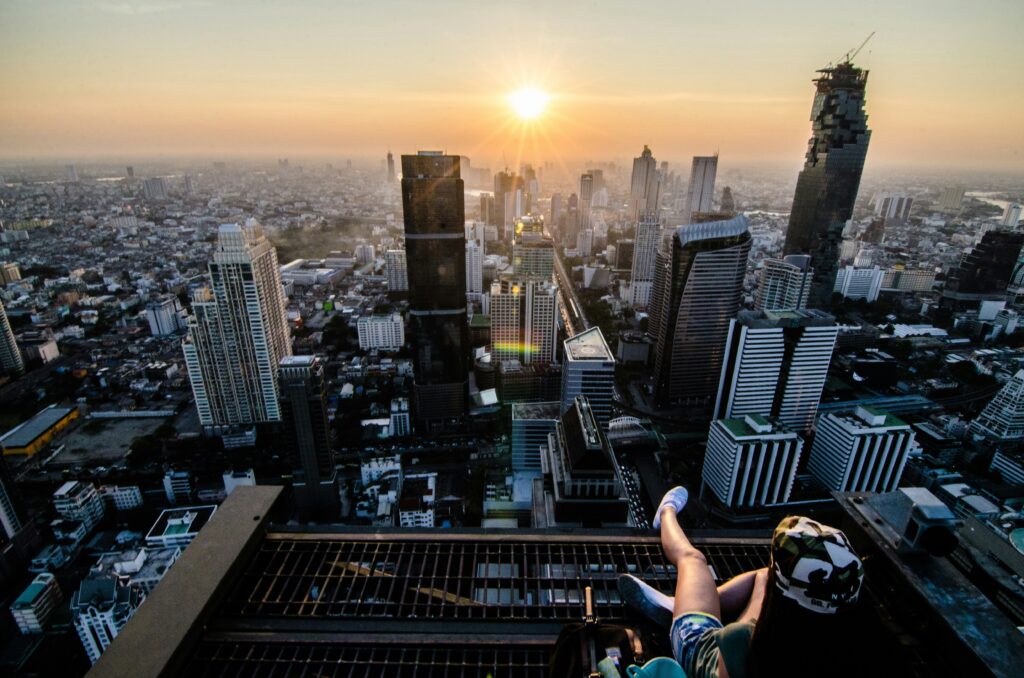
Bangkok’s rooftop bars are among the best in the world — the city’s flat geography and density of high-rises creates 360-degree views impossible in hillier cities. Lebua’s Sky Bar (made famous by The Hangover II) sits at 63 floors. SEEN Bangkok at the Avani+ Riverside is newer, better priced, and has river views Lebua doesn’t. Vertigo at the Banyan Tree is the third option — outdoor seating, restaurant-quality food, slightly more accessible pricing. Not a must-do, but a genuinely memorable evening when the budget allows — and noticeably more expensive than anything else on this list by Bangkok standards.
💡 Book in advance for the 6–7pm sunset slot. The minimum spend at Lebua is real; SEEN and Vertigo are more flexible and genuinely as impressive.
Jay Fai is a Michelin-starred chef who works from an open-air street cart in the old city wearing a ski mask and goggles to protect against the live charcoal she’s cooked over for 50+ years. Her crab omelet ($30) and dry tom yum ($25) are among the most discussed dishes in Bangkok. In a city where you can eat extraordinarily well for $5, $50–$80 per person is a genuine splurge — but the experience of eating Michelin-starred food at a street cart while a 70-year-old woman commands a wok with the precision of a surgeon is not available anywhere else on earth.
💡 Reservations required and book weeks or months ahead. Call directly — the website is unreliable. Worth every bit of the planning effort.
Three hours from Bangkok, Kanchanaburi is the site of the Death Railway built by Allied POWs during WWII — including the famous bridge over the River Kwai. The Allied War Cemetery, the JEATH War Museum, and the original railway tracks through mountain terrain are genuinely moving. The Erawan National Park nearby has a seven-tiered waterfall with turquoise pools that is among the most beautiful natural sites within a day trip of any major Asian city. It’s a full-day commitment and pricier than a typical Bangkok activity — but the most memorable day trip available from the city.
💡 Early start is essential — war cemetery and museum in the morning, Erawan waterfalls in the afternoon. The third and seventh tiers have the best swimming. The train from Thonburi Station ($2) is the most scenic way to arrive.
Worth It / Skip It
Don’t Make These Mistakes
Underestimating Bangkok’s size and traffic. The city has 10 million people and covers an area larger than Los Angeles. Without the BTS, a 5-mile journey can take an hour in traffic. Every day’s itinerary should be planned geographically — don’t mix Old City temples with Sukhumvit nightlife and Chatuchak market in a single day and expect to move efficiently. Plan by neighborhood, stay near the Skytrain, and use Grab only for the last mile.
Not completing the Thailand Digital Arrival Card before departure. Since May 2025, all visitors to Thailand must complete the TDAC (Thailand Digital Arrival Card) online at tdac.immigration.go.th within 3 days before arrival. Airlines check for it and Thai immigration requires it. Doing this at the airport on your phone while jet-lagged is not the move. Complete it the day before your flight.
Visiting the Grand Palace without reading the dress code first. Shoulders and knees must be covered — no exceptions, enforced at the gate. The palace rents sarongs at the entrance but the lines can be long and the rental process adds 20+ minutes. Wear a light long-sleeved shirt or bring a scarf. In Bangkok’s heat, a breathable linen shirt over a tank top is the practical solution.
Using ATMs too frequently. Every ATM withdrawal on a foreign card costs $6–$7 in fees at Thai ATMs. Withdrawing $50 four times costs $24–$28 in fees. Withdrawing $200 once costs $6–$7. Always withdraw the maximum sensible amount in a single transaction. Use a no-foreign-transaction-fee card and withdraw larger sums less often — it’s the single easiest money-saving move in Bangkok.
VacayValue Scorecard — Bangkok
Packing List — Bangkok
Every Sunday: One Destination. One Honest Take.
Join travelers who plan smarter. One email per week — real costs, specific advice, no filler.
Bangkok Is the World’s Best Value City for Travelers. The Gap Between What You Get and What You Pay Is Unmatched Anywhere on Earth.
No city in the world gives you this combination: temples that belong in the conversation with the great architectural achievements of human history, a food culture with multiple Michelin stars and $2 street cart versions of those same dishes, hotels with rooftop pools at $60/night, and a day trip to an ancient capital that predates the United States by four centuries for $20.
The only thing Bangkok gives you that costs a lot is the flight — and on a 7-day mid-range trip, you spend $1,700–$2,100 all-in, less than four nights at a mid-range hotel in Paris. The flight is the Bangkok tax. Everything else is the reward for paying it.
Go in November. Stay near a BTS station. Eat street food as your default and save the restaurant budget for one rooftop sunset and one proper Thai dinner. Do the Grand Palace on your first morning. Take the train to Ayutthaya. Get a Thai massage at Wat Pho before your flight home. Add Bangkok to any Southeast Asia itinerary you’re considering and extend it without hesitation.