
Lisbon 2026: Western Europe’s Last Great Value Capital
The architecture rivals Paris. The food rivals anywhere. The wine costs $3 a glass. Lisbon is what the rest of Western Europe used to be before prices caught up — and in 2026, it still hasn’t caught up entirely.
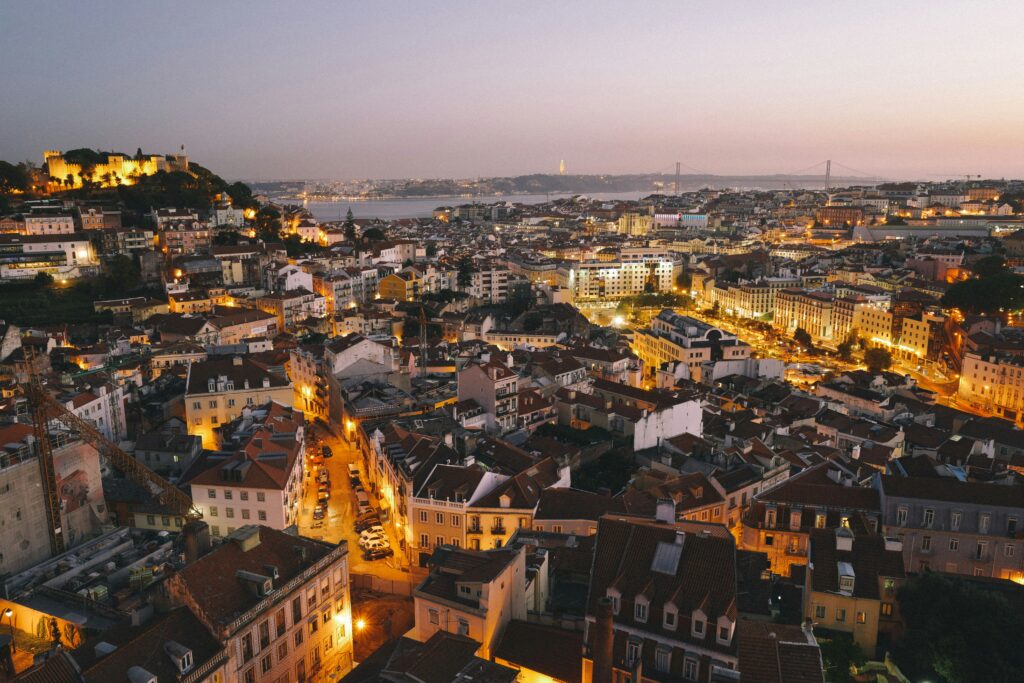
It’s 6pm and you’re sitting at a miradouro — one of Lisbon’s hilltop viewpoints — watching the Tagus River turn gold below you. You have a glass of cold Vinho Verde in your hand that cost $3. The pastéis de nata you had this morning cost $1.40 and they were the best thing you’ve eaten in months. You’ve spent $55 today including the hotel. This is Western Europe. It just doesn’t feel like it should be possible.
Lisbon has been quietly transforming into one of Europe’s most sought-after cities — winning “Europe’s Leading City Destination” two years running, drawing American visitors in record numbers, and pushing hotel prices upward as a result. But it still costs 40–60% less than Paris, Amsterdam, or London for an equivalent experience. The food is better than its reputation. The architecture is unlike anywhere else. And the hills, the trams, the fado, the wine — none of it has been polished into a theme park version of itself yet. That window is still open. Go now.
What’s In This Guide
Best Time to Visit Lisbon
Sweet spot: April–May and September–October. The city is walkable, the miradouros aren’t packed, and hotels run 30–40% below July–August prices. May is particularly exceptional — the Santo António festival at the end of the month fills the Alfama with sardines grilling on every corner and the whole neighborhood dancing in the streets.
Where to Stay in Lisbon — The Neighborhood Decision
Lisbon’s neighborhood choice matters more than almost any other city in Europe. Baixa (the downtown grid) is central and convenient but generic. Alfama and Mouraria are atmospheric but hilly and hard on tired legs. Príncipe Real is the best balance of character, convenience, and value. The key rule: stay within walking distance of a metro station. All rates verified March 2026.
One of the most consistently rated hostels in Europe, set inside the ornate 19th-century Rossio train station — the best transport hub in the city. Private rooms run $70–$100 and include breakfast with views of the city from the terrace. The location puts you 10 minutes’ walk from Alfama, Chiado, and the river. For the price, nothing in the city touches the combination of location, quality, and character.
A converted 18th-century palace on the edge of Chiado — the most elegant neighborhood in Lisbon — with a rooftop terrace looking out over the Tagus. At $130–$200 in shoulder season, this is exceptional value for the caliber of hotel. The restaurant is genuinely excellent rather than coasting on the location. Chiado puts you in the middle of Lisbon’s best independent restaurants, bookshops, and bars within a 5-minute walk in any direction.
A 14th-century palace adjacent to São Jorge Castle in the heart of Alfama — the pool looks directly at the castle walls and the Tagus stretches out below. The history of the building is legitimate: it’s one of the oldest surviving private palaces in Lisbon and the renovation preserved rather than polished it. At $220–$380/night, a comparable property in Paris or Rome would cost twice as much. For a once-in-a-trip splurge in Lisbon, this is the right choice.
Get the Budget Travel Cheat Sheet
Booking shortcuts, packing hacks, and money-saving moves our readers use on every trip — free when you subscribe.
15 Best Lisbon Experiences
Lisbon’s best experiences divide cleanly between free (the neighborhoods, the viewpoints, the trams) and paid (the monuments, the food halls, the day trips). The free tier is genuinely extraordinary. The paid tier is affordable by any European standard.
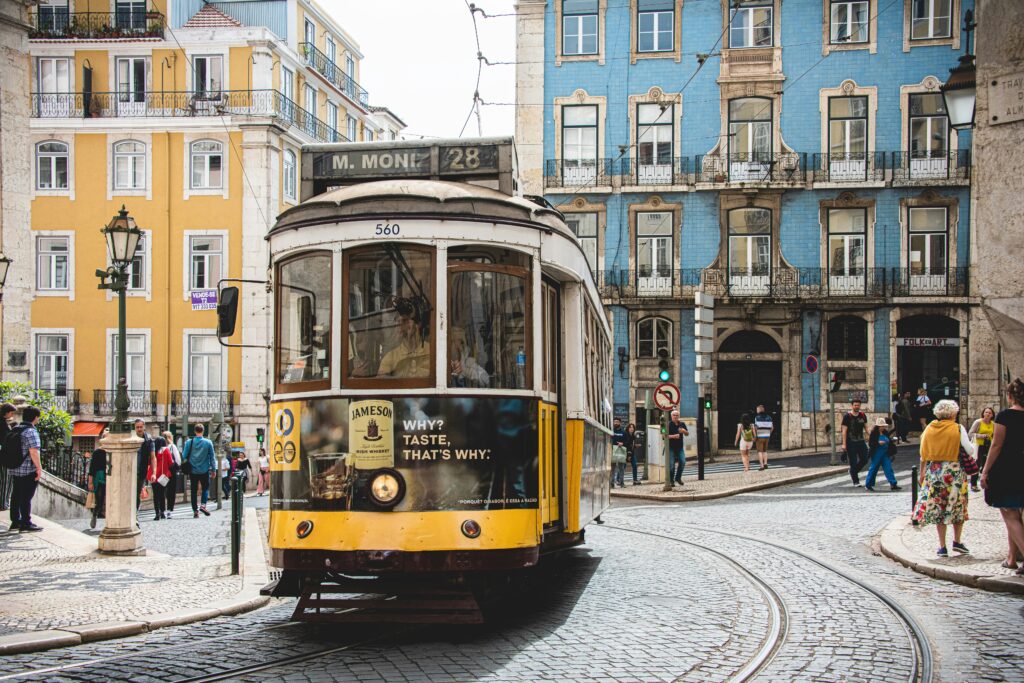
Lisbon is built across seven hills and each one offers a viewpoint — a miradouro — looking out over the terracotta rooftops, the river, and the city below. Miradouro da Graça is the most beautiful and least crowded of the major ones. Miradouro de Santa Catarina is where Lisbon’s young people gather at dusk with bottles of wine. Miradouro da Senhora do Monte is the highest point in the city. All are free, all are open at sunset, and all offer the specific experience of watching a European capital turn gold from above while spending almost nothing. This is Lisbon’s defining experience and it doesn’t cost a euro.
💡 Graça in the early morning and Santa Catarina at sunset are the two essential miradouro visits. Bring a wine from the nearest mini-market ($3) for Santa Catarina — half of Lisbon already has the same idea and it’s one of the great free evening experiences in Europe.
Alfama is the Moorish quarter of Lisbon — a maze of narrow streets, tiled facades, laundry hanging between buildings, and fado music drifting from open doorways. It survived the 1755 earthquake that destroyed most of the city, which means it preserves a Lisbon that’s 500+ years old. Getting lost is the correct approach — follow the sound of fado, find the smallest restaurants, stumble onto viewpoints not on any map. The neighborhood is entirely walkable and entirely free to explore. This is the Lisbon that people describe to their friends when they get home.
💡 The restaurants on the narrow streets of Alfama proper cost 20–30% less than anything on the main tourist-facing streets near Rossio. Wander first, eat second.
A 19th-century textile factory complex in Alcântara transformed into a hub of independent restaurants, bars, bookshops, design studios, and vintage clothing. The Sunday market draws Lisbon residents rather than tourists and is the best weekly market in the city. The complex sits beneath the 25 de Abril Bridge — Lisbon’s own Golden Gate — and the view from the riverside terrace is one of the most photogenic in the city. The restaurants here are genuinely good and priced for the local crowd. Budget an afternoon.
💡 Sunday morning LX Factory market is the most authentic weekly market in Lisbon. Arrive at 10am — the vintage bookshop on the upper floor has extraordinary finds at very low prices and fills up by noon.
The pastéis de nata — flaky pastry shell, custard filling, burnished on top — was invented in 1837 by monks at the Jerónimos Monastery in Belém, and Pastéis de Belém has been making them from the original secret recipe ever since. There is an argument that this is the best thing you can eat in Portugal for under $2. The bakery itself is an institution — tiled walls, marble counters, three generations of staff. Get them fresh from the oven with cinnamon and powdered sugar. Eat them at the counter or take them to the riverside 100 meters away.
💡 The queue always looks worse than it is — it moves quickly. Go at 9am or after 3pm for shorter waits. Every neighborhood in Lisbon has excellent pastéis de nata at local bakeries for $1.20–$1.40, but Belém’s original is worth the trip at least once.
The original Time Out Market, opened in 2014 in the historic Mercado da Ribeira — a covered market that dates to 1882. Around 40 restaurant concepts from some of Lisbon’s best chefs, all in a single hall. Bacalhau com natas from a Michelin-recognized chef. Grilled sardines. Pastéis de nata from multiple bakeries. Portuguese wine by the glass for $3–$5. It’s a genuine food hall — the line at Cervejaria Ramiro for seafood proves that Lisbon residents eat here regularly. Budget $15–$20 for a proper lunch.
💡 Best value move is lunch on a weekday. Avoid Friday and Saturday evenings when finding a table takes 20 minutes. The wine and cheese corner is the most underused section.
The number 28 tram is Lisbon’s most famous transport line — a vintage yellow electric tram that climbs and descends the steepest streets of Alfama, squeezes through alleys barely wider than the tram itself, and passes within feet of the tiled facades that define the city’s aesthetic. The $3.40 fare buys you a moving tour through three of Lisbon’s most atmospheric neighborhoods. It’s part transit, part experience. Go early morning on a weekday for the version that feels like transportation rather than tourism.
💡 Board at Martim Moniz (the northern terminus) rather than midroute — you’ll get a seat. Secure your bag; this tram is notorious for pickpockets in tourist season. A day pass ($7.50) makes this essentially free as part of your transit day.
The Moorish castle that crowns Alfama’s highest hill dates from the 11th century and offers 360-degree views of the city, the Tagus, and the Atlantic in the distance. The archaeological site within the walls has layers of occupation going back to the 7th century BC. The $27 admission is the highest single ticket price in the city and worth it specifically for the views from the towers and walls — the panorama from the castle battlements is the best elevated perspective on Lisbon available.
💡 Go early morning (opens 9am) for the cleanest light and smallest crowds. Take a Bolt to the entrance and walk back down through Alfama rather than climbing in the afternoon heat.
The finest example of Manueline architecture in the world — Portugal’s own Gothic-meets-maritime style, covered in carved ropes, coral, armillary spheres, and nautical motifs. Built in 1502 to commemorate Vasco da Gama’s voyage to India, it is the burial place of Da Gama himself and the poet Luís de Camões. The cloister is the most photographed space in Portugal and earns every photograph. For $20 it’s one of the great value monuments in Europe.
💡 Combine with the nearby Torre de Belém ($16) and Pastéis de Belém bakery for a full Belém morning. The three together take 2.5–3 hours and represent the essential cultural half-day of any Lisbon visit.
Portugal’s most distinctive art form — the hand-painted ceramic tile (azulejo) — has its own museum in a stunning former convent. The collection covers 500 years of tile production, from 15th-century Moorish geometric patterns to contemporary art installations, with the centerpiece being a 118-foot panoramic tile panel of Lisbon’s pre-earthquake skyline. Walking through this museum transforms how you see every building surface in the city. That transformation is worth $11 by any measure.
💡 Take the 794 bus from Praça do Comércio — 15 minutes, drops you directly at the museum. The museum’s cloistered garden café is one of the most pleasant lunch spots in the city at non-tourist prices.
The prato do dia (dish of the day) at a neighborhood tasca is the best single food value in Western Europe. For $10–$15 you get a full lunch: soup, a main course of grilled fish or meat with potatoes and salad, bread, and sometimes a glass of house wine. The food is legitimately good — bacalhau com natas, carne de porco à alentejana, grilled sardines — not a tourist approximation of Portuguese cooking but the actual thing. The tascas furthest from the main tourist circuits are always cheaper and consistently better.
💡 Look for handwritten daily menus in Portuguese on a chalkboard, paper tablecloths, and locals eating lunch. Those are the signals. If the menu is laminated with photos in five languages, walk past it.
40 minutes from Lisbon by train along the Tagus estuary, Cascais is a whitewashed fishing village turned upscale resort town with excellent beaches, a pedestrianized old town, and a promenade stretching to the dramatic Boca do Inferno cliffs. The train runs every 20 minutes from Cais do Sodré station. The beaches at Guincho, 6 miles beyond Cascais by local bus, face the open Atlantic and are considered among the best in continental Europe. Combine both in a day with ease.
💡 Sit on the right side heading out of Lisbon for river views. Guincho beach is reachable by local bus from Cascais or a 30-minute bike ride on a coastal path.
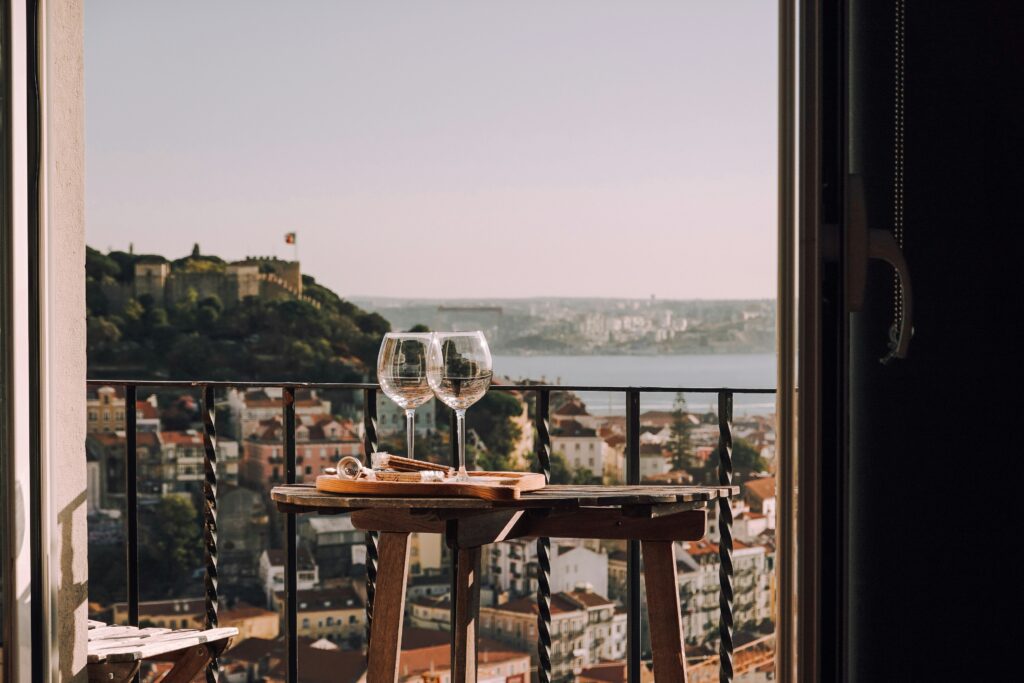
Sintra is 25 miles from Lisbon — a UNESCO World Heritage mountain village packed with extraordinary royal palaces and Romantic-era fantasy architecture. The Palácio Nacional da Pena, perched on a crag above the village in candy-colored Romanticism, is one of the most visually extraordinary buildings in Europe. The Quinta da Regaleira has a garden with an initiatory well that spirals 88 feet underground. The train from Rossio costs $3.50 each way; palace entries run $20–$22 each. Budget the whole day — Sintra rewards time.
💡 Start at Pena Palace before 10am — the hilltop gets extremely crowded by midday. Walk down through the gardens rather than taking the bus back.
Fado — Portugal’s UNESCO-recognized music of longing, loss, and the sea — is best heard in a small Alfama restaurant where the performance is intimate. The fado dinner shows combine traditional Portuguese food with live fado performed by guitarists and singers who have been doing this their whole lives. A fado night in Lisbon is one of the defining European travel experiences. The tourist-facing shows near the main streets are fine; the restaurants further into Alfama that require some navigation to find are better.
💡 Mesa de Frades and Sr. Fado are among the most respected small venues in Alfama. Book 2–3 weeks ahead in summer. Arrive with an empty stomach; the food is genuinely good.
The Douro Valley — three hours north of Lisbon by train — is one of the world’s oldest designated wine regions and among the most dramatically beautiful. Steep terraced vineyards descend to the river, ancient quintas (wine estates) offer tastings and tours. A day trip requires an early train ($30–$40 round trip) and a planned winery visit ($40–$60). It’s the most expensive day on this list and worth it if wine and landscape are your priorities. Book a guided small-group tour for the most efficient way to do it in a single day.
💡 The Alfa Pendular train to Porto takes 2h45 and costs $30–$40 each way. Organized Douro Valley wine tours depart from Porto daily and run $50–$80 including tastings.
Chef José Avillez’s Belcanto has held two Michelin stars since 2014 and consistently ranks among Europe’s best restaurants. The tasting menu reinterprets classical Portuguese cooking through a contemporary lens — bacalhau reimagined, piri piri elevated, petiscos reconstructed. At $130–$180 per person, it is significantly cheaper than a two-Michelin-star tasting menu in Paris, London, or Barcelona. In the context of Lisbon’s overall value, it’s one of Europe’s best-value fine dining experiences.
💡 Reservations open 60 days in advance and fill within hours. Set a calendar reminder. The lunch tasting menu is slightly shorter and $20–$30 less per person.
Worth It / Skip It
Don’t Make These Mistakes
Booking in July or August without accounting for the price spike. Lisbon’s peak summer sees hotel rates jump 40–60% over shoulder season. The same boutique hotel that costs $120 in May costs $200 in July. If your dates are flexible, April, May, September, or October give you the same city — the same weather, the same food, the same monuments — at significantly lower cost and with noticeably fewer crowds at the miradouros and Tram 28.
Not watching for pickpockets on Tram 28. This is the most pickpocket-active location in Lisbon — the tram gets crowded, the stops are frequent, and the distraction of the views makes passengers inattentive. Keep your bag in front of you, use an inside pocket or money belt for your phone and wallet, and stay aware of who is standing close to you. It doesn’t stop being a great experience — it just requires basic awareness that most city tourists would apply automatically.
Skipping Sintra because it sounds too far. 25 miles by train that takes 40 minutes from central Lisbon and costs $3.50 each way. Sintra is one of the most visually extraordinary places in Western Europe — Pena Palace alone is worth the trip. Most visitors who skip it do so because it sounds logistically complicated; in reality, the Rossio–Sintra train is straightforward and runs constantly. Budget a full day and go early.
Eating every meal in the tourist circuit. Lisbon has one of the worst tourist restaurant traps in Europe — streets lined with restaurants serving mediocre Portuguese food at twice the price to visitors who don’t know better. The fix is simple: walk two blocks from any major monument or tourist attraction before sitting down. The quality doubles and the price halves. Look for handwritten menus in Portuguese, paper tablecloths, and tables filled with locals eating lunch.
VacayValue Scorecard — Lisbon
Packing List — Lisbon
Every Sunday: One Destination. One Honest Take.
Join travelers who plan smarter. One email per week — real costs, specific advice, no filler.
Lisbon Is What the Rest of Western Europe Used to Be. It Won’t Stay This Way Forever — Go Now.
There is a version of Lisbon that’s becoming a premium European capital — rising hotel prices, increasing tourist infrastructure, the slow erosion of what makes the city feel like itself rather than a curated version of itself. That version is arriving. It has not yet arrived.
What you still have in 2026 is a city with one of the most beautiful urban landscapes in Europe, a food culture built around honest cooking at honest prices, wine that costs $3 at a neighborhood bar, and neighborhoods that still feel like neighborhoods rather than attractions. The architecture is extraordinary. The light is extraordinary. The fado is extraordinary. And for 40–60% less than Paris, you experience all of it.
Go in May. Stay in Príncipe Real or Chiado. Eat at local tascas at lunch and spend that savings on a fado dinner. Walk to every miradouro you can find at sunset. Take the train to Sintra on day three. Come back richer in the ways that matter.