
Los Angeles: The World’s Best Beach City (If You Know How to Drive It)
Free world-class museums. Free beaches from Malibu to Manhattan. $3 street tacos on every corner. LA has a reputation for being ruinously expensive — and it is, if you let it be. The version where it isn’t is accessible, extraordinary, and 72°F year-round.
It’s 8am and you’re at the Getty Center — one of the world’s great art museums — and admission is free. You drove 20 minutes from Venice with the windows down and the Pacific glinting to your left, and now you’re standing in front of Van Goghs and Monets in a building that cost a billion dollars and charges you nothing. Afterward you’ll drive to El Matador, park for $8, and have the most dramatic coastal cove in Southern California essentially to yourself. For lunch, two carne asada tacos from a truck on Lincoln Boulevard cost $6. This is LA on a budget. It’s a different city than the one that gets written about.
Los Angeles is expensive if you stay at a Beverly Hills hotel and eat at celebrity restaurants and valet park everywhere. It is significantly less expensive — and often extraordinary — if you understand that the city’s best experiences are almost universally either free or very cheap. The beaches cost nothing. The hikes cost nothing. The Getty, the Griffith Observatory, the Farmers Market — all free. The car rental is unavoidable and is the largest daily cost you’ll face. Everything else is negotiable. This guide is for the LA that rewards people who actually drive it.
What’s In This Guide
📅 Best Time to Visit Los Angeles
Sweet spot: September and October, or January through April. September is arguably the finest month in all of Southern California — the summer crowds have thinned, the water is at its warmest, the sky is clear, and hotel rates drop 20–30% from the August peak. March and April offer the added advantage of green hills before they turn golden and some of the year’s most competitive hotel pricing.
Where to Stay in Los Angeles
In a city this sprawling, neighborhood choice determines your entire experience. Venice and Santa Monica put you on the beach but at a 30–40% price premium. Culver City, West LA, and El Segundo give you excellent access to the coast and the freeway network at significantly lower rates. The non-negotiable: stay somewhere near a freeway on-ramp. LA’s grid is only navigable from the freeways. All rates verified March 2026.
A Hostelling International property 2 blocks from the Santa Monica Pier — private rooms with en-suite bathrooms in a well-run hostel 5 minutes’ walk from the beach. At $80–$110 for a private room, it’s far cheaper than any hotel in the immediate Santa Monica area. The in-house bike rental puts Venice Beach (2 miles south along The Strand) and the Santa Monica Farmers Market within easy reach without dealing with parking. The location on 2nd Street is exceptionally walkable by LA standards — the Third Street Promenade, the beach path, and a strong restaurant scene are all within a 10-minute walk.
The definitive Venice Beach hotel — a short walk from the boardwalk, Muscle Beach, and the skate park that defines the neighborhood. The rooftop bar has one of the best sunset views on the Westside and is open to non-guests, making it worth a visit even if you’re staying elsewhere. At $160–$240 in shoulder season, it delivers an authentic Venice experience at a price that doesn’t require a second mortgage. The rooms facing the ocean are louder (Venice Beach boardwalk is active until midnight) but the views are extraordinary.
The only hotel in Los Angeles with direct private beach access — a shingled Cape Cod-style property at the edge of the Santa Monica sand, where the Pacific is audible from every room and the pool deck sits at the waterline. One Pico, the hotel restaurant, is one of the finest dining rooms in the city. The Shutters aesthetic — beach house luxury, whitewashed wood, deep soaking tubs, ocean views from the bath — is what every Santa Monica hotel promises and only this one delivers without compromise. At $600–$1,000+, it is genuinely expensive. It is also genuinely the finest beachfront hotel in Southern California.
Get the Budget Travel Cheat Sheet
Booking shortcuts, packing hacks, and money-saving moves our readers use on every trip — free when you subscribe.
15 Best LA Beach Experiences
Los Angeles has one of the strongest free experience tiers of any city in the United States — free world-class museums, free beaches from Malibu to the South Bay, and free hiking with some of the most dramatic urban views on earth. The paid tier covers studio tours and theme parks. The car unlocks all of it.
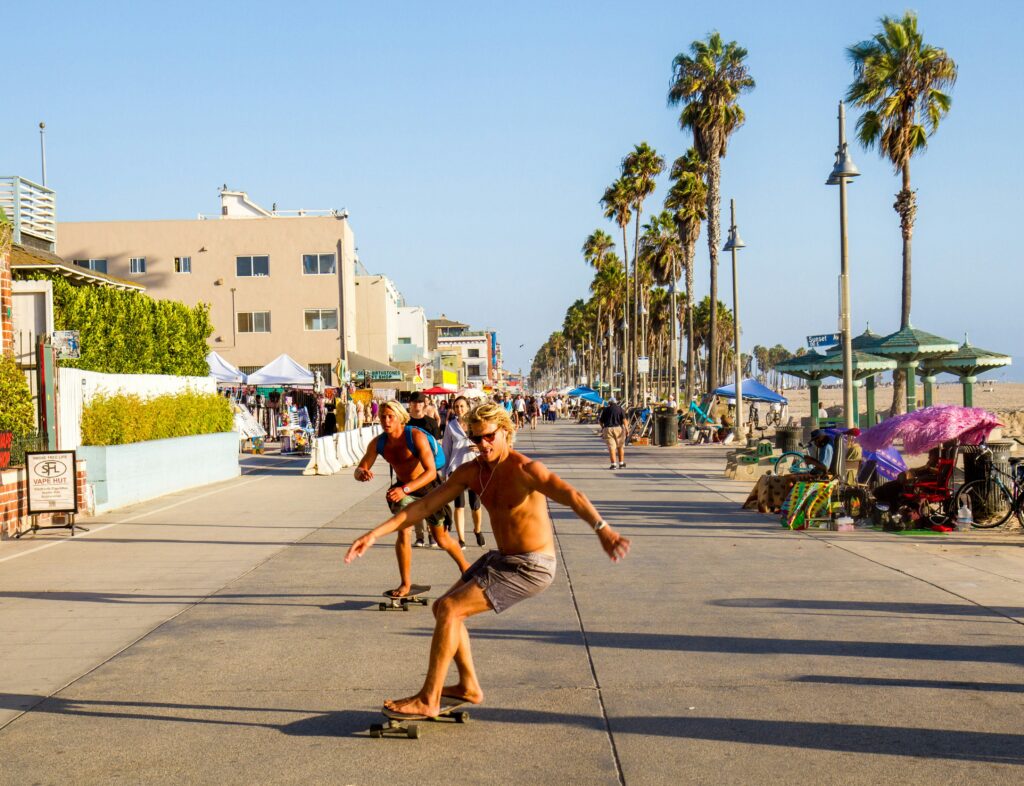
The Venice Beach Boardwalk is one of the great free spectacles in the United States — a mile-long promenade where bodybuilders work out in an outdoor gym originally used by Arnold Schwarzenegger, skaters carve the outdoor skate park, street performers do things that are technically impossible, artists sell work from stands, and the Pacific glints at the end of every perpendicular street. It is loud, unpredictable, and thoroughly LA in a way that no curated attraction replicates. The beach itself is free. The Boardwalk is free. The skate park is free. Walking south from Venice toward Santa Monica along The Strand — the paved beachside path that runs 22 miles from Pacific Palisades to Redondo Beach — is one of the finest free walks in California.
💡 Go on a Sunday morning for the full Venice experience — the drum circle starts around noon at the south end of the Boardwalk, the skate park is at its most active, and Abbot Kinney Boulevard (one block east) has the best independent brunch spots in LA. Arrive before 10am for free street parking on the surrounding residential streets.
The Griffith Observatory on the southern slope of the Santa Monica Mountains is the finest free viewpoint in Los Angeles — looking south over the entire LA basin from Downtown to the Pacific, with the Hollywood Sign visible on the ridge above and the city grid stretching to the horizon in every direction. The Observatory itself (free) has telescopes open to the public on clear evenings and a planetarium show ($8) that’s worth the ticket. The hike to the top from the parking lot is 20 minutes through Griffith Park — 4,300 acres of wild hills in the middle of the city, with 50+ miles of trails. The Runyon Canyon hike nearby offers similar views with a steeper approach and a more social trail culture.
💡 Drive up Los Feliz Boulevard to the Observatory parking lot (free, fills early on weekends — arrive before 9am). The east terrace looking over Downtown LA and toward the San Gabriel Mountains is the best viewpoint. Sunset from the west terrace, with the city going orange below the Pacific, is the definitive free LA experience.
The J. Paul Getty Center sits on a ridge in the Santa Monica Mountains with 360-degree views of the Los Angeles basin, the Pacific, and the San Gabriel Mountains — and charges nothing to enter. The collection includes Van Gogh’s Irises, Monet’s Wheatstacks, Rembrandt, Turner, Degas, and one of the finest collections of Baroque European decorative arts in the world. The architecture by Richard Meier, the gardens by Robert Irwin, and the travertine terraces looking out over the city are themselves extraordinary. This is a genuine world-class art institution that happens to be free.
💡 The free Getty shuttle departs from the paid parking lot on Sepulveda near the 405 — park there for $5 instead of $25. The museum is less crowded on weekday mornings. The outdoor café and garden terrace are open to all visitors without a gallery ticket — bring your own picnic for the views and eat for free on the terrace.
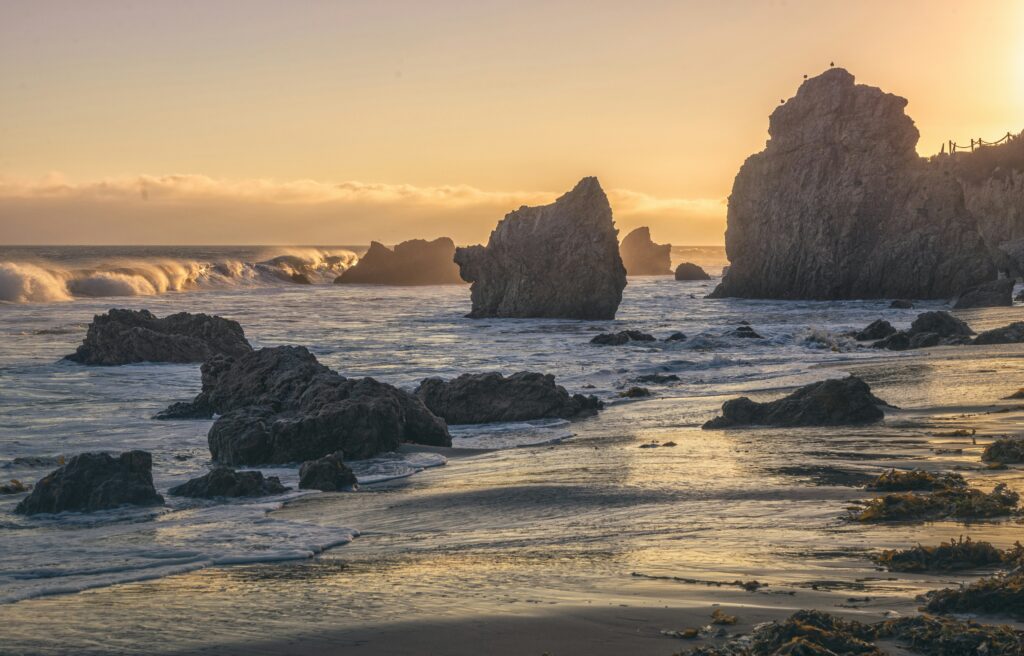
El Matador is the most dramatic beach in Southern California — a sea stack beach 35 miles north of Santa Monica in Malibu where ancient rock formations create arches, caves, and tide pools in configurations that look painted. The beach is reached by a steep trail from the clifftop parking lot, and the resulting seclusion means it rarely feels crowded even on weekends. Three connected coves — El Matador, El Pescador, and La Piedra — can be explored on foot over 2–3 hours, with the rock arch at El Matador’s north end being the most photographed formation. At $8 for the day-use parking permit, it is the finest single dollar-for-dollar natural experience available in LA County.
💡 Arrive before 9am to guarantee parking — the small lot fills quickly on weekends. Wear shoes you can get wet; the tide pool exploration requires scrambling over slippery rocks. Check tide charts before going — low tide reveals the best caves and the largest tide pools.
The 27-mile stretch of Pacific Coast Highway through Malibu contains three entirely different beach personalities within 6 miles of each other. Point Dume State Beach — a headland of volcanic rock with a hidden cove and wide surf beach accessible by a trail over the bluff — is one of the most beautiful natural settings in LA County. Zuma Beach is the wide, powerful surf beach where LA lifeguards train; 2,600 feet of open ocean with consistent waves and the broadest expanse of sand in the area. Paradise Cove is a sheltered private beach ($40 parking, waived with restaurant purchase) with calm water and the cinematic quality of every Malibu beach scene ever filmed. Hit all three in a day by car.
💡 Point Dume first (hike the bluff trail for views of the entire Malibu coastline), then Zuma for the surf, then Paradise Cove for dinner as the sun goes down. The Paradise Cove Beach Café is expensive ($35–$55/person) but justifies the parking fee. Alternatively, pay the $40 and bring your own food — the cove itself is worth it.
The Strand is a 22-mile paved beachside bike path running from Pacific Palisades to Torrance — one of the great urban cycling routes in the world. Renting a beach cruiser from Venice ($15–$25/day) and riding south through Santa Monica, Marina del Rey, Playa del Rey, Manhattan Beach, Hermosa Beach, and Redondo Beach gives you 6 cities of coastline with the Pacific constantly on your right. Each neighborhood has a distinct character — Venice’s boardwalk energy transitions to Santa Monica’s polished promenade, then to the quieter family beaches of the South Bay. The whole route south to Hermosa Beach is 14 miles and takes 1.5–2 hours at an easy pace with stops.
💡 Rent from one of the shops on Washington Boulevard in Venice — they’re $5–$8 cheaper than beachfront rental stands and the bikes are better maintained. Ride south (the wind is usually at your back in the morning) and Uber back from Manhattan Beach if you don’t want to return on the bike.
Grand Central Market in Downtown LA is a 1917 public market hall that houses 40+ vendors serving food from across the world — pupusas, Thai noodles, French pastries, Mexican tortas, Ethiopian injera, and the famous Egg Slut breakfast sandwich that consistently has a 40-minute line for reasons that can only be understood by eating one. A serious meal here runs $12–$18. The surrounding Downtown blocks support one of the finest taco cultures in the country — Guerrilla Tacos on Regent Street, Sonoratown on Olympic, and the birria taco trucks on Union Avenue are the specific destinations worth seeking out.
💡 Grand Central Market is best on a weekday — weekend lines for the most popular stalls can be 20–30 minutes. Arrive at 11am before the lunch rush. The taco trucks on Union Avenue and in East LA are a 10-minute drive east of Downtown and represent the highest quality at the lowest prices — $2.50–$3.50 per taco with no tourist markup.
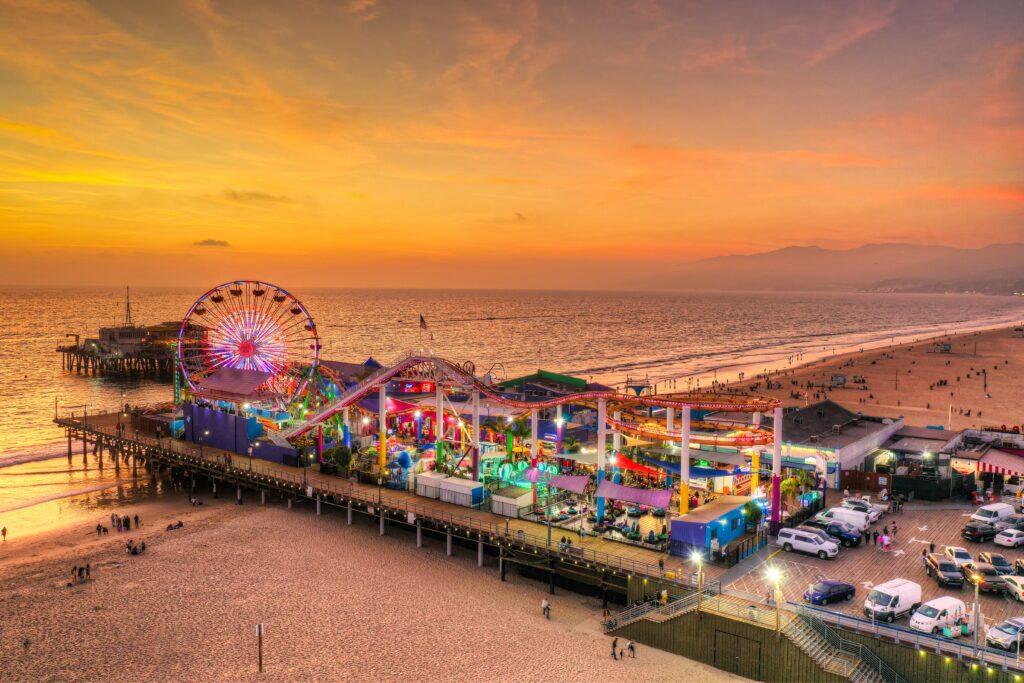
The Santa Monica Pier is one of the most iconic structures on the West Coast — a 100-year-old timber pier jutting into the Pacific with an amusement park, a trapeze school, a fishing deck, a historic carousel, and the western terminus of Route 66 marked by a sign at the base. Walking the pier costs nothing. The Pacific Park amusement rides run $5–$10 each or $40 for an all-day wristband. The view from the end of the pier looking back at the Santa Monica Mountains and the sweep of the bay at sunset is one of the great LA vistas. The Farmers Market two blocks east (Saturday mornings) is the best weekly market on the Westside and costs nothing to browse.
💡 The pier is best experienced at sunset — the light on the Ferris wheel from the beach below is one of the most photographed images in California for good reason. The trapeze school (about $65/session) is one of the more unexpected great LA experiences if you’re looking for something active.
Los Angeles has two genuinely exceptional contemporary art institutions. LACMA — the Los Angeles County Museum of Art — is the largest art museum in the western United States, with a collection spanning 6,000 years and the iconic Urban Light installation of 202 cast-iron streetlamps that is the most photographed public art in California. At $20, it is excellent value for the breadth of the collection. The Broad in Downtown LA ($30) focuses exclusively on contemporary art — Koons, Basquiat, Cindy Sherman, Roy Lichtenstein — in a building designed to maximize natural light, with Yayoi Kusama’s Infinity Mirror Rooms as the centerpiece. Both institutions are significantly better than their national profile suggests.
💡 The Urban Light installation at LACMA’s Wilshire Boulevard entrance is free and open 24 hours — one of the finest free photo opportunities in LA, especially at dusk when the lamps illuminate. The Broad’s Infinity Mirror Rooms require a timed entry reservation booked weeks ahead — do this before you arrive in LA, not after.
The South Bay beaches — Manhattan, Hermosa, and Redondo — are the underrated version of LA beach culture: wider sand, cleaner water, a more serious volleyball culture, and restaurant strips significantly better value than anything in Venice or Santa Monica. Manhattan Beach has the most beautiful pier in Southern California and a downtown one block from the sand that would be nationally famous if it weren’t overshadowed by its northern neighbors. Hermosa’s beach boardwalk is the most socially active stretch of sand in the South Bay — beach volleyball, outdoor bars, and a pace that doesn’t take itself too seriously.
💡 Drive south on PCH rather than the 405 — the coastal road past Playa del Rey and Dockweiler Beach is one of the finest 20-minute drives in LA. Park in the Manhattan Beach city lots on Manhattan Avenue ($10–$12/day) and walk to both the pier and the restaurant strip on foot.
Warner Bros. is a working studio — not a theme park — and the tour makes that distinction felt immediately. You walk actual backlot streets where Friends, Casablanca, and Gilmore Girls were filmed, see working costume and prop departments, sit at the Central Perk sofa from Friends, handle props from the DC Universe, and understand the physical mechanics of how a major studio actually operates. The 3-hour tour is conducted in small groups with a guide who clearly knows the subject. At $70 it is the finest value Hollywood experience available — significantly more informative and less crowded than Universal, and genuinely connected to the craft of filmmaking rather than ride infrastructure.
💡 Book the 8:30am tour — it’s the least crowded and the golden morning light on the backlot streets is extraordinary. The Harry Potter section and the Friends set are the most popular stops; you’ll get them to yourselves at this hour. Reserve online; tours sell out 1–2 weeks ahead in summer.
The Sunset Strip — the stretch of Sunset Boulevard through West Hollywood between Laurel Canyon and Doheny Drive — has been the center of LA’s music and nightlife culture since the 1960s. Harriet’s at 1 Hotel West Hollywood and the rooftop at Andaz West Hollywood set the current standard for the best combination of view and quality. A round of cocktails for two runs $45–$60 including tip. The Strip itself is free to walk — the bars are where the money goes, and the view of the city lights spread out below the Pacific justifies the price.
💡 Arrive at Harriet’s at 5pm for the best seats facing west toward the Pacific — by 7pm on a weekend it’s standing room only and the wait is an hour. Weeknight sunsets are the ideal time to experience the Sunset Strip rooftops without the weekend pricing and crowds.
Universal Studios is a theme park built on a functioning studio lot — the tram tour passes active soundstages and shooting locations, and the rides include The Wizarding World of Harry Potter (the most immersive theme park area in Southern California), Super Nintendo World, and the original King Kong tram experience. At $109–$189 for general admission (price varies by date — weekdays are cheaper and significantly less crowded), it is expensive but delivers a full day of genuinely excellent entertainment. The Express Pass add-on ($50–$100 extra) eliminates lines on weekends and is worth adding for summer or holiday visits. Book online well in advance — day-of tickets cost $20–$30 more at the gate.
💡 Arrive at the park opening (typically 9am) and go directly to The Wizarding World of Harry Potter — the crowds build fast and the wand interactive experiences are most enjoyable before noon. Midweek visits in September–October hit the sweet spot of good weather and manageable lines without the summer premium pricing.
Los Angeles from the air is a fundamentally different city — the scale of the basin becomes comprehensible, the geometry of the freeway system makes sense, and the relationship between the mountains, the city grid, and the Pacific coast resolves into something you can finally hold in your head. A 30-minute helicopter tour from Santa Monica Airport covers the coastline from Malibu to the Palos Verdes Peninsula, the Hollywood Sign and Griffith Park, Downtown, and back over the ocean. Companies including Orbic Air and Los Angeles Helicopter Tours operate regular tourist flights. At $150–$250/person it’s the most expensive hour in LA, and the spatial understanding of the city it provides is worth the price.
💡 Book a sunset departure (6–7pm in summer) for the most extraordinary light — the city grid catching the golden hour from 1,500 feet is one of the great visual experiences in California. Doors-off helicopter tours add a photography dimension if cameras are your priority; book those specifically.
Nobu Malibu is the restaurant that defines what a certain kind of LA evening is supposed to feel like — the deck cantilevered over the Pacific, the sound of waves below, Japanese-Peruvian fusion cooking from the Nobu playbook executed with the finest California ingredients, and a crowd that looks exactly like the Malibu version of this experience always looks in films about LA. The black cod miso ($42) and the wagyu beef tacos ($32) are the anchor dishes. A full dinner with wine for two runs $300–$400. At $100–$200+ per person it is unambiguously expensive — it is also one of the specific experiences that exists only in Los Angeles, at a specific address, at a specific hour.
💡 Reserve a deck table (not inside) and specify sunset timing — the restaurant opens at 5:30pm and the early seating puts you on the deck as the sun hits the water. Reservations open 30 days in advance online and the best deck tables go in the first hour. Come for sunset, stay for two hours, and drive back on PCH in the dark.
Worth It / Skip It
Don’t Make These Mistakes
Not budgeting for the car. The single most common LA trip failure is arriving without a rental car and discovering that the city’s geography makes everything feel impossible. Build $45–$80/day into the budget before you book anything else. Every experience on this list assumes a car. Without one, you are paying $35 Uber rides to see things that would cost $3 in parking, and you are not seeing El Matador, Malibu, the South Bay, or anything that makes LA worth the flight.
Getting a parking ticket. LA’s parking enforcement is aggressive, consistent, and expensive. Street-sweeping tickets are $73. Meter violations are $63. Expired meter fines are $55. Every street in Santa Monica and Venice has posted restrictions that change by day and time. Pay the $10–$20 parking lot fee — it is always cheaper than the alternative of trying to find free street parking and miscalculating the restrictions. Read every single sign on every block before you leave the car.
Scheduling too much into a single day. LA is enormous and traffic is genuinely unpredictable. Google Maps at 8am will tell you Griffith to Malibu is 40 minutes. At 10am it will be 75 minutes. At 5pm it is 2 hours. Build buffer time into every drive, keep daily plans geographically clustered (all-Malibu day, all-Santa Monica day, all-Downtown day), and accept that the freeway system will make some of your plans 45 minutes longer than expected. Two great places done well beat four great places done stressed.
Skipping the South Bay. Manhattan Beach, Hermosa Beach, and Redondo Beach are 20–35 minutes south of Venice by car and collectively offer better sand, better value restaurants, and significantly lower hotel prices than their famous northern counterparts. Most first-time visitors never make it past Santa Monica. The South Bay beaches are where the people who actually live in LA go to the beach — wider sand, cleaner water, and none of the tourist infrastructure premium that pushes a lunch on the Venice boardwalk to $25.
VacayValue Scorecard — Los Angeles
Packing List — Los Angeles
Every Sunday: One Destination. One Honest Take.
Join travelers who plan smarter. One email per week — specific advice, real costs, no filler.
Los Angeles Rewards the Curious Driver and Punishes the Passive Tourist.
There is an expensive version of LA — valet parking at Nobu, $22 cocktails on the Sunset Strip, $300/night beachfront hotels, $189 Universal tickets — that is real and genuinely costs a fortune. And there is another version that runs on $8 El Matador parking, free Getty admission, $3 tacos from a truck on Lincoln Boulevard, and a $55/day rental car with the windows down on PCH.
The second version is better. Not just cheaper — actually better. El Matador at low tide is more beautiful than any beach you can access from a $600/night hotel. The Getty at 10am on a Tuesday morning, essentially empty, is one of the great museum experiences in the United States and costs you nothing. The South Bay at sunset, the Griffith Observatory in the morning, the drive up Mulholland with the city grid spread out below you on both sides — these are the specific experiences that make LA worth the flight, and they cost almost nothing.
Rent the car. Go to El Matador first. Hit the Getty on a Tuesday morning. Drive PCH north through Malibu at sunset. Eat wherever the truck has the longest local line. Come back for the beaches, not the theme parks.