
Santorini 2026: The Budget Strategy That Actually Works
Everyone says Santorini is too expensive. They’re staying in the wrong village. One location decision saves $800 on a 5-day trip — and the beaches, sunsets, and Greek wine are identical on either side of the island.
You’re sitting at a table in a whitewashed village, a glass of Assyrtiko in one hand, the Aegean dropping off in front of you into nothing but blue. The caldera walls turn pink at the edges. You haven’t spent $500 today — you’ve spent $95. You’re staying 20 minutes from this exact view and paying a third of what the people in Oia are paying. This is the Santorini that’s available to everyone who does the homework.
Santorini’s reputation for being prohibitively expensive is earned in one narrow category: caldera-view cave hotels in Oia. Those start at $250/night and climb to $2,500. But the island is 28 square miles. The beaches in Perissa and Kamari are free, the taverna food is excellent, the wine is world-class, and the public bus costs $3. The people who say they can’t afford Santorini priced it as an Oia hotel trip. That’s not the only way to do it — and for most travelers, it’s not even the best way.
What’s In This Guide
📅 Best Time to Visit Santorini
The sweet spot: May and September deliver everything Santorini is famous for — warm swimming water, open restaurants and catamaran tours, the Oia sunset — at 30–50% below peak prices. The August version of this trip costs $600–$900 more per couple for the same beaches and the same caldera, shared with a significantly larger crowd.
Where to Stay in Santorini — The Location Strategy
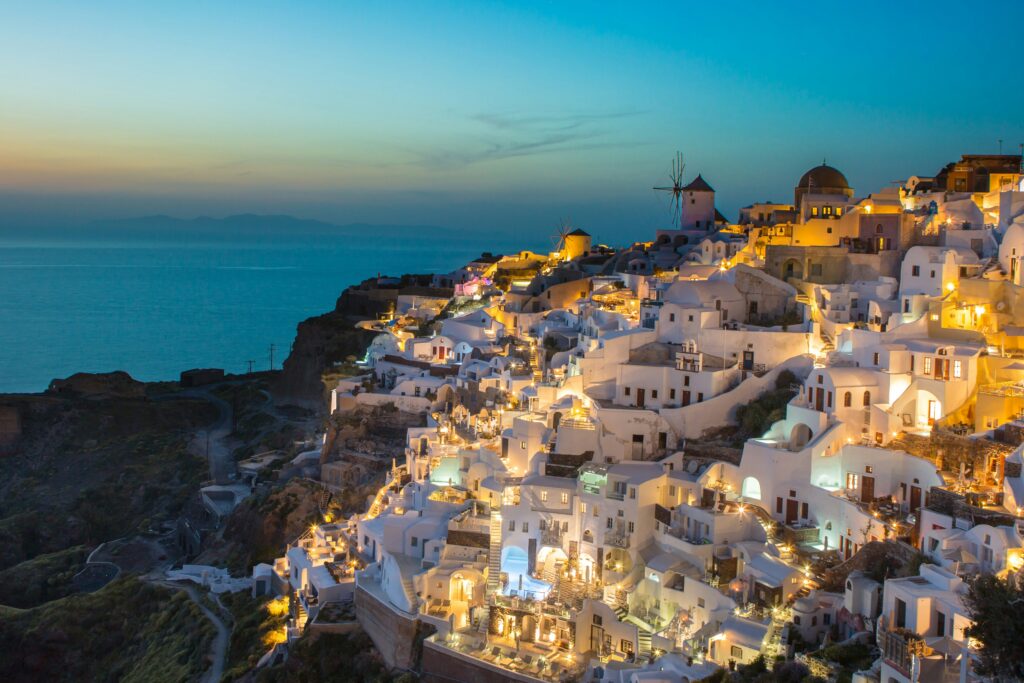
The single most consequential decision you’ll make for a Santorini trip is where to base yourself. Oia is the postcard — it’s also $200–$400 more per night than anywhere else on the island. The smart move: stay in Kamari or Perissa for a budget trip, Fira for mid-range with caldera access, and take the 15-minute bus to Oia for the sunset like everyone else does anyway. All rates verified March 2026 for shoulder season dates.
Kamari is Santorini’s best-kept accommodation secret. The village has a long seafront promenade lined with tavernas and bars, a volcanic black sand beach, and direct KTEL bus access to Fira and Oia. The same money that buys you a windowless room in Fira buys you a proper hotel with a pool, breakfast, and sea views here. The beach isn’t Oia’s caldera — but Oia’s caldera is a 20-minute bus ride away, and Kamari’s beach is genuinely beautiful in its own volcanic way.
Volcano View delivers the signature Santorini experience — caldera panorama, cave-style architecture, infinity pool — without the Oia price tag. It sits just outside central Fira, which means you get the views without the foot traffic and noise of the main drag. The pool terrace overlooking the volcano at sunrise is one of the more memorable hotel moments available in Greece at this price point. Book in May or September and the rates become genuinely reasonable for what you’re getting.
If your trip has a specific occasion attached — anniversary, honeymoon, a bucket list item you’re finally checking off — Canaves is the honest recommendation for Oia. The rooms are carved into the caldera cliff face, the pool hangs over the Aegean, and the sunset from the terrace is the one from every Santorini photo you’ve ever seen. The restaurant is excellent rather than coasting on its position. It’s expensive by any measure — but at this tier, it delivers in ways that many Oia hotels at similar prices do not.
Get the Budget Travel Cheat Sheet
Booking shortcuts, packing hacks, and the money-saving moves our readers use on every trip — free when you subscribe.
15 Best Santorini Experiences
Santorini’s essential experiences span the full range — from free beaches and cliffside hikes to boat tours worth every dollar. Here’s the honest breakdown of what deserves your time and money, grouped by what it costs.
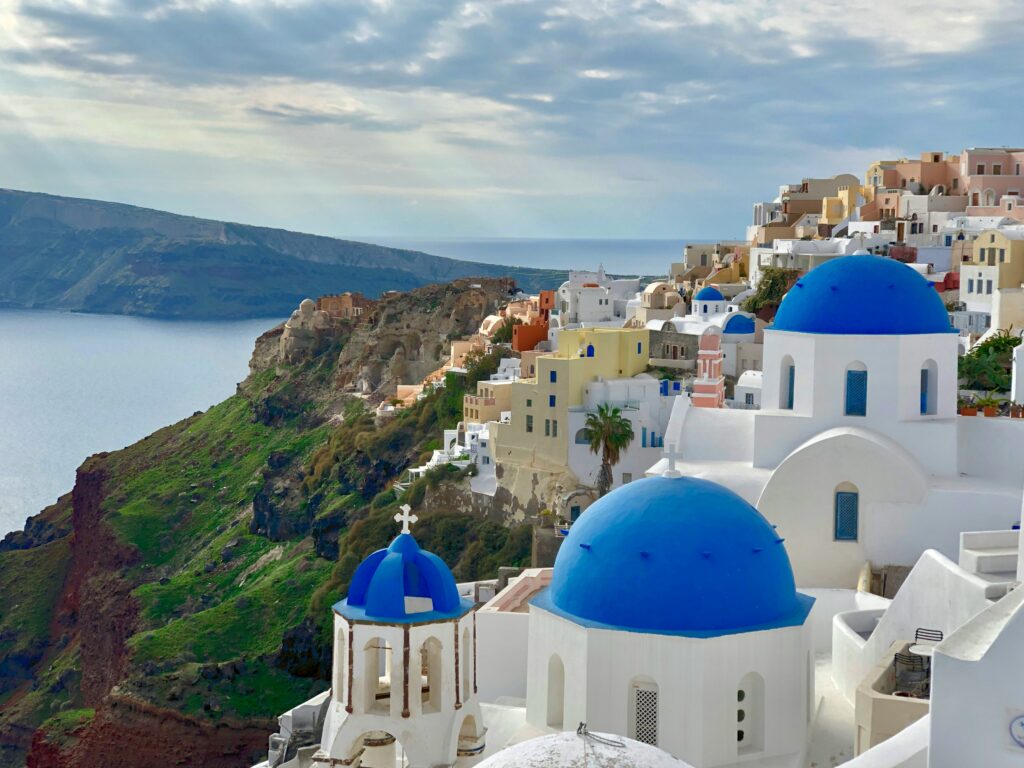
The most celebrated sunset in Greece and one of the most photographed in the world — the sun drops behind the caldera rim and turns the white buildings and blue domes every shade of orange, pink, and gold simultaneously. In peak season, the Oia castle viewpoint draws thousands of people and the sunset becomes a crowd management exercise. The strategy that actually works: arrive 90 minutes early, find a wall or ledge away from the main viewing area, and watch the light change across the whole village rather than fighting for a spot at the castle.
💡 The caldera path between Oia and Imerovigli offers unobstructed sunset views with a fraction of the crowd. Walk 10 minutes south from Oia’s main square and find your own spot on the cliff.
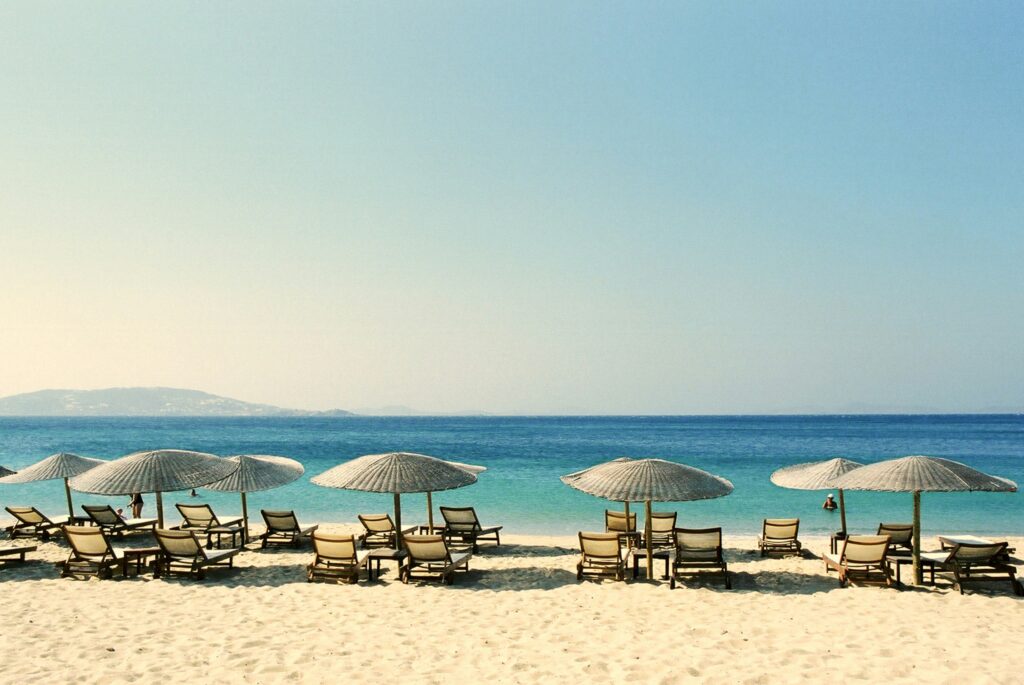
Five kilometers of volcanic black sand along the base of Mesa Vouno mountain. The sand absorbs heat and stays warm well into the evening. The beach has excellent tavernas right on the water, sunbed rentals for $9–13 if you want them, and a long promenade running its full length. It’s less famous than Red Beach or White Beach, which means it’s also less congested and more accessible. Perissa is where Santorini’s longer-stay visitors actually spend their beach days — usually a reliable signal.
💡 The northern end of Perissa near the Mesa Vouno base is the quietest stretch with the clearest water. Walk past the main taverna cluster to find the best swimming spots.
A 10-kilometer cliffside path running along the top of the caldera from Fira through Firostefani and Imerovigli to Oia. The views are continuous and unobstructed the entire way — the caldera dropping 300 meters into the Aegean on one side, white villages and blue domes on the other. It takes 3–4 hours at a relaxed pace. The stretch through Imerovigli, perched on the highest point of the rim, is the most dramatic section. Bring water — there are no shops on the path.
💡 Walk from Fira toward Oia so the sun stays behind you for better photographs. Start before 9am in summer to avoid midday heat. The last bus back from Oia runs late, so there’s no rush at the far end.
Santorini’s capital is more than a transit hub. The main caldera walkway in Fira offers the same volcanic panorama as Oia with far fewer visitors. The Catholic quarter behind the main church has quieter, less-photographed streets. The covered market heading toward the port has the most authentic shopping on the island — local wine, dried herbs, ceramics — at prices well below the Oia boutiques. The terrace in front of the Orthodox Cathedral is one of the better free viewpoints on the island and almost no one uses it as one.
💡 The Orthodox Cathedral terrace faces the caldera directly and is publicly accessible all day. It’s quieter than the main Fira walkway and positioned just as well above the cliffs.
Santorini produces some of the most distinctive white wine in Europe from the Assyrtiko grape — volcanic soil, extreme wind exposure, and the unique basket-trained vines (kouloura) that hug the ground to protect fruit from the gusts. Santo Wines has the most dramatic tasting terrace on the island with direct caldera views; a tasting of 3–4 wines with food pairing starts at $16. Estate Argyros and Domaine Sigalas produce the bottles that sommeliers actually seek out. This wine is worth a dedicated afternoon.
💡 Book the sunset tasting slot at Santo Wines well ahead — it sells out weeks in advance in peak season. The terrace faces directly west across the caldera and the light at dusk is extraordinary.
The best way to experience Santorini is on two or four wheels with no schedule. Rent an ATV or scooter for a full day and build your own itinerary: Red Beach in the morning, Ancient Akrotiri before the heat, a winery in the afternoon, up to Pyrgos village at dusk, then Oia for the sunset. The island is small enough to cover entirely in one day. Most rental shops are in Fira and Kamari. ATVs require no motorcycle license in Greece; scooters are faster and seat one. Both run the same daily rate.
💡 Book the day before to secure your preferred vehicle. Start at 8am before tourist buses fill the narrow roads to Red Beach and Oia. The streets inside caldera villages are too narrow for ATVs — park at the entrance and walk in.
The public group boat tour from Athinios Port takes you to Nea Kameni — the active volcanic island in the caldera — for a 30-minute hike to the crater rim, then to the natural hot springs at Palea Kameni for a swim in iron-red thermal water, then past the caldera cliffs to Oia by sea. The view of Santorini from the water — looking up at those cliffs with the white villages stacked along the rim — is one that no photograph prepares you for. The public tour costs $22–38 versus $110+ for private options. Same route, same experience.
💡 Wear clothes you don’t mind staining to the hot springs — the mineral water permanently discolors light-colored fabric. Most experienced visitors bring old or dark swimwear specifically for this stop.
Akrotiri is a Bronze Age Minoan settlement buried by the Santorini volcanic eruption around 1627 BC — the real-world event most historians believe is the origin of the Atlantis legend. Excavated in 1967, it’s now protected under a massive roof structure that lets visitors walk through the preserved multi-storey buildings, streets, and drainage systems of a city frozen in time 3,600 years ago. The frescoes were removed to Athens museums, but the architecture and urban planning are extraordinary. This is the most undervisited significant archaeological site in the Greek islands.
💡 Go first thing in the morning before the bus tours arrive. The site is small enough to see thoroughly in 90 minutes. Combine with Red Beach the same morning — they’re five minutes apart.
The tavernas in Pyrgos, Megalochori, and Emporio charge 20–30% less than equivalent restaurants in Fira and Oia for food that is frequently better. These are where island residents eat — the octopus has been drying on the line outside all day, the fava dip is made from Santorini’s own famous split peas, the house wine is local and inexpensive. Pyrgos sits at the highest point of the island away from the tourist circuit, with a medieval castle village to wander before dinner. Budget $27–44 per person with wine and a full meal.
💡 Pyrgos is about 15 minutes by ATV from Fira. The castle ruins at the top of the village have the best 360° view of the entire island — arrive at dusk to watch the light change before settling in for dinner below.
Santorini’s most dramatic beach — towering red and black volcanic cliffs dropping straight into turquoise water, a narrow strip of red pebbles at the base. It’s genuinely unlike any other beach in Europe. The approach is a 10-minute walk over volcanic rocks from the small car park near Akrotiri. The beach gets crowded by mid-morning in summer and has no shade or facilities. Go early, swim in the extraordinary color-contrast water, and leave before 11am. This is a one-hour experience, not a full beach day.
💡 Combine with Akrotiri in the same morning — the sites are five minutes apart. Park once at the Akrotiri lot, walk to Red Beach first, then visit the archaeological site before the tour buses arrive at both.
Thirassia is the smaller island directly across the caldera from Santorini — part of the same original volcanic structure, much less developed, and almost entirely free of tourist infrastructure. A small ferry runs from Ammoudi Bay below Oia to the main settlement at Manolas. The village has a handful of tavernas, a few hundred permanent residents, and the same caldera views looking back across the water — none of the crowds, none of the pricing. A half-day here is one of the more unexpected experiences available in the Cyclades.
💡 The climb from the ferry port up to Manolas is 250 steps — steep but short. The taverna at the top serves the freshest fish on either island; the owner catches it in the morning and it’s on the menu at lunch.
A semi-private catamaran that sails the caldera across a half-day — stopping at the hot springs and volcano, anchoring at a secluded bay for swimming off the boat, sailing past the Red and White Beaches, and returning at sunset with the cliffs glowing in the evening light. BBQ lunch and unlimited drinks are included. The perspective from a sailboat in the middle of the caldera, looking up at the rim villages, is the most complete version of Santorini that exists. It’s the single best-value splurge on the island.
💡 Book at least 2 weeks ahead in shoulder season, 4–6 weeks in peak. Choose a morning departure (9am) rather than afternoon — the light is better for swimming and you’ll return before the main crowds hit the caldera.
Once during the trip, at a restaurant cantilevered over the caldera in Oia, watching the sun go down with a glass of Vinsanto dessert wine — this is worth the premium. The food at the top Oia restaurants (Lauda, Ambrosia, Lycabettus) is genuinely excellent, not trading on location alone. The experience of sitting above the volcano as the sky shifts through its colors, with the entire caldera laid out below, has no cheaper version. Budget $66–110 per person with wine and book the sunset seating slot weeks ahead in peak season.
💡 Lauda at Andronis Luxury Suites has the most dramatic setting and consistently strong food. For a more approachable price point, Sunset Tavern at the top of the Oia steps delivers genuine caldera views at $55–77/person with a more casual menu.
Santorini has 14 operating wineries producing some of the world’s most distinctive whites from the Assyrtiko grape. A structured tour of three — typically Estate Argyros, Domaine Sigalas, and Santo Wines — covers the range from old-vine traditional production to modern premium viticulture, with paired food at each stop. Santorini Assyrtiko has earned serious standing in global fine wine discussions; this tour is the Cyclades equivalent of a day in Burgundy for anyone who cares about what’s in the glass.
💡 For a self-guided version at a fraction of the cost, rent an ATV and visit Estate Argyros and Domaine Sigalas on your own. Both welcome walk-ins for tastings ($16–22) with no tour operator markup.
A 15–20 minute flight covering the entire caldera — Oia, the cliffs, the volcano islands, the beaches, and the distinctive crescent shape of the island all visible at once. The aerial view of the caldera formation makes sense in a way that ground level never quite does: you can see the full geometry of a volcanic collapse that happened 3,600 years ago. Santorini Helicopter Tours operates from the island’s airport. For a trip built around a milestone occasion, this is the capstone experience.
💡 The early morning golden-hour slot (around 7–8am) offers better photography light and calmer air than afternoon flights. Book at least 3 weeks ahead and have a backup date — helicopter tours are weather dependent.
Worth It / Skip It
Don’t Make These Mistakes
Pricing the trip as an Oia hotel trip and deciding you can’t afford it. The Oia cave hotels are genuinely expensive — $275 to $2,750 per night. But the island is 28 square miles and there are dozens of good hotels in Kamari, Perissa, and Fira at $80–$180/night that are 20 minutes from everything. Most people who say they can’t afford Santorini haven’t priced it from Kamari. The sunset, the caldera walk, the volcano, the wine — none of it requires staying in Oia to access.
Going in July or August without accepting what it costs. Peak season in Santorini is one of the most crowded tourist experiences in Europe. The Oia sunset viewpoint draws thousands of people. Hotel rates run 50–100% above shoulder season. If your dates are fixed to summer, that’s fine — but budget accordingly and book 3+ months ahead. If your dates are flexible, May and September are better versions of the same trip at significantly lower cost. Going in peak season on a shoulder-season budget leads to disappointment on both counts.
Skipping Akrotiri. The Bronze Age Minoan settlement buried by the 1627 BC eruption is one of the most significant archaeological discoveries of the 20th century, and most Santorini visitors walk straight past the signs on their way to Red Beach. The $13 admission covers a genuinely extraordinary site — multi-storey buildings, paved streets, drainage systems preserved in extraordinary detail. It’s five minutes from Red Beach. There is no good reason to visit one without the other.
Relying on taxis for transport. The island has roughly 25 licensed taxis. In peak summer, wait times stretch to 60–90 minutes. Uber does not operate in Greece. The KTEL public bus connects all major villages every 20–30 minutes and costs $3. ATV rentals run $27–55/day. Planning around taxis on Santorini in summer is a reliable way to miss your boat tour, your dinner reservation, and your sunset. Sort out transportation before you need it.
VacayValue Scorecard — Santorini
Packing List — Santorini
Every Sunday: One Destination. One Honest Take.
Join travelers who plan smarter. One email per week — real costs, specific advice, no filler.
Santorini Is Worth It. The Strategy That Makes It Affordable Is Simple — and Almost Nobody Uses It.
The island is one of the most beautiful places on earth. The caldera is unlike anything else in Europe. The wine is extraordinary. The sunsets are not exaggerated. And the gap between what most tourists pay and what a prepared traveler pays is enormous — not because of any clever workaround, but because the island runs two price systems simultaneously: the Oia premium economy and everything else.
Stay in Kamari. Take the bus to Oia for the sunset like everyone else does. Eat in village tavernas. Rent an ATV for a full day and see the whole island for $38. Spend your money on the catamaran and one real dinner with a caldera view. That’s the trip. It costs $2,000–$3,000 all-in for a couple over five days — every bit as memorable as the $5,000 version, because the caldera doesn’t look any different from where you’re standing than it does from a cave suite above you.
Go in May or September. Book Kamari first, upgrade later if the budget allows. Don’t miss Akrotiri. Do the catamaran. Have the Assyrtiko with grilled octopus at a taverna in Pyrgos the night before you leave. Come back for the caldera suite when you’re celebrating something that deserves it.