
Maui 2026 — What a Trip to the World’s Best Island Actually Costs
The beaches are genuinely peerless, the whale season is real, and the Road to Hana will change you. So will the price tag — if you’re not prepared for it. Here’s every verified number you need before you book.
The first time I stood at the Haleakala summit at 4 a.m., wrapped in a borrowed jacket, watching the sky ignite above the clouds at 10,000 feet — I understood immediately why magazines keep voting this island the world’s best. I also understood why travelers come home with sticker shock.
Maui is expensive. The flights cost more than almost any domestic destination, hotel rates are among the highest in the country, and even a rental car — which you absolutely must have — runs $70 to $225 a day depending on category and season. But here’s the thing: a significant portion of Maui’s greatest experiences are completely free. The beaches, the hiking trails, the whale-watching from shore in winter, the Road to Hana itself — all free. This guide exists to help you maximize the free, budget the paid, and not blow your trip on the things that aren’t worth it.
What’s In This Guide
📅 Best Time to Visit Maui
April–May and September–October are the sweet spots — shoulder pricing, excellent ocean conditions, and manageable crowds. If whale watching is non-negotiable, December through April is your window, but expect to pay peak prices for the privilege.
Where to Stay in Maui
Your choice of neighborhood shapes your entire budget. Wailea and Kaanapali are beautiful — and priced accordingly, with even modest properties starting at $300+/night before Hawaii’s ~19% accommodation tax (TAT + county + GET) lands on your bill. Budget travelers do better in Kahului or Kihei, where rates start meaningfully lower and a short drive gets you to any beach. All rates verified March 2026; add approximately 19% in combined taxes to every quoted rate.
Hawaii’s total accommodation tax burden is approximately 19% on top of your quoted nightly rate — composed of the Transient Accommodations Tax (11% as of January 2026), county lodging taxes (up to 3%), and General Excise Tax (4–4.5%). On a $250/night room, that’s an extra $47+ per night you may not see until checkout. The hotel row in our calculator reflects advertised nightly rates; always factor in this surcharge when comparing Maui to other destinations.
Kahului Bay isn’t a swimming beach, but Maui Beach Hotel delivers genuine oceanfront atmosphere at rates that would be laughably cheap for Kaanapali. The rooms are clean and comfortable without pretending to be a resort — which is exactly what a value-focused trip needs as a base. You’re five minutes from Costco (mandatory first stop), walking distance to a Target and Queen Ka’ahumanu Center, and perfectly positioned to launch the Road to Hana without a predawn detour. Good beaches are 15–20 minutes south by car.
The Maui Coast Hotel sits in the sweet spot of Kihei — central enough to walk to the Kamaole Beach Parks and close enough to Wailea to feel like you’re in a resort town without paying resort prices. Two pools, a poolside bar, and a full restaurant mean you’re not sacrificing amenities. The 427 rooms are clean and contemporary, and the South Maui location puts you within 15 minutes of both Wailea and the best snorkel beaches on the island. At $240–$340 before tax, it’s one of the better value propositions on an expensive island.
There’s a reason the Grand Wailea has anchored Maui’s luxury conversation for decades: a sprawling nine-pool water park, direct access to one of the finest stretches of Wailea Beach, and a scale that somehow still feels personal. The Waldorf Astoria management brought the service standards in line with the property’s ambitions. This isn’t just a hotel — it’s an island within the island, and for a honeymoon, milestone birthday, or any trip where the experience is the point, it delivers. Rates vary sharply by season; shoulder months offer the best entry point into a property that’s otherwise priced at the very top of the Maui market.
Get Our Free Maui Planning Checklist
Haleakala sunrise reservations, Waianapanapa booking links, and the exact itinerary order that saves you the most driving. Delivered free.
15 Best Maui Experiences
Maui’s great gift to budget travelers is that its most transcendent experiences cost nothing. The beaches, the hiking, whale-watching from the shore in winter, the Road to Hana with its bamboo forests and black sand beaches — all free to experience at your own pace. The paid tier fills in the gaps: world-class snorkel sites only reachable by boat, a living coral reef aquarium, and a luau rebuilt from the ashes of Lahaina’s worst day. The Signature tier is for the experiences that define a Maui trip — the ones you plan your whole itinerary around.
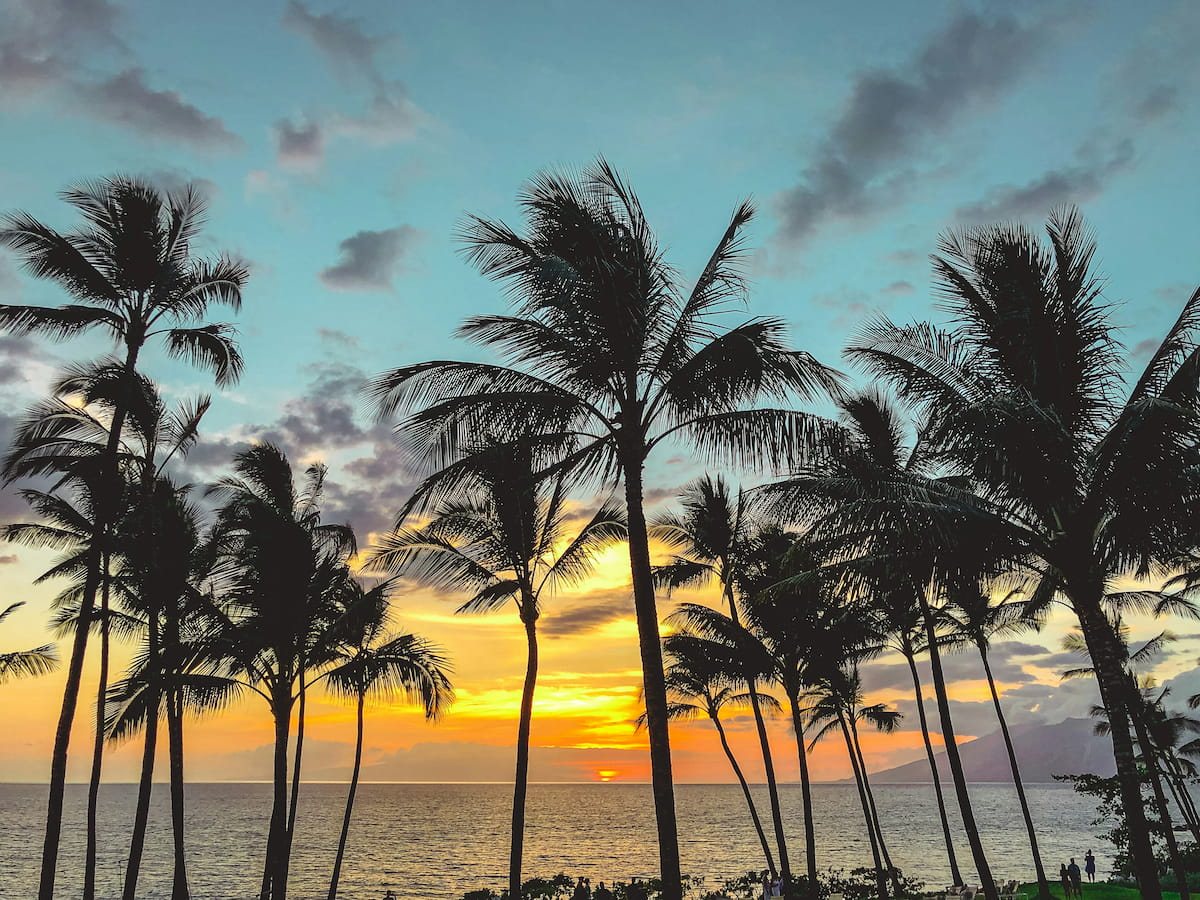
Three consecutive beach parks along South Kihei Road form one of the island’s most accessible stretches of Pacific coastline — and they’re completely free to anyone with a parking spot. Kamaole II and III are the snorkeling standouts, with reef formations close to shore that consistently draw Hawaiian sea turtles (honu). Kamaole III has the largest grassy park area and the best facilities, making it the top pick for families. The water is generally calm inside the bays, and the lack of resort infrastructure means you’re sharing the beach with locals, not just tourists.
💡 Arrive before 9 a.m. to grab parking — street spots fill fast, especially on weekends. Bring your own snorkel gear from a rental shop (far cheaper than tour boat rentals) and you’ll spend free time in one of Hawaii’s best shallow reefs.
About ten minutes east of Pa’ia on the Hana Highway, Hookipa is world-famous among windsurfers and kitesurfers — but even if you’re not riding, the spectacle of watching elite athletes work the trade winds against a backdrop of cliffs and crashing surf is its own kind of performance. More reliably than almost any beach on Maui, Hookipa hosts resident Hawaiian green sea turtles hauling out on the beach to rest in the afternoon. Walking down to the lower beach area gives you close-range (but respectful distance) encounters that nature documentaries charge handsomely to replicate.
💡 Come in the late afternoon — turtles typically haul out on the sand between 3 and 6 p.m. The upper lookout gives a great vantage point without disturbing them. Federal law requires maintaining a 10-foot distance from resting sea turtles.
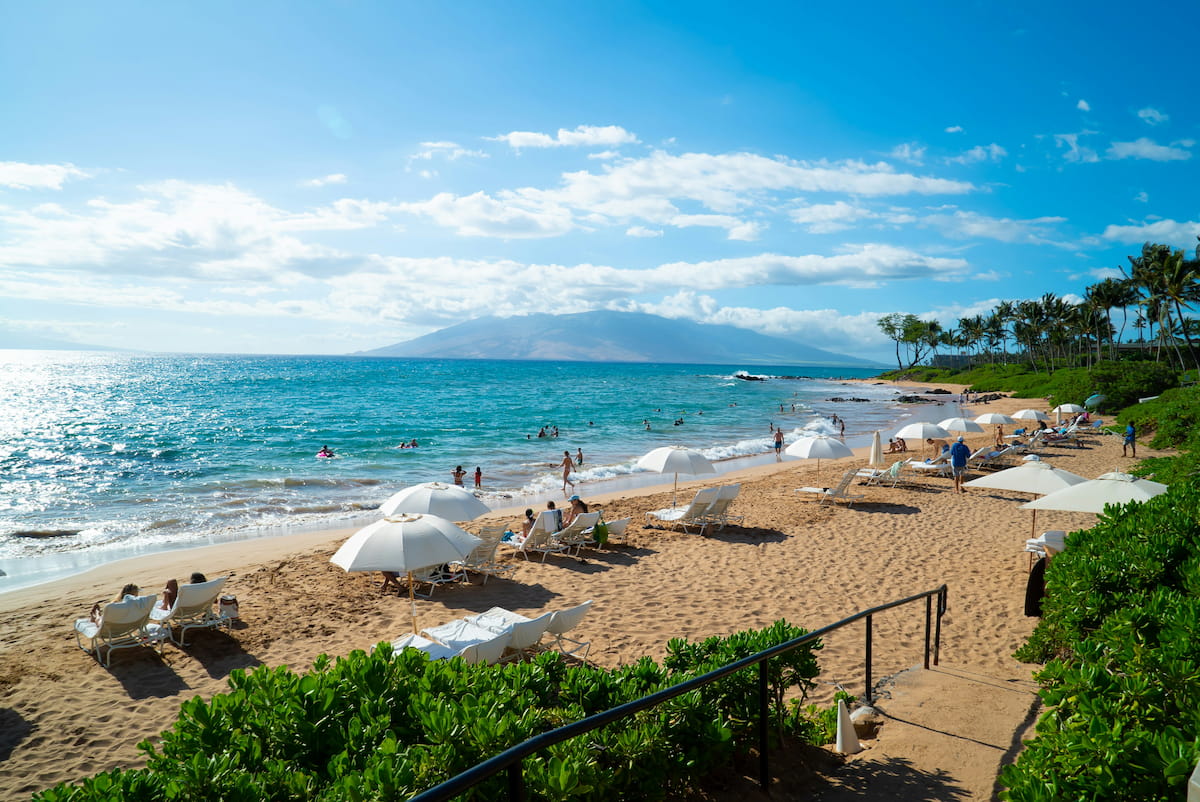
Beyond the manicured resort beaches of Wailea, the road continues to Makena State Park and one of Hawaii’s most dramatic stretches of sand — nearly a mile of broad, golden beach with no resort infrastructure, no parking fees, and no concessions. The scale of Oneloa (Long Beach) makes the rest of Maui’s beaches feel managed by comparison. The surf here is powerful and the shore break steep — not always safe for swimming, but extraordinary for walking, bodyboarding when conditions permit, and watching the Pacific behave like the Pacific. Little Beach, accessed by a short trail over the cinder cone at the north end, is Maui’s famous clothing-optional beach.
💡 Check surf reports before swimming — the shore break at Makena is notorious for knocking people down. The parking lots fill by 10 a.m. on weekends; arrive early or visit on a weekday. Bring shade since there are no beach umbrellas for rent here.
Pa’ia is where Maui’s surf culture, farm-to-table food scene, and bohemian character converge on a two-block stretch of Baldwin Avenue. The galleries, boutiques, and cafes make for an excellent morning before heading east on the Hana Highway — and the adjacent Spreckelsville Beach offers a long, uncrowded stretch of sand with views toward the West Maui Mountains that feels completely removed from the resort economy. Baldwin Beach Park, a few minutes west, is a favorite with local families and offers good bodysurfing when conditions are right.
💡 Pa’ia makes a natural breakfast stop before the Road to Hana — Paia Fish Market and Cafe des Amis both open early and offer solid plate-lunch-level value. Stock up on snacks before entering the winding road where options become expensive and scarce.
Running along the edge of Maui’s most expensive real estate, the Wailea Beach Walk is a 1.5-mile public coastal path that weaves past Wailea and Ulua beaches and the fronts of the Four Seasons, Fairmont, and Grand Wailea — all of which are legally required to maintain public beach access in Hawaii. You can walk the same stretch of oceanfront that guests pay $800+ per night for the view of, with complete legitimacy. At sunrise, it’s one of the most beautiful walks on the island; at sunset, it’s a reliable place to spot spinner dolphins close to shore.
💡 Hawaii law guarantees public shoreline access regardless of which hotel you’re staying at. You can use the public beach access paths between resort properties to reach Wailea Beach, Polo Beach, or any other beach — no hotel room required.
The summit of Haleakala rises to 10,023 feet above sea level — above the cloud line, above most weather, and into a landscape that has no equal in the Hawaiian archipelago. The crater itself is a vast volcanic depression of cinder cones, silversword plants, and absolute silence; hiking even a partial section of Sliding Sands Trail into its interior gives you a sense of scale that photos can’t convey. The $30 vehicle entry fee is valid for three consecutive days and covers both the Summit District and the Kipahulu District on the road to Hana — making it one of the best per-day values in the national park system. The park is cashless; pay by card online or at the gate.
💡 The America the Beautiful annual pass ($80) covers entry to all national parks for 12 months — if you’re visiting any other national park this year, it pays for itself quickly. Haleakala Road can close temporarily due to ice, wind, or volcanic gas; check nps.gov/hale before driving up.
Just fifteen minutes from Kahului, the ‘Iao Valley State Monument protects a lush, narrow valley carved by the West Maui Mountains — and at its center, the ‘Iao Needle rises 1,200 feet from the valley floor in a pillar of green, cloud-pierced rock. It’s one of the most photographed natural landmarks in Hawaii and easily reached in half a morning. The boardwalk trail is paved and accessible, running along ‘Iao Stream through dense tropical vegetation. Advance reservations are now required via gostateparks.hawaii.gov — walk-in visits are no longer guaranteed.
💡 Book your reservation as early as possible — slots for popular dates fill quickly online. The $10 vehicle fee plus $5 per non-resident adult is charged at the gate in addition to the reservation. No cash accepted at most state park facilities.
One of the most visually striking stops on the entire Road to Hana route, Waianapanapa’s black sand beach is formed from volcanic basalt — obsidian-dark sand, turquoise Pacific surf, and lava sea caves that frame the scene in a way that feels genuinely otherworldly. Swimming is sometimes possible in calmer conditions, but the real draw is the dramatic landscape itself: blowhole, lava arches, coastal hiking trail, and the eerie black-walled cave accessible from the beach. This requires advance reservation through gostateparks.hawaii.gov — you cannot show up without one.
💡 Reserve your spot as far in advance as possible — weekend slots vanish within minutes of release. Non-resident admission is $5 per person plus a parking fee; your $30 Haleakala park pass does NOT cover state park entry. Book the 9–10 a.m. slot for the best combination of light and calm water.
Located in central Ma’alaea, Maui Ocean Center is the most comprehensive window into Hawaii’s underwater world that doesn’t require a wetsuit. The centerpiece is a 750,000-gallon Open Ocean exhibit with a 53-foot acrylic tunnel walk-through — putting you eye-level with sharks, rays, and large reef fish in a setting that rivals any aquarium in the country. The 3D Humpback Whale Sphere experience (included in admission) is particularly impressive, and the Living Reef section houses one of the largest live Pacific coral displays in the world. Plan two hours minimum. Book a day ahead online and save $5/person.
💡 Book online the day before to get the $5 early purchase discount, bringing adult admission to $44.95. Visit on a weekday morning when school groups are less common. The on-site Seascape Restaurant is pricier than alternatives in Pa’ia or Kihei — bring snacks or eat beforehand.
The Hana Highway is 64 miles from Kahului and takes the better part of a day to drive properly — not because of distance but because the road winds through 59 bridges, countless one-lane crossings, and dozens of pull-offs worth stopping for: Twin Falls (free), the Garden of Eden ($20/car), Wai’anapanapa Black Sand Beach (reservation required, $5/person), bamboo forests, and finally the Kipahulu District of Haleakala National Park with its pools and Pipiwai Trail ($30/vehicle — your park pass covers this). Self-driving gives you maximum flexibility; guided tours ($150–$200/person) handle logistics and include stops you might otherwise miss.
💡 Drive east in the morning when the light is better and the waterfalls are at their fullest. Fill your gas tank before leaving Kahului — there are no reliable stations between Pa’ia and Hana. Return via the Back Road to Hana (unpaved, check your rental car agreement) for a completely different perspective on the island’s south coast.
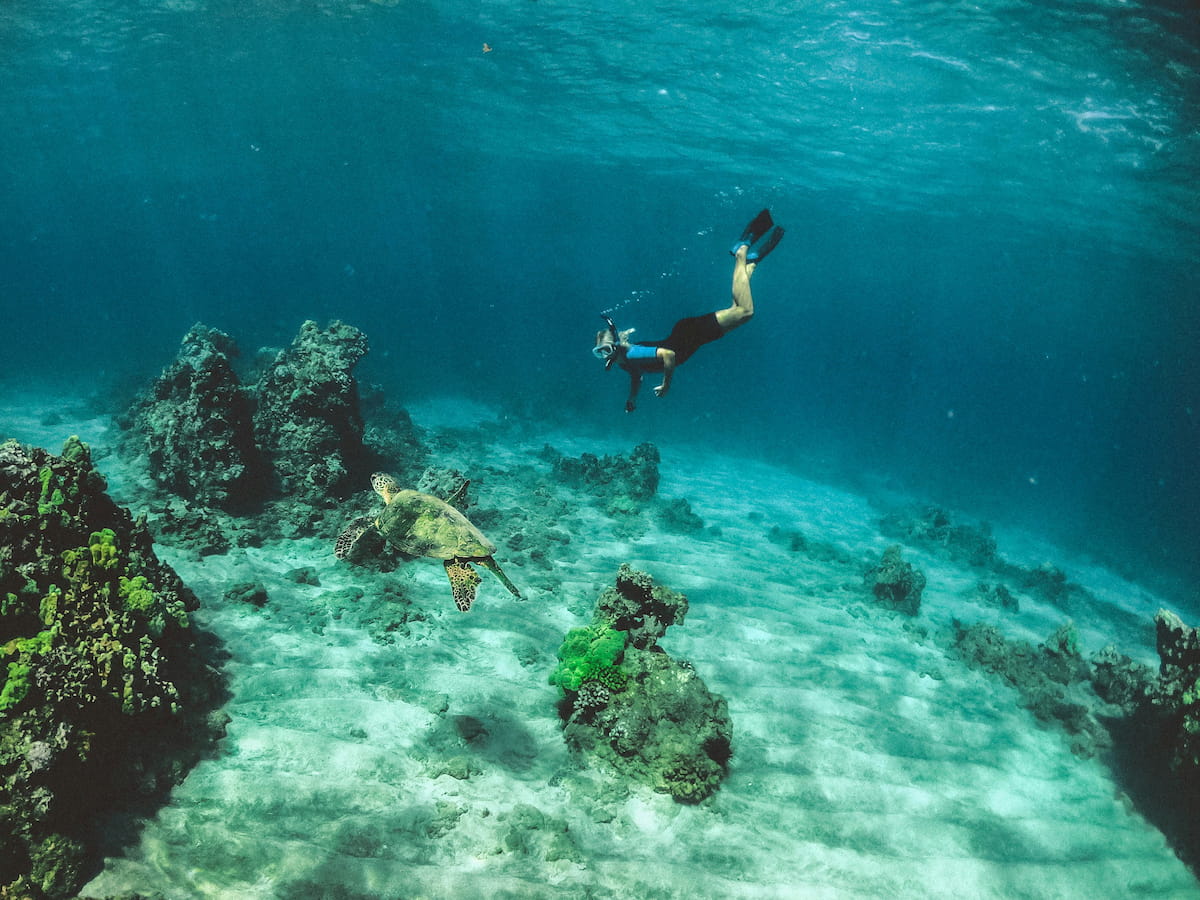
Molokini is a partially submerged volcanic crater about three miles offshore in the ‘Alenuihāhā Channel — and it’s the snorkeling benchmark against which everything else on Maui is measured. Visibility routinely exceeds 100 feet in the protected crescent-shaped lagoon, and the marine life density is exceptional: more than 250 species of tropical fish, reef sharks, rays, and in season, humpback whales audible (and sometimes visible) in the water column. Most tour boats depart from Ma’alaea Harbor between 7 and 8 a.m. and include a second snorkel stop at Coral Gardens or Turtle Town. Prices include gear, breakfast, and lunch.
💡 Book the earliest available departure — Molokini’s visibility peaks in the morning before afternoon trade winds stir up the channel. Smaller boats (6-passenger catamarans) give you a more personal experience; larger boats fit more people but move faster between sites. Molokini is only reachable by boat — there’s no shore access to this experience.
Every winter, the North Pacific humpback whale population migrates to the warm, shallow waters of Maui’s ‘Auʻau Channel — and Maui consistently produces some of the most reliable and dramatic whale encounters anywhere in the world. Peak season runs January through March, but sightings begin in late November and extend into April. From shore, you can often spot spouts and breaches from the Wailea coastal path or McGregor Point Lookout. But a two-hour zodiac or catamaran tour gets you close enough to hear the whale song through the hull. At $50–$85/person, it’s one of the better-value paid activities on the island.
💡 Outside of December through April, skip whale watching — the humpbacks have returned to Alaska and the boats won’t have much to show you. During whale season, most snorkel tours become de facto whale watching tours as well, making combined excursions excellent value. Pacific Whale Foundation tours support active research and conservation.
Mark Twain called it “the sublimest spectacle I ever witnessed.” Even accounting for the hyperbole of the era, he wasn’t far off. Standing at 10,023 feet above sea level in the pre-dawn cold, watching the eastern sky ignite from black to violet to orange above a cloudscape that stretches to the horizon — this is the Maui experience that people come back to describe for the rest of their lives. It requires a $1 reservation made exactly 60 days in advance on recreation.gov (these sell out within minutes of release), a 2 a.m. wake-up call, and a 90-minute drive up a switchback road in the dark. Every bit of it is worth it.
💡 Set a calendar reminder for exactly 60 days before your target date — slots release at midnight Hawaii time and are gone within the hour. Dress for temperatures in the 30–40°F range regardless of how warm it is at sea level; pack a winter jacket you didn’t think you’d need for Hawaii. Arrive 30 minutes before sunrise to find parking.
About 80% of Maui’s landscape is inaccessible by road — the deep valleys of the West Maui Mountains, the backcountry waterfalls of East Maui, the sea cliffs of Molokai’s north shore that rise 3,000 feet from the Pacific. A helicopter tour is the only way to see any of it. Blue Hawaiian, Air Maui, Sunshine, and Maverick all depart from Kahului Airport; the 45-to-60-minute West Maui and Molokai routes ($220–$340 base before fuel and tax) hit the greatest concentration of scenery per dollar. Doors-off flights cost slightly more and reward photographers. Landing tours — particularly the Hana Rainforest Experience with a champagne stop — push toward $450+.
💡 Book morning flights (8–10 a.m.) for the best weather and clearest visibility over the mountains. Wear dark solid-colored clothing to reduce window glare in photos. Fuel surcharges add $30–$50 to advertised prices at most operators — factor this in when comparing quotes. Blue Hawaiian has the longest safety record; Air Maui is consistently the best value for the standard West Maui + Molokai circuit.
Old Lahaina Luau survived the August 2023 wildfires that destroyed most of historic Lahaina — their oceanfront grounds were spared while the town burned around them — and they reopened in March 2024 to what can only be described as a hero’s welcome. Running 7 nights a week at their original oceanfront location, the luau has marked its 40th anniversary as Maui’s most consistently praised cultural experience: 100% authentic Hawaiian hula (no Samoan fire dances here), a four-course dinner of traditional dishes, unlimited premium bar, and a lei greeting that sets the tone before you’re even seated. The $230/person price stings, but booking 2–3 months ahead is mandatory — and attending directly supports a community still rebuilding its homes.
💡 Book directly at oldlahainaluau.com or through a trusted booking platform — no-shows and cancellations are subject to strict policies given the demand. Arrive 15–20 minutes before your check-in time to get your first mai tai and find a seat with ocean views before the show begins. Bring a light layer — evenings along the water can be breezy even in summer.
Worth It / Skip It
Don’t Make These Mistakes
Missing the Haleakala sunrise reservation window. Sunrise slots require a $1 reservation through recreation.gov, available up to 60 days before your visit — and they sell out within minutes of being released at midnight Hawaii time. If you show up at 3 a.m. without a reservation, you will be turned away. Set a calendar alert for 60 days before your target sunrise date, have your recreation.gov account ready, and be logged in at 11:59 p.m. the night they drop. The reservation is $1. Missing it costs you the defining experience of the trip.
Planning your trip around historic Lahaina without checking current access. The August 2023 wildfires destroyed most of Lahaina’s famous Front Street and waterfront district. As of early 2026, Lahaina Harbor has begun a phased reopening, a handful of businesses have returned to parts of Front Street, and the Old Lahaina Luau is fully operational — but the historic district, Banyan Tree Park, and most of the pre-fire visitor infrastructure remain closed or under ongoing recovery. West Maui (Kaanapali, Kapalua) is fully open. Don’t show up expecting the Lahaina of five years ago; check the latest status at MauiRecovers.org before building your itinerary around it.
Relying on rideshares instead of a rental car. Uber and Lyft operate on Maui, but availability is inconsistent, wait times in Kihei or Wailea can stretch 20–30 minutes, and pricing to remote areas like Hana or the Haleakala summit road is effectively prohibitive. Worse, some areas have no rideshare coverage at all. A rental car is the cost of doing business on this island. Book through Discount Hawaii Car Rental or directly with the major companies at least 6–8 weeks ahead — Maui’s rental market is chronically tight, and last-minute availability during peak season frequently means no availability at all.
Underestimating Hawaii’s accommodation tax. Hawaii’s combined accommodation tax burden is approximately 19% — Transient Accommodations Tax (11%), county lodging tax (up to 3%), and General Excise Tax (4–4.5%). On a $300/night room, that’s an extra $57 per night you won’t see in the listed price. Over six nights for a couple, that’s $342 in hidden tax on a modest booking. Always calculate your true nightly cost using the listed rate × 1.19. Maui accommodation is expensive enough without budget shock at checkout.
VacayValue Scorecard — Maui, Hawaii
Packing List — Maui
Never Overpay for a Trip Again
VacayValue delivers verified cost breakdowns, sweet spot timing guides, and the travel hacks that actually move the needle — straight to your inbox.
Maui Costs More Than Anywhere Else on This List — and Earns Most of It
A VacayValue Score of 7.0 tells you something honest: Maui is an expensive destination. The accommodation market is brutal, the rental car market is tight, and Hawaii’s ~19% accommodation tax adds a sting that other destinations don’t carry. Budget travelers flying from the East Coast face flights that cost more than an entire trip to Oaxaca. There’s no spinning any of that.
What the score can’t fully capture is that Maui’s 5.0 experience quality rating is not hyperbole. The Haleakala sunrise is genuinely one of the most extraordinary things a traveler can witness anywhere on earth. Molokini’s underwater visibility and marine density surpass dive sites that charge three times as much. The Road to Hana is a living argument for why Hawaii exists. And the free beaches — Makena’s dramatic scale, Hookipa’s sea turtles, Kamaole’s snorkeling — give every budget tier access to world-class experiences that simply don’t require a reservation.
The travelers who leave Maui feeling financially burned are almost always the ones who stayed in Wailea without planning for parking, ate every breakfast at the resort, and booked activities from their hotel lobby instead of shopping around. The travelers who leave feeling like they got away with something booked a Kihei base, drove everywhere, snorkeled from shore, and saved their money for one truly exceptional experience: a helicopter, a sunrise, a legendary luau rebuilt after the fires. That’s the Maui that’s worth every dollar.