
Peru & Machu Picchu Travel Guide — Real Costs, What to Book, What to Skip
One of the seven wonders of the world sits at 7,972 feet in the Peruvian Andes — and it costs $47 to walk through the gates. Here’s how to plan the trip without getting blindsided by altitude, sold-out tickets, or the wrong train.
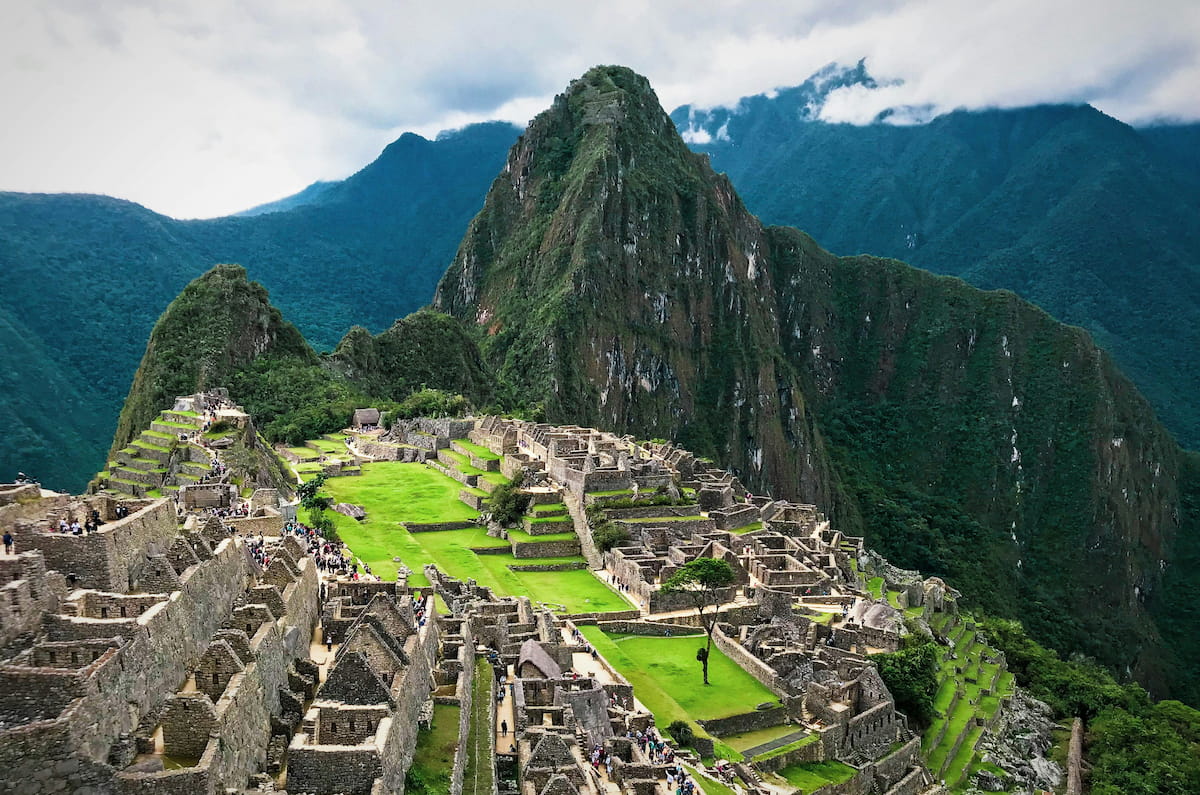
The clouds lift over the Sun Gate just after dawn, and suddenly 15th-century Inca stonework materializes below you in impossible precision — terraces, temples, towers — all fitted together without a drop of mortar, perfectly placed in a mountain saddle above the jungle. You’ve just paid $47 to see one of the world’s great architectural masterworks. The value is almost offensive.
Peru rewards travelers who do their homework. The experience itself — Machu Picchu, the Sacred Valley, Cusco’s cobblestone plazas, the terraced Andes — ranks among the most extraordinary on the planet. But this is also a destination with real logistical tripwires: tickets that sell out months ahead, mandatory train access that can’t be improvised, and altitude that humbles even seasoned hikers before they’ve set down their bags. Get the planning right, and Peru delivers exceptional value. Skip the research, and you’ll pay more for less — or miss the citadel entirely.
What’s In This Guide
📅 Best Time to Visit Peru & Machu Picchu
The sweet spot is May or September–October — you get dry-season conditions with a fraction of the June–August crowds. February is the one month to avoid entirely: the Inca Trail closes for maintenance and rainfall is at its peak. Whatever month you choose, book Machu Picchu tickets and train seats as early as possible — Circuit 2 sells out 2–4 months ahead in high season.
Where to Stay in Cusco
Cusco is your base for everything — it’s where you’ll acclimatize, explore the Sacred Valley, and catch the train to Machu Picchu. The historic center (Centro Histórico) and the bohemian San Blas neighborhood put you within walking distance of Inca ruins, world-class restaurants, and the PeruRail office. Budget a day or two just for altitude adjustment before doing anything strenuous. All rates verified April 2026; Cusco’s 18% IGV hotel tax is typically included in quoted rates at the properties below.
Niños Hotel is a Cusco institution and an easy VacayValue pick at the budget tier — not just because of the price, but because every sol you spend funds social programs for local street children. The rooms are simple but clean, the colonial courtyard is genuinely charming, and the central location on Calle Meloc puts you minutes from the Plaza de Armas. Breakfast is included and portions are generous. For the price point, the atmosphere and cause make it hard to beat.
Tierra Viva punches above its price bracket in Cusco — clean modern rooms in a restored colonial building, a dedicated tour desk for organizing Sacred Valley and Machu Picchu logistics, and oxygen available for guests struggling with altitude. The location near the Plaza de Armas means you’re 90 seconds from Cusco’s best restaurants and the PeruRail ticket office. Staff are consistently praised for helping guests who underestimated the 11,000-foot elevation.
The Monasterio was converted from a 16th-century Augustinian seminary and is arguably Peru’s most atmospheric hotel. Rooms are built around a cedar-tree courtyard containing the original chapel — genuinely stunning architecture that nowhere else in the world replicates. Belmond’s signature offering here is oxygen-enriched rooms for guests managing altitude; it costs more per night but for a luxury trip to Cusco, this is the definitive address. Service is the caliber you’d expect from the Belmond name.
Plan Peru Without the Guesswork
Get our free Machu Picchu booking timeline, altitude checklist, and verified cost breakdowns for 60+ destinations delivered straight to your inbox.
15 Best Peru & Machu Picchu Experiences
Peru’s experience mix is unlike most destinations: genuinely free things to do (wander Cusco’s streets and neighborhoods for hours without spending a sol), a mid-range paid tier anchored by the Machu Picchu ticket itself, and signature experiences at the top end that range from a 4-day Inca Trail trek to the world’s most theatrical luxury train. The split here reflects how most travelers actually encounter the country — a blend of casual exploration, a handful of ticketed highlights, and one or two experiences that become the trip’s centerpiece.
Cusco’s main square is one of the most dramatic urban spaces in the Americas — flanked by the 16th-century Cathedral Basilica and the Church of La Compañía de Jesús, both built on Inca foundations using stones stripped from Sacsayhuaman. The streets radiating out from the plaza weave through neighborhood after neighborhood of precisely fitted Inca stone walls supporting Spanish colonial facades. This is a city that rewards walking slowly and without a map. Budget a full afternoon just for getting comfortably lost in the Centro Histórico.
💡 The Cathedral contains an extraordinary painting of the Last Supper by Cusqueño artist Marcos Zapata — featuring guinea pig and chicha beer as the meal. Entry costs a few dollars; the painting alone is worth it.
Uphill from the Plaza de Armas, the San Blas barrio is Cusco at its most atmospheric — steep cobblestone calles, whitewashed walls, artisan workshops selling everything from silver jewelry to hand-painted textiles, and small restaurants with terrace views over the city’s red-tiled rooftops. The neighborhood’s namesake chapel holds one of the most intricate carved wooden pulpits in colonial South America. You could spend hours here without a purpose and leave with a completely different understanding of the city.
💡 Walk up early morning (before 9am) for the best light on the stonework and near-empty streets. Most vendors set up by 10am; the morning calm beforehand is one of Cusco’s quiet pleasures.
On Calle Hatunrumiyoc, embedded in the wall of what is now the Archbishop’s Palace, sits a single andesite block with 12 perfectly fitted angles — each face locking seamlessly against a neighboring stone without mortar or gap. It’s a modest-seeming thing to stop for: one rock among thousands. But stand in front of it for five minutes and the scale of Inca engineering slowly becomes very strange. This stone was quarried miles away, shaped without metal tools, and fitted perfectly. Walking the full length of Hatunrumiyoc Street along the original Inca perimeter wall is one of Cusco’s best free hours.
💡 Look carefully at the full wall on both sides of the street, not just the famous 12-angled stone — many of the surrounding blocks are equally complex fits. The stone is usually guarded by a costumed local who asks for a photo tip (entirely optional).
The open-air artisan market in the Sacred Valley town of Pisac is one of the largest and most colorful in Peru — a genuine jumble of woven textiles, alpaca goods, ceramics, jewelry, and street food that unfolds through the town’s main square every Sunday (and in smaller form on Tuesdays and Thursdays). Getting there requires a shared collectivo from Cusco (~$2 each way) or a private taxi (~$15), but once you’re in Pisac, the market itself costs nothing to wander. The nearby Pisac Inca ruins sit above the town and require a Boleto Turístico for entry, but the market alone is worth the trip.
💡 Arrive by 9am for the best selection before tour groups descend. Bargaining is expected but not aggressive — a polite counteroffer of 70% is typically accepted on textiles and crafts.
Circuit 2 is the comprehensive Machu Picchu route — the one that takes you through the Temple of the Sun, the Sacred Plaza, the Temple of the Three Windows, the Intihuatana stone, the residential urban sector, and the classic Guardian’s House viewpoint for that unmistakable panoramic photo. It covers the citadel in roughly 3 hours. Foreign adult admission is $47 for most of 2026, rising to approximately $52 from May onward per the Ministry of Culture’s pricing schedule. All tickets must be purchased online at tuboleto.cultura.pe with a specific date, circuit, and entry time — there are no walk-up tickets on the day.
💡 The 6am entry slot is genuinely different from midday — you’ll have 60–90 minutes with a fraction of the visitors before tour groups arrive en masse. The early morning cloud cover burning off the mountains is a photographic gift.
A 20-minute walk uphill from Cusco’s Plaza de Armas, Sacsayhuaman is the largest and most jaw-dropping Inca ruin on the city’s doorstep. The massive zigzagging stone walls — built from limestone blocks weighing up to 300 tons — stretch across a hilltop terrace with panoramic views over the red-roofed city below. The Boleto Turístico (partial circuit, ~$35) grants access to Sacsayhuaman along with several other Sacred Valley sites including Pisac ruins and Ollantaytambo. It’s the most logical way to cover multiple sites and saves money over individual admissions.
💡 Arrive at opening (7am) on a weekday — the site is enormous and the early morning light across those zigzagging walls is extraordinary. By 10am, tour buses have arrived and the atmosphere shifts considerably.
The Qoricancha was the most important temple in the Inca Empire — its interior walls once sheathed in gold, its garden planted with life-sized golden replicas of crops and animals. The Spanish demolished most of it to build the Church of Santo Domingo on top, but the curved Inca foundation walls survived and remain intact today, their precision stonework visible beneath and beside the colonial church. The juxtaposition of two civilizations occupying the same physical space is quietly profound. At around $5 for foreign adults, it’s one of the best-value historic sites in South America.
💡 This one is not included in the Boleto Turístico — buy your ticket separately at the entrance. Allow at least 90 minutes; the integrated museum inside is worth moving through slowly.
The Sacred Valley between Cusco and Machu Picchu contains some of the most important Inca archaeological sites outside the citadel itself — Pisac’s terraced fortress, the salt mines of Maras (still harvested in the traditional method), the agricultural laboratory at Moray with its perfectly circular concentric terraces, and the fortress at Ollantaytambo, whose massive walls are the most intact military architecture in the Inca world. A guided day tour from Cusco covers most of these for $60–90 per person including transport. Doing it yourself by collectivo cuts costs significantly; having a guide at the ruins adds context that’s hard to replicate solo.
💡 The best sequence: Pisac market in the morning, Maras and Moray midday, Ollantaytambo in the late afternoon — the fortress looks extraordinary in golden-hour light. Many visitors also stay overnight in Ollantaytambo to catch an early train to Machu Picchu the next morning.
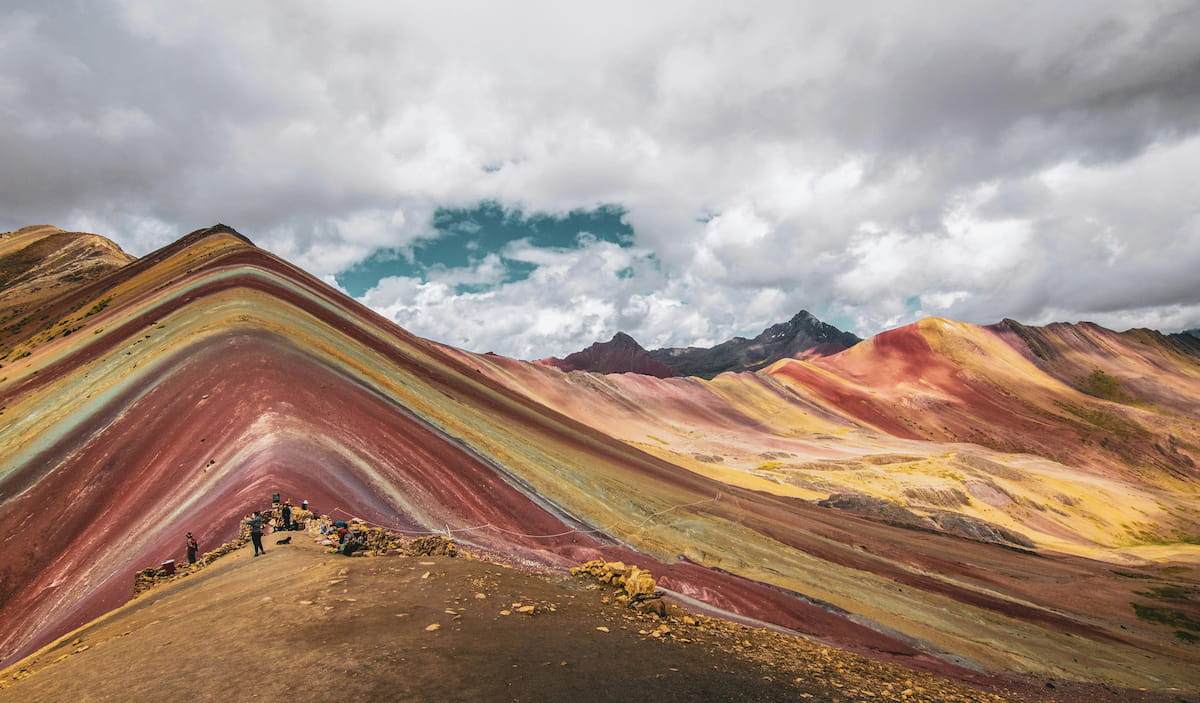
Vinicunca — Rainbow Mountain — sits at 17,060 feet above sea level and reveals a layered geological palette of red, gold, green, and turquoise mineral deposits that looks too vivid to be real. Group tours depart Cusco around 3:30–4am to reach the trailhead by dawn, then involve a 2–3 hour round-trip hike at brutal altitude. Tours (including transport, guide, and entrance fee) run $40–55. This is not a hike to tackle in the first 48 hours in Cusco — altitude sickness at 17,000 feet is genuinely dangerous without proper acclimatization. Wait until day 3 or 4 at minimum.
💡 The mountain gets crowded by 11am. Book the earliest departure available. Horses can be hired at the trailhead for roughly $20 if altitude or fitness is a concern — no shame in it at 17,000 feet.
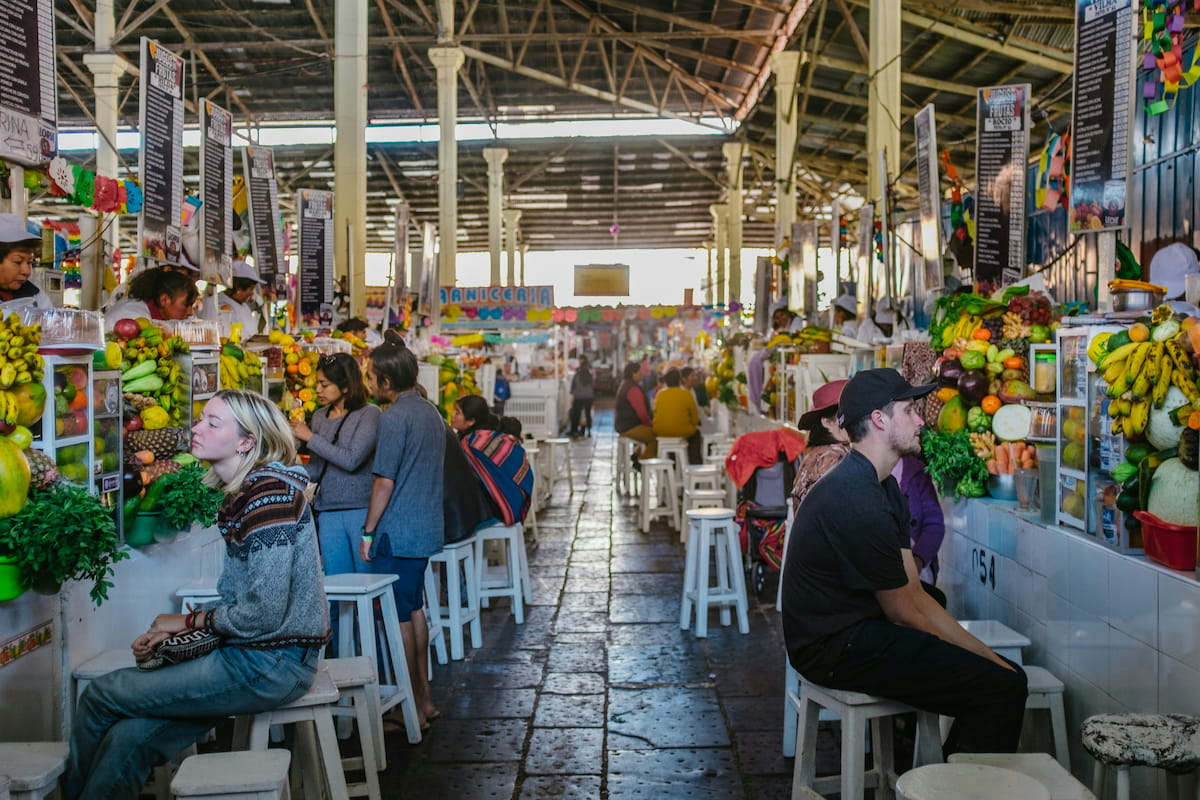
Peruvian cuisine is having a global moment — Lima has held the title of world’s best food city for multiple years running — but the source ingredients and traditional dishes originate in the Andean highlands. A 3-hour cooking class in Cusco typically begins with a guided walk through the Mercado San Pedro (the city’s main market) to select produce, quinoa, ají peppers, and herbs, followed by hands-on preparation of lomo saltado, causa, and pisco sour. It’s one of the most practical food education experiences available anywhere, and the session ends with a meal you made yourself.
💡 Book with a small-group operator (under 12 participants) rather than a hotel-organized class for a more hands-on experience. Classes at Marcelo Batata and Señora Maldini’s have consistently strong reviews on TripAdvisor.
After a full day at Machu Picchu — miles of stone stairways, mountain air, and the cumulative weight of the experience — the thermal baths in Aguas Calientes (Machu Picchu Pueblo) are an unexpectedly welcome footnote. The municipal hot springs sit 15 minutes on foot from the train station and offer a handful of outdoor pools at varying temperatures, fed by natural thermal waters. Entry for foreign adults is $6. They’re not world-class spas, but soaking aching legs while steam rises into the surrounding cloud forest walls after a day at the citadel is one of those simple pleasures that lands well out of proportion to the price.
💡 Bring your own towel — rentals are available but overpriced. The pools are cleanest and least crowded in the early morning before the day-trip crowds filter down from Machu Picchu.
The Inca Trail to Machu Picchu is among the great long-distance hikes on earth — 26 miles of original Inca paving, cloud forest, alpine grassland, and dozens of archaeological sites, culminating in arrival at the Sun Gate above Machu Picchu at dawn on day four. Government regulations require hiking with a licensed operator (permits cannot be purchased independently), limit daily starters to 500 total (including guides and porters), and close the trail every February. Permits for peak season (June–August) sell out within hours of their October release. Budget from $800–1,000 per person for a reputable group tour; private departures run $1,500 and up.
💡 A 2026 regulation means the Inca Trail permit no longer covers the full Machu Picchu citadel tour — a separate Machu Picchu ticket for Circuit 2 or 3 must now be purchased in addition to the trail permit. Book both through your licensed operator to ensure correct circuits and timing.
The steep pyramid of Huayna Picchu — the dramatic peak visible behind Machu Picchu in every classic photograph — can be climbed in about 45 minutes via a vertiginous Inca path with chain handholds and genuinely exposed sections. The view from the top, looking down at the citadel from above, is arguably the single best perspective of Machu Picchu available. Only 400 climbers are permitted daily, split between two entry windows (7am and 10am). The combo ticket runs $62 per person. This is not appropriate for anyone with a fear of heights or limited climbing fitness — the trail is steep, narrow, and uneven with significant drop-offs on either side.
💡 Huayna Picchu is frequently closed during the rainy season when the rock faces become dangerously slick. Book the 7am slot (not 10am) for the best light and weather conditions at the summit.
PeruRail’s Hiram Bingham is the most theatrical way to travel between Cusco and Machu Picchu — a vintage-style Pullman train with polished wood interiors, white-tablecloth dining, a cocktail car, and live Andean music on board. The journey from Poroy station takes 3.5 hours each direction and includes brunch on the outbound leg and cocktails and a 4-course dinner on the return. A guided tour of Machu Picchu and the citadel entrance ticket are included in the price. At $950+ round trip per person, this is an indulgence — but as a once-in-a-lifetime way to complete a bucket-list journey, the whole package makes sense.
💡 The Hiram Bingham departs from Poroy station (not Cusco’s main San Pedro station) and is suspended January–April due to seasonal landslide risk. Check PeruRail’s current operating schedule at perurail.com before building your itinerary around this train.
When Inca Trail permits are sold out — or when the idea of a more remote, less-trafficked route appeals — the Salkantay Trek is the answer. The 5-day route crosses the 15,200-foot Salkantay Pass beneath a permanent glacier, descends through cloud forest into the Urubamba Valley, and delivers you to Aguas Calientes for the final day at Machu Picchu. Unlike the Inca Trail, Salkantay permits are not limited by the government, though daily numbers are still managed by operators. The scenery is arguably more diverse — and the sense of genuine remoteness on the high pass is something the classic trail, popular as it is, no longer fully provides.
💡 The Salkantay Pass is crossed on day 2, the most physically demanding section — book an operator that includes an acclimatization day in Cusco as part of the package. Mountain Lodges of Peru runs the premium version with lodge accommodation each night; Sky Lodge Adventures covers the budget-friendly camping option.
Worth It / Skip It
Don’t Make These Mistakes
Arriving in Cusco and immediately going hard. Cusco sits at 11,152 feet — higher than most people have ever been — and altitude sickness doesn’t discriminate by fitness level. Common symptoms include headaches, nausea, dizziness, and disrupted sleep. Plan a full day of rest and acclimatization on arrival: drink coca tea, eat light, hydrate aggressively, and avoid alcohol for the first 24 hours. Don’t hike Rainbow Mountain, tackle Sacsayhuaman, or take a Machu Picchu day trip until day 3 at minimum.
Waiting to book Machu Picchu tickets and the train. Circuit 2 sells out 2–4 months ahead during peak season (June–August) and increasingly sells out in shoulder months too. Inca Trail permits sell out within hours of their October release for the following year. The train from Ollantaytambo fills up weeks ahead in high season. These are not bookable on arrival. If your trip is more than 8 weeks out, lock in your Machu Picchu ticket and train tickets as your first priority — before hotels, before tours, before anything else.
Flying through Lima without stopping. Lima’s culinary scene — particularly the Miraflores and Barranco neighborhoods — is one of the best in the world, and most routes from the US connect through Jorge Chávez Airport anyway. An overnight in Lima before flying to Cusco adds minimal cost (domestic Lima–Cusco flights run $80–150), delivers an extraordinary food experience at Central, Maido, or dozens of excellent mid-range spots, and gives you a gentler geographic transition before the altitude hits in the highlands.
Underestimating the logistics of getting to Machu Picchu. Machu Picchu is not accessible by road — the only options are the train from Ollantaytambo (or Cusco), the Hidroeléctrica bus-and-hike route, or multi-day trekking routes. The one-way train from Ollantaytambo takes approximately 1.5 hours; budget a full day for the round trip. Aguas Calientes, the gateway town, is a 25-minute shuttle bus from the citadel entrance. None of this is complicated once you understand it, but travelers who assume they can figure it out on arrival frequently miss their entry slot or pay significantly more for last-minute arrangements.
VacayValue Scorecard — Peru & Machu Picchu
Packing List — Peru & Machu Picchu
Your Next Adventure, Already Planned
Subscribe for verified cost breakdowns, booking timelines, and destination intelligence for 60+ destinations — including every major bucket-list site.
Peru Delivers an Extraordinary Return — Once You Know How to Navigate It
The economics of Peru are unusual. The destination is genuinely affordable once you’re there — hostel beds for $15, full lunches for $5, one of the world’s great archaeological sites for $47 — but the cost of getting there is real, and the mandatory transport to Machu Picchu (train + shuttle) adds a significant line item that doesn’t scale down regardless of budget. The result is a trip where the cost structure front-loads into flights and logistics, then pays dividends in extraordinary value every day on the ground.
The experience tier is the other factor that earns Peru its score: Machu Picchu is simply in a different category from most tourist attractions. Standing in the citadel for the first time, surrounded by precisely engineered stonework on a mountain ridge above the clouds, produces a specific feeling that’s very hard to replicate anywhere else. Add the Sacred Valley, Cusco’s layered Inca-colonial history, Rainbow Mountain’s alien geology, and cuisine that ranks among the best in the world, and Peru is one of the highest-concentration adventure destinations on the planet.
The critical variable is planning lead time. This is not a trip that works on impulse. Machu Picchu tickets, train seats, and Inca Trail permits require months of advance booking, particularly in peak season. Get that right, and Peru rewards the preparation with one of travel’s most lasting memories at a price that feels quietly, almost absurdly, right.