
Costa Rica Adventure Travel Guide — Volcanoes, Zip Lines & Jungle Thrills
An active volcano. Class IV rapids. 200-foot canopy drops over cloud forest. Costa Rica packs more adventure per square mile than almost anywhere on earth — and it doesn’t cost a fortune to access it.
You don’t come to Costa Rica for rest. You come to clip into a harness 200 feet above the cloud forest floor, white-knuckle a class IV rapid on the Río Pacuare, and stand close enough to an active volcano to feel the ground hum under your boots.
Costa Rica earns its reputation as one of the world’s top adventure destinations not because it’s extreme — though it can be — but because the concentration of experiences is unmatched. Rainforest, volcano, river, ocean, and cloud forest all within a day’s drive of each other. The adventure infrastructure is mature enough to be genuinely safe, but the wilderness is wild enough to feel real. This guide focuses on the adventure circuit — Arenal, Monteverde, the Osa Peninsula, and the rivers in between — with verified prices for every activity so you can plan without surprises. The wellness and beach angles are covered in separate guides; this one is for travelers who want to move.
What’s In This Guide
📅 Best Time to Visit Costa Rica for Adventure
The best windows are January through April and late November through mid-December. If you’re targeting Río Pacuare rafting specifically, May through August actually produces the most exciting water levels — it’s a legitimate case where shoulder season delivers a better experience than dry season. Avoid September and October entirely unless you’re an extremely flexible, seasoned traveler chasing rock-bottom rates.
Where to Stay in Costa Rica
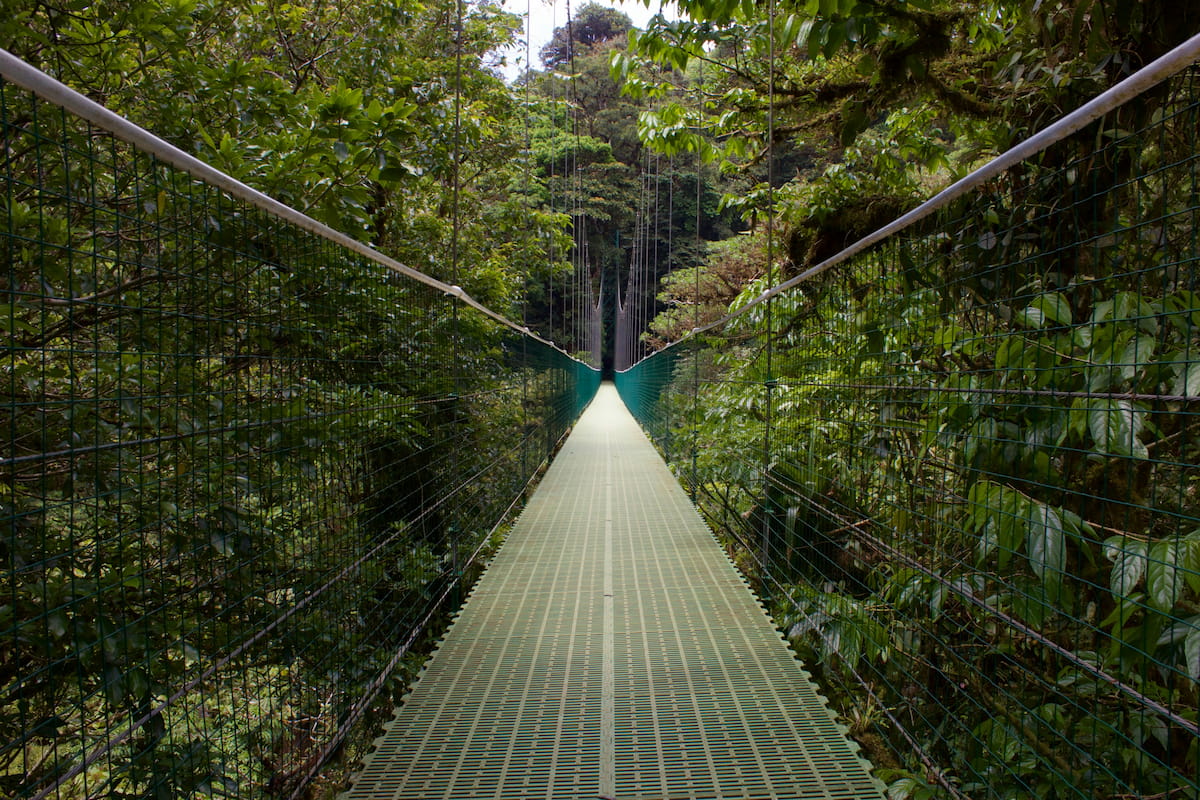
La Fortuna, the small town at the foot of Arenal Volcano, functions as the adventure hub for most itineraries — it sits within reach of the volcano, the Mistico hanging bridges, La Fortuna waterfall, and the road to Monteverde. Rates below are for La Fortuna-area properties and were verified April 2026. Note that Costa Rica charges 13% IVA (sales tax) on accommodations; the rates shown are room-only before tax.
One of the few budget properties in La Fortuna with a legitimate volcano view from the pool deck — which is a genuine differentiator at this price point. Private rooms are simple but clean, with A/C and en-suite bathrooms. It’s busy and social, which suits travelers who want to find a rafting or zip line partner. The location puts you within a short drive of most major Arenal activities without paying eco-lodge premiums.
Positioned on the slopes above La Fortuna with unobstructed sightlines to Arenal, the Kioro earns its mid-range slot by offering thermal pools and a full restaurant without the four-figure nightly rates of the luxury resorts. Suites have private terraces — the kind of spot where you wake up, open the curtains, and immediately feel the trip has already been worth it. Activity desks on-site can arrange most Arenal excursions at competitive rates.
Tabacon’s thermal river runs through the resort grounds, fed directly by Arenal’s volcanic heat — this isn’t a hotel with a hot tub, it’s a hotel built around a genuine geothermal waterway. Guests have exclusive access to the thermal complex after 10pm when day visitors leave, which transforms the experience entirely. The adventure infrastructure around La Fortuna means you spend your days on the volcano and rivers, then come back to something genuinely spectacular.
Get the Costa Rica Adventure Trip Sheet
Activity operators, price benchmarks, and the exact route we’d take — delivered to your inbox before you book.
15 Best Costa Rica Adventure Experiences
Costa Rica’s adventure lineup breaks into a clear three-tier structure: a handful of genuinely free experiences anchored in the natural landscape; a solid middle tier of national parks, guided activities, and river expeditions priced fairly for what they deliver; and a small group of signature experiences worth saving for. All prices below are standard adult non-resident rates verified April 2026.
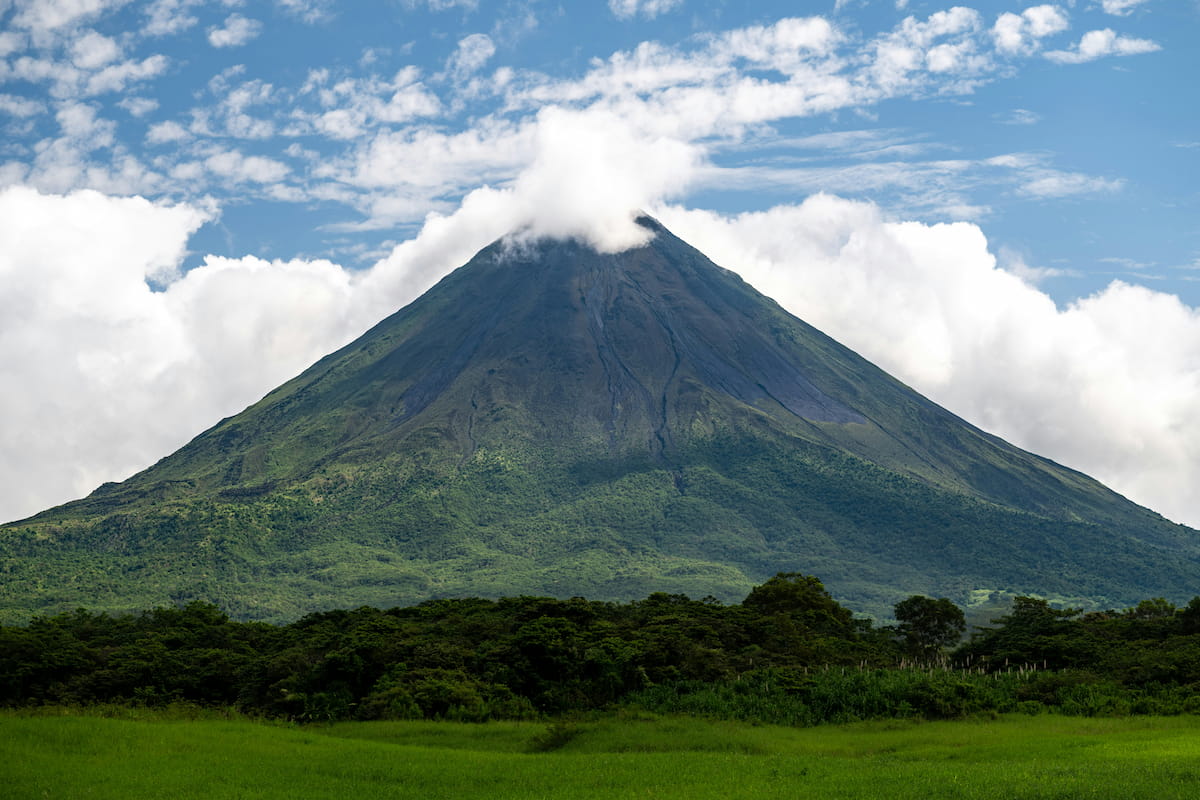
The most dramatic thing about Arenal isn’t inside the national park — it’s what you see from La Fortuna’s central plaza and the road heading west out of town. The volcano rises 5,438 feet from a flat plain with nothing obscuring it, a near-perfect cone shape that looks implausibly cinematic at sunrise and at night. No ticket required, no trail to follow. Multiple pullout viewpoints along Route 142 give you clean sightlines at any hour.
💡 The clearest views tend to come in the early morning before convective clouds build around the summit. Set an alarm for 6am and drive the main road west for 10–15 minutes.
A few kilometers outside La Fortuna, volcanic runoff from Arenal heats sections of the Río Cholín to a natural warm temperature — locals know exactly where to wade in, and the spots aren’t hard to find if you ask at your hotel. This is the un-packaged version of what the resort hot springs charge $80+ for: a jungle river, warm geothermal water, no wristbands, no swim-up bars. Basic infrastructure, spectacular concept.
💡 Ask your hotel or hostel staff for the current access point — the best spots shift slightly with seasonal water levels. Bring sandals with grip; riverbank rocks can be slippery.
Costa Rica has one of the highest biodiversity densities on the planet, and much of it is visible from public roads at no cost. Three-toed sloths hang in cecropia trees along Route 142. Scarlet macaws fly in pairs over the Pacific lowlands. Howler monkeys announce dawn from roadside canopy. White-faced capuchins forage near river crossings. You don’t need a national park ticket or a guided tour to encounter wildlife here — you need patience, decent binoculars, and a willingness to pull over.
💡 Dawn and dusk are peak activity windows for most species. Slow down near cecropia trees (light green, large-leafed) — sloths are partial to them and easier to spot once you know the tree.
Entry to the park puts you on the lava trails that circle Arenal’s base — hardened 1992 lava fields, secondary forest regeneration, and the kind of terrain that makes it viscerally clear you’re walking on a geologically active landscape. The main trails are well-maintained and accessible without a guide. The lake lookout trail (Sendero Los Tucanes) is the standout, with sweeping views across Lago Arenal when the summit is clear.
💡 Entry is online reservation via the SINAC system (sinac.go.cr). Arrive before 9am on weekends — the park fills its daily capacity quickly during dry season.
A 75-meter cascade that drops into a jade-green swimming hole — the descent is 500 steps down a well-maintained staircase, and the payoff at the bottom justifies every one of them. Swimming at the base is permitted and genuinely exhilarating; the water is cold and the current near the falls requires awareness. The uphill return takes most people 20–30 minutes and earns its own category as a workout. One of the most photogenic spots on the adventure circuit.
💡 Come on a Tuesday or Wednesday morning during dry season to avoid weekend crowds. The swimming hole is at its most swimmable when water levels are moderate — after heavy rain, the current near the base becomes unsafe.
The world’s most visited cloud forest, and deservedly so. Permanent mist clings to the canopy year-round, creating an ecosystem unlike anything at lower elevations. The reserve protects nearly 35,000 acres of forest where resplendent quetzals nest, bellbirds call from the treetops, and the trail network covers terrain from accessible boardwalk loops to steep back-country paths. This is not a zip line park — it’s a functioning wilderness reserve where the main activity is looking, listening, and slowing down.
💡 Daily entry is capped — book at least 48 hours ahead at reservas.mcl.ac.cr, especially during January through April. The 7–9am window produces the best quetzal sightings during nesting season (Jan–May).
The Río Celeste runs a blue so vivid it looks computer-generated — the color comes from a chemical reaction where two clear springs merge and scatter light at a specific frequency. The hike to the waterfall and mixing point covers about 4.5 miles round-trip through primary jungle. It’s moderately challenging with sections of slick wooden boardwalk and root-covered path. One of Costa Rica’s most extraordinary natural phenomena, and one of the most underrated on the adventure circuit.
💡 Tenorio is a 2.5-hour drive from La Fortuna — pair it with a night in Bijagua to avoid the early morning rush from the Arenal area. Go on a weekday; weekend crowds dilute the experience significantly.
Costa Rica invented commercial zip lining as a tourism product, and the Arenal and Monteverde operators have refined it over decades. The better operators (Sky Adventures, Midworld, Extremo) run multi-cable circuits over primary forest with Arenal views or cloud forest canopy — the longest cables exceed 1,700 meters. Tarzan swings, rappels, and Superman-position cables are standard inclusions at this price. Quality varies significantly by operator, which matters for both safety and experience.
💡 Stick to established operators with verifiable safety certifications — Sky Adventures and Midworld are consistently reliable. Avoid discount zip lines near Jacó or the airport corridor; the equipment and training standards don’t compare.
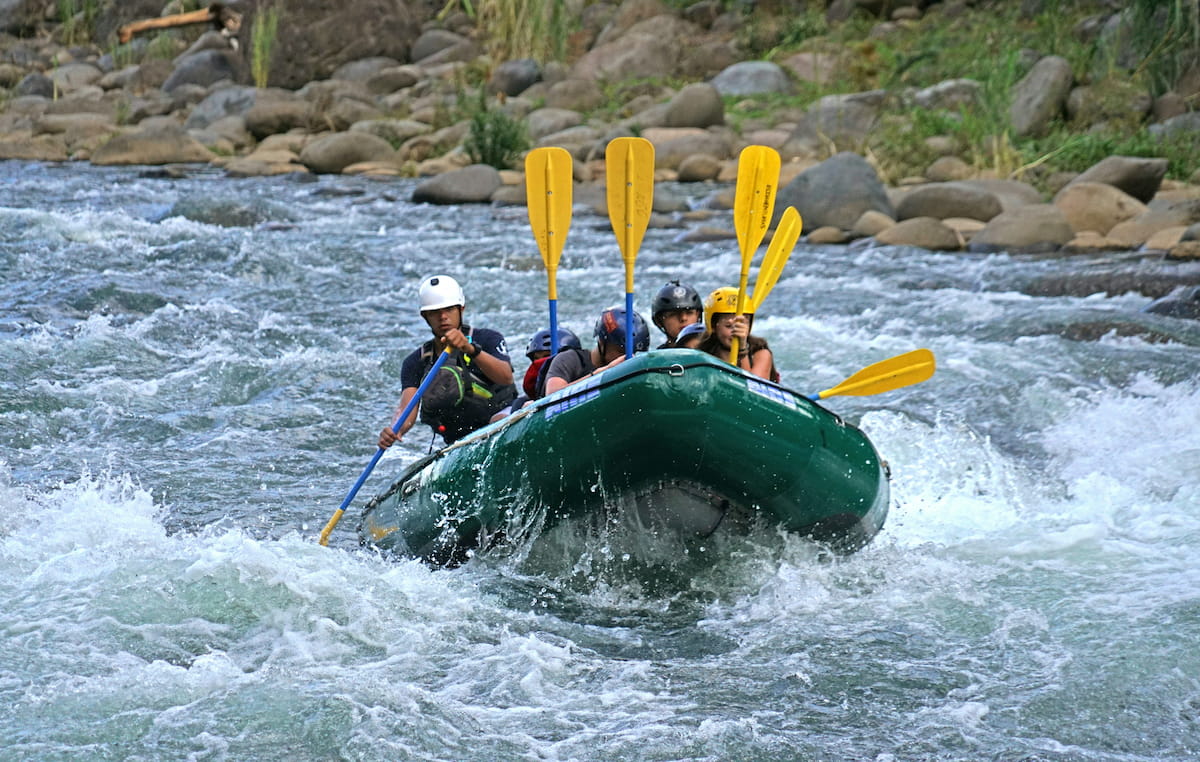
The Sarapiquí offers Class III–IV rapids through dense jungle with good wildlife viewing between drops — toucans, kingfishers, and river otters are common sightings. It’s the right starting point for travelers who want legitimate white water without committing to a multi-day expedition. Most half-day rafting tours from La Fortuna include transport, equipment, and lunch; a solid operator will run safety instruction that makes even nervous paddlers comfortable before the first rapid.
💡 Water levels — and therefore rapid intensity — are highest May through August. If you’re after a mellower float, January through March produces a more relaxed Sarapiquí. Ask operators about current conditions when booking.
Costa Rica’s smallest and most-visited national park combines primary rainforest with Pacific coast beaches in a package that’s hard to match. White-faced capuchins walk the trails openly, sloths nap in trees directly above the path, and the forest transitions to white sand beach over roughly 4 miles of trail. It’s not untouched wilderness — the infrastructure is polished and crowds arrive early — but the wildlife density per hour of trail is exceptional by any measure.
💡 Reservations at sinac.go.cr are mandatory; the park limits daily visitors to 600. Book at least a week out during dry season. A licensed guide (~$25 split per group) dramatically increases wildlife sightings — many animals are invisible without trained eyes.
The same jungle trail that hosts toucans and sloths by day transforms after dark. Red-eyed tree frogs emerge on leaf surfaces, fer-de-lance snakes cross paths, kinkajous move through the canopy, and the ambient sound layer shifts completely. A knowledgeable guide with spotting lights can locate animals that are functionally invisible without assistance — it’s a 2-hour experience that reframes everything you thought you understood about the daytime forest. Among the most memorable things to do in Costa Rica for a certain type of traveler.
💡 Wear long pants and closed shoes — trail conditions can include wet grass and exposed roots. Groups of 6 or fewer get significantly better wildlife sightings than large tour groups; ask operators about group size caps before booking.
The Pacuare is consistently ranked among the top five white water rivers in the world, and the overnight lodge format is the reason to do it rather than the single-day trip. Class III–IV rapids run through a gorge of unbroken primary jungle — no roads, no towns, no infrastructure except the river lodges accessible only by boat or raft. You sleep in an open-air lodge above the riverbank, fall asleep to rapids, wake up and do it again. The per-person cost includes all meals, equipment, guides, and transport back to San José or La Fortuna.
💡 Book 6–8 weeks ahead for the best lodge availability. Rios Tropicales and Exploradores Outdoors are the gold-standard operators — both run their own lodges on the river, which matters for the overnight experience quality.
Corcovado on the Osa Peninsula contains what National Geographic once called the most biologically intense place on earth — and access requires a certified guide, advanced reservation, and genuine logistical planning. Tapirs walk the beach at dawn. Harpy eagles nest in the primary forest canopy. Jaguar tracks appear regularly in the mud near the river crossings. This is primary rainforest, not managed parkland — it requires a full day or multi-day commitment and an operator who knows the terrain. The cost reflects the remoteness, the required guide certification, and the scale of what you’re entering.
💡 Entry is through either the San Pedrillo or Los Patos ranger stations; the coastal approach from Drake Bay is the classic route. Book at least 3–4 weeks ahead — the park has a hard daily visitor cap and certified guides fill their slots quickly in dry season.
The waters off Drake Bay on the Osa Peninsula host humpback whales (July–October, December–March), pods of spinner dolphins, whale sharks, and bottlenose dolphins year-round. A guided sea kayaking excursion puts you at water level with these animals rather than on a motor vessel looking down. Half-day tours launch before sunrise for the best wildlife windows and combine open-ocean paddling with mangrove channels. The experience is fundamentally different from Pacific coast dolphin watching from a speedboat — this is slow, quiet, and close.
💡 Combine with a Corcovado day — most Drake Bay operators offer packaged multi-day programs that include kayaking, snorkeling, and park access. July through October peaks for humpback whale encounters; ask your operator about current sightings before booking.
Arenal from above on a clear day is one of those images that recalibrates scale. A 30-minute scenic helicopter circuit over the cone, across Lago Arenal, and back over the rainforest provides a perspective that no trail or viewpoint can replicate — you can see the summit crater, the lava channels, and the relationship between the volcano and the surrounding landscape in a single frame. Several operators run these flights out of La Fortuna; trips are weather-dependent and typically scheduled for morning when atmospheric clarity is best.
💡 Weather cancellations are common — book with a full refund or reschedule policy. Sunrise flights are the most spectacular and the most likely to have clear summit views before clouds build at mid-morning.
Worth It / Skip It
Don’t Make These Mistakes
Renting a 2WD sedan when your itinerary requires one. The road up to Monteverde from the Pan-American Highway is 35 kilometers of unpaved gravel with sharp elevation gain and deep ruts after rain. Economy sedans make it on dry days — barely — but a single afternoon storm can strand an underpowered 2WD in the mud. Several Osa Peninsula destinations require river crossings that no sedan survives. Check every leg of your route before committing to a car class; the upgrade cost is always less than a tow truck and a ruined day.
Assuming driving times are proportional to distances on a map. Costa Rica has no divided highways connecting adventure destinations. La Fortuna to Monteverde is roughly 100 kilometers but takes 3–3.5 hours over winding mountain roads. San José to Drake Bay involves a domestic flight or a full day’s drive plus a boat. Build generous buffers into every transfer day, and never schedule a park entry or guided activity immediately after a long drive — delays compound quickly on rural roads.
Skipping mandatory rental car insurance. Costa Rica law requires all rental cars to carry basic liability and collision damage waiver coverage — it’s not optional and it’s not included in the base rental rate you see online. The daily cost runs $12–$18 depending on the company and vehicle class. Every budget comparison you do needs to include this line item or you’re comparing the wrong numbers. Some US credit cards provide CDW coverage — check your card’s terms before you decline the rental company’s policy.
Visiting during September or October without accounting for the operational impact. These two months bring the heaviest rainfall on the Pacific side and affect more than just trail conditions. Some national parks restrict access. Certain eco-lodges close for maintenance. Unpaved roads that are manageable in July become impassable in October. If you must travel during these months, concentrate your itinerary on the Caribbean side (which has its own dry spell August–October) or stay on paved routes and plan indoor contingencies for every outdoor activity.
VacayValue Scorecard — Costa Rica Adventure
Packing List — Costa Rica Adventure
Before You Book, Read This
Operator recommendations, timing tips, and the booking sequence we’d follow — all in one free trip sheet.
World-Class Adventure at a Price Point That Still Makes Sense
Costa Rica’s adventure credentials are genuinely hard to argue with. Active volcano, primary rainforest, class IV rivers, and cloud forest zip lines — all within a country the size of West Virginia, with mature tourism infrastructure that makes it accessible rather than exhausting. The activities that define this trip are priced competitively for what they deliver. A Río Pacuare overnight runs $280–$400 per person; a comparable wilderness expedition in Patagonia or Alaska costs multiples of that.
Where Costa Rica loses points is in the surrounding costs. Flights from most US cities aren’t cheap enough to be surprising. Eco-lodges command a premium over Southeast Asian equivalents for similar natural surroundings. Food is reasonable at local sodas but climbs quickly in tourist hubs. The budget traveler willing to eat where the locals eat, rent a basic vehicle, and book activities directly rather than through hotel desks can keep a 5-night adventure trip under $2,500 for two — a legitimate achievement for this caliber of experience.
The VV Score of 8.2 reflects a destination that earns high marks on activity value and experience quality while landing in the middle on affordability. That’s the right read: Costa Rica isn’t the cheapest adventure destination, but it may be the one where the money-to-memory exchange rate is most defensible.