
Edinburgh on Any Budget: Scotland’s Capital Without the Sticker Shock
More world-class free museums per square mile than almost anywhere in Europe — and a UNESCO Old Town you can explore entirely on foot. Here’s what Edinburgh actually costs, and where the money is worth spending.
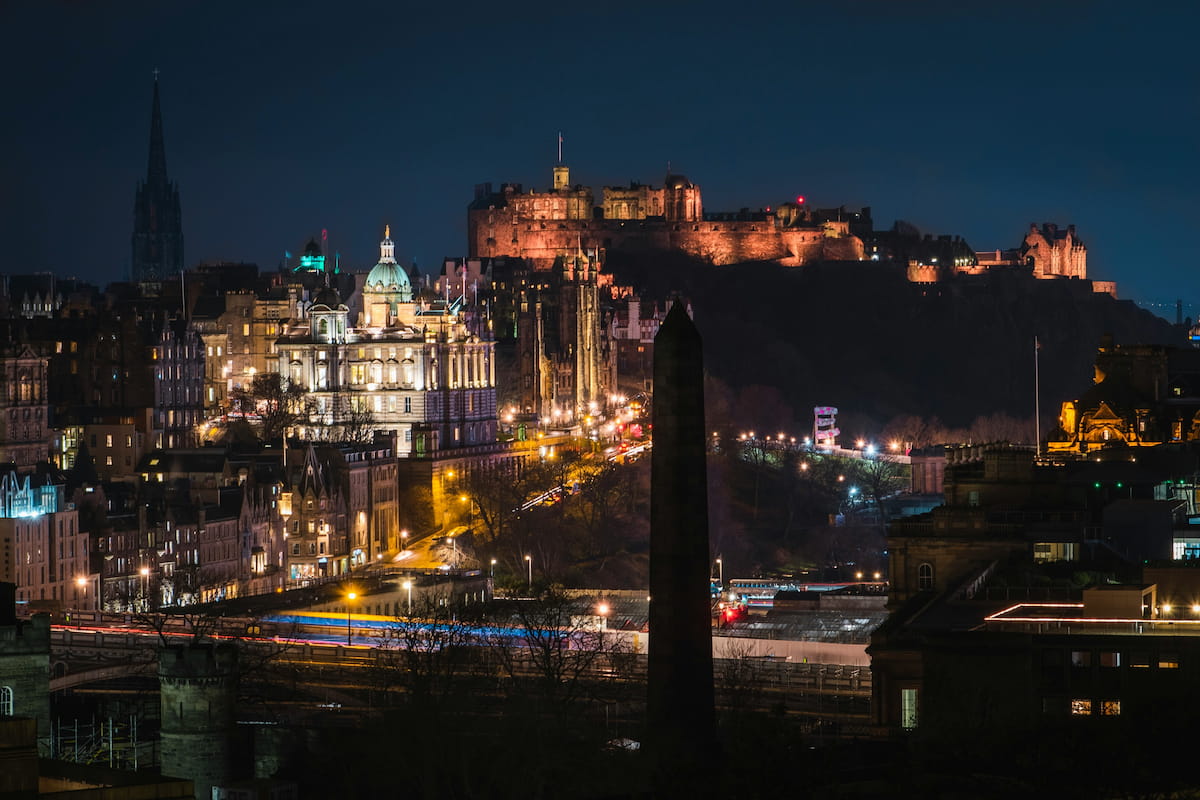
The first thing you notice about Edinburgh is the castle — a thousand-year-old fortress perched on a volcanic plug, looming over every street corner. The second thing you notice is that the city below it is almost completely free to explore.
Scotland’s capital is one of Europe’s great travel bargains hiding inside an expensive-looking package. Yes, flights across the Atlantic cost money, and yes, August prices are brutal. But once you land, the National Museum of Scotland, the Scottish National Gallery, Arthur’s Seat, Calton Hill, and the entire UNESCO World Heritage Old Town cost nothing to experience. Edinburgh rewards travelers who know which £25 admission fees are genuinely worth it and which ones aren’t. This guide does that math for you.
What’s In This Guide
📅 Best Time to Visit Edinburgh
The sweet spot is April–June or September–October. Avoid August unless you’ve secured accommodation and Fringe tickets well in advance — prices can triple overnight once the festival calendar opens. September is Edinburgh’s most underrated month by a significant margin: golden light on the Old Town, post-festival quiet, and room rates 40–60% lower than August.
Where to Stay in Edinburgh
Edinburgh’s most central neighborhoods are the Old Town (medieval, atmospheric, next to everything) and the New Town (Georgian, quieter, slightly better value). Staying within walking distance of Princes Street keeps transport costs minimal — this is one of the most walkable cities in Europe. Note: Edinburgh is introducing a Visitor Levy on accommodation — check current rates when booking. All hotel rates verified March 2026 and represent standard non-festival periods; August Fringe prices can be 2–3x higher.
Premier Inn is the UK’s most reliable budget chain — and in a city where “budget” is a relative term, they consistently deliver clean, comfortable rooms at prices that don’t punish you. Multiple locations exist across Edinburgh; the most central options sit near Haymarket Station or the Royal Mile. Rooms are compact but functional, with power showers, good beds, and blackout curtains. You won’t get views or charm, but you will get everything you need within walking distance of the Old Town.
Sitting directly on Princes Street — the main artery between the Old and New Towns — this hotel puts you at the center of everything. The castle is visible from select rooms, the hop-on hop-off bus stops outside, and both the National Gallery and Waverley Station are a short walk. Rooms are modern and well-maintained, and the location alone saves you meaningful transport costs since you can walk to most of Edinburgh’s major attractions from the front door.
The clocktower at the east end of Princes Street is as much a part of Edinburgh’s skyline as the castle itself, and The Balmoral is the hotel beneath it. J.K. Rowling finished Harry Potter and the Deathly Hallows in Suite 552 — now available to book. Rooms are supremely comfortable with Old Town views, and the hotel connects directly to Waverley Station for easy arrival from the airport. If you’re going to splurge once in Edinburgh, a night here makes the whole trip feel different.
Scotland on a Budget — Get the Breakdown
Practical trip-planning guides with verified prices, timing tips, and zero filler. Join the VacayValue list.
15 Best Edinburgh Experiences
Edinburgh’s greatest trick is that its most memorable experiences cost nothing at all. The free tier here is genuinely world-class — a national museum that rivals the British Museum, a gallery that could anchor a major European capital, and a volcanic summit with panoramic views across Scotland. The paid experiences are where Edinburgh earns its prestige, and the signature tier delivers once-in-a-lifetime moments for those ready to spend for them.
An extinct volcano rising 823 feet above the city, Arthur’s Seat is one of the most dramatic urban hikes in the world. The main route from the Holyrood Park gates takes 45–75 minutes each way depending on your pace, and the summit delivers a 360° panorama stretching from the Firth of Forth to the Pentland Hills. It’s technically a moderate hike rather than a walk — bring proper footwear, as the path becomes rocky near the top. The light in the late afternoon is extraordinary.
💡 Start from the St Margaret’s Loch car park for the most gradual ascent. The summit is accessible year-round but can be icy in winter — check conditions. Weekday mornings are quieter; weekend afternoons can be surprisingly crowded near the top.
If Arthur’s Seat is for the committed hiker, Calton Hill is for everyone else. A 15-minute walk from Princes Street brings you to a hilltop scattered with neoclassical monuments — the unfinished National Monument (Edinburgh’s own Parthenon), Nelson’s Column, the City Observatory — and what many photographers consider the best view of Edinburgh Castle in the city. The skyline at sunset from here is the kind of image you came to Scotland to see.
💡 There’s no entrance fee or opening time — Calton Hill is accessible at any hour. The view looking west at sunset puts the castle in silhouette against the sky. Come on a clear evening and bring a jacket; it’s exposed and always windy.
One of Europe’s great free museums, the National Museum of Scotland covers natural history, world cultures, Scottish history, science, and design across seven floors of a stunning Victorian building on Chambers Street. The Scottish history galleries on the upper levels are exceptional — Dolly the sheep is here, as are medieval artifacts, Jacobite relics, and the Lewis Chessmen. Budget at least two to three hours; the collection is genuinely absorbing and the architecture of the Grand Gallery alone is worth the visit.
💡 The rooftop terrace is free and open to all — it offers a lesser-known panoramic view of the Old Town that rivals Calton Hill without the climb. Access via the elevator on the upper floors.
The permanent collection at the Scottish National Gallery is free, and it’s exceptional — Titian, Raphael, Velázquez, Vermeer, Rembrandt, El Greco, and the most comprehensive collection of Scottish paintings in the world, all housed in a neoclassical building at the foot of the Mound between the Old and New Towns. Visiting takes 1.5–2 hours at a comfortable pace. The Impressionist rooms have strong representation from Monet and Van Gogh, and the ground-floor Scottish galleries tell the story of the country’s artistic identity in a way the history museums never quite manage.
💡 The gallery sits directly beside Princes Street Gardens — combine the two for an afternoon. Temporary exhibitions sometimes carry admission fees; check the website ahead of time.
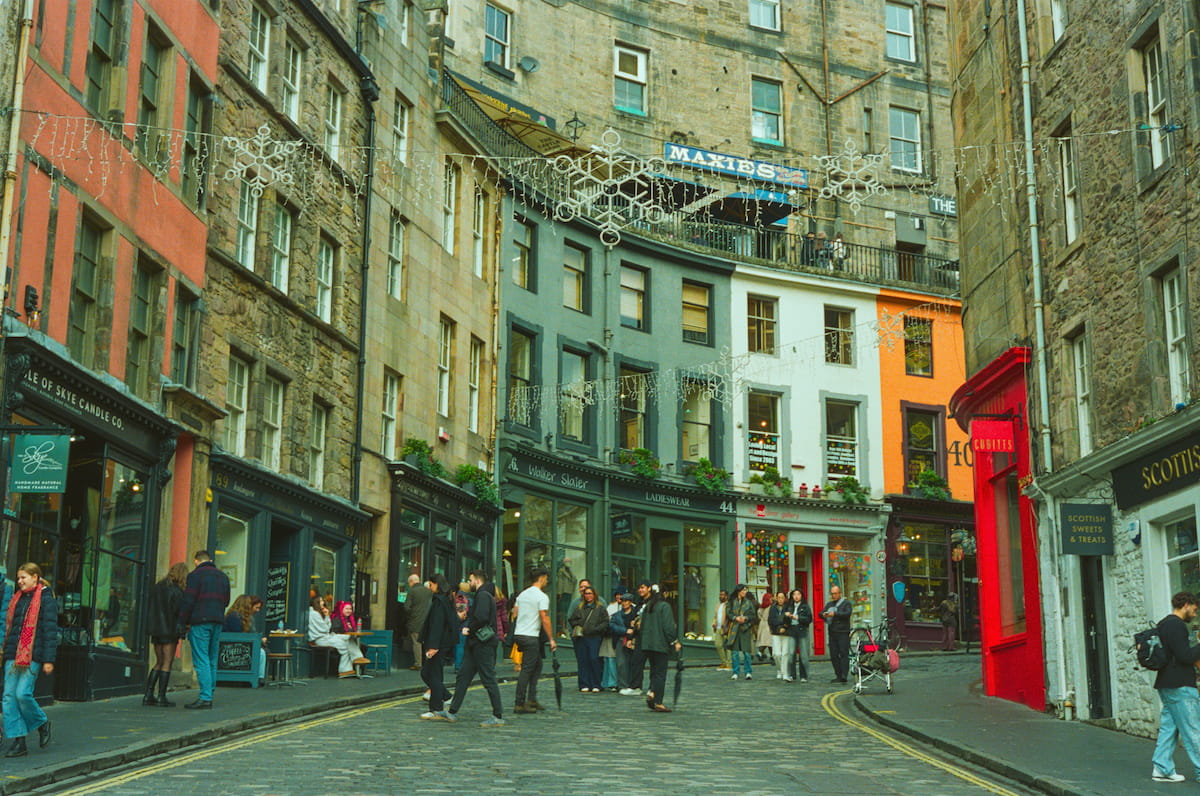
The single best free activity in Edinburgh is simply walking the Old Town. Start at Edinburgh Castle and descend the Royal Mile through 900 years of Scottish history — past St Giles’ Cathedral (free entry, suggested donation), down the closes and wynds that branch off the main street, and into the Grassmarket below. The curve of Victoria Street is one of the most photographed streets in Scotland, with its candy-colored shopfronts stacked across two levels. Greyfriars Kirkyard at the bottom is free, atmospheric, and home to the statue of Greyfriars Bobby — the Skye Terrier who guarded his owner’s grave for 14 years.
💡 The closes (narrow alleyways) branching off the Royal Mile are where Edinburgh’s real history hides — Brodie’s Close, Riddle’s Court, and Bakehouse Close all have stories worth knowing. A good guidebook or audio tour app makes the walk significantly richer.
Scotland’s most-visited paid attraction divides people cleanly into two camps: those who think it’s overpriced and those who can’t believe how much is packed inside a single ticket. The Honours of Scotland — the oldest surviving crown jewels in Britain — are kept here, as are St Margaret’s Chapel (the oldest building in Edinburgh, dating to the 12th century), Mons Meg (a medieval siege cannon of extraordinary scale), the Scottish National War Museum, and one of the best castle views in Europe. Book online in advance for the $25 rate; walk-up tickets cost $31, and the summer peak can sell out days ahead. Note: as of early 2026, the Stone of Destiny has been permanently relocated to Perth Museum and is no longer at the Castle — a significant change worth knowing before you go.
💡 Arrive at 9:30am when the gates open — the Crown Room and Great Hall are appreciably less crowded in the first hour. Free guided tours by castle stewards depart throughout the day and are genuinely excellent.
The King’s official Scottish residence sits at the opposite end of the Royal Mile from the Castle and provides a completely different lens on Scottish history. The State Apartments are extraordinary — particularly the Great Gallery with its portraits of 110 Scottish monarchs — and the ruins of 12th-century Holyrood Abbey, accessible within the grounds, are hauntingly atmospheric. Mary, Queen of Scots’ historic chambers tell the story of her turbulent six years of residence, including the murder of her secretary David Rizzio, whose stained floorboard is still pointed out today. The audio guide included in every ticket is genuinely one of the best in Scotland.
💡 The palace is closed Tuesdays and Wednesdays from October through late May. Book timed entry tickets online in advance at $28 — same-day tickets at the door cost $33. Check the website for royal closure dates, as the palace closes when the King is in residence.
Tripadvisor’s #1 UK Attraction for 2025, the Royal Yacht Britannia is moored at Ocean Terminal in Leith — about 20 minutes from the city center by tram — and it earns that ranking without much argument. For 44 years, Britannia served as the floating royal residence for state visits and royal honeymoons, and the five-deck self-guided tour (audio guide in 36 languages included) makes the contrast between royal opulence and naval practicality vivid throughout. The State Drawing Room, Queen’s Bedroom, and crew quarters are all open, and the Royal Deck Tearoom serves excellent scones with harbor views.
💡 Take the Edinburgh tram from the city center (~$3/person single) to the Ocean Terminal stop — it’s the most straightforward route. Timed entry tickets are available at the desk without prebooking outside peak season, but online booking guarantees your preferred arrival slot.
Beneath the High Street of Edinburgh’s Royal Mile lies a network of preserved 17th-century streets that were sealed and built over when the Royal Exchange was constructed in the 1750s. Character guides lead 50-minute tours through the underground closes, telling the stories of merchants, plague victims, and ordinary Edinburgh residents whose cramped, layered world was simply buried rather than demolished. The experience is part history tour, part theater — the guides are genuinely skilled storytellers and the location is unlike anything else in Scotland. It sells out frequently; pre-booking is strongly advised.
💡 Photography is not permitted during the tour, which actually enhances the experience — you’re forced to simply be present. Wear layers; the temperature underground is noticeably cooler than street level year-round.
Located steps from Edinburgh Castle on the Royal Mile, the Scotch Whisky Experience delivers a proper introduction to Scotland’s national drink — the Silver Tour runs approximately 60 minutes, taking you through the four main whisky-producing regions with a guided tasting of a single malt at the end. The world’s largest collection of Scotch whisky bottles (over 3,500) is on display in the vault. Whether you’re a whisky enthusiast or a total beginner, the guides calibrate the experience well. The on-site Amber restaurant is excellent for lunch post-tour.
💡 The Gold Tour at $49 includes four single malts and is worth the upgrade for genuine whisky drinkers. If you’re visiting multiple distilleries during your Scotland trip, this is a strong orientation — do it on day one.
The oldest purpose-built visitor attraction on the Royal Mile, Camera Obscura sits directly opposite Edinburgh Castle and has been drawing crowds since 1853. The rooftop camera installation — using mirrors and a lens to project a live, real-time image of the city onto a viewing table — is genuinely fascinating as a piece of Victorian technology, and the five floors of optical illusions, holograms, and visual puzzles make it one of the better family-friendly paid stops in the Old Town. Allow 1.5–2 hours. The rooftop terrace after the camera demonstration provides some of the best castle views in Edinburgh.
💡 Visit on a clear day if possible — the Camera Obscura projection is far more dramatic in bright light. Check the official website for current admission prices before visiting, as they may vary by season.
Edinburgh’s greatest advantage as a base is that the Scottish Highlands begin less than two hours north. Dozens of guided day tour operators run small-group excursions departing from the city — covering Loch Ness, Glencoe, Loch Lomond, the Cairngorms, or Stirling Castle depending on the route. A full-day Highlands tour typically runs 10–12 hours and covers 200–300 miles of scenery that most first-time Scotland visitors put at the top of their list. The group tour format keeps costs manageable while guaranteeing narration, logistics, and stops you might miss on a self-drive day.
💡 Tours depart from Waterloo Place or Edinburgh Bus Station from around 7:30am. Book through reputable operators — Rabbies, Timberbush, and Highlands Explorer are consistently well-reviewed. Private tours run $200–$400+ per person but include flexibility and customization.
Held on the Castle Esplanade every August, the Royal Edinburgh Military Tattoo is one of the most spectacular outdoor performances in the world. Over 200,000 people attend the three-week run each year, watching military bands from across the globe, dancers, display teams, and pyrotechnics against the floodlit backdrop of Edinburgh Castle at night. Tickets range from $80 in covered grandstand seats to $200+ for premium positions. It’s genuinely unlike anything else — but the August timing means accommodation costs are at their annual peak, and the entire city operates in festival mode.
💡 Tickets for the Tattoo go on sale each December for the following August — popular sections sell out within days. Book the Tattoo first, then arrange accommodation. The show is performed in all but the most severe weather, and the waterproof-poncho business on the Royal Mile does well for a reason.
The Scotch Whisky Experience is the orientation; a distillery day tour is the degree. Several operators run full-day small-group tours to working distilleries in the Speyside, Highlands, or — for the more adventurous — the islands of Islay, taking you through the malting floors, stills, cask warehouses, and blending rooms with access that individual visitors rarely get. Tours typically include two to four distillery visits, transport from Edinburgh, and guided tastings at each stop. Speyside day tours run $95–$150/person; Islay overnight tours covering the island’s legendary peated distilleries start around $300.
💡 Speyside is the most accessible region for day trips — distilleries like Glenfiddich, Macallan, and Balvenie are within a 3-hour drive. If you’re serious about whisky, the Islay trip is unmatched — book at least 2–3 months ahead, particularly for summer dates.
Occupying a 16th-century merchant’s house at the top of the Royal Mile, The Witchery by the Castle has been Edinburgh’s most atmospheric dining room for over 40 years. The interior is spectacularly Gothic — carved wood, candlelight, tapestries, and antiques stacked against stone walls — and the Scottish menu holds its own at this level: aged beef, game, seafood, and a wine list that takes the “international” designation seriously. It’s expensive and you should know that going in. A three-course dinner typically runs $100–$150/person before wine. But as a single splurge dinner in a city this rich with history, few tables in the UK beat the setting.
💡 The Witchery also offers nine extravagantly decorated suites for overnight stays, which represent one of Scotland’s most memorable accommodation options. Pre-theatre menus (available early evening) offer better value than the à la carte — check the website for current pricing.
Worth It / Skip It
Don’t Make These Mistakes
Booking your Edinburgh trip in August without securing accommodation and tickets 6–12 months ahead. The Edinburgh Festival Fringe is the world’s largest arts festival, and it turns the entire city into a sold-out event in August. Hotel prices routinely triple compared to September rates. If you’re visiting in August specifically for the Fringe or the Military Tattoo, planning this far ahead is non-negotiable. If the festival isn’t your reason for going, September delivers comparable weather, dramatically lower prices, and a city you can actually walk through without fighting crowds at every corner.
Eating every meal on the Royal Mile. The main tourist corridor charges a significant premium for food that’s identical to what you’ll find one block away. The Grassmarket below the Castle wall, the Stockbridge neighborhood 15 minutes north, and the Leith waterfront all serve better food at meaningfully lower prices. A pub lunch in the Grassmarket runs $12–$18; the same meal labeled “Traditional Scottish” on the Royal Mile can cost $23–$28. That gap compounds over a 5-night stay into a significant budget line.
Skipping Arthur’s Seat because it looks too ambitious. First-time visitors often see the mountain on the map, decide it’s a serious hiking undertaking, and never go. In reality, the main summit route takes 45–75 minutes of moderate effort, and the view is categorically better than anything you’ll pay admission to see in the city. Wear sensible shoes — the upper section is rocky — but the hike itself is accessible to anyone in reasonable shape. It is the single best free thing you can do in Edinburgh.
Forgetting to get a UK Electronic Travel Authorisation (ETA) before your trip. As of January 2025, US citizens visiting the UK must obtain an ETA in advance — it costs approximately $13 (£9.92) per person and is applied for online via the UK Government website. It’s not a visa and the process is straightforward, but it must be done before you travel. Airlines and border control will both ask to see it. Several travelers have been caught out not knowing this requirement existed — build it into your booking checklist immediately after purchasing flights.
VacayValue Scorecard — Edinburgh
Packing List — Edinburgh
More Guides Like This, Straight to Your Inbox
Weekly destination guides with prices you can actually plan around. No filler, no sponsored content.
Edinburgh Punches Above Its Price Tag — If You Know Where to Look
The flights are expensive, the hotels are not cheap, and August is a financial trap for the unprepared. But Edinburgh’s core value proposition is one of the strongest in Europe: five world-class free attractions, a UNESCO World Heritage city center you can spend days exploring on foot, and a cultural identity — whisky, history, pageantry, festivals — that is genuinely unlike anywhere else on the continent.
The traveler who times this trip right (April–June, or September–October), chooses accommodation outside the Royal Mile, eats where locals do, and leans into the extraordinary free tier will come away feeling they got more city for their money than almost anywhere in Western Europe. The traveler who books in August without planning, stays on the main tourist drag, and eats at every tartan-fronted restaurant will pay London prices for an Edinburgh trip.
Book April through June or September through October. Walk the Old Town before you pay for anything. Buy the Castle ticket online. Find a pub in the Grassmarket. Then decide which of the paid attractions make your list. Edinburgh rewards that approach with one of the most memorable city trips in Europe.