
Mexico City Travel Guide 2026 — The Best Value City in the Americas
Tacos for $1.50. World-class museums for free. Boutique hotels in tree-lined Roma Norte for $80/night. A Mesoamerican pyramid a one-hour bus ride away for $10. Mexico City is the travel value that people who’ve been there talk about constantly and everyone else underestimates.
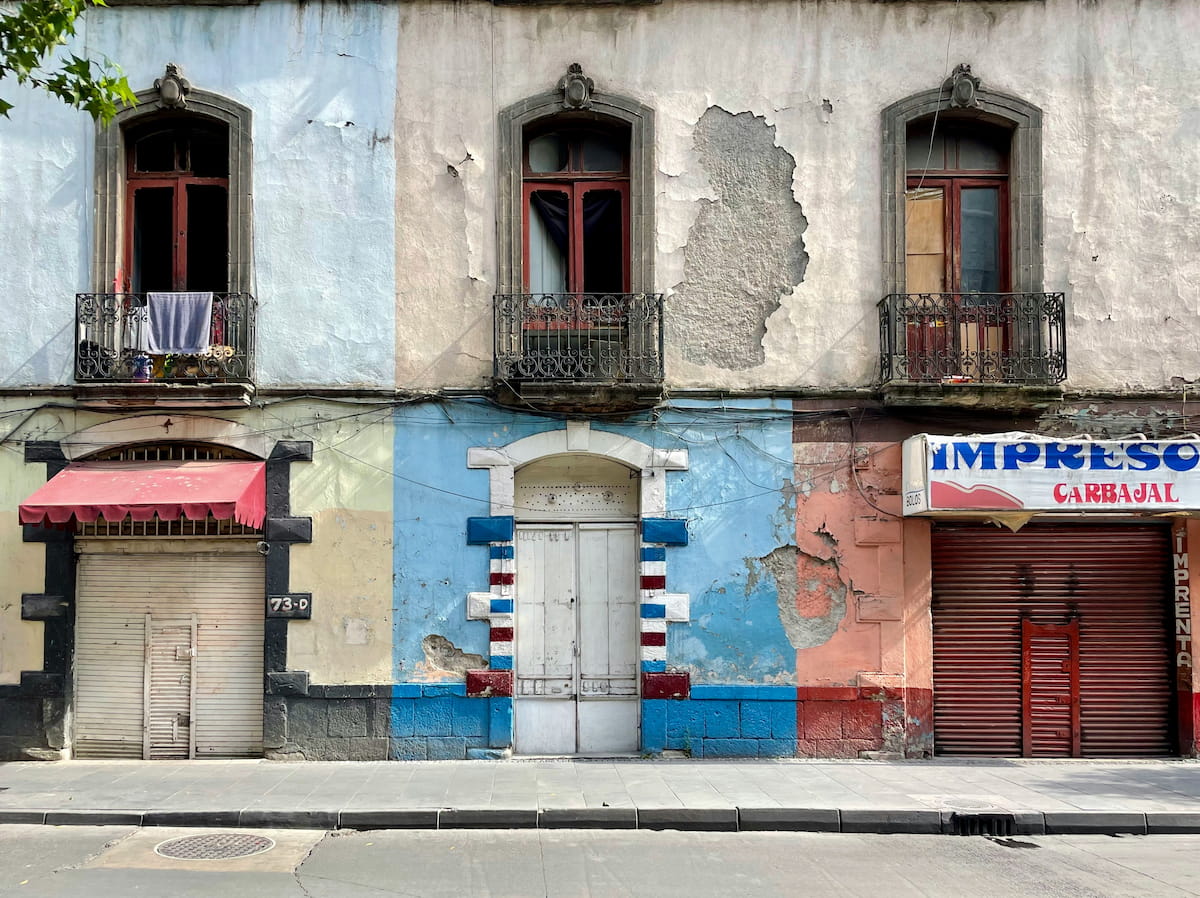
I ate birria tacos with consommé for $3.50 at a corner taqueria in Roma Norte, then spent four hours at one of the greatest anthropology museums on Earth for $10.50, then had mezcal at a rooftop bar in Condesa watching the Popocatépetl volcano glow at sunset, and the whole day — including an $8 Uber — cost me less than lunch in midtown Manhattan. That’s Mexico City in a sentence.
Mexico City sits in a category of its own among world capitals. It has the cultural density of Paris, the food scene of Tokyo, the architectural layering of Rome — Aztec ruins underneath Spanish colonial churches underneath modernist skyscrapers — and prices that bear no relationship to any of those comparisons. The BTS (Bureau of Transportation Statistics) consistently ranks it among the top overseas city destinations for Americans, and yet the budget-travel content on it barely scratches the surface. This guide is the honest, verified cost breakdown that doesn’t exist elsewhere.
What’s In This Guide
📅 Best Time to Visit Mexico City
The sweet spot: February through April — dry season, jacarandas in bloom, mild temperatures at 6,800-foot elevation, and a city in full cultural gear. The value window: June through August — rainy season brings lowest prices and fewest tourists; afternoon showers rarely last more than an hour. The unmissable event: Día de Muertos (Nov 1–2) — book months ahead but come if you possibly can; it’s unlike anything else on Earth.
Where to Stay in Mexico City
The neighborhood decision matters more in Mexico City than almost any other city in this guide. Roma Norte and Condesa are where most international travelers land — leafy, walkable, architecturally stunning, packed with coffee shops, restaurants, and bars, and reasonably priced. Polanco is the upscale option with the best fine dining and luxury hotels. Centro Histórico puts you among the pre-Hispanic ruins and colonial architecture but the area quiets down at night. Stay in Roma or Condesa for your first visit — that’s where CDMX actually lives. Rates verified March 2026.
Hotel Isabel occupies a colonial building a short walk from the Zócalo — Mexico City’s main square and the heart of the historic center. At $40–65/night for a private room with en-suite bathroom, it’s the most honest-value hotel option in the city center: clean, secure, well-maintained, and staffed by people who’ve been handling tourist questions for decades. The location eliminates transport costs to the Templo Mayor, the Palacio Nacional, and the Metropolitan Cathedral. Not a boutique hotel — this is straightforward, reliable, and priced right.
The Red Tree House is the gold standard of mid-range boutique hotels in Mexico City — a beautifully restored Condesa townhouse with individually designed rooms, a genuinely excellent free breakfast, and a rooftop terrace that overlooks the tree canopy of Parque México. At $80–130/night it represents one of the best hotel values in this entire guide: the design quality, the location in Condesa’s best block, and the included breakfast would cost twice as much in most comparable cities. This is the kind of place that becomes the highlight of a trip rather than just where you sleep.
The Four Seasons Mexico City occupies a landmark position on Paseo de la Reforma — the grand Haussmann-inspired boulevard that runs through the city — with a famous garden courtyard that serves as the best afternoon cocktail spot in the city. The property is Mexico City luxury at its best: impeccably maintained, beautifully proportioned rooms, and a restaurant scene that attracts diners from across the city. At $280–350/night it’s extraordinary value compared to Four Seasons properties in London ($700+) or New York ($900+) for equivalent quality.
Get Our Mexico City Neighborhood Map
Roma Norte vs. Condesa, which market to hit first, the three taco spots locals actually use — we’ll send you the insider breakdown before you book anything.
15 Best Mexico City Experiences
Mexico City’s experience split is unusual: the free and low-cost tier is outrageously good. Chapultepec Park alone — free, 1,700 acres, with the best anthropology museum in the Americas inside it — could fill two days. Add the Zócalo, the Diego Rivera murals, the markets of La Ciudadela, and the rooftop bars of Condesa, and you have a city that rewards walking and wandering more than almost anywhere. The paid tier adds depth: Teotihuacan is a full day of ancient wonder for $10. The Signature tier is where Mexico City separates itself entirely from everywhere else — the food scene here is one of the great discoveries of any traveler’s life.
The Zócalo — Plaza de la Constitución — is one of the largest public squares on Earth and the symbolic heart of Mexican history. It’s ringed by the Metropolitan Cathedral (built atop an Aztec ceremonial center, free to enter), the Palacio Nacional (Diego Rivera’s epic murals of Mexican history painted across its walls, free), and the ruins of the Templo Mayor just behind the cathedral. The layering of civilizations is visible everywhere: Aztec foundation stones beneath colonial arches beneath 20th-century government buildings. Walking the Centro Histórico on foot for half a day costs absolutely nothing and delivers more historical density per block than almost anywhere in the Americas.
💡 Enter the Palacio Nacional Monday through Friday (closed weekends for official functions) to see Diego Rivera’s murals free of charge — the main staircase mural spanning 1,200 square feet is one of the great works of 20th-century art and crowds are typically manageable on weekday mornings.
Chapultepec Park is one of the great urban green spaces in the Western Hemisphere — 1,700 acres of forest, lakes, jogging paths, and cultural institutions in the heart of a city of 22 million people. The park is completely free to enter and roam, and contains within it the National Museum of Anthropology (paid, addressed below), Chapultepec Castle (paid), a free zoo, and the Museum of Modern Art (small fee). On weekends it becomes one of the city’s most joyful scenes: families, street food vendors, paddleboat rides on the lake, and live music echoing through the trees.
💡 The park is most magical in early morning (6–9am) when joggers, dog walkers, and local families have it largely to themselves. The lake at the center rents paddleboats on weekends for around $4/hour — genuinely fun and very local. Enter via the Constituyentes Metro station (Line 1) for the most direct path to the Anthropology Museum.
Roma Norte and Condesa are the neighborhoods that make people fall in love with Mexico City. Art Deco architecture lines streets shaded by 100-year-old jacaranda and ash trees. Parque México — Condesa’s circular park — is surrounded by café terraces, bookshops, and vintage clothing stores. Álvaro Obregón, Roma’s main boulevard, is lined with murals, galleries, and independent restaurants. There’s nothing to buy, no admission to pay — just walking through these neighborhoods is one of the great urban pleasures in the Americas. Rent an Ecobici bike (Mexico City’s bike-share, a few dollars for a day pass) and cover both neighborhoods in a morning.
💡 The best time to walk Roma Norte is weekend mornings (9–11am) before the restaurants fill and the streets get loud. The Mercado Medellín (Calle Medellín, open daily) is a covered market selling fresh produce, flowers, and street food within the neighborhood — one of the most authentic and affordable markets in the city.
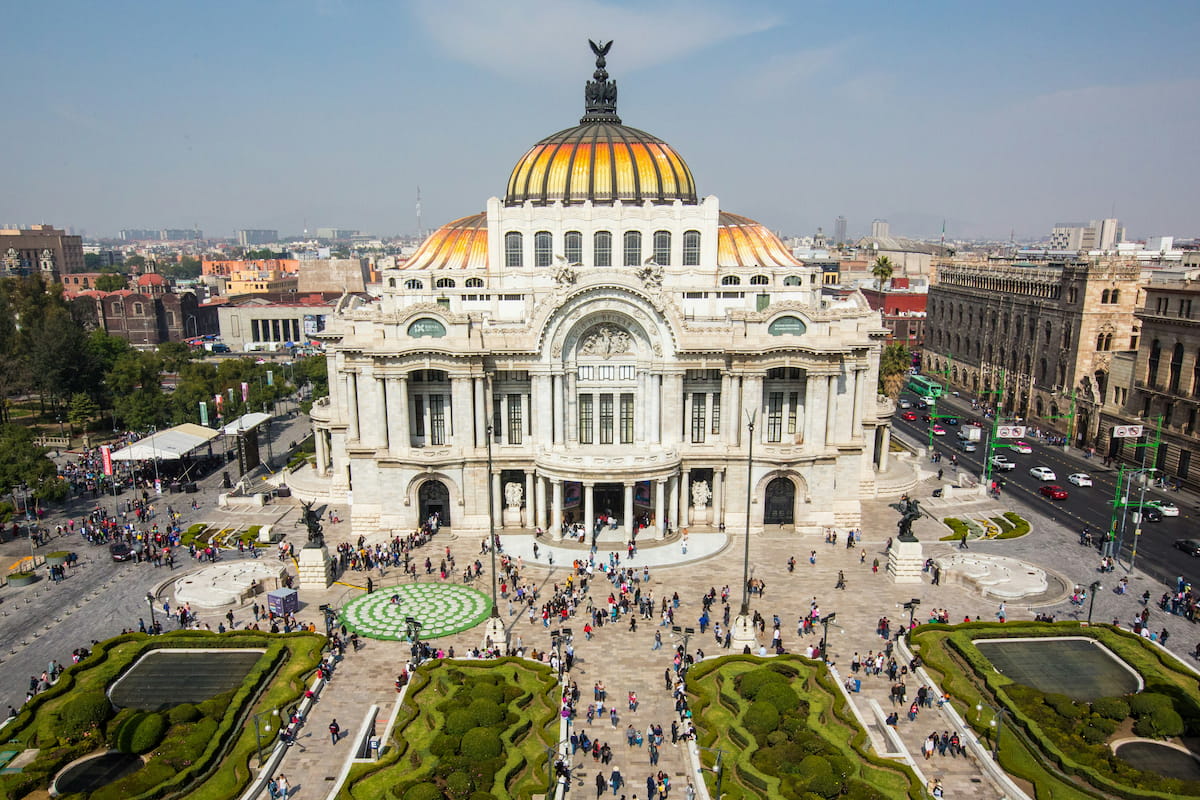
The Palacio de Bellas Artes is one of the most beautiful buildings in the Americas — an Art Nouveau exterior of white Carrara marble with a Mexican Art Deco interior that contains murals by Diego Rivera, David Alfaro Siqueiros, and José Clemente Orozco. The building is free to photograph and admire from outside, and the Alameda Central park in front is a great free afternoon spot. Interior access to the ground floor murals costs a nominal 20 MXN (~$1), making it one of the best-value museum experiences in the city. The building also hosts world-class opera, ballet, and exhibitions — check the schedule at bellasartes.gob.mx for what’s on during your visit.
💡 The best exterior photos are from the rooftop terrace of the Sears department store directly across the street — free to access, offering an elevated view of the dome and the Latinoamericana Tower behind it. A genuinely spectacular photograph that most guidebooks don’t mention.
Coyoacán is Mexico City’s most charming neighborhood — a former village that retains its colonial character with cobblestone streets, a flower-filled central plaza, and the Frida Kahlo Museum (the Casa Azul, paid separately). The plaza itself is completely free: weekend markets selling handicrafts and traditional food, the Templo San Juan Bautista, street performers, and the best churros in the city from a vendor who’s been in the same spot for decades. The neighborhood was home to Frida Kahlo, Diego Rivera, and Leon Trotsky — their houses are now museums, but the streets they walked are free to anyone.
💡 Coyoacán is a 30-minute Metro ride from Roma Norte (Line 3, Viveros or Coyoacán stop) for $0.25. Go on a Saturday to experience the artisan market at full volume. The churros from Churrolandia on the main plaza ($1.50 for a generous order) are a legitimate Mexico City institution — cash only, always a line, always worth it.
Mexico City has extraordinary markets, and La Ciudadela is the best permanent artisan market — a vast covered complex near the Alameda Central selling handcraft from every state in Mexico: Oaxacan textiles, Talavera pottery, Huichol bead art, silver jewelry from Taxco, and hand-embroidered clothing. Prices are fixed and honest — no haggling expected. La Lagunilla, the city’s great antique market (Sundays only, free), spreads across several blocks northeast of the Centro: vintage furniture, revolutionary-era photographs, folk art, and decades of Mexico City cast-offs in one overwhelming space.
💡 La Ciudadela vendors are generally honest and prices are labeled — don’t feel pressured to negotiate. The Sunday La Lagunilla runs from about 9am–4pm; go early for the best finds. The surrounding streets have good cheap lunch options — look for the fondas (home-cooking stalls) rather than the tourist-facing sit-down restaurants.
The Museo Soumaya in Polanco is a silver-tiled architectural marvel housing Carlos Slim’s personal art collection — over 66,000 works including one of the largest collections of Rodin sculptures outside Paris, plus El Greco, Dalí, van Gogh, Monet, and an extensive Latin American collection. Uniquely for a museum of this caliber, entry is completely free every day. The building itself (designed by Fernando Romero) is a destination — an aluminum-clad curved tower that seems to defy structural logic. Easily combine with the adjacent Plaza Carso open-air shopping area for a full Polanco afternoon.
💡 Go on a weekday morning — the museum fills on weekends, especially the upper floors. The Rodin collection is on the top level and includes major works: The Thinker, The Kiss, The Gates of Hell. The basement has the pre-Columbian and colonial collections which are often the quietest and most intimate spaces in the building.
The National Museum of Anthropology holds the world’s largest collection of pre-Hispanic art and artifacts — the Aztec Sun Stone, monumental Olmec heads, the reconstructed Temple of Quetzalcoatl from Teotihuacan, Maya jade death masks, and room after room covering every major Mesoamerican civilization. The building itself, designed in 1964, is architecturally extraordinary — an enormous courtyard with a single umbrella column fountaining water from its center. At $10.50/adult (210 MXN, doubled by INAH in January 2026 from its previous price), it remains one of the great museum bargains on Earth. Plan for a minimum of three hours; serious visitors spend a full day.
💡 Go Tuesday through Saturday morning for the least crowded experience — Sunday is free for Mexican residents and nationals, making it much busier. Free guided tours run Tuesday through Saturday at 10:30, 12:30, and 15:00. Go directly to the Aztec room (Sala Mexica) first — the Piedra del Sol (Aztec Sun Stone) is the centerpiece and best seen before groups arrive.
The Casa Azul — Frida Kahlo’s cobalt-blue childhood home in Coyoacán, where she was born, lived, and died — is now one of the most visited museums in Mexico. It houses an extraordinary collection of her personal belongings, letters, paintings, and the studio where she worked: her corsets, prosthetic leg, four-poster bed with the mirror she used to paint her self-portraits, and the ashes she kept in a pre-Columbian urn on her desk. The museum is intimate and genuinely moving — this was a person’s actual home, and it still feels like one.
💡 Tickets sell out days in advance — book at museofridakahlo.org.mx as soon as your dates are confirmed. The timed entry system means walk-ups are rarely possible on busy days. Morning slots (9–10am) are the least crowded. The Diego Rivera Studio Museum (Museo Casa Estudio Diego Rivera y Frida Kahlo) in San Ángel is a worthy companion visit, less visited and architecturally remarkable.
The Templo Mayor is the main temple of the Aztec capital Tenochtitlán — discovered in 1978 when electrical workers digging beneath downtown Mexico City hit a massive carved stone disk. The excavation that followed uncovered the ceremonial heart of the Aztec empire, buried six layers deep beneath Spanish colonial buildings. You can walk through the ruins and into the museum which houses the excavated artifacts: massive serpent heads, eagle warrior statues, and the famous Coyolxauhqui disk that triggered the entire excavation. At $5/adult, this is among the best-value archaeological experiences in the world.
💡 The Templo Mayor is closed Mondays. Go in the morning for the best light — the site is partially open-air and angled morning sun makes the carved stones glow. The museum component is air-conditioned and houses the finest pieces found during excavation — don’t skip it after seeing the ruins outside.
Xochimilco’s network of pre-Hispanic canals and floating gardens (chinampas) in the southern part of the city is a UNESCO World Heritage Site and one of CDMX’s most joyful experiences. Brightly painted trajinera boats are rented by the hour, with vendors in smaller boats pulling alongside to sell tacos, beer, and roasted corn. On weekend afternoons the main canals fill with dozens of boats, mariachi bands playing from boat to boat, and families celebrating birthdays and quinceañeras — a genuinely extraordinary scene. A full hour on the water for a boat of 8–10 people runs $80–120 total (~$10–15/person) plus whatever you buy from vendors.
💡 Take the Metro to Tasqueña (Line 2), then the tren ligero (light rail) to Xochimilco — total fare under $1 each way. Official trajinera prices are posted at the embarcaderos; negotiate firmly but fairly — vendors will open higher. Go on a Sunday for the full festive atmosphere; go on a Saturday morning for smaller crowds.
Lucha libre — Mexico’s masked wrestling tradition — is genuine sport, genuine theater, and genuine Mexico City culture all at once. Arena México (the sport’s most storied venue, near the Metro Doctores stop) hosts shows Tuesday and Friday evenings. The crowd is multigenerational, passionate, and enthusiastic in ways that transcend language barriers. Wrestlers in elaborate masks fly off the ropes, throw each other through the air, and deliver theatrical monologues while the crowd chants in unison. General admission tickets start from around $10; ringside can reach $35. Either price is extraordinary value for the experience.
💡 Buy tickets at the Arena México box office the day of the show — they rarely sell out for regular Tuesday events. Friday shows attract larger crowds. Go general admission (gradas) for the full atmosphere; the top-tier crowd energy is better than ringside. Arrive 30 minutes early and get a taco from the vendors outside the arena.
Fifty kilometers northeast of Mexico City, Teotihuacan was the largest city in the pre-Columbian Americas — at its peak, larger than Rome. The Pyramid of the Sun is the third-largest pyramid in the world. Walking the Avenue of the Dead toward the Pyramid of the Moon, with the scale of the ancient city spreading around you on every side, is one of those experiences that genuinely recalibrates your sense of history. Entry is $10.50/adult (210 MXN — doubled by INAH in January 2026 as part of a national archaeological sites fee increase). The bus from Terminal de Autobuses del Norte runs every 30 minutes for about $3 round-trip; the journey takes one hour each way.
💡 Arrive at opening (9am) to beat both the sun and the crowds — by noon the site is exposed and hot with no shade. Bring water. The lower platforms of the Pyramid of the Moon are climbable again after a 5-year closure (as of late 2025). Avoid Sundays (free for Mexican residents — busiest day).
Mexico City has one of the finest food scenes on Earth — not just Mexican food, but food at every price point, executed with a care and technique that would cost ten times as much anywhere in the US or Europe. A full day eating through the city: birria tacos at 8am from a street cart ($2–3); tlayuda or memela at the Mercado de Medellín ($4); late lunch at a Roma Norte comida corrida (set lunch, soup + main + agua fresca, $6–8); pastry and coffee from Panadería Rosetta ($3–4); mezcal at a Condesa bar ($4–6 per glass). That’s an extraordinary eating day for under $25. Mexico City’s greatest attraction isn’t the pyramids — it’s this.
💡 El Huequito on Calle Bucareli in the Centro (founded 1959) serves what many locals consider the best tacos al pastor in the city — crispy-edged pork carved from a trompo spit, $1.50/taco. Contramar in Roma Norte is the mid-range fish restaurant that appears on every best-restaurant list in the city — lunch for $30–40/person. Quintonil in Polanco is the aspirational splurge — reserve 2–3 weeks ahead.
If there is any possibility of being in Mexico City on November 1–2, organize your entire trip around it. Día de Muertos — Day of the Dead — is not the somber occasion the name suggests in English. It’s a joyous, elaborate reunion with ancestors: families decorate grave sites overnight with marigold carpets, photographs, and the deceased’s favorite foods; there’s music, dancing, and mezcal; and a Grand Parade (since 2016, inspired by the James Bond film’s opening sequence) fills Paseo de la Reforma with enormous skeleton floats and costumed celebrants. The cemetery vigils in San Andrés Mixquic (accessible by public transit) are the most traditional and most moving version. Entry to every element is completely free.
💡 Book accommodation 2–3 months ahead for Día de Muertos — this is the peak demand period and rooms in Roma/Condesa sell out fast. Visit the cemetery at Mixquic the evening of November 1st for the traditional candlelit vigil. The parade along Reforma runs November 1st starting mid-afternoon — arrive 2 hours early to secure a viewing spot along the route.
Worth It / Skip It
Don’t Make These Mistakes
At 7,350 feet (2,240 meters) above sea level, Mexico City sits higher than Denver. Altitude affects visitors immediately: more fatigue, easier dehydration, and alcohol hits noticeably harder. The first day or two you’ll feel slightly short of breath on stairs. Drink significantly more water than usual, skip heavy alcohol the first day, and don’t plan your most active sightseeing for day one. This passes within 48 hours for most visitors.
Mexico City’s street food and market scene is one of its defining qualities, and the best tacos, tamales, tlayudas, and tortas are not in restaurants. They’re at street carts with a line of office workers at 8am. The advice to avoid street food here is outdated: choose stalls with visible high turnover (the line is the indicator), avoid raw vegetables you haven’t confirmed are washed in purified water, and you’ll eat some of the best food of your life for $2–4 a meal.
The Casa Azul sells out days — sometimes weeks — ahead during peak season (March, October–November, summer). Walk-up tickets are rarely available. If seeing the museum is a priority, book at museofridakahlo.org.mx before you book your flights. This is the one CDMX museum where advance booking is non-negotiable.
The city is enormous — 573 square miles — and the neighborhoods you want (Roma Norte, Condesa, Coyoacán, the Centro, Polanco, Xochimilco) are spread across a large area. Don’t try to walk between them. The Metro is $0.25/ride, Uber averages $3–6 per trip, and both work well. Build your itinerary by neighborhood, not by landmark proximity — grouping by area saves hours over a multi-day visit.
VacayValue Scorecard — Mexico City
Packing List — Mexico City
Before You Go to Mexico City
The altitude checklist, the three cash-only taco carts worth finding, the Teotihuacan morning routine, and how to book Frida Kahlo before it sells out — one email, all of it.
Mexico City Is the Best Travel Value in the Western Hemisphere — and It’s Not Particularly Close
The numbers are almost uncomfortable to look at. A hotel in Roma Norte’s best boutique neighborhood for $80–100/night. The greatest pre-Columbian museum in the Americas for $10.50. Tacos that compete with the best food in any world city for $1.50–$3. A $0.25 Metro system. One of the world’s great UNESCO archaeological sites an hour away by bus. And one of the most vibrant, culturally layered, architecturally extraordinary cities on Earth surrounding all of it.
The 9.4 score is the highest in this guide for a reason. Flights are genuinely affordable from nearby US hubs — Houston, Dallas, Phoenix, and Los Angeles all see regular round-trips under $350. Hotels at the mid-range deliver quality that would cost $200+ in comparable European neighborhoods. Food and transport barely register in the budget because they’re priced for a city where the average daily wage is a fraction of a US equivalent. And the experience quality is 4.5/5 because the cultural and culinary offering genuinely competes with any city on the planet.
The one genuine caveat: altitude. Mexico City sits at 7,350 feet and it catches visitors off guard. Build in a slow first day, drink water aggressively, and skip the mezcal until night two. Everything else about this city exceeds expectations — usually by a significant margin. It is, without question, the most underrated travel value available to American travelers in 2026.