
Chicago 2026: The Honest Cost Guide to the Windy City
World-class museums, a free lakefront, an L train that actually works, and more architecture per block than almost anywhere on Earth. Chicago rewards smart travelers more than most American cities.
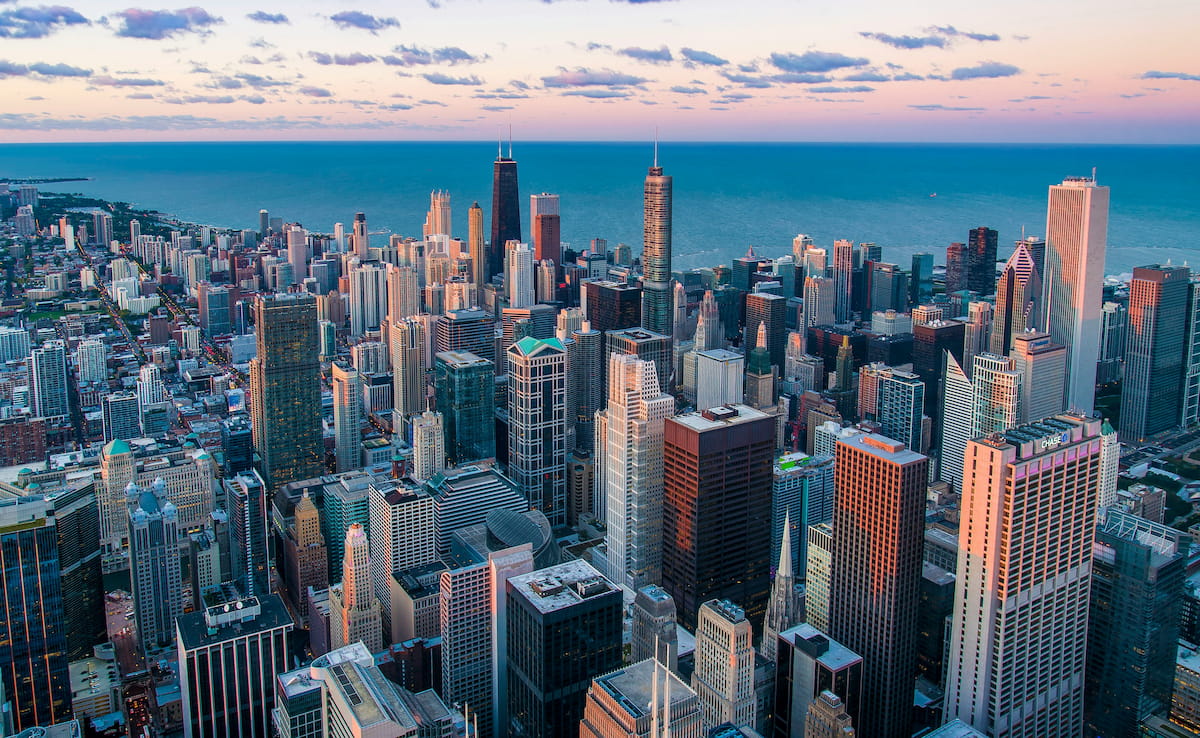
You’re standing on the Chicago Riverwalk at dusk, watching the architecture cruise slip under the Michigan Avenue Bridge while the canyon walls of a hundred years of extraordinary buildings glow in the fading light. You paid nothing to stand here. The museum you just left cost $32. The deep-dish you have reserved for tonight will be the best thing you’ve eaten in years. Chicago is, quietly, one of the great value cities in America — if you know where to point yourself.
The city’s free cultural infrastructure is genuinely staggering. Lincoln Park Zoo is entirely free every single day of the year. Millennium Park and the entire 18-mile lakefront cost nothing to enter. The Chicago Cultural Center has two of the most spectacular interiors in the country — all free. Where your money goes is on the world-class museum admissions, hotels in the downtown Loop, and the deep-dish dinner you’ve been planning since you booked the flight. This guide breaks down every number so you can plan honestly.
What’s In This Guide
📅 Best Time to Visit Chicago
Sweet spot: September. The Jazz Festival is free, summer crowds have cleared, hotel rates drop meaningfully, and the weather is about as close to perfect as Chicago gets. June is also outstanding if you time it for the Blues Festival — four days of the world’s best blues musicians performing for free on the lakefront. If you can only visit once and weather matters, May through September is the window. January and February offer serious budget value but require serious cold-weather preparation.
Where to Stay in Chicago
The Loop and River North put you walking distance from the lakefront, Millennium Park, and the major museums. The West Loop and Fulton Market run slightly cheaper with excellent restaurant access and easy L connections. Whatever you do, don’t rent a car — downtown parking runs $40–$60 per night at hotels and the CTA L train covers everything. All rates below verified March 2026.
A Chicago institution. The Ohio House is a classic American motel sitting improbably in River North — one of Chicago’s best neighborhoods — and it’s been the city’s go-to budget option for decades precisely because nothing else at this price gets you this close to everything. Rooms are simple and clean, parking is free (unheard of downtown), and you’re a short walk from the L, the Riverwalk, and a stretch of excellent independent restaurants. No frills, genuine value.
Modern Marriott property that punches above its price point. Rooms are compact but cleverly designed, and the lobby doubles as a lively social hub with all-day food and drinks. Positioned within walking distance of Michigan Avenue, the Chicago Riverwalk, and multiple L stops. Perfect for travelers who want energy and location without a luxury bill. The bar scene alone saves money compared to going out for pre-dinner drinks elsewhere.
Check Rates on Hotels.com →Housed in Mies van der Rohe’s landmark IBM Building, The Langham is one of the most architecturally significant hotel stays in America — and the service matches the setting. Floor-to-ceiling river and city views, a world-class spa, and Travelle restaurant make this a legitimate occasion hotel. If you’re going to splurge in Chicago, do it here: the building alone justifies the rate, and being in a Mies van der Rohe interior is a Chicago experience that goes beyond a hotel stay.
Check Rates on Hotels.com →Every Sunday: One Destination. One Honest Take.
Join travelers who plan smarter. Real costs, specific advice, no filler.
15 Best Chicago Experiences
Chicago is remarkable for how much it gives away. Between the lakefront, the parks, and world-class cultural institutions that charge nothing at the door, you can spend days exploring without spending a dollar. The museum circuit is where real costs appear — but they are among the best museums on earth, and every price below was verified directly from the official source.
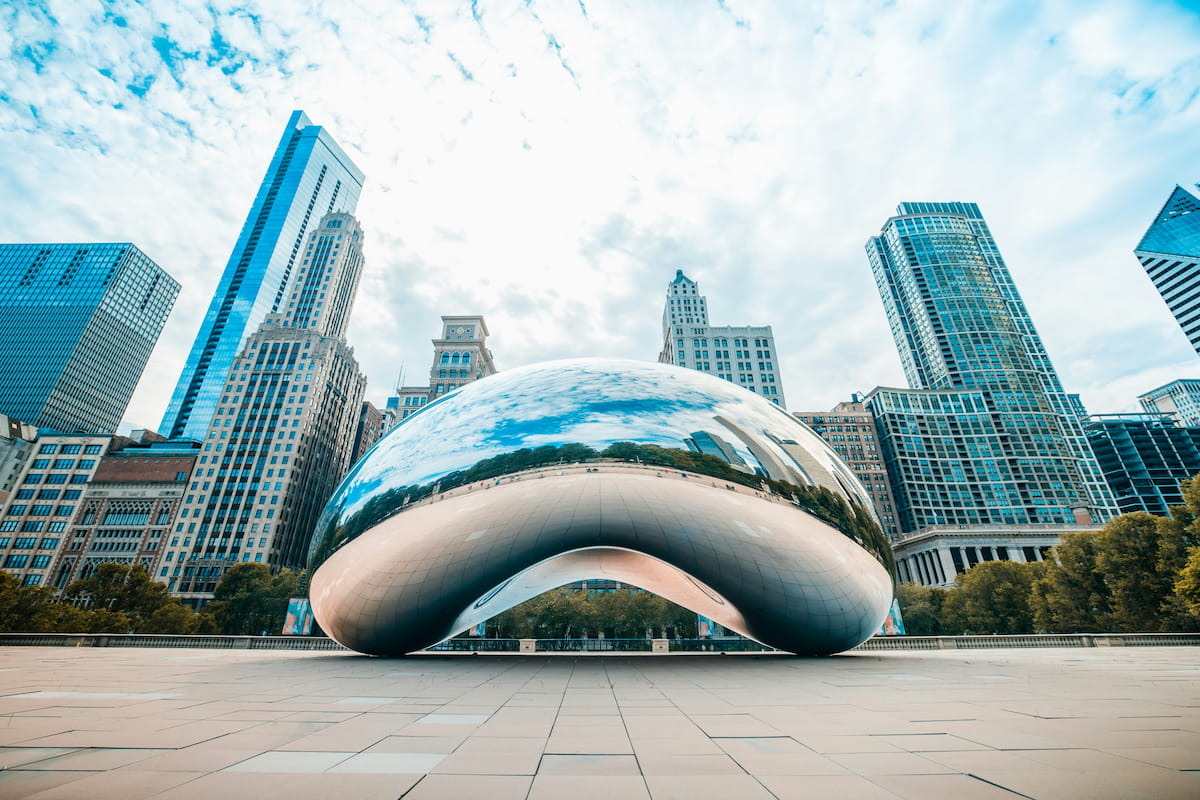
Chicago’s most photographed public space is entirely free, 24 hours a day. Cloud Gate — the giant mirrored sculpture everyone calls “The Bean” — reflects the skyline and the people around it in a way that never gets old. Beyond the Bean, Crown Fountain’s 50-foot LED towers cascade water in summer, Lurie Garden is a world-class botanical oasis, and the Jay Pritzker Pavilion hosts free concerts from May through September. The park sits directly adjacent to the Art Institute, the Riverwalk, and the lakefront — making it a natural anchor for any day in the city.
💡 Arrive early morning to photograph The Bean with the skyline reflected and almost no crowds. Thursday evenings in summer bring free Millennium Park concerts — check the schedule before your visit.
The 1.25-mile pedestrian promenade along the Chicago River’s south bank is one of the best free walks in any American city. Each section has its own character — the Marina cove lined with restaurants, the boathouse where kayaks rent by the hour, the Boardwalk with views of all three river branches. On Thursday, Friday, and Saturday evenings in season, Art on the MART projects large-scale digital artworks onto the Merchandise Mart building across the water. The Riverwalk also connects directly to the CAC Architecture Cruise boarding point at Michigan and Wacker.
💡 The Riverwalk is accessible from street level via stairs at multiple points along Wacker Drive. The free walk pairs perfectly with the paid Architecture Cruise — do both in the same morning.
One of the only major urban zoos in the country to offer completely free admission every day of the year. Founded in 1868, Lincoln Park Zoo sits on 49 acres in one of Chicago’s most beautiful lakefront neighborhoods and houses gorillas, lions, polar bears, African wild dogs, and nearly 200 other species. An Eastern Black Rhinoceros calf was born here in March 2026 — already the zoo’s newest star. The Nature Boardwalk at the south end is a stunning ecological habitat worth seeing on its own. Take the CTA bus 151 or 156, or walk from the Brown Line Armitage stop.
💡 Don’t drive — parking in the zoo lot costs $20–$35 depending on season. The CTA bus puts you at the entrance for $2.50. Combine with a walk through Lincoln Park to the lakefront for a perfect free morning.
The most underrated free attraction in Chicago and one of the most underrated free attractions in the entire country. This stunning Beaux-Arts building on Michigan Avenue contains two of the most spectacular interior spaces in the city — a pair of Tiffany glass domes, among the largest in the world, arching over grand gallery spaces now used for rotating art exhibitions. Free concerts, free architectural tours, and a free welcome to just stand under those domes and look up. The building alone earns the detour.
💡 Free guided tours of the building run on select Saturdays. It’s directly across from Millennium Park — make it the first stop on a Museum Campus morning, before the paid museum crowds arrive.
Chicago has 26 public beaches and 18 miles of continuous paved lakefront trail, all free to access. Oak Street Beach, steps from the Magnificent Mile, is the most famous. North Avenue Beach has volleyball courts and a boat-shaped concession building. The trail connects every beach and park from Rogers Park in the north to South Shore in the south — on a clear summer day with the skyline behind you, you’d be forgiven for forgetting you were standing on a freshwater lake rather than an ocean.
💡 Rent a Divvy bike — $1/30 min or a $20 day pass covers unlimited 3-hour rides — to cover the full trail in a few hours. Rental stations are positioned throughout the lakefront path.
The second-largest art museum in the United States and legitimately one of the best on the planet. The Impressionist and Post-Impressionist collection alone — Seurat’s “A Sunday on La Grande Jatte,” Grant Wood’s “American Gothic,” an entire wall of Monet — would justify a dedicated trip. General admission is $32 for adults (standard non-resident rate, verified artic.edu). Children under 14 are always free. Illinois residents get free evening entry on select Thursdays and during Summer Thursdays, June 11–September 17, 2026.
💡 Plan 3–4 hours minimum. Free daily guided tours are included with admission — check the schedule at the information desk on arrival. The museum closes Tuesdays.
The highest observation deck in the United States, on the 103rd floor of Willis Tower, 1,353 feet above street level. On a clear day the views reach four states. The Ledge — five glass-floor balconies extending 4.3 feet out from the building — is the main event. A lower-level interactive museum now covers Chicago’s history and architecture before you ascend. Adults start at $32; ages 3–11 are $24; under 3 free. Timed tickets required — book in advance through theskydeck.com to avoid significant wait times.
💡 Weekday mornings offer shortest lines and clearest skies. Night visits are spectacular for city lights but you lose the distant views. If it’s overcast, consider rescheduling — the whole point is the view.
SUE, the most complete T. rex skeleton ever discovered, lives here. So does a recreation of an ancient Egyptian tomb you can actually walk through, the largest jade collection in the Western Hemisphere, and 35 permanent exhibitions spanning 4.6 billion years. General admission starts at $30 for out-of-town adults (verified fieldmuseum.org). Illinois residents get free admission every Wednesday. The Pokémon Fossil Museum, a blockbuster traveling exhibition, opens May 21, 2026 — expect it to sell out advance slots quickly.
💡 The Field Museum shares the Museum Campus with the Shedd Aquarium and Adler Planetarium. Chicago CityPASS covers all three at roughly 40% off combined admission — worth doing if you plan the full campus in one trip.
The Shedd uses dynamic date-based pricing for non-Chicago-resident visitors. Out-of-town standard adult admission typically runs $37–$45 depending on how far in advance you book and how busy the date is. Note: the $19.95 rate advertised widely is the Chicago resident price only — if you’re visiting from elsewhere, expect to pay standard non-resident pricing. Illinois residents receive free admission on multiple designated dates annually. The beluga encounters, Wild Reef sharks, and Amazon Rising exhibit are the highlights. Kids under 3 free. Book directly at sheddaquarium.org.
💡 Mid-week, non-peak date bookings consistently come in lower than weekend slots under the plan-ahead pricing model — the Shedd’s website makes this easy to see at a glance before you commit.
Voted the #1 boat tour in the United States by USA Today readers, and Chicago Reader’s Best Tour for over a decade. This 90-minute cruise aboard the First Lady fleet, led by expert CAC docent volunteers, covers the stories behind 50+ landmark buildings as you travel all three branches of the Chicago River. The architectural context transforms how you see the rest of the city for the remainder of your trip. Tickets start at $57 direct from architecture.org — this is the one Chicago expense that is completely, unconditionally worth the money.
💡 Book directly at architecture.org — summer cruises sell out days in advance. Evening departures after 5pm offer softer light and a stunning skyline at dusk. Book evening slots at least a week ahead.
The comedy institution that launched Tina Fey, Stephen Colbert, Amy Poehler, Bill Murray, John Belushi, and dozens of others. The Mainstage at 230 W. North Avenue runs scripted sketch revues with improv sets woven in — and the performers you see tonight may be headlining in five years. Mainstage tickets start around $25 and run to $55 for premium seats, verified at secondcity.com. Tuesday nights feature a $10 “Ten Dollar Comedy” option on the third floor. You’re not just seeing comedy — you’re watching a living piece of Chicago history.
💡 Stay for the free improv set after the main show in the same theater — it’s often as good as the headliner and gives you the classic unscripted Second City experience at no extra cost.
Wrigley Field isn’t just a baseball stadium — it’s one of the last ballparks in America where the experience transcends the sport. Built in 1914, with ivy-covered outfield walls and a hand-operated scoreboard, attending a Cubs game here is a genuine piece of American cultural heritage. Upper deck and bleacher seats start around $30; prime seats go considerably higher. The neighborhood surrounding the park — Wrigleyville — amplifies everything before and after the game. Worth every dollar as a once-in-a-trip occasion.
💡 Take the CTA Red Line directly to Addison station — one stop from the front gates. No rideshare needed. The Red Line runs until 2am, so you’re covered for late games.
The world’s largest free blues festival. Running June 4–7, 2026 in Grant Park and Millennium Park, the Blues Festival draws the biggest names in blues across multiple outdoor stages on the lakefront — all at no charge. Chicago is where blues migrated from the Mississippi Delta and transformed into electric Chicago blues, the direct ancestor of rock and roll. This festival is simultaneously great entertainment and a genuine history lesson. If you can time your trip around these four days, do it.
💡 Arrive an hour before headliners to claim lawn space near the main Petrillo Music Shell stage. Food vendors line the perimeter. Hotel rates for that week are still summer pricing — book early if you’re targeting this weekend.
Running September 3–6, 2026 in Millennium Park, the Chicago Jazz Festival is one of the most beloved free annual events in the country — world-class performers, multiple stages, and the entire lakefront campus as the venue, all without a ticket. September in Chicago hits a perfect sweet spot: summer crowds are gone, hotel rates have dropped from their July–August peaks, the weather is ideal for walking, and this festival makes the month even better. If September works for your schedule, plan around this weekend.
💡 September is genuinely the best time-to-value month to visit Chicago. Combine the Jazz Festival with the Art Institute, the Riverwalk, and Lincoln Park Zoo and you have a near-perfect five-day Chicago trip.
This is not optional — it’s infrastructure. You must eat deep-dish pizza in Chicago. The real thing is nothing like what gets exported: a thick cast-iron crust, chunky tomato sauce on top of the cheese (not under it), and a dense, layered interior that requires a fork and about 20 minutes to cool. The pilgrimage requires navigating competing loyalties: Lou Malnati’s (the famous name, beloved by locals), Giordano’s (stuffed-pizza specialists, popular with first-timers), and Pequod’s in Lincoln Park (the caramelized-crust underdog that earns the most devoted repeat visitors). A full pie takes 45 minutes to bake — order the moment you sit down.
💡 Reservations are strongly recommended at Lou Malnati’s and Giordano’s, especially on weekends. Pequod’s in Lincoln Park takes no reservations — go at 5pm when they open or after 9pm to minimize the wait.
Worth It / Skip It
Don’t Make These Mistakes
O’Hare (ORD) is Chicago’s primary airport but it’s 17 miles from downtown. The CTA Blue Line takes 40–45 minutes and costs $5 from the terminal. A taxi or rideshare runs $35–$60 and can take just as long in traffic. Midway (MDW) is closer — the Orange Line downtown takes about 20 minutes for $2.50. Don’t book into ORD and budget for a 15-minute transfer. Build the real commute time into your first and last days.
The $19.95 adult admission for the Shedd Aquarium is widely cited online and in travel guides. It is the Chicago resident rate and requires a Chicago address at checkout. Out-of-town visitors pay the standard non-resident price under the dynamic pricing model, which typically runs $37–$45 depending on date and demand. Always check the standard non-resident price when budgeting — the same applies to the Field Museum and Art Institute, which also offer resident discounts with ID at the door.
The nickname is earned. January and February in Chicago are not “a little cold” — wind chills regularly hit -20°F or below, and being improperly dressed makes outdoor exploration genuinely miserable and potentially dangerous. Winter trips work beautifully if you’re prepared: waterproof insulated boots, a face-covering hat, base layers, and a windproof outer shell are not optional. Budget travelers who come in February underprepared end up spending on emergency gear they never planned for.
Not all deep-dish is equal, and the wrong choice is a genuine disappointment. Avoid the tourist-facing restaurants clustered around Navy Pier and the Magnificent Mile. The right names are Lou Malnati’s, Giordano’s, and Pequod’s in Lincoln Park. All three require you to order immediately because a full pie takes 45 minutes to bake. Pequod’s famously takes no reservations — plan for a wait at 5pm or after 9pm. Arriving hungry and ordering late is the most common mistake visitors make.
VacayValue Scorecard — Chicago
Packing List — Chicago
Planning Your Next Trip? Start Here.
One email per week — one destination, one honest take, real prices. Join travelers who plan smarter.
The Tourist Trap Version of Chicago Exists. The Real Version Is One of America’s Best Travel Values.
Chicago hands you an extraordinary amount before you spend a dollar. A free world-class zoo, 18 miles of free lakefront, free concerts all summer, free festivals that happen to be among the best in the country, and a public park so well designed that it embarrasses most paid attractions. All of it free, all of it year-round.
The paid layer is also genuinely world-class — the Art Institute alone would justify a trip to Chicago. The Architecture River Cruise changes how you see the city for the rest of your visit. The deep-dish pizza pilgrimage is worth the entire flight. What you’re paying for here is real, and the prices for what you get are fair by any American city standard.
Chicago rewards travelers who do the homework. It also punishes those who eat on Navy Pier, rent a car, and book a hotel assuming downtown Chicago is like Las Vegas with discount rates. Know where to point yourself, and this city is nearly impossible to get wrong.