
Grand Canyon 2026: America’s Greatest Natural Wonder (And How to Do It Right)
$35 gets your whole car in. The hiking is free. The views are indescribable. There is no place in the United States where $35 buys more — if you know what to do with it once you’re inside.
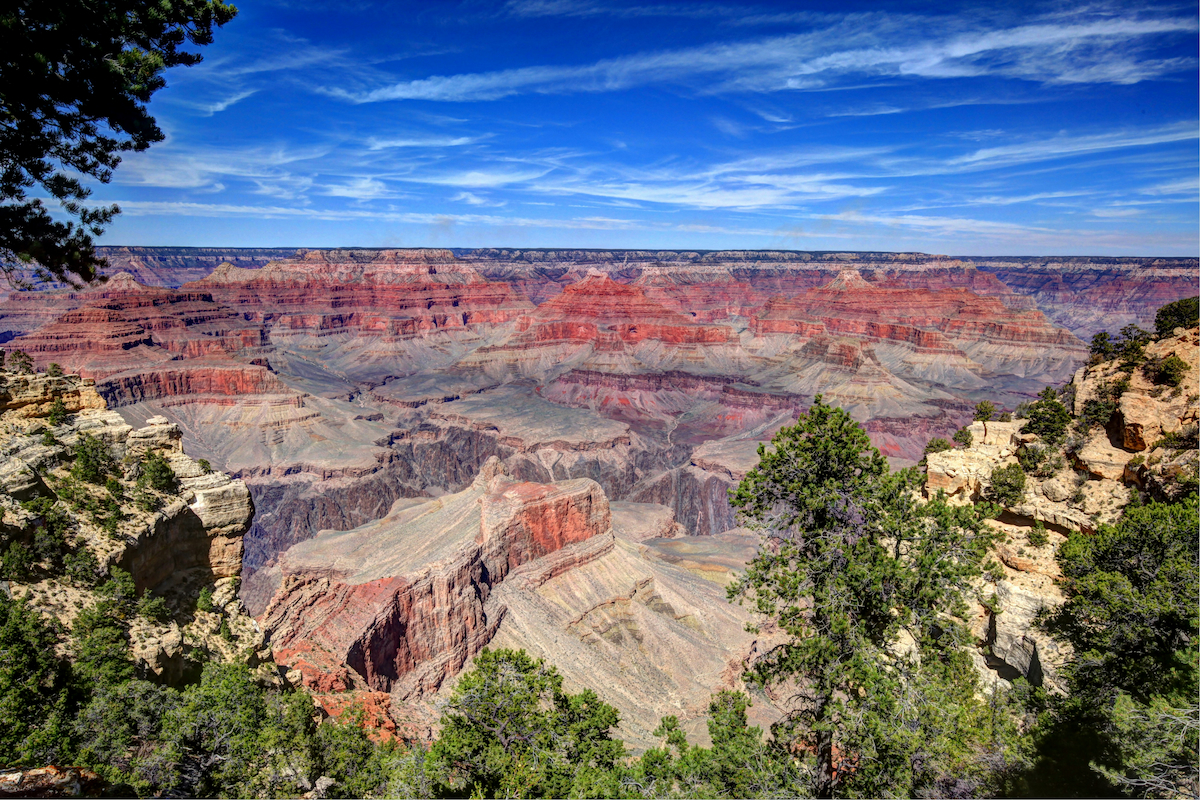
You’re standing at the South Rim and you understand, for the first time, why photographs of the Grand Canyon always look slightly wrong. The camera compresses it. The brain can’t calibrate the scale until you’re standing there — until you realize the tiny ribbon at the bottom is a river a mile below you, that the canyon is 277 miles long, that you’re looking at two billion years of Earth’s history exposed in layers of red and orange and purple rock. It is genuinely unlike anything else in North America. And the car that drove you here paid $35 to stay for a week.
The Grand Canyon is one of the best values in American travel — not despite its scale, but because of it. The things that make it extraordinary are the same things that can’t be packaged or marked up: the trails, the views, the sunrise over the canyon walls, the condors riding thermals above the rim. A $35 vehicle pass buys seven days of unlimited access to all of that. The paid activities — mule rides, helicopter tours, rafting the Colorado — are optional upgrades to an experience that’s already extraordinary at zero marginal cost. This guide is about making the most of that $35, and being honest about what the upgrades are actually worth.
What’s In This Guide
📅 Best Time to Visit Grand Canyon
Sweet spot: April–May and September–October. These four months offer the best combination of comfortable hiking temperatures, manageable crowds, and full trail access. Inner canyon hiking in July or August is genuinely dangerous due to heat — the NPS discourages hiking below the rim after 10am from May through September. If summer is your only option, stay on the rim and hike early mornings only. The North Rim is open May 15–October 15 only and has severely limited services in 2026 due to 2024 wildfire damage.
Where to Stay at the Grand Canyon
Accommodation falls into two categories: inside the park (the historic lodges on or near the South Rim, managed by Grand Canyon National Park Lodges/Xanterra) and outside the park in Tusayan, the small gateway town 1 mile south of the entrance, or further in Williams (60 miles) or Flagstaff (80 miles). Staying inside the park puts you on the rim at sunrise without fighting for parking — a genuine advantage that justifies the premium. All rates verified March 2026 from grandcanyonlodges.com and major booking sites.
Yavapai Lodge is the most affordable in-park lodge option — basic motel-style rooms in a wooded area about a mile from the rim, with free shuttle access to all South Rim viewpoints and trailheads. It lacks El Tovar’s history and rim proximity but delivers the critical advantage of being inside the park: no entrance gate wait, no parking battle at the South Rim lots, and access to the canyon at sunrise and sunset without needing a car. The on-site Yavapai Tavern restaurant is a practical dinner option. Book as far ahead as possible — in-park lodging sells out months ahead for spring and fall peak seasons.
Maswik Lodge sits in a ponderosa pine forest inside the park, about a half-mile from the rim — close enough to walk to the canyon edge in the morning, far enough from the tourist infrastructure to feel removed from the crowds. The lodge’s food court is one of the more practical dining options inside the park: affordable, fast, and open long hours. Rooms are comfortable and well-maintained. The free shuttle system stops nearby and connects to all major viewpoints and trailheads. For the mid-range traveler who wants to be inside the park without paying El Tovar prices, Maswik delivers exactly the right balance.
El Tovar is the Grand Canyon’s most iconic hotel — a National Historic Landmark built in 1905 from Oregon pine and local limestone, sitting directly on the canyon rim and hosting everyone from Theodore Roosevelt to Paul McCartney. The El Tovar Dining Room is considered the finest dining on the South Rim. Rooms are historic (which means smaller and less polished than modern hotels) but the location is incomparable — you step out the door and the Grand Canyon is right there. At $300–$700/night (a March 2026 guest reported paying $695), this is not a value play. It’s a bucket-list property. Note: the North Wing is offline June 25–September 11, 2026 for room renovation; the dining room and retail remain open during this period.
Get the Budget Travel Cheat Sheet
Booking shortcuts, packing hacks, and money-saving moves our readers use on every trip — free when you subscribe.
15 Best Grand Canyon Experiences
The Grand Canyon’s best experiences are almost entirely free once you’re inside the park. The $35 vehicle pass buys access to 300+ miles of trails, every viewpoint, every ranger program, and every sunrise over the canyon walls. The paid experiences — mule rides, helicopter tours — are optional upgrades to something that’s already extraordinary. Grouped below by cost so you can build your days around your budget.
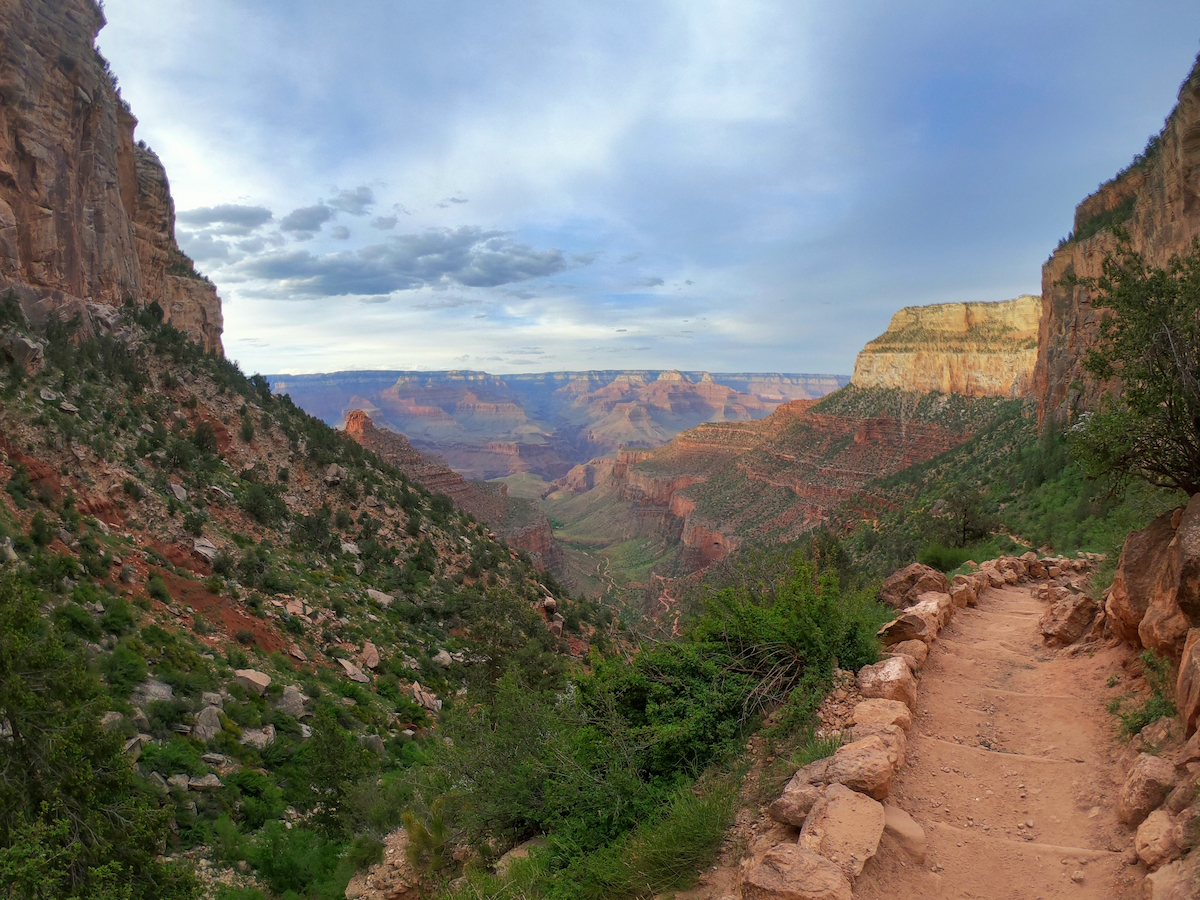
The South Rim has 17 named overlooks accessible by the free shuttle system or on foot along the Rim Trail, each offering a different perspective on the canyon’s 277-mile length and mile-deep depth. Mather Point is the most visited and offers the classic first-look experience — but the viewpoints east along Desert View Drive (Grandview Point, Lipan Point, Desert View Watchtower) are less crowded and arguably more dramatic. Desert View, 25 miles east of Grand Canyon Village, is the only viewpoint with a view of the Colorado River from the rim. Plan a full day along the East Rim Drive as a dedicated activity — pack lunch and water, use the viewpoint pullouts, and let the canyon reveal itself over the course of the drive rather than trying to see everything from one spot.
💡 The free shuttle system (Blue Route, Orange Route, Red Route) covers all major South Rim viewpoints from March through November. Leave your car at the visitor center or lodge and shuttle between viewpoints — it eliminates the parking frustration that derails many canyon visits and lets you focus on the views instead of logistics.
The Rim Trail is a 13-mile paved and unpaved path running along the South Rim from Hermits Rest to the South Kaibab Trailhead — one of the most spectacular walking trails in the United States that requires no fitness preparation, no permits, and no planning beyond showing up. Most visitors walk sections of it rather than the full length: the 3-mile stretch from Mather Point through Grand Canyon Village to Bright Angel Trailhead is flat, paved, and genuinely stunning at any time of day. Sunrise and sunset bring the canyon walls alive with color in a way that midday simply doesn’t replicate. The trail is open year-round, 24 hours.
💡 The section between Maricopa Point and Pima Point on the Hermit Road (western rim) is the least crowded and arguably the most dramatic — longer views with fewer people. The Hermit Road shuttle runs from March through November; outside that window you can drive it.
Sunrise and sunset at the Grand Canyon are genuinely transformative experiences that reward the effort of setting an alarm. At first light, the canyon walls shift through dozens of shades of pink, orange, red, and purple as the sun angles across the strata — colors that don’t exist in the middle of the day when the sun is overhead and everything washes out. Mather Point and Yavapai Point are the most popular sunrise spots; Lipan Point on the East Rim and Hopi Point on the West Rim are better for sunset. Being at the rim at these times is not just “nice” — it’s a categorically different experience from a midday visit, and it’s free to anyone who woke up early enough to get there.
💡 Arrive at least 30 minutes before sunrise — parking at Mather Point fills before dawn in peak season. The free shuttle starts running before sunrise during summer months. Bring layers: the rim is 20–30°F cooler than Phoenix at any time of year, and mornings can be genuinely cold even in May and September.
Bright Angel Trail is the most popular corridor trail at the South Rim — a well-maintained path descending from the rim through two tunnels (blasted in 1902 and 1931) to Havasupai Gardens 4.6 miles below. The first section to the 1.5-Mile Resthouse (3 miles RT, 1,120 ft descent) is the most accessible inner canyon hike in the park and gives first-time visitors an understanding of the canyon’s scale that the rim simply can’t provide — you’re inside it, looking up at walls that stretch 2,000 feet above you. The 3-Mile Resthouse (6 miles RT, 2,112 ft descent) is the recommended turnaround for day hikers who want a deeper experience without overcommitting. Water is available at both resthouses seasonally.
💡 The cardinal rule of inner canyon hiking: hike down first and budget twice as long for the return climb. A 45-minute descent takes 90 minutes to climb back out. Start before 7am in summer — the NPS advises turning around no later than 10am on hot days. Carry at least 1 liter of water per hour of hiking, regardless of how cool it feels at the rim.
The South Kaibab Trail is considered the most visually spectacular of the South Rim corridor trails — it follows ridgelines rather than drainages, which means unobstructed 360-degree views of the canyon from nearly every step. The 1.8-mile round trip to Ooh Aah Point (600 ft descent) delivers what might be the single best return-on-effort hike in the entire national park system: 45 minutes down, 45 minutes up, views that stop hikers mid-step. Cedar Ridge, the next destination (3 miles RT, 1,140 ft descent), extends the experience with a flat resting area with canyon panoramas in every direction. No water source on the South Kaibab Trail — carry all you need from the trailhead.
💡 The South Kaibab Trailhead requires the shuttle — no private vehicle parking at the trailhead. Take the Orange Route from the Visitor Center. Early morning (first shuttle, around 5am in summer) gets you to Ooh Aah Point for sunrise — one of the most rewarding experiences in the park and entirely free once you’re inside the gate.
The National Park Service runs an extensive free ranger program at Grand Canyon — daily ranger-led hikes, geology talks, condor interpretive programs, and evening campfire programs at Mather Campground. These are not tourist performances. They’re led by people who have spent careers studying this specific place, and the talks on geology (the canyon exposes two billion years of rock layers), wildlife (California condors were saved from extinction with captive breeding and reintroduction here), and Native American history (the canyon has been inhabited for 12,000 years) change what you see when you look at the canyon afterward. Check the program schedule at the Visitor Center or the NPS app.
💡 The geology ranger talks are particularly recommended — the canyon’s layered walls become a readable history of Earth once you understand what you’re looking at. The condor program at Lookout Studio (usually late morning) reliably draws California condors with 9+ foot wingspans to the rim. Getting within 20 feet of a condor is one of the more extraordinary wildlife experiences in North America.
The standard 7-day vehicle pass at $35 covers all occupants of a private vehicle at both the South and North Rims for seven consecutive days — one of the best value propositions in American travel. No cash is accepted at Grand Canyon entrance stations; bring a card or pre-purchase on Recreation.gov. If you’ll visit any other national park within 12 months, the America the Beautiful Annual Pass at $80 covers all NPS sites for a full year and pays for itself at two parks. The pass also covers the cardholder’s vehicle at Grand Canyon, Zion, Bryce Canyon, and hundreds of other federal lands. Note: non-US residents aged 16+ pay an additional $100/person surcharge effective January 1, 2026 — this does not affect US citizens and permanent residents.
💡 Fee-free days for US residents in 2026: Feb 16, May 25, June 14, July 3–5, Aug 25, Sep 17, Oct 27, Nov 11. These days are genuinely busier than normal — the crowds that might otherwise skip the entrance fee show up. If you have an annual pass, the free day crowds are actually a reason to visit the day before instead.
The Canyon Vistas Mule Ride is a 4-mile, 2-hour guided mule trip along the East Rim Trail above the canyon — you’re on the rim, not descending into the canyon, which makes it accessible to riders of varying fitness levels. The wranglers stop six times to share geology, cultural history, and canyon information. It’s the most accessible version of the Grand Canyon’s century-long mule riding tradition, operating since 1887. Note: riders must weigh less than 225 lbs fully dressed and be at least 4’9″ tall. Book through grandcanyonlodges.com 6–8 months ahead — the rides fill quickly for peak season. The deeper Phantom Ranch overnight mule rides are cancelled through June 30, 2026 due to trail conditions.
💡 Book 6–8 months ahead online at grandcanyonlodges.com or call 888-297-2757. If you arrive without a reservation, ask at the Bright Angel Transportation Desk about next-day availability — cancellations do open up. All mule riders must check in the day before their ride at the Bright Angel Lodge desk.
The Grand Canyon Railway departs from the historic Williams, Arizona depot daily — a 65-mile, 2.25-hour train journey through the high desert to the South Rim, with live entertainment, strolling musicians, and a Wild West ambiance that leans hard into its 1901 heritage. Coach class runs approximately $70–$90/adult roundtrip; first class and dome cars cost more. The train arrives at the Grand Canyon Depot directly in Grand Canyon Village, eliminating the South Rim parking nightmare entirely. For families with kids, visitors who prefer not to drive, or anyone doing a day trip from Williams, the railway delivers genuine value alongside the experience. Book at thetrain.com.
💡 The railway is particularly useful for travelers arriving from Albuquerque or making a Southwest road trip — Williams is on I-40 and makes a logical overnight stop. The Williams depot area has good dining and accommodations. The train’s arrival in Grand Canyon Village puts you walking distance from Bright Angel Trail and the main viewpoints without a car.
Bright Angel Bicycles, located at the South Rim Visitor Center, rents cruisers, e-bikes, and tag-alongs for cycling the Rim Trail and the Greenway Trail system — a network of paved paths connecting Grand Canyon Village to Hermit’s Rest and beyond. Cycling the rim is a substantially different experience from walking it: you cover more distance, pass more viewpoints, and have the flexibility to stop for as long as you want at any overlook before pedaling to the next. E-bikes make the mild elevation changes effortless. It’s one of the most underrated ways to experience the South Rim and far less crowded than the shuttle bus system.
💡 Rent bikes early in the day when supply is fullest and temperatures are coolest. The Greenway Trail to Hermit’s Rest (7 miles one-way) is the most rewarding cycling route — smooth pavement, canyon views the entire way, and a turnaround at the historic Hermit’s Rest building designed by Mary Colter in 1914. The shuttle back from Hermit’s Rest runs on the half hour.
The Desert View Watchtower is a 70-foot circular stone tower designed by architect Mary Colter in 1932 and situated at the highest point on the South Rim — at 7,522 feet elevation, it offers the most expansive view of the canyon available from any developed area, including the only South Rim viewpoint with a clear sight line to the Colorado River. The interior of the tower is painted with Hopi murals and houses a gift shop and small interpretive displays. Desert View is 25 miles east of Grand Canyon Village along the East Rim Drive — a beautiful drive in itself — and significantly less crowded than the main South Rim Village area.
💡 Desert View is the best picnic spot on the South Rim — there’s a picnic area with canyon views and none of the Village crowds. The Desert View Campground (first-come, first-served, May–October) is the only in-park campsite outside the main Village complex and offers the most peaceful camping experience on the South Rim.
A helicopter tour departing from Tusayan (just south of the park entrance) gives you a perspective of the Grand Canyon that simply cannot be replicated on foot — the full 277-mile sweep of the canyon visible from the air, the Colorado River threading through the inner gorge 5,000 feet below, the scale made suddenly comprehensible in a way that even a week of rim walking doesn’t quite achieve. Tours run 25–50 minutes depending on the operator and package, with prices from $269 for a basic flight up to $450+ for extended tours. Papillon and Maverick are the two primary operators, both departing from Grand Canyon Airport in Tusayan. Book online well in advance for summer dates.
💡 Morning departures (7–10am) have the clearest air and calmest conditions — afternoon heat creates turbulence over the canyon. Canyon landings are only permitted at the West Rim on Hualapai tribal land (not the South Rim). If you want a landing experience, that requires departing from Las Vegas rather than Tusayan. Book directly through operators rather than third-party platforms to save 10–15%.
Hiking from the South Rim to the Colorado River and back in a single day is technically possible on the South Kaibab and Bright Angel corridor — approximately 19 miles round trip with 4,800 feet of elevation change — but the NPS strongly discourages it for most visitors and it should only be attempted by experienced hikers in fall, winter, or spring. The experience of reaching the river and standing at the bottom of the canyon, looking up at walls that stretch a mile above you, is categorically different from any rim experience. This is not a standard day hike recommendation — it’s listed here because for the right person with the right preparation, it’s one of the great hiking achievements in the national park system.
💡 If you attempt the river: start by 4am, carry 4+ liters of water, bring electrolytes, pack substantial food, and plan 12–14 hours round trip. The combination of South Kaibab down and Bright Angel up is the standard route — it’s longer but Bright Angel has water and shade that South Kaibab lacks. Do not attempt between May and September.
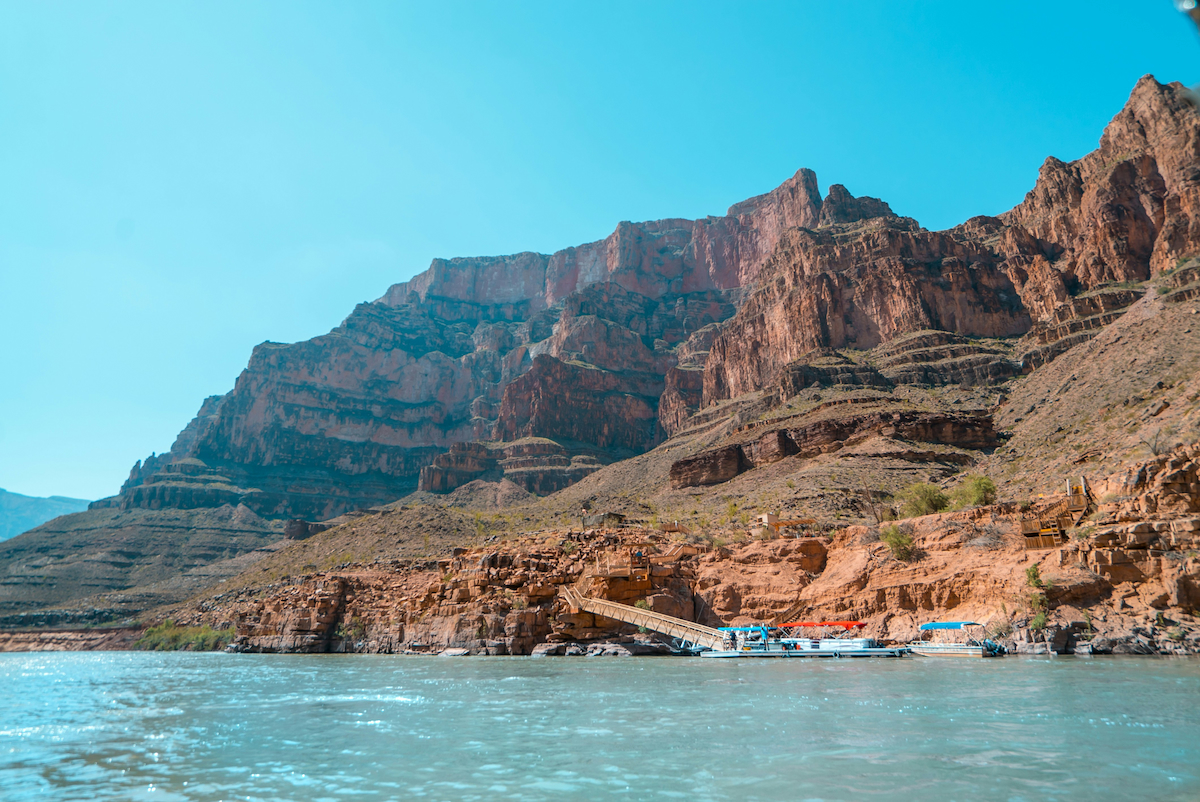
Running the Colorado River through the Grand Canyon is one of the great wilderness experiences on earth — 226 miles of the most remote river canyon in North America, accessible only by water or helicopter, with canyon walls that climb to a mile above you and Class III–V rapids that demand full attention. Commercial motorized trips (3–7 days, $1,800–$2,500/person) are the most accessible; oar-powered trips (7–16 days, $2,500–$4,500+) go slower and deeper into the experience. Private permits require a lottery system that books 18+ months ahead. For serious adventure travelers, this is genuinely the most immersive way to experience the canyon — nothing else puts you inside it for days at a time.
💡 The Phantom Ranch mule ride connection (staying at the bottom) is a common addition to rafting trips but note: Phantom Ranch mule rides are cancelled through June 30, 2026 due to trail conditions. Check grandcanyonlodges.com for updated availability before planning any itinerary that includes Phantom Ranch access by mule.
Backpacking below the rim and spending the night in the inner canyon is the most profound way to experience the Grand Canyon — waking up with canyon walls rising a mile on all sides, the Colorado River audible below you, the stars visible in a band of dark sky between the canyon walls above. Havasupai Gardens (formerly Indian Garden) is the most accessible overnight destination at 4.6 miles down Bright Angel Trail. Permits are required and competitive — apply through Recreation.gov up to 4 months in advance on the first of the month. The permit costs $10/night plus a $10 non-refundable reservation fee. The experience of going from the overcrowded South Rim to an almost completely silent canyon floor is a journey in more than one direction.
💡 Permits open on the first of each month at Recreation.gov — they sell out within minutes for popular dates. Apply for shoulder season dates (March–May, September–October) which are slightly less competitive than summer. Mather Campground on the South Rim (first-come or reservation) is a good fallback if you can’t get a backcountry permit.
Worth It / Skip It
Don’t Make These Mistakes
Trying to pay cash at the entrance gate. Grand Canyon National Park is cashless — the entrance stations accept credit cards, debit cards, and mobile payments only. No cash. Bring a card or purchase your pass in advance on Recreation.gov. This catches visitors who don’t read the park website, and it delays the entrance line for everyone behind them when it happens.
Hiking below the rim without enough water. Every year the NPS rescues hikers who underestimated how much water the combination of heat, exertion, and altitude demands. The guidance is 1 liter per hour of hiking minimum — more in summer. The inner canyon’s heat increases as you descend (roughly 10°F warmer at the river than the rim in summer). Carry more water than you think you need and drink before you’re thirsty.
Not booking in-park lodging or campgrounds far enough ahead. In-park lodges open reservations 13 months in advance at grandcanyonlodges.com, and El Tovar and the prime Maswik/Yavapai dates sell out quickly. Mather Campground (reservable up to 6 months ahead at Recreation.gov) fills for spring and fall weekends months ahead. If you’re planning a peak-season trip to the South Rim, your lodging reservation needs to happen before almost any other planning decision.
Planning to visit the North Rim in 2026 without checking current conditions. A 2024 wildfire destroyed the North Rim Lodge, campground, gas station, and most facilities. The North Rim is open for 2026 but services are severely limited — no overnight lodging in the traditional sense, no gas, significantly reduced food options. Confirm current conditions at nps.gov/grca before planning any itinerary that depends on North Rim amenities.
VacayValue Scorecard — Grand Canyon
Packing List — Grand Canyon
Every Sunday: One Destination. One Honest Take.
Join travelers who plan smarter. One email per week — real costs, specific advice, no filler.
The Best $35 Spent Anywhere in American Travel. Full Stop.
The Grand Canyon’s value proposition is almost absurdly good: $35 buys your entire vehicle seven days of access to one of the seven natural wonders of the world, 300+ miles of trails, free shuttle buses, free ranger programs, and the freedom to stand at the rim of a mile-deep canyon at sunrise or sunset whenever you want. The paid experiences — mule rides, helicopter tours, rafting — are optional upgrades to something that’s already extraordinary.
The mistakes are predictable: not booking lodging far enough ahead, hiking in the heat without enough water, trying to see the canyon in a day trip, and spending so much time photographing it that you forget to actually look at it. The canyon rewards patience and time. Two nights inside the park, one below-rim hike, one sunrise and one sunset — that’s the formula. Everything else is negotiable.
The North Rim is severely limited in 2026 — plan the South Rim and return for the North Rim when services are restored. Phantom Ranch mule rides are cancelled through June 30. El Tovar’s North Wing is offline for renovation until September. These are 2026-specific constraints that don’t change the fundamental experience — the canyon itself is unchanged and extraordinary. Go this year.