
New Orleans 2026: America’s Most Singular City (What to Eat, Hear, and Skip)
The best food city in America. Free live jazz every night on Frenchmen Street. A po’boy under $15 that beats any $40 sandwich you’ve had anywhere else. There is nowhere else like this, and it costs less than you think.
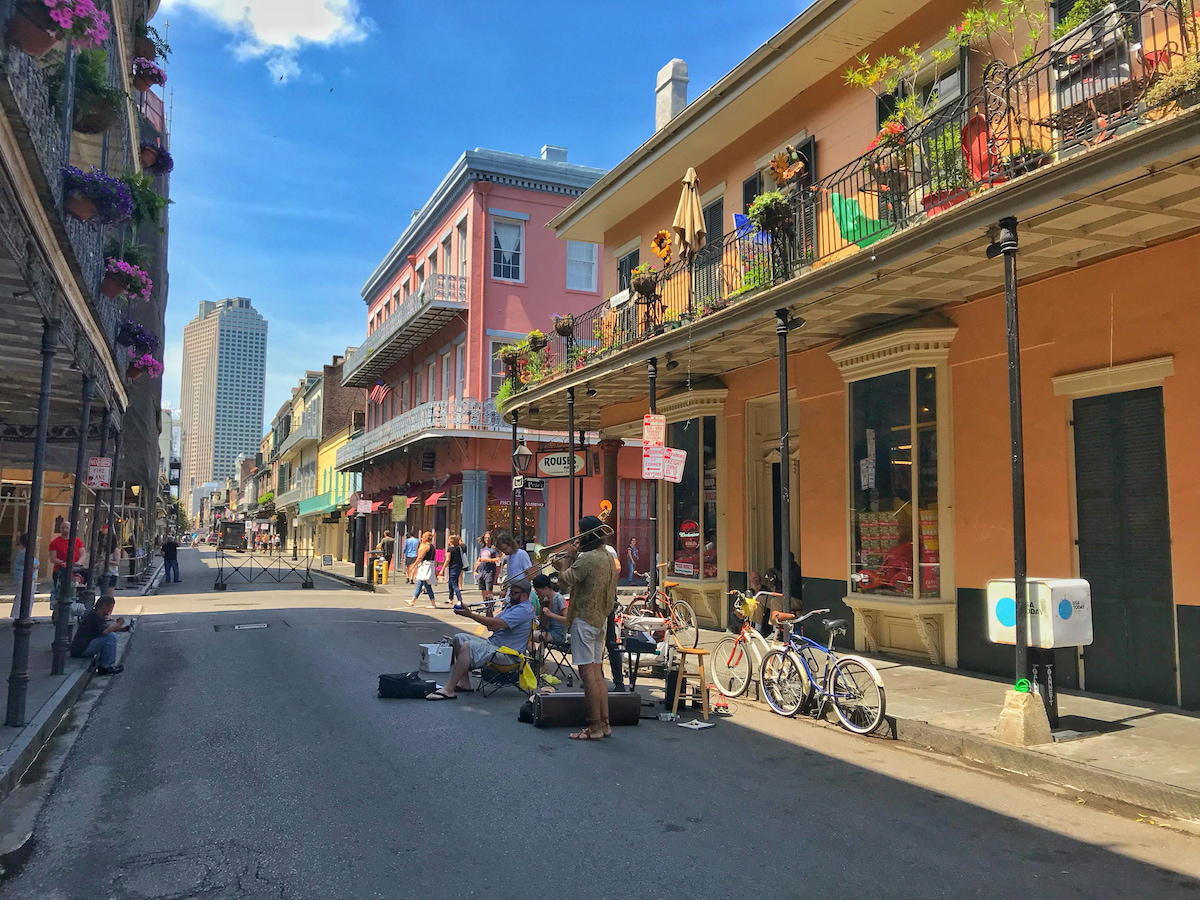
You’re on a side street off Frenchmen at 11pm, and there are three bands playing within earshot — one on the corner, one bleeding through the open door of the Spotted Cat, one from somewhere you can’t quite identify. The trombone player on the corner has been there for two hours and shows no sign of stopping. Someone just walked past carrying a hurricane, and the air smells like jasmine and the Mississippi. This is not something that can be replicated. This is specifically here, specifically this city, and it has been this way for three hundred years.
New Orleans is the most culturally specific city in the United States — a place with its own architecture, its own cuisine, its own musical traditions, its own relationship with time and death and celebration that doesn’t exist anywhere else on earth. It’s also significantly more affordable than its reputation suggests. Free live music every night on Frenchmen Street. Po’boys from neighborhood shops that cost $12 and take 30 years to perfect. A streetcar that costs $1.25 and travels through some of the most beautiful urban streets in America. The city rewards the curious and the unhurried in ways that the Bourbon Street tourist never discovers.
What’s In This Guide
📅 Best Time to Visit New Orleans
Sweet spot: October–November and March. October is simply one of the best months to visit any US city — New Orleans in October has perfect temperatures, full local life (Saints season, Voodoo Fest, neighborhood events), and none of the event-driven pricing of Mardi Gras or Jazz Fest. March post-Mardi Gras is similarly excellent: the city exhales, prices drop, and the weather is perfect for walking. If Jazz Fest or Mardi Gras is the goal, book accommodation 6+ months ahead and budget 2–3x standard hotel rates during those windows.
Where to Stay in New Orleans
The French Quarter is the most atmospheric accommodation location in the city — wrought-iron balconies, courtyard pools, a block from Bourbon Street — but also the noisiest, especially near Bourbon. The Garden District and Lower Garden District offer quieter, more residential character with the St. Charles Streetcar connecting you to the Quarter in 20 minutes. The Marigny (Faubourg Marigny) puts you walking distance from Frenchmen Street’s live music scene at often lower prices. Note that New Orleans adds roughly 15% in hotel taxes on top of the listed room rate — factor this into your budget. Prices below are verified for non-event periods; Mardi Gras and Jazz Fest dates carry significant premiums.
At the budget end of the French Quarter, a handful of smaller historic properties — the Cornstalk, the Hotel St. Pierre, and similar shotgun-style guesthouses — offer genuine French Quarter character at prices significantly below the major hotel brands. Expect rooms that are small by modern standards, with character that outweighs the square footage: exposed brick, plaster walls, courtyard access, wrought-iron detail. These properties are in the quieter residential sections of the Quarter, away from the Bourbon Street noise corridor. For travelers whose priority is being in the heart of the city without paying the Marriott premium, these properties deliver the authentic French Quarter experience.
The Bourbon Orleans occupies a historic 1827 building on Orleans Street in the residential side of the French Quarter — well-positioned for exploring the Quarter while sitting back from the Bourbon Street noise. The hotel has an outdoor pool and courtyard, full-service amenities, and rooms ranging from standard to balcony-facing suites. The location is the key advantage: Jackson Square is a five-minute walk, Frenchmen Street is twelve minutes on foot, and the best French Quarter restaurants are all within easy reach. For travelers who want a proper French Quarter hotel experience with history built into the walls, the Bourbon Orleans consistently delivers.
The Hotel Monteleone has been operating on Royal Street since 1886 and is one of the last family-owned hotels in the French Quarter. Ernest Hemingway, William Faulkner, Tennessee Williams, and Truman Capote all stayed here — it’s formally designated a Literary Landmark. The Carousel Bar, a slowly revolving cocktail bar in the lobby, is an authentic New Orleans institution that’s been running since 1949. The rooftop pool overlooks the French Quarter skyline. At $250–$500/night it’s a splurge, but the Monteleone delivers something no modern hotel can replicate: a continuous thread of New Orleans history that you’re sleeping inside, not adjacent to.
Get the Budget Travel Cheat Sheet
Booking shortcuts, packing hacks, and money-saving moves our readers use on every trip — free when you subscribe.
15 Best New Orleans Experiences
New Orleans divides into two kinds of experiences: the free ones that are uniquely, specifically NOLA — Frenchmen Street at midnight, a po’boy at a neighborhood lunch counter, the St. Charles Streetcar through the Garden District — and the paid ones that are worth every dollar because nothing similar exists anywhere else. The tourist version of this city costs more and delivers less than the real one.
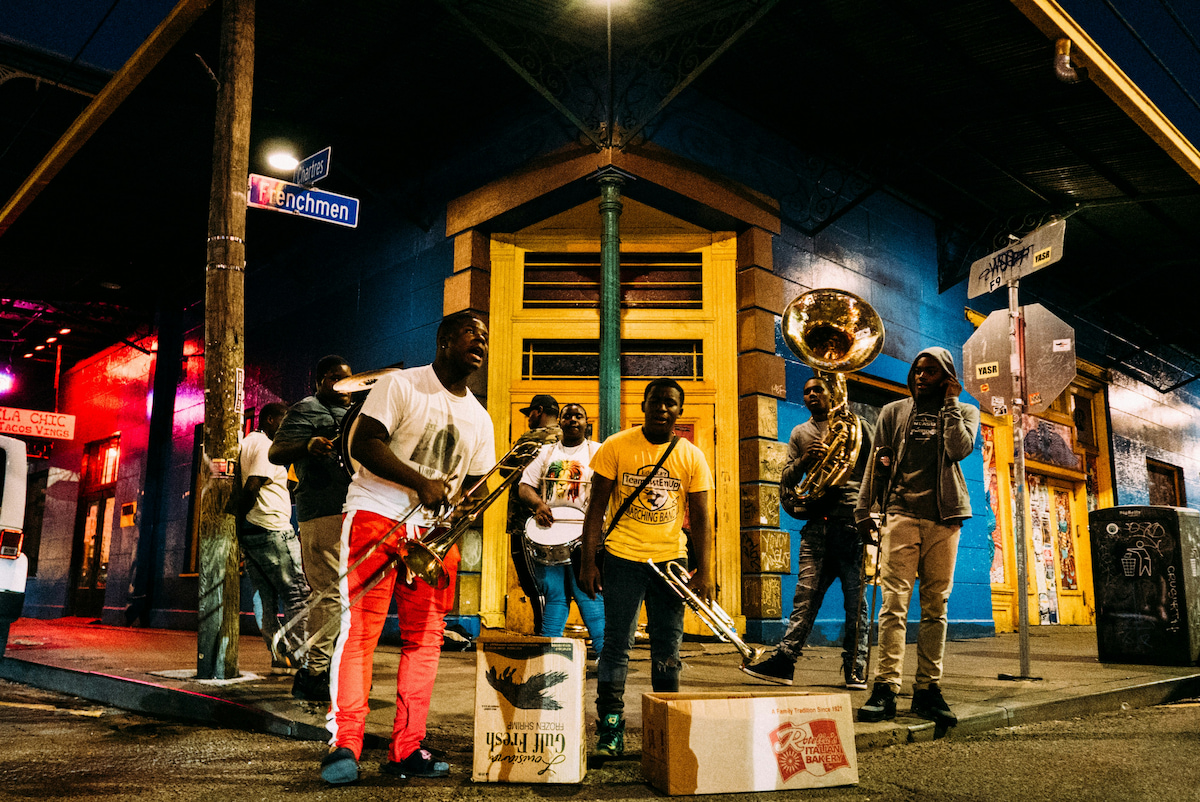
Frenchmen Street in the Faubourg Marigny is one of the great free cultural experiences in America — a three-block stretch with a dozen live music venues packed side by side, operating every night of the year. Unlike Bourbon Street, which has largely become a backdrop for drinking, Frenchmen is where actual musicians play: jazz ensembles at the Spotted Cat, brass bands at the Maison, Rebirth Brass Band spillover, DJs and funk bands filling the gaps. The music flows into the street. People dance on the sidewalk. The whole thing costs exactly whatever you put in the tip jar. The Rebirth Brass Band plays the Maple Leaf Bar in Uptown every Tuesday night — a recurring institution that draws locals and has been running for decades. Get there before 10pm for the full experience; it builds toward midnight.
💡 Frenchmen gets going around 9–10pm and peaks around 11pm to 1am. Wednesday through Sunday tend to have the fullest lineups. Download the WWOZ app (New Orleans’ community radio station) to see who’s playing where before you go — it’s the best live guide to that night’s music city-wide.
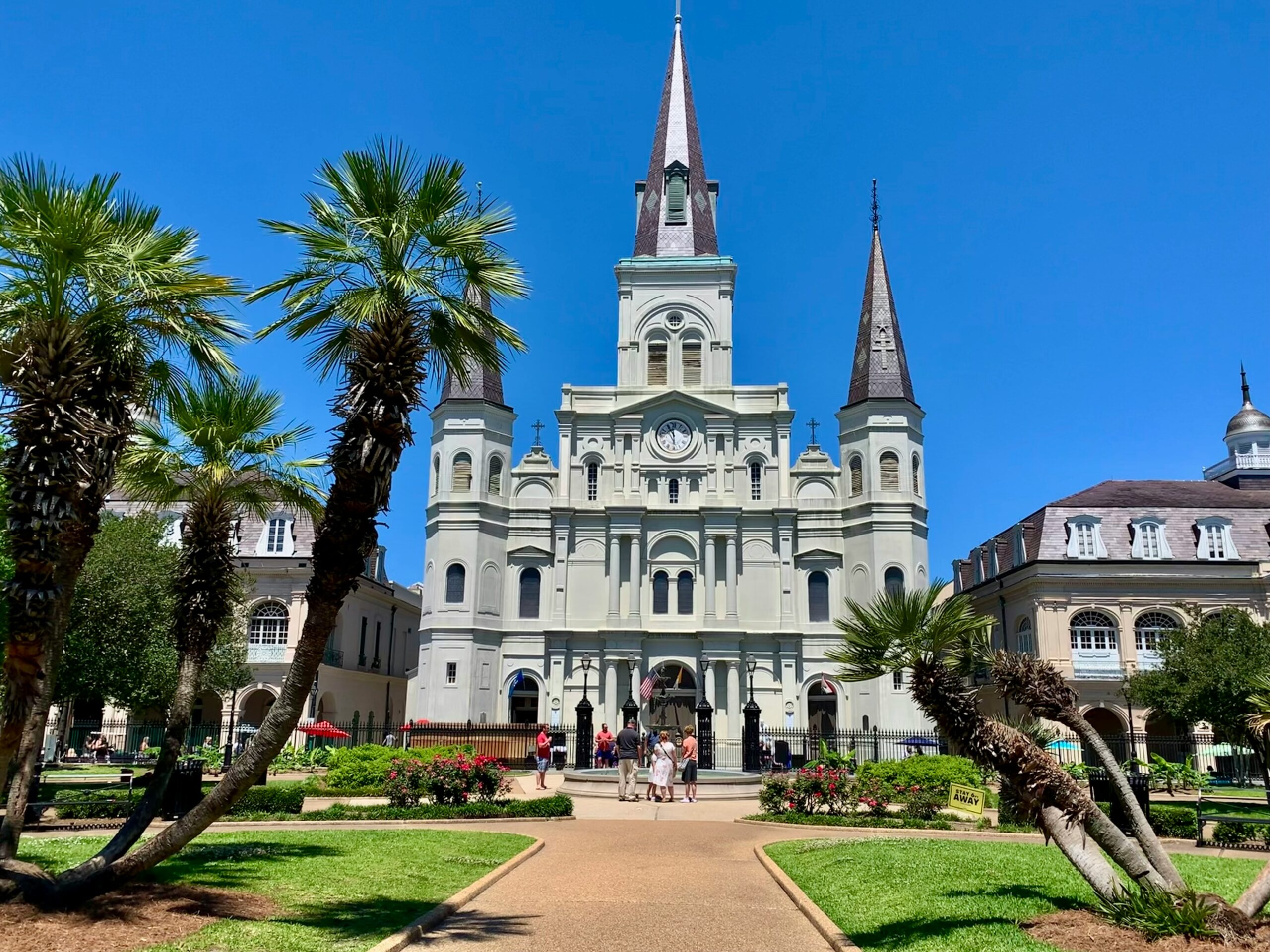
Jackson Square is the geographical and spiritual center of New Orleans — a formal public square fronted by the St. Louis Cathedral (the oldest continuously operating Catholic cathedral in the US), flanked by the Pontalba Buildings (the oldest apartment buildings in America), and perpetually occupied by street artists, musicians, fortune tellers, and tarot readers who have claimed their spots by custom and tradition. The French Quarter surrounding it is best experienced on foot: Royal Street for antiques and galleries, Chartres for quieter history, Bourbon for understanding what you’ve been warned about. The St. Louis Cemetery No. 1, just outside the Quarter, holds New Orleans’ famous above-ground tombs — visitable by guided tour only (required since 2015).
💡 The best time to walk the French Quarter is early morning (7–9am) before the crowds arrive. The light is beautiful, the streets are quiet, and you see the neighborhood as it actually is rather than as a tourist experience. The Café du Monde beignets are best appreciated at this hour with a café au lait and the river mist still hanging in the air.
City Park is one of the great urban parks in America — 1,300 acres of live oaks draped in Spanish moss, lagoons, gardens, and the Besthoff Sculpture Garden, a free permanent outdoor collection surrounding the New Orleans Museum of Art (NOMA). More than 90 sculptures by major modern and contemporary artists are arranged among the trees and along the lagoon paths — a genuine world-class outdoor art experience that costs nothing. The NOMA interior charges admission ($15/adult) but the sculpture garden is free and accessible from the park. The Canal Street Streetcar deposits you at the park entrance. Rent a paddleboat on the lagoon ($15/hour) for a different perspective on the oaks.
💡 The sculpture garden is most beautiful in morning light when the moss catches the sun and the reflection on the lagoon is clear. Combine with the NOMA interior for a full art day — the permanent collection includes work from Degas, Monet, and Picasso and the museum is genuinely excellent. City Park is also where the New Orleans Jazz Fest takes place each spring at the Fair Grounds racetrack.
The St. Charles Streetcar Line is the oldest continuously operating streetcar in the world, running since 1835 on tracks down the neutral ground (the local term for the tree-lined median) of St. Charles Avenue. For $1.25 — or $3 for an all-day Jazzy Pass — it travels from the edge of the French Quarter through the Central Business District and into the Garden District and Uptown, passing under live oak canopies, alongside antebellum mansions, past Tulane and Loyola universities, and through one of the most architecturally remarkable residential corridors in the United States. Get off at Washington Avenue for the Garden District’s cemetery and mansion-lined streets. The ride itself — wooden seats, open windows, the clatter of vintage cars on hundred-year-old tracks — is an experience, not just transit.
💡 Pay with exact change ($1.25, no bills) or download the Le Pass RTA app for digital tickets. Sit near an open window for the full effect. Combine a streetcar ride with a Garden District walk — the Magazine Street corridor has excellent independent restaurants, coffee shops, and boutiques, and connects back to the streetcar line easily.
A New Orleans po’boy is not a sandwich in the generic sense. It’s a specific thing: French bread from Leidenheimer Baking Company (the bakery that’s supplied most of the city’s po’boy shops since 1896), loaded with fried seafood or slow-roasted beef debris, dressed with shredded lettuce, tomato, pickles, and mayo. Domilise’s in Uptown, Parkway Bakery on Bayou St. John, R&O’s in Metairie, Frady’s in the Bywater — these are neighborhood institutions that have been making the same sandwich for decades. Ordering from a proper po’boy shop rather than a French Quarter tourist restaurant is both cheaper and better. A half-po’boy runs $10–$12. A full one feeds most people for $14–$16. It is one of the best food values in American travel.
💡 Order it “dressed” — that means the full condiments are applied. The fried shrimp po’boy is the canonical choice for first-timers. Parkway Bakery is the most accessible to tourists and genuinely excellent. Bring cash; some shops are cash-only and parking is tight in neighborhood locations.
Café du Monde has been operating in its current location on Decatur Street since 1862 — a covered open-air café facing Jackson Square that serves exactly two things: beignets and café au lait. The beignets are hot fried dough squares buried under a mountain of powdered sugar that will immediately coat your clothing; the café au lait is half coffee, half chicory, half hot milk (the math doesn’t work but the drink does). This is not a tourist trap with tourist pricing — the place is genuinely beloved, genuinely cheap, genuinely delicious, and open 24 hours a day, 364 days a year. Everyone does this. Everyone was right to.
💡 The line is shortest at non-peak hours — very early morning (6–7am) or late night after midnight. The outdoor seating facing Jackson Square is the move; the interior is just tables. Don’t wear black. Don’t fight the powdered sugar. That is the experience.
The National WWII Museum is the top-rated attraction in New Orleans on every review platform, and it’s not close. Designated by Congress as the official WWII museum of the United States, it tells the story of the American experience across six soaring pavilions — why the war was fought, how it was won, and what it means today. The immersive “Campaigns of Courage” exhibition puts you inside the Pacific and European theaters. The 4-D film “Beyond All Boundaries” (additional $9) is narrated by Tom Hanks and worth it. Plan a full day minimum — many visitors spend two days. The connection to New Orleans is real: the Higgins boats that carried American soldiers onto the beaches of Normandy were designed and built in this city.
💡 Buy tickets online at nationalww2museum.org — occasionally timed entry is helpful during peak periods. The Beyond All Boundaries 4-D film is highly recommended (add $9 at purchase). The American Sector restaurant inside the museum is an excellent lunch option — open through 2pm most days. A second-day pass adds only $15 if you want to come back.
Preservation Hall is 726 St. Peter Street in the French Quarter — a deliberately modest room with wooden benches, no air conditioning, no bar, and no stage. Just musicians and an audience 100 people deep. The hall has presented traditional New Orleans jazz every night since 1961 specifically to preserve and perpetuate the art form, and the musicians who play here are masters of a tradition that is specific to this city and this culture. There are no gimmicks, no production values, no tourist theater. There’s a band playing the music that invented jazz in the room where it belongs. Three shows nightly (8pm, 9pm, 10pm); additional shows Thursday–Sunday. General admission tickets are first-come, first-served at the door in cash. Big Shot seats (front rows, guaranteed) are booked online at preservationhall.com.
💡 Book Big Shot tickets online if you want to sit — the front rows are worth the premium for the intimacy. General admission queue starts building 30–45 minutes before showtime; arrive early for standing room near the stage. Shows run about 45 minutes. There’s no food or drink served inside; eat dinner first on Frenchmen or in the Quarter.
New Orleans sits in a delta of bayous, swamps, and marshland that is unlike anything else in the contiguous United States — a flat world of cypress trees draped in Spanish moss, standing water reflecting clear sky, alligators lounging on logs, and herons stalking the shallows with complete indifference. A half-day swamp tour (departing from the city, ~$40/person including transport) puts you in an airboat or flat-bottom skiff moving through this landscape with a guide who has spent their life in it. Operators including Cajun Encounters and Honey Island Swamp Tours are established and reliable. It’s a reminder that the city sits in one of the most ecologically unusual regions in North America — a completely different New Orleans experience from anything on Bourbon Street.
💡 Book online in advance for the best price and guaranteed transport. Morning tours (7–9am departure) have better light, more active wildlife, and cooler temperatures in summer. Wear clothing you don’t mind getting damp and bring bug spray — the bayou environment in summer is genuinely buggy.
New Orleans’ above-ground “Cities of the Dead” are one of the city’s most distinctive and haunting features — marble and brick tombs stacked above a waterlogged ground that can’t accommodate traditional burial. St. Louis Cemetery No. 1, established in 1789, is the oldest surviving cemetery in New Orleans and contains the presumed tomb of Marie Laveau, the Voodoo Queen of New Orleans, a site of ongoing cultural practice. Since 2015, independent access is prohibited — entry requires a guided tour. Save Our Cemeteries and licensed guides offer walking tours ($20–$25/person) that put the cemetery’s history, architecture, and significance in proper context rather than reducing it to a ghost tour prop.
💡 Book a tour through Save Our Cemeteries (saveourcemeteries.org) for the most historically grounded experience. Do not draw on Marie Laveau’s tomb — locals and scholars consider it disrespectful, and the practice has caused significant damage to the historic structure. The cemetery is in the Tremé neighborhood; combine with a walk through the Tremé for a deeper sense of New Orleans’ Black cultural history.
New Orleans cuisine — real Creole and Cajun cooking, not the tourist approximation — is one of the great regional food traditions in the world. Gumbo, étouffée, red beans and rice on Monday, barbeque shrimp, turtle soup, bananas foster — this is food that can only be made correctly here, with these ingredients, by people who learned it from people who learned it from people. The tier of what’s actually excellent is wider than most cities: Dooky Chase (the queen of Creole cooking, recently reopened), Willie Mae’s Scotch House (best fried chicken in America, no argument), Compère Lapin in the Warehouse District, the Upperline in Uptown. Budget $40–$80/person for dinner including a drink at any of these. Commander’s Palace is the apex and worth the full occasion.
💡 Make a reservation, especially for Saturday and Sunday. New Orleans restaurants often run at full capacity Thursday through Sunday year-round. Commander’s Palace requires reservations weeks ahead. For a legendary budget meal, Willie Mae’s Scotch House in the Tremé serves James Beard Award-winning fried chicken that costs under $20 for the full plate — arrive at opening (11am) for shortest wait.
Mardi Gras is not a single day but a two-week season of increasingly elaborate parades rolling through the city’s neighborhoods, culminating on Fat Tuesday. The parades are free and public — you stand along the parade route and the krewes throw beads, trinkets, and doubloons from the floats. The experience of watching a massive parade float roll past throwing cups of purple, gold, and green while a brass band follows behind it is genuinely something no other event in the US replicates. The catch: hotel rates multiply by 3–5x during peak Mardi Gras weekends, and the city is at absolute maximum capacity. Mardi Gras 2027 falls February 16; 2026 already passed February 17. If planning for a future Mardi Gras, book accommodation the day you decide — ideally 6+ months ahead.
💡 The best Mardi Gras experience is in the Uptown neighborhoods, not the French Quarter tourist crush. Parade routes in the Garden District and Uptown are more family-friendly and less frenzied. The Zulu and Rex parades on Fat Tuesday morning are the most iconic. Download the Mardi Gras New Orleans app for real-time parade tracking and routes.
Jazz Fest runs over two weekends in late April and early May at the Fair Grounds Race Course in Mid-City — 12 stages, hundreds of acts, and a food court that’s genuinely considered one of the best collections of New Orleans cuisine assembled in a single place. The music ranges from traditional jazz and gospel to international acts drawn by the festival’s reputation. Day tickets run approximately $85–$125 depending on the day and advance purchase window; check nojazzfest.com for 2026 lineup and pricing as dates approach. The food alone justifies part of the ticket cost: crawfish bread, cochon de lait, alligator pies, pheasant and andouille gumbo from vendors that only appear at this event.
💡 Plan accommodation 6+ months ahead for Jazz Fest dates — hotels within a few miles of the Fair Grounds sell out early and surge in price. Single-day tickets are the best value for most visitors; weekday tickets can be slightly cheaper than weekend. The food vendor lines move faster in the early morning and late afternoon; avoid peak lunch hour.
A second line parade is a New Orleans brass band tradition that has been ongoing in the city’s Black neighborhoods since the 19th century — social aid and pleasure clubs organize Sunday afternoon parades through their home neighborhoods, led by a brass band, with community members dancing and following the parade through the streets. These are not tourist events. They are genuine community celebrations, and they’ve been happening every Sunday from September through June for over a hundred years. The experience of a real second line parade — the music, the dancing, the neighborhood gathered in the street — is one of the most profound cultural experiences available to a visitor anywhere in America. The Offbeat magazine website and local sources like WWOZ publish the weekly schedule.
💡 Be a respectful visitor, not a spectator with a camera. Follow the parade, dance if you know how to or want to learn, and understand that you’re a guest in someone’s neighborhood celebration. Bring cash — street vendors sell cold drinks and snacks along the route. Second lines typically begin in the early to mid-afternoon and last 3–4 hours.
Commander’s Palace in the Garden District has been one of America’s great restaurants since it opened in 1880. It launched the careers of Paul Prudhomme and Emeril Lagasse, invented turtle soup as a fine dining staple, and has been widely considered the best restaurant in New Orleans by local consensus for decades — a claim that says a lot in a city where the competition is fierce. The dining room is a Victorian-era grand hall with white tablecloths, tuxedoed servers, and the extraordinary brandy-flambéed bananas foster still prepared tableside. The lunch prix fixe runs considerably more affordable than dinner. It’s a celebration meal — not for every night, but for the night you want New Orleans at its most ceremonial and most itself.
💡 Reservations weeks ahead for dinner, especially on weekends — call or book via OpenTable. The Saturday jazz brunch is one of the most beloved New Orleans rituals and slightly more affordable than Saturday dinner. Dress code is business casual to dressy; the restaurant is formal without being stuffy. Budget $120–$150/person for dinner with wine. The service is legendary.
Worth It / Skip It
Don’t Make These Mistakes
Staying only in the French Quarter and thinking you’ve seen New Orleans. The Quarter is the tourist infrastructure of the city. The city itself is the Tremé, the Marigny, the Garden District, the Bywater, Mid-City — neighborhoods where people actually live, where the second lines run, where the neighborhood restaurants operate. A trip confined to the French Quarter is a trip to a tourist district, not New Orleans.
Not eating where the locals eat. The best food in New Orleans is not in the French Quarter tourist corridor. It’s in neighborhood places that have been operating for decades — Willie Mae’s Scotch House in the Tremé, Dooky Chase in Mid-City, Parkway Bakery on Bayou St. John, Mandina’s on Canal. These restaurants are accessible, affordable, and serve food that is specific to New Orleans in a way that the tourist strip approximations are not. Ask locals, not Yelp’s tourist algorithm.
Underestimating the summer heat and humidity. New Orleans in July and August is hot in the way that other cities are merely warm — the combination of heat, humidity, and UV intensity creates conditions that make outdoor activity genuinely difficult for people unaccustomed to it. Visitors who plan full days of outdoor walking in July regularly find themselves exhausted and overheated by noon. If traveling in summer, plan accordingly: outdoor activity in early morning only, air-conditioned museums and restaurants mid-day, outdoor evenings.
Not accounting for hotel tax in the budget. New Orleans adds approximately 15% in state, city, and occupancy taxes on top of advertised hotel rates. On a $200/night room that’s an extra $30/night — $150 over a five-night stay that doesn’t appear in the listing price. Budget accordingly, particularly for French Quarter properties that carry higher base rates.
VacayValue Scorecard — New Orleans
Packing List — New Orleans
Every Sunday: One Destination. One Honest Take.
Join travelers who plan smarter. One email per week — real costs, specific advice, no filler.
There Is Nowhere Else Like This. Go, and Then Go Again.
New Orleans is the only city in the United States with no architectural, culinary, or cultural reference point outside itself. It was built by French colonists, shaped by Spanish rule, transformed by enslaved Africans who created its music and much of its cuisine, absorbed waves of Italian, Irish, and Caribbean immigration, and emerged as something categorically singular. You cannot get a New Orleans po’boy in Chicago. You cannot get New Orleans jazz in Nashville. You cannot get gumbo from the neighborhood counter that has been making it since before you were born from anywhere except there.
The value equation is remarkable for a city of this cultural density. The best live music in America is free, every night, on Frenchmen Street. The food tradition is deep and available at every price point from $12 po’boys to Commander’s Palace dinners. The streetcar costs $1.25. The neighborhoods are walkable and beautiful. The WWII Museum is world-class at $36. The only thing that gets expensive here is the hotel tax and the festival season premiums — both of which are manageable with planning.
Go in October or November for the best weather. March after Mardi Gras for the quietest city and best prices. Plan 5 nights minimum — 3 days is enough to see the surface; 5 lets you find the city underneath it. And come back, because the city is one of the few places where the second trip is substantially better than the first.