
Las Vegas 2026: The Budget Traveler’s Guide to America’s Most Misunderstood City
The cheapest flights in America land here. The iconic stuff is free. The resort fee is not. Understanding those three facts is the difference between a great trip and a $300/night surprise at checkout.
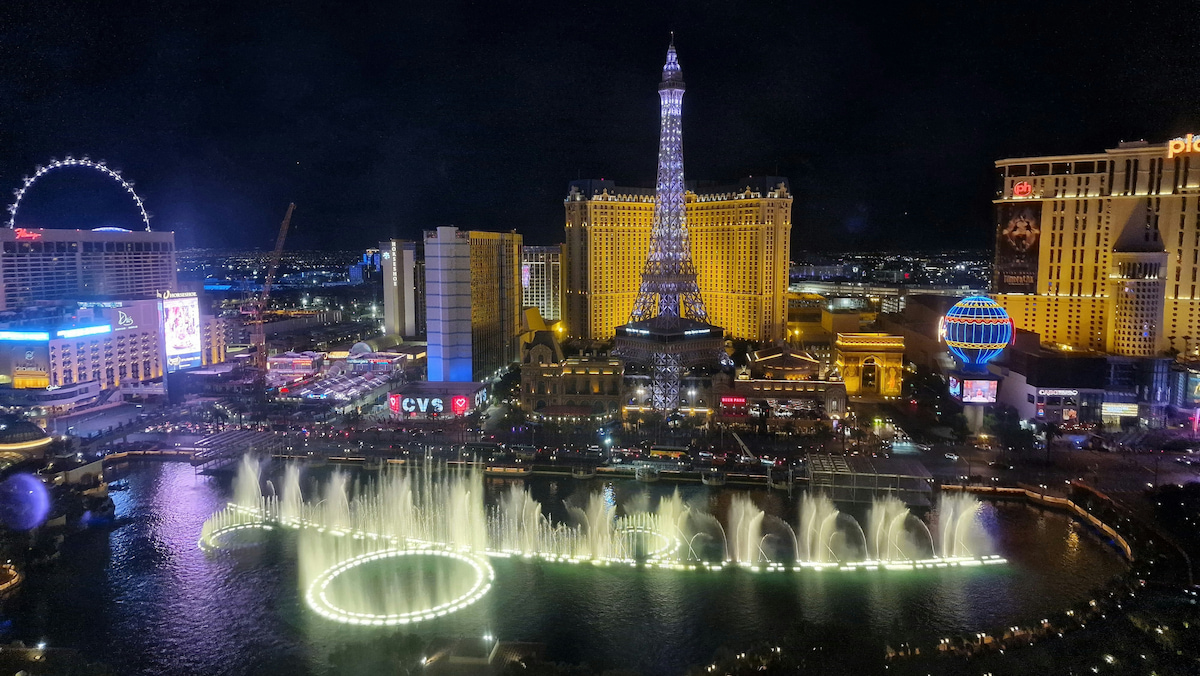
You’re standing at the edge of the Bellagio fountains at 9pm. The water shoots 460 feet in the air, perfectly synchronized to music that the crowd around you — tourists from every country on earth, standing shoulder to shoulder along the railing — is quietly experiencing the same way you are. It cost you nothing to get here. The flight was $180 round trip. The casino gave you a free drink while you were playing blackjack at the $10 minimum table. The show across the street is free. There is genuinely nowhere else like this in America.
Las Vegas ranked #1 on Skyscanner’s list of cheapest flight destinations for Americans in 2026 — average round-trip economy fare around $232, with off-peak midweek deals going significantly lower. The most famous attractions on the Strip cost nothing. The casino economy subsidizes everything: free drinks, discounted hotel rooms, cheap buffets, free entertainment. The trap isn’t that Las Vegas is expensive. The trap is the resort fee — a mandatory $40–$55/night charge added to virtually every Strip hotel bill on top of your room rate, payable at checkout whether or not you used the pool. Know that’s coming and you can plan one of the most value-dense trips in American travel.
What’s In This Guide
Every Las Vegas Strip hotel charges a mandatory resort fee of $40–$55/night before Nevada’s 13.38% tax — that’s $45–$62/night added to your bill at checkout, on top of whatever room rate you booked. It’s non-negotiable and non-refundable. A room listed at $89/night can become $150+/night after resort fee and tax. Always calculate your total nightly cost as: room rate + resort fee + 13.38% tax. The calculator below includes resort fee estimates in the hotel row. Some off-Strip and Downtown properties have lower or no resort fees — noted in the Where to Stay section.
📅 Best Time to Visit Las Vegas
Sweet spot: March–April and October–November. These four months deliver Las Vegas at its best: 65–85°F temperatures, the pool scene active without the 107°F July extreme, and the full Strip experience without peak-season hotel premiums. March and April are the best value for the experience. October is peak season with corresponding prices — but the weather is genuinely perfect. Avoid major convention dates (CES in January, NAB in April) which drive hotel prices up regardless of season. Check the Las Vegas convention calendar before booking any midweek trip.
Where to Stay in Las Vegas
In Las Vegas, the hotel is part of the experience in a way it isn’t anywhere else — you’re not just booking a room, you’re choosing which themed environment to live inside for a few days. The key budget principle: always look up the total all-in nightly cost including resort fee and tax, not just the room rate. A $60/night room at a Strip property becomes $110–$130/night once resort fees ($40–$50) and Nevada tax (~13%) are added. Downtown Fremont Street properties and off-Strip hotels typically charge lower or no resort fees, making them genuinely better value for budget travelers. Prices below reflect total all-in estimates.
Excalibur sits at the south end of the Strip with a medieval castle theme and among the lowest room rates of any on-Strip property. The medieval theming is campy in a Las Vegas way that’s entirely self-aware, the rooms are clean and functional, and the location gives easy access to the MGM Grand, New York-New York, and the walkway to the Bellagio area. Resort fees run $25–$35/night here — lower than the luxury tier — making the all-in total more accurate to the listed price than higher-end properties. The food court inside has some of the most affordable meals on the Strip. For travelers who want to be on the Strip without spending Wynn money, Excalibur is a reliable base.
Paris Las Vegas sits dead-center on the Strip with an Eiffel Tower replica rising out of the hotel, a direct connection to Bally’s (now Horseshoe), and walking distance to the Bellagio fountains, the Cosmopolitan, and most of the mid-Strip action. The themed rooms are spacious by Strip standards, and the Eiffel Tower view rooms looking directly at the Bellagio across the street are worth requesting. The location is the primary value — you can walk to more of the Strip’s best free experiences from Paris than from almost any other hotel. Resort fees run $37–$45/night at this tier.
The Wynn is consistently ranked among the finest hotels in the United States — not just on the Strip. Steve Wynn built it as his personal statement of what a Las Vegas hotel could be, and the result is a property where the flowers alone involve a dedicated botanical team, the rooms have floor-to-ceiling windows overlooking the pool or the golf course, and the service is genuinely world-class rather than performatively so. Resort fees run $45–$65/night at this tier, but the quality justifies the all-in cost more credibly than budget properties with similar fee structures. At $350–$700/night, it’s a significant spend — but as luxury hotel experiences go, few properties in the US deliver more consistently.
Get the Budget Travel Cheat Sheet
Booking shortcuts, packing hacks, and money-saving moves our readers use on every trip — free when you subscribe.
15 Best Las Vegas Experiences
The Las Vegas formula is straightforward once you understand it: the casino economy subsidizes the spectacular, so the most famous experiences in the city are free, and the paid experiences are priced at a premium the city can command because of demand. The Bellagio fountains are free. The $9 beer at the club is not. Below is an honest breakdown of where the free experiences genuinely rival anything paid, and where the paid upgrades are actually worth it.
The Bellagio fountains are the single most iconic free attraction in Las Vegas — 1,200 water jets synchronized to music, firing up to 460 feet in the air, running every 30 minutes in the afternoon and every 15 minutes in the evening on the 8.5-acre artificial lake in front of the Bellagio hotel. The show runs day and night, changes its musical program regularly, and draws crowds of hundreds of thousands of people annually who stand along the railing on Las Vegas Boulevard, often in complete silence, watching something that would be a paid attraction worth $50 anywhere else in the world. It is genuinely one of the most spectacular free public displays in America, and it runs whether you’re a casino guest or not.
💡 The fountain shows run every 30 minutes from 3pm (noon on weekends), and every 15 minutes from 8pm until midnight. The best free viewing positions are along the Strip sidewalk and from the bridge over the lake. For an elevated view, the Eiffel Tower replica at Paris Las Vegas across the street offers a paid observation deck — but the sidewalk view is genuinely excellent for free.
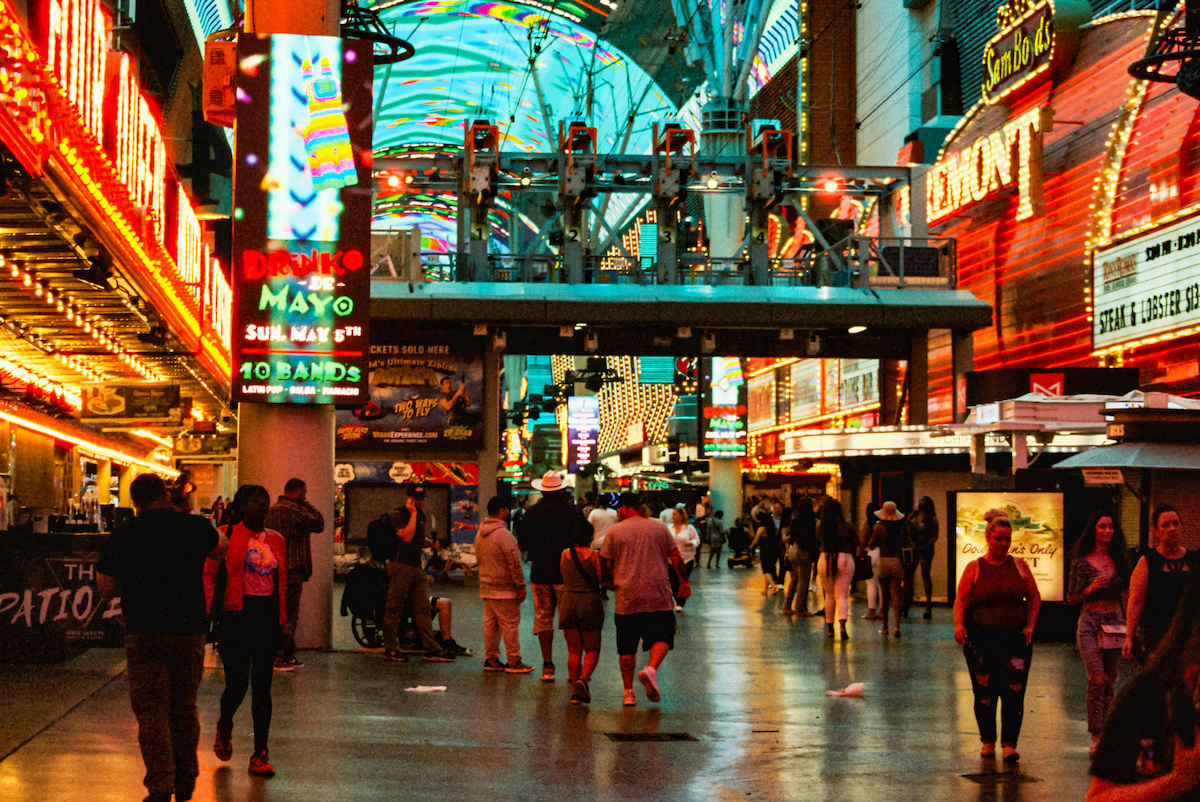
The Fremont Street Experience in Downtown Las Vegas is the original casino corridor — five blocks under a 1,500-foot LED canopy that puts on a free light and sound show every hour after dark, with three live music stages operating simultaneously every night of the year. The entertainment ranges from cover bands to headline artists performing for free at the Downtown Rocks concert series (May through October). The casinos lining Fremont Street — Binion’s, the Golden Nugget, Four Queens — have lower minimum table bets than Strip casinos, cheaper drinks, and a vintage Vegas energy that feels genuinely different from the Strip. The free zipline (SlotZilla) costs $25–$45 to ride, but watching people fly overhead under the neon canopy costs nothing.
💡 Fremont Street is best experienced Thursday through Sunday evenings when all three stages are operating and the crowd density creates the full energy. Downtown Las Vegas hotels (the D, Golden Gate, Four Queens) charge significantly lower resort fees than Strip properties — staying Downtown and Ubering to the Strip for specific experiences is a legitimate budget strategy saving $15–$30/night on fees alone.
The Las Vegas hotel lobbies and casino floors are among the most extravagant spaces built anywhere in the modern world, and every single one is free to walk through. The Bellagio Conservatory (a massive floral installation changed five times yearly, maintained by a dedicated team of 140 horticulturists — free), the Venetian’s indoor canals and painted sky ceiling (free), the Luxor’s pyramid interior (free), the Forum Shops at Caesars (free to walk and browse, free Fall of Atlantis animatronic show every two hours at the fountain), the Wynn’s floral displays (free). A self-guided walking tour from one end of the Strip to the other, through hotel lobbies and across the sky bridges, takes half a day and costs nothing beyond whatever you order at a casino bar.
💡 Start at Mandalay Bay (south) and walk north through Luxor, Excalibur, New York-New York, MGM Grand, Park MGM, the Aria, Bellagio, Cosmopolitan, Venetian, and LINQ. Each casino has overhead climate control — essential in summer — and the combined architectural spectacle of the full walk is genuinely unlike anything else in the world. Budget 4–5 hours for the full Strip.
The Bellagio Conservatory is a 14,000-square-foot glass-ceilinged space inside the Bellagio hotel that houses a massive seasonal floral installation changed five times a year (Chinese New Year, Spring, Summer, Fall, and Holiday). Each installation involves a dedicated team of 140 botanists and horticulturists and typically includes live plants, artistic sculptures, flowing water features, and architectural elements that collectively create one of the most elaborate floral displays in the world. It’s free to enter, it’s air-conditioned, it’s genuinely beautiful, and it changes completely every few months so repeat visitors always see something new. One of the most underrated free experiences in Las Vegas.
💡 The Conservatory is open 24 hours and most beautiful in the early morning when foot traffic is minimal and the lighting creates dramatic shadows through the glass ceiling. The holiday installation (November–January) is considered the most elaborate of the five annual displays. It’s a few steps from the casino floor — follow the signs from the main Bellagio entrance.
The Welcome to Fabulous Las Vegas sign at the south end of the Strip is a 1959 neon landmark that’s been photographed approximately a billion times. There’s a small parking area with a permanent queue of visitors; the best time to visit with no wait is early morning. But the larger experience is the Strip itself at night — 4.2 miles of neon, light shows, moving marquees, and architectural spectacle that is, start to finish, a free experience. The Sphere’s exterior LED display (the Exosphere) — 580,000 square feet of LEDs visible for miles — runs throughout the evening and is spectacular to encounter even without a show ticket inside.
💡 Position yourself on the elevated walkway between the Venetian and the Palazzo for the best Sphere vantage point. The exterior display changes throughout the evening and is genuinely worth timing your Strip walk around after dark. The Welcome to Las Vegas sign at the south end has a dedicated turn lane off Las Vegas Boulevard — arrive before 8am to skip the photo queue entirely.
Las Vegas food ranges from $100-per-person celebrity chef dinners to some of the cheapest fast food in America — and the casino economy means some of the cheapest options sit inside casino food courts directly on the Strip. The Miracle Mile Shops food court at Planet Hollywood (In-N-Out, Earl of Sandwich, Auntie Anne’s) offers meals for $12–$18. The LINQ food court runs similarly. Off-Strip, the Spring Mountain Road corridor a mile west has excellent Vietnamese, Chinese, and Korean restaurants at $12–$18/person that rival anything on the Strip for a fraction of the price. The single biggest money-saving move: buy water and breakfast items at the CVS across from Park MGM on your first day. Hotel minibar water costs $8; CVS water costs $1.50.
💡 The casino free drink policy is legitimate — as long as you’re gambling (even at minimum bets), most Strip casinos will bring you free alcoholic drinks. A $20 blackjack session at a $10 minimum table buying three drinks pays for the drinks and potentially breaks even or profits. This is the casino economy working in your favor — understand the incentive structure and use it.
The Neon Museum in Downtown Las Vegas is a non-profit organization preserving more than 200 historic neon signs from casinos, motels, and businesses across Las Vegas’s history — the defunct Stardust, the Moulin Rouge, Caesars Palace originals, and dozens of others arranged across an outdoor “Boneyard” north of Fremont Street. It’s one of the most culturally specific museum experiences in America: you’re walking through the physical remnants of Las Vegas’s golden age, surrounded by signs that lit up the Strip for decades before the casinos they advertised were demolished. The evening admission ($35/adult) is more atmospheric — the restored signs are illuminated, the Brilliant! Jackpot projection show is available as an add-on, and the desert night sky creates a setting unlike any other museum.
💡 Book tickets in advance at neonmuseum.org — the evening sessions sell out, particularly on weekends. The Brilliant! Jackpot add-on ($17) is a projection-mapped audiovisual show illuminating 40 of the signs and is widely considered worth the extra cost. Combined evening admission + Brilliant! show runs ~$52/adult total. Guided tours are available and provide the historical context that makes the full collection legible.
The Mob Museum — formally the National Museum of Organized Crime and Law Enforcement — is housed in a former federal courthouse in Downtown Las Vegas where a mob-related hearing actually took place in 1950. It’s a genuinely serious museum telling the history of organized crime’s relationship with American law enforcement, from Prohibition through modern day, with impressive artifact collections (the actual wall from the St. Valentine’s Day Massacre), interactive exhibits, a basement speakeasy serving Prohibition-era cocktails, and an on-site distillery. It’s comprehensive, well-curated, and covers territory — the mob’s foundational role in building Las Vegas — that connects directly to the city you’re standing in. Allow 2–3 hours minimum; the basement speakeasy alone justifies an evening visit.
💡 The basic museum admission is worth $27 on its own — the Crime Lab and Use of Force Training Experience add-ons are optional extras. The speakeasy in the basement serves genuinely excellent Prohibition-era cocktails and is open to museum visitors; arrive near closing time when the crowds thin out. The museum is a 10-minute Uber from the Strip.
The High Roller at the LINQ Promenade is the tallest observation wheel in North America at 550 feet — a 30-minute, one-revolution ride in a glass-enclosed cabin with panoramic views of the entire Strip and the surrounding desert valley. The daytime ride gives clear views of the Strip’s full extent and the mountains beyond; the evening ride is more dramatic, with the neon of the city spread out below you. The Happy Half Hour option (~$55, age 21+) includes an open bar during your ride — a genuinely popular option that adds a social dimension to the 30-minute revolution. Kids under 3 ride free; ages 4–12 pay a reduced child rate.
💡 Buy tickets online in advance for the lowest price — day-of window prices run higher. The evening rides are the most popular; arrive 15–20 minutes before your desired rotation. The Happy Half Hour is particularly popular as a group activity — an open bar for 30 minutes above the Strip is a memorable premise. Cabins hold up to 40 people but feel more spacious than that number suggests.
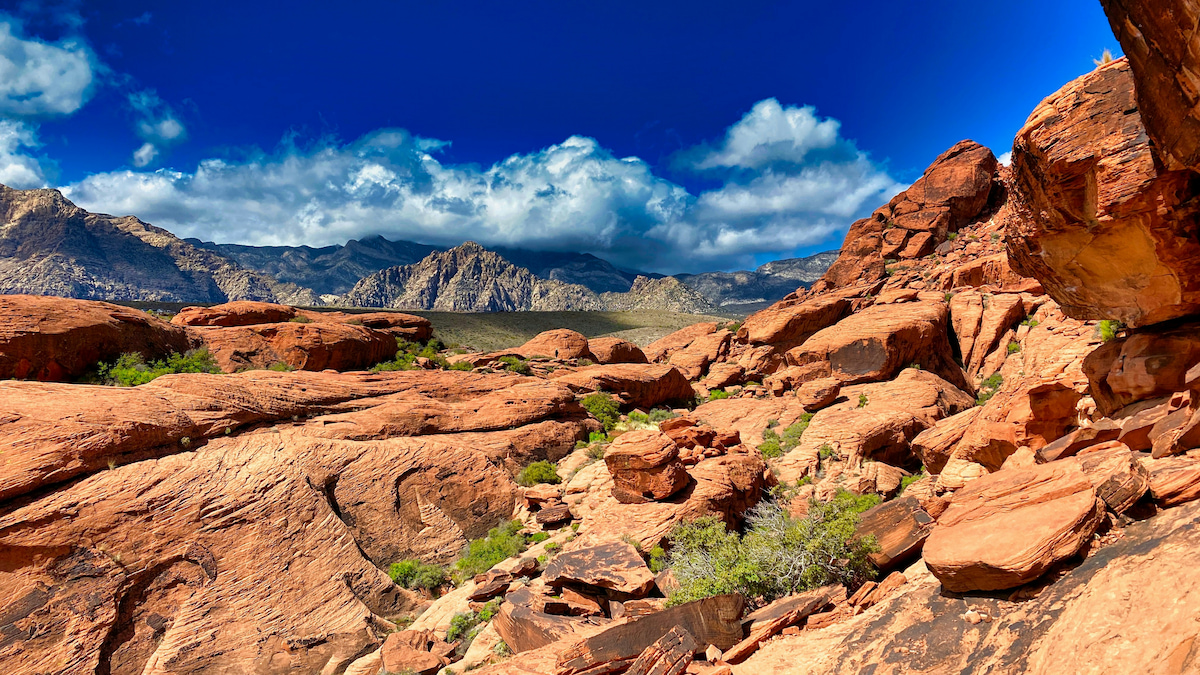
Red Rock Canyon National Conservation Area sits 17 miles west of the Strip — a dramatic landscape of Aztec sandstone formations rising 3,000 feet above the valley floor in shades of deep red, orange, and white. A 13-mile scenic loop drive passes the major formations, with access to dozens of hiking trails ranging from easy walks to technical multi-pitch climbs. It’s one of the most accessible and spectacular desert landscapes in the American Southwest, and it’s 35 minutes from the Bellagio. The $15/vehicle entry fee (or free with the America the Beautiful pass) is one of the best value-per-view propositions in the region. The contrast between the neon of the Strip and the silence of the canyon, with nothing in between but desert, is genuinely striking.
💡 A rental car or rideshare is required — no transit service from the Strip. Early morning visits (arrive by 8am) have the best light for photography and avoid the midday heat. The scenic loop road is one-way; plan 2–3 hours including stops. If visiting in summer, limit hikes to early morning only — the desert heat is extreme by 10am. The Calico Hills area near the entrance is the most photogenic section for casual visitors.
Cirque du Soleil’s “O” is the most celebrated of the multiple Las Vegas Cirque productions — an aquatic-themed show performed in and above a 1.5-million-gallon pool stage that transforms between water and solid surface throughout the performance. The acrobatics are extraordinary, the production design is world-class, and the show has been running at the Bellagio since 1998 without losing the ability to stop audiences mid-breath. At $100–$180/adult it’s the most expensive regular paid experience recommended in this guide — but “O” is genuinely one of the finest theatrical productions in America, and the Bellagio performance space was built specifically for it. Cirque’s other Las Vegas shows (Mystère at Treasure Island, KÀ at MGM Grand) start from $49 and are also excellent at lower price points.
💡 Book directly at cirquedusoleil.com rather than third-party sites for the best seat selection. Category A seats (lower tier) provide the best proximity to the water stage without sacrificing sight lines. Tuesday and Wednesday performances typically have better availability. Mystère at Treasure Island starts from $49/adult and is the best-value Cirque option if budget is the primary constraint.
The Sphere opened in September 2023 as a fundamentally new kind of venue — a 366-foot-tall spherical arena with a 160,000-square-foot wraparound 16K LED interior screen and 4D physical effects that create full-immersion environments impossible to replicate anywhere else. The Wizard of Oz immersive experience (running 2026, from $137) is the most accessible entry point — a cinematic experience that envelops you 360° in Oz. Concert residencies at the Sphere (Backstreet Boys from July 2026, additional acts announced throughout the year) run $175–$500+ per ticket depending on artist and date. The Sphere doesn’t just stage concerts; it stages environments, and the difference from any other venue is immediately apparent to anyone who’s been inside.
💡 Mid-level sections (200s and 300s) offer the optimal view of the full wraparound LED display — floor seats sacrifice the overhead visual perspective. Check the Sphere’s website for current programming. The Wizard of Oz film tickets are available directly at thesphere.com. If visiting without a show ticket, the exterior Exosphere display is visible from the Strip and worth walking past after dark — it’s one of the stranger and more memorable things in Las Vegas.
Las Vegas has become one of America’s most serious restaurant cities, with more Michelin-starred and James Beard-recognized restaurants per square mile than almost anywhere outside New York and San Francisco. Gordon Ramsay’s Hell’s Kitchen at Caesars, Joël Robuchon at the MGM Grand (one of only two restaurants in North America to earn three Michelin stars), Guy Savoy at Caesars, Nobu at the Hard Rock — the concentration is extraordinary and justified. A two-course dinner with a cocktail at a celebrity chef restaurant runs $60–$100/person; the full fine dining experience runs $100–$150+. For the traveler who wants one genuinely memorable meal, Las Vegas does it better than its reputation suggests and better than many cities that think of themselves as food destinations.
💡 Many celebrity chef restaurants offer lunch or early dinner prix fixe menus at significantly lower prices than their dinner carte — Gordon Ramsay’s Hell’s Kitchen lunch, for example, runs about half the dinner price for the same kitchen. Book reservations 2–3 weeks ahead for weekend evenings, especially at Joël Robuchon where the tasting menu requires advance planning regardless.
The Grand Canyon’s South Rim is 280 miles and about 4.5 hours from Las Vegas — a manageable day trip that many Las Vegas visitors miss entirely. The drive itself passes through the Mojave Desert, across the Arizona Strip, and into the high-desert plateau surrounding the canyon. Self-driving requires a rental car and the $35 vehicle park pass; guided bus tours from Las Vegas ($100–$150/person) provide the transport and access without the logistics. Given that Las Vegas is one of the most popular gateways to the Grand Canyon, combining a Strip trip with a canyon day trip is one of the highest-value itineraries in the American Southwest.
💡 If self-driving, depart by 6am to maximize time at the canyon. The drive is 4.5 hours each way — an 8–9 hour day trip is achievable but tiring. Helicopter tours to the West Rim (Grand Canyon West on Hualapai tribal land) are shorter and can be done in 5 hours total including transport from the Strip. For the self-drive, a VacayValue Grand Canyon guide covers the full visit in detail.
Las Vegas nightclubs — Hakkasan at MGM Grand, Omnia at Caesars Palace, Drai’s at the Cromwell, Zouk at Resorts World — are the apex of the global nightclub market, both in scale and in price. General admission covers are $30–$60/person on most nights, and include access to a multi-floor club with top-tier production and a rotating lineup of the world’s highest-paid DJs. It is expensive by any measure. The way to do it well on a budget: arrive before midnight (cover is sometimes free or reduced), avoid bottle service entirely, and limit to one night rather than making it the entire trip’s entertainment budget. The experience of a Vegas nightclub at its peak — 3am, the DJ at full speed, the lights doing what they do — is a specific and genuinely singular thing that doesn’t exist at this scale anywhere else.
💡 Guest list access (available through hotel concierge, the club’s own website, or third-party guest list services) can reduce or eliminate the cover charge for mixed groups — worth researching before paying full price at the door. Arriving Thursday or Sunday instead of Friday/Saturday also reduces cover costs. Dress code is enforced: no athletic wear, shorts, or sneakers at premium clubs.
Worth It / Skip It
Don’t Make These Mistakes
Booking based on the room rate without adding the resort fee. The room rate you see on Hotels.com, Expedia, or the hotel’s own site is not what you’ll pay at checkout. Every Strip hotel adds a mandatory resort fee of $40–$55/night before Nevada’s 13.38% tax. Always find the property’s resort fee before booking. The fee is disclosed — it’s just not prominently displayed. Calculate: room + resort fee + tax = actual nightly cost.
Scheduling your trip to coincide with a major convention without knowing it. Las Vegas hosts CES in January (tech, ~180,000 attendees), NAB in April (broadcast, ~90,000), and dozens of other major conventions throughout the year. During convention weeks, hotels surge dramatically in price and availability becomes extremely limited. Check the Las Vegas Convention and Visitors Authority calendar at vegasmeansbusiness.com before choosing your travel dates.
Not bringing a defined gambling budget — and sticking to it. The casino is designed to extract money from people who don’t have a clear budget. The machines are engineered to prolong play. The free drinks slow the budget calculation. Set your total gambling budget before you arrive (separate from the rest of your trip budget), take it out in cash on day one, and stop when it’s gone. This single discipline is the difference between a trip that feels like a win and one that doesn’t.
Treating Las Vegas as only a nightlife destination. Las Vegas in 2026 is genuinely one of the most interesting cities in America for day activities: the Neon Museum is world-class, Red Rock Canyon is 35 minutes away, the Grand Canyon is 4.5 hours away, the Mob Museum is excellent, the Strip walk is a half-day architectural experience, and the Sphere is something that can’t be approximated anywhere else. The city is not just a background for drinking. The travelers who treat it that way miss the most interesting parts of it.
VacayValue Scorecard — Las Vegas
Packing List — Las Vegas
Every Sunday: One Destination. One Honest Take.
Join travelers who plan smarter. One email per week — real costs, specific advice, no filler.
The Cheapest Flights in America. Free World-Class Entertainment. One Mandatory Fee That Ruins It for the Unprepared.
Las Vegas is Skyscanner’s #1 cheapest flight destination for Americans in 2026. The Bellagio fountains are free. The hotel lobbies are free. The Fremont Street Experience runs free concerts every night. The casino gives you free drinks while you play. The entire economic architecture of the city is built to get you there cheaply and keep you comfortable once you arrive.
The trap is the resort fee — $40–$55/night mandatory on virtually every Strip hotel, disclosed in the fine print and rarely reflected in the advertised room rate. Know that’s coming. Add it to your total before you book. Then recognize that even with the fee, a midweek Las Vegas trip — cheap flight, moderate hotel, free entertainment, casino floor meals — is one of the most complete entertainment experiences available in the US at a price that makes other major cities look overpriced.
March and April for the best weather. October for the full-energy city at its peak. Stay midweek to cut 30–50% off room rates. Research the resort fee for your specific property before booking. And set a defined gambling budget before you arrive — the casino will always win long-term, but an evening of $10 blackjack with free drinks is one of the better entertainment values in American travel as long as you’re honest about what it is.