
Yosemite 2026: The Complete Guide to America’s Greatest National Park
No day-use reservations required in 2026. $35 park entry covers your whole car for seven days. Free shuttles throughout the valley. Half Dome, El Capitan, and Yosemite Falls — the most dramatic landscape in North America — more accessible this year than it’s been in years.
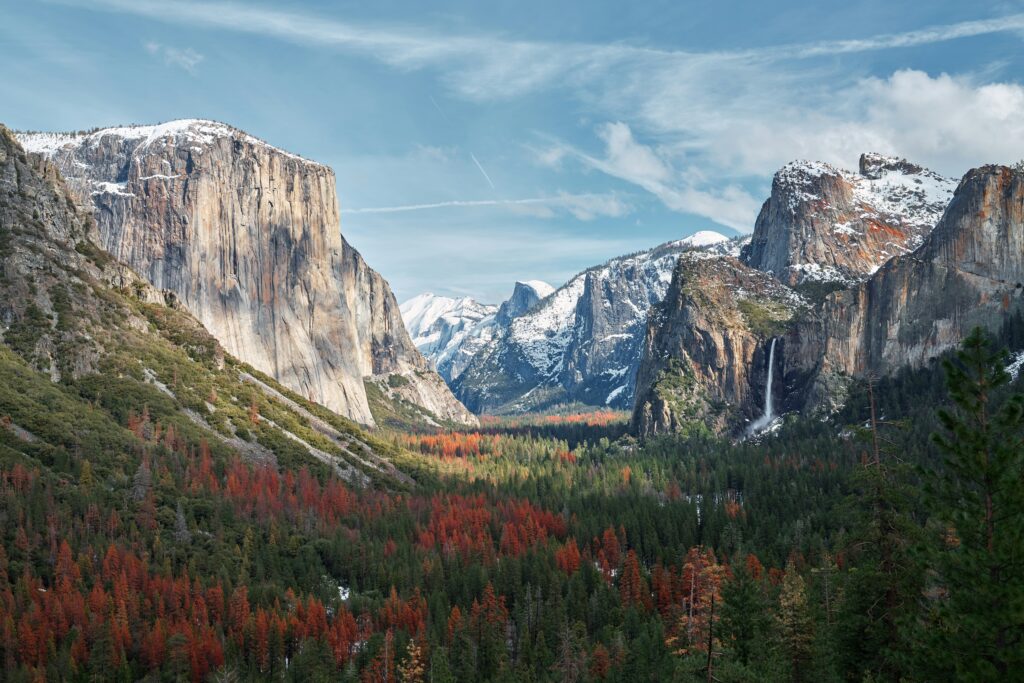
You’re standing at Tunnel View just after sunrise, and the valley is laid out in front of you like something that shouldn’t exist — El Capitan rising 3,000 vertical feet on your left, Half Dome centered perfectly at the back, Bridalveil Fall catching the morning light on the right. You drove four hours from San Francisco, paid $35 at the entrance gate, and parked for free. The people around you are speaking a dozen languages. Everyone is completely silent. There is nowhere else on earth quite like this. And it costs almost nothing to stand here.
Yosemite National Park is 747,956 acres of Sierra Nevada granite, ancient sequoias, thundering waterfalls, and sheer rock walls that define what Americans mean when they say wilderness. It receives roughly 3.5 million visitors per year — and the vast majority see only Yosemite Valley, which is 8 square miles of a park that stretches 60 miles north to south. The challenge of visiting Yosemite is not the cost — park entry is $35 per vehicle for all passengers for seven days, and most of what the park offers is free once you’re inside. The challenge is timing, logistics, and knowing where to go beyond the valley floor. This guide covers all of it.
What’s In This Guide
📅 Best Time to Visit Yosemite
The VacayValue recommendation: May and September–October are the sweet spot — peak waterfall flows in spring, golden light and thinning crowds in fall. If summer is your only option (June–August), arrive before 8am, use the free valley shuttle, and stay at least one night inside the park. The valley after 6pm in summer is a completely different and extraordinary place.
Where to Stay at Yosemite
In-park accommodation books out 12+ months ahead for peak summer dates and fills within minutes of release. If you miss the window, gateway towns just outside the park — El Portal (30 min from valley), Fish Camp (south entrance), and Groveland (northwest entrance) — offer solid alternatives with good access. For budget travelers, valley campgrounds are the best option if you can secure a site — you wake up inside the park, free shuttles run from your campsite, and being in the valley after the day crowds leave is worth every minute of the planning effort. All rates verified March 2026.
Curry Village — officially rebranded as Half Dome Village — is the most affordable in-park lodging option and the closest thing Yosemite has to a budget hotel. Canvas tent cabins start around $154 and share communal bathhouses; standard wooden cabins with private baths run $230–$280. The location is exceptional — central valley floor, one shuttle stop from Yosemite Village, direct views of Glacier Point and the surrounding cliffs. The complex has multiple dining options, a summer swimming pool, and bike rentals. It’s rustic, but the location is the right call for most first-time visitors who want to be inside the park.
The best balance of comfort and location in the valley at a non-Ahwahnee price. Standard rooms have private bathrooms and many face directly toward Yosemite Falls — the view from a falls-facing room in May, when the waterfall is running at full volume, is genuinely extraordinary. The onsite Bar + Grill is the best food option in the valley at a non-luxury price. At $300–$380/night in peak summer it’s expensive by any measure, but the location and the experience justify it if the budget is there.
The best hotel option outside the park on the Highway 120 corridor — 25 minutes from the Big Oak Flat entrance. Rush Creek is a purpose-built mountain resort with a genuine outdoor aesthetic: year-round pool, excellent farm-to-table dining, fire pits, and rooms designed around forest views. It’s meaningfully more available than in-park lodging, costs 20–30% less than comparable in-park options, and has better food. The trade-off is a 25-minute drive into the valley instead of stepping out of your room into it — a reasonable exchange for most travelers.
Get the Budget Travel Cheat Sheet
Booking shortcuts, packing hacks, and money-saving moves our readers use on every trip — free when you subscribe.
15 Best Yosemite Experiences
Yosemite’s greatest experiences are overwhelmingly free — the viewpoints, the valley floor walks, the waterfalls, the high country roads are all included with your $35 park entry. The paid activities are few and optional. What you’re really paying for at Yosemite is the logistics: getting there, staying there. The park itself is a remarkable bargain.
The most iconic viewpoint in the park — the sweeping panorama of Yosemite Valley from the east portal of the Wawona Tunnel: El Capitan on the left, Half Dome centered at the back, Bridalveil Fall on the right, the valley floor 4,000 feet below. In spring, the waterfalls are running at full volume and mist often fills the valley at dawn. In fall, the light turns the granite gold. It’s not subtle. This is the image that has defined America’s idea of wilderness for 150 years, and standing inside it at first light — before the tour buses arrive — is one of the most purely affecting experiences in American travel.
💡 Arrive 30 minutes before sunrise. The parking lot fills by 7am in summer. The light changes completely in the first 20 minutes after sunrise — stay through the full transition rather than leaving after the first shot.
The valley floor is flat, paved in parts and well-maintained trail in others, and loops 11 miles around the full valley perimeter. The western end passes Bridalveil Fall (quarter-mile round trip, mandatory), Cook’s Meadow (the best close-up view of Half Dome from the valley floor), and the base of El Capitan. The eastern end reaches Mirror Lake in spring, when the lake reflects Half Dome in still water before it dries out in summer. Free shuttle buses run every 10–20 minutes between all major valley stops — walk one section and bus back without retracing.
💡 The best short walk in the valley: Sentinel Meadow from the LeConte Memorial Lodge shuttle stop. 20 minutes, no elevation, simultaneous views of El Capitan and Half Dome across open meadow. Almost no one is there after 5pm when crowds are concentrated at Tunnel View and Yosemite Falls.
The easiest access to the most powerful waterfall view in the park. The 1-mile loop from the shuttle stop takes 30–45 minutes at a relaxed pace and ends at the base of the lower fall — 320 feet of cascading water, mist in the air, the roar audible from a quarter-mile away in peak flow. In May, the water volume can be aggressive enough to soak anyone on the viewing platform. In late summer, the falls reduce significantly or stop entirely. If you’re visiting in spring, this is non-negotiable.
💡 Take shuttle stop #6. The trail is paved and fully accessible. Evening light (after 5pm) hits the falls more directly than midday and the crowds are smaller. Peak flow runs roughly late April through early June.
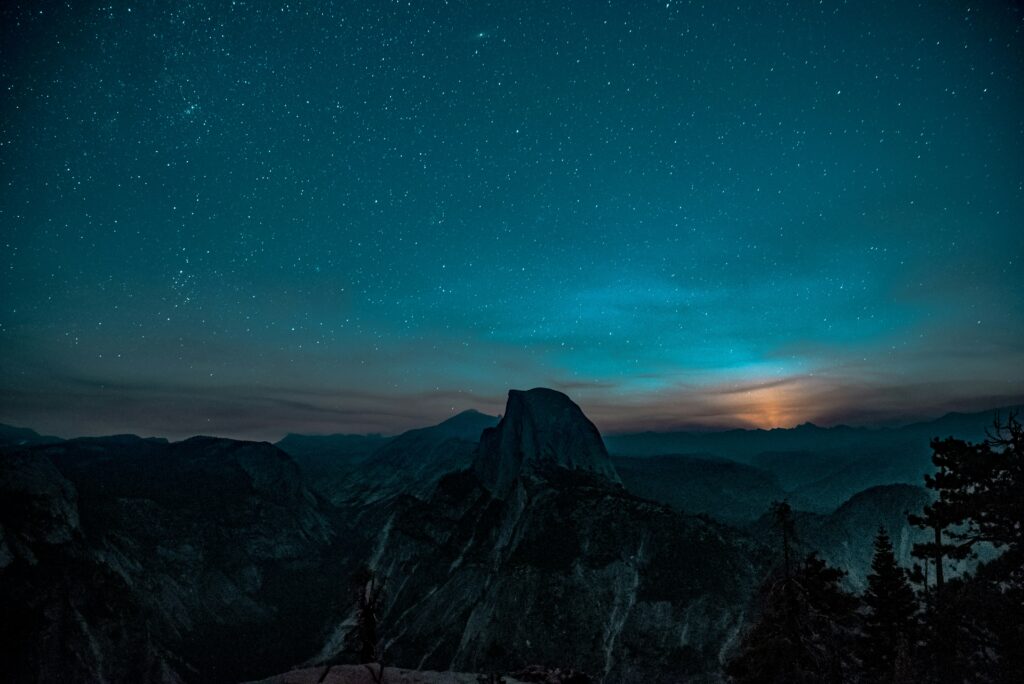
Glacier Point Road climbs 16 miles from the valley to an overlook at 7,214 feet — the elevated perspective that makes Yosemite’s scale comprehensible. From Glacier Point, you look directly across at Half Dome at eye level, down into the valley 3,000 feet below, and out to the high Sierra in every direction. Stops along the way — Sentinel Dome (1-mile round trip to the summit with 360° views) and Taft Point (1-mile to an exposed ledge) — are among the best short hikes in the park. Both are free and both are dramatically less crowded than valley floor trails. Road is open late May–early October.
💡 Sentinel Dome at sunset is the single best photography location in the park. It’s a 20-minute walk from the parking lot and relatively uncrowded even in peak season.
The largest sequoia grove in Yosemite — 500+ mature giant sequoias, including the Grizzly Giant (one of the oldest and largest living things on earth, estimated at 1,800–2,700 years old). The grove is near the south entrance, 35 miles from Yosemite Valley. A free shuttle runs from the Wawona parking area to the grove in summer. The 2-mile loop through the lower grove takes 90 minutes and passes a dozen named trees. Walking among trees that were alive when Rome was building its empire — and that are wider than most city streets — is a distinct and humbling experience.
💡 The grove is most peaceful early morning (shuttle starts at 8am) and after 4pm when day visitors are leaving. Midday in summer brings crowds that make the experience feel more like a theme park than a forest.
The best single hike in the valley that doesn’t require a permit. The Mist Trail follows the Merced River from Happy Isles, passing Vernal Fall (317 feet, reached at mile 1.5) and continuing to Nevada Fall (594 feet, reached at mile 3.4) with 1,900 feet of elevation gain. The trail is named for the spray from Vernal Fall — in peak spring flow, hikers passing the bridge below the fall get completely soaked without rain gear. The round trip to Nevada Fall covers 7 miles and typically takes 4–6 hours. The payoff: two enormous waterfalls connected by a river canyon with the granite walls of the valley closing in around you.
💡 The JMT return loop from Nevada Fall comes back via a different trail with better views of Half Dome and avoids retracing the crowded Mist Trail steps. It adds 0.8 miles but is worth it for anyone with the energy.
Tioga Road crosses the Sierra Nevada at 9,945 feet through some of the most spectacular high-altitude scenery in North America — alpine lakes, granite domes, subalpine meadows, and distant peaks with almost no crowds relative to the valley. Tuolumne Meadows (8,600 feet) is the largest subalpine meadow in the Sierra Nevada and serves as the trailhead for dozens of high-country routes. The Cathedral Lakes trail (7 miles round trip, 1,000 feet elevation) reaches two alpine lakes at the base of Cathedral Peak — one of the most beautiful short hikes in California. Road open late May–October.
💡 If valley crowds are overwhelming you, drive Tioga Road east and spend a day in the high country. The scale, the light, and the quiet are a completely different experience from the valley floor.
Yosemite’s ranger-led interpretive programs — evening talks at campground amphitheaters, morning walks through the valley, junior ranger programs for kids — are among the most underutilized free experiences in the park. A 45-minute ranger talk on the geology of El Capitan, delivered by someone who has spent 20 years studying these rocks, changes how you see the valley entirely. Evening campfire programs at valley campgrounds cover wildlife, fire ecology, Indigenous history, and park conservation. The schedule is posted at visitor centers and on the park app. They’re free, they’re genuinely good, and almost nobody goes.
💡 The Yosemite Valley Visitor Center has excellent exhibits worth 30 minutes before you start hiking — understanding the geology and human history of the valley makes every subsequent hike more interesting.
Yosemite is one of the most photographed places on earth for a reason — the geometry of the valley, the scale of the granite, the quality of the light in early morning and late evening creates conditions that require almost no skill to produce extraordinary images. Valley View on Valley Road (Merced River with El Capitan reflection in still water), Cook’s Meadow (Half Dome from the meadow floor), and the base of Bridalveil Fall (upward angle on the fall) are the three most productive locations. The light window is 5:30–7am and 5–7pm. Show up in that window with any camera and the valley does the rest.
💡 Valley View is on Northside Drive, 1 mile west of the valley shuttle loop — no shuttle stop means you need a car or bike to reach it. The Merced River reflection of El Capitan in calm morning water is the least-crowd, most-reward photograph in the valley.
The most famous day hike in America — 14–16 miles round trip, 4,800 feet of elevation gain, ending on the summit of an 8,839-foot granite dome above the valley. The final 400 feet require ascending steel cables bolted into the rock face. The permit costs $10/person and is obtained through a lottery: preseason lottery in March for May–September dates, daily lottery at 7am the day before for remaining spots (limited to 300 per day). The physical demand is significant — start by 5am, carry 3+ liters of water, bring traction devices for the cables. The view from the summit — the entire valley spread 4,700 feet below, the Sierra Nevada extending in every direction — justifies all of it.
💡 Enter the preseason lottery in March at recreation.gov for your preferred dates. If you miss it, the daily lottery releases remaining permits at 7am the day before — check at 6:55am and enter immediately. May and September have better lottery odds than July–August.
Twelve miles of paved bike paths run through Yosemite Valley, connecting shuttle stops, meadows, and trailheads along the valley floor. Renting a bike at Curry Village or Yosemite Valley Lodge ($15–$35 for a half day) is the most efficient and enjoyable way to cover the valley — faster than walking, quieter than driving, able to stop anywhere. The bike path through Sentinel Meadow and past the base of El Capitan on the west end is one of the most scenic paved routes in the country. In peak summer, biking beats driving for valley access entirely — you skip the parking situation and arrive before the shuttle crowd.
💡 The bike rental spots open at 8am. Get there at 8:01 in summer — the fleet rents out by 10am on peak days. Helmets are included. The flat valley floor makes this accessible for most fitness levels and ages.
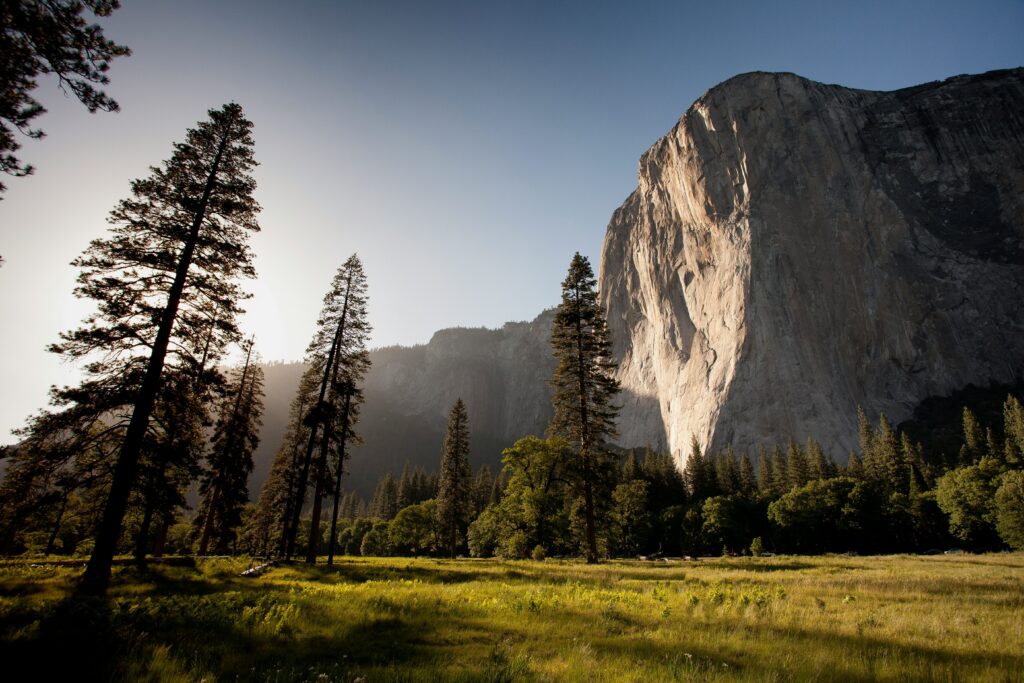
Yosemite Valley is the birthplace of big-wall climbing and the most important site in the history of the sport. The Yosemite Mountaineering School (operated by Aramark in the park) offers half-day beginner climbing instruction on the valley’s practice slabs — you leave having climbed on actual Yosemite granite, with a working understanding of the techniques the sport’s legends used on the walls above you. The half-day intro runs $120–$150 per person and covers basic movement, gear use, and top-rope climbing on low-angle slabs. No experience required. Age minimum 10.
💡 Book directly through the Yosemite Mountaineering School at travelyosemite.com at least 2 weeks ahead in summer. Classes are limited to small groups and fill fast. The school also offers multi-day courses for anyone who catches the climbing bug — and many do.
The Ahwahnee Hotel dining room is one of the great dining experiences in the American West — a cathedral-ceilinged room with 34-foot ceilings, massive stone fireplaces, Native American textile designs, and floor-to-ceiling windows facing the valley. The food is genuinely good. Dinner runs $45–$75 per person for the main course range; a full dinner with wine is $80–$120 per person. Reservations are required and book out weeks ahead in summer. The dining room is open to non-guests. Even if you’re camping, one dinner at the Ahwahnee is a memorable splurge that puts the wilderness and the grandeur together in one extraordinary room.
💡 Lunch at the Ahwahnee runs $30–$50 per person and gives you the same room, the same views, and the same experience for significantly less money. Reserve at least 3 weeks ahead in summer.
Yosemite’s wilderness — 94% of the park’s total area — is accessible by foot and almost completely devoid of day visitors. A single overnight above the valley (Cathedral Lakes, Cloud’s Rest, the West Rim Trail) transforms the park from a day-trip destination into a place you genuinely inhabit. The wilderness permit costs $10 per group plus $5 per person reservation fee. Popular trailheads (Happy Isles, Cathedral Lakes) book through the advance lottery; less-used trailheads have same-day availability. The payoff: Yosemite after the last day-visitor has left, under stars the valley light barely reaches, with the granite walls entirely to yourself.
💡 Cloud’s Rest overnight — 14 miles round trip from the Tenaya Lake trailhead — gives you the single best view of Yosemite Valley with far lower permit demand than Half Dome and arguably better sightlines.
Yosemite Conservancy and several local guide services offer 2–3 hour guided sunset tours of the valley’s best photography viewpoints — Tunnel View, Valley View, Cook’s Meadow — timed to golden hour light on the granite walls. The guides know current waterfall conditions, optimal positioning, seasonal lighting patterns, and the history of each viewpoint. For first-time visitors who want to understand what they’re looking at rather than just photographing it, a guided walk during the best light of the day adds genuine depth. The park’s free ranger programs cover similar ground; the paid tours offer smaller groups and more specific guidance.
💡 Yosemite Conservancy photography walks (yosemite.org) are led by professional photographers and natural history educators, run in small groups (8–12 people), and are more interactive than larger commercial tours. Book 2–3 weeks ahead in summer.
Worth It / Skip It
Don’t Make These Mistakes
Not booking campgrounds and lodging far enough in advance. Valley campgrounds open for reservations exactly 5 months ahead at 7am Pacific Time on recreation.gov — they fill within minutes, not hours. In-park lodging opens 366 days ahead at 7am Pacific Time on travelyosemite.com and summer dates disappear in under 15 minutes. If you’re planning a summer trip and haven’t started the booking process, you are already behind. Set calendar reminders for the exact release dates, have payment information ready, and have a backup plan (gateway town hotels) if your first choice is gone.
Attempting Half Dome unprepared. Half Dome is a 14–16 mile, 4,800-foot elevation gain hike on exposed granite with a cable section requiring upper body strength. People die on Half Dome — from falls on the cables, from lightning strikes on the fully exposed summit, and from exhaustion and dehydration on the descent. Requirements before attempting: cardio conditioning with elevation gain weeks beforehand, appropriate grip-soled footwear (no sandals or casual shoes), 3+ liters of water per person, and a weather check the night before. If thunderstorms are forecast, do not go.
Storing food improperly — or anywhere near your car or tent. Yosemite Valley has a resident black bear population and the bears have learned that human food is accessible. Bears that become food-conditioned are destroyed by the park service. All food, scented items, and trash must go in certified bear canisters or the metal food storage boxes provided at campgrounds and trailheads. Cars are not food storage — bears regularly break into them and the park will fine you for it. Storing food improperly in Yosemite is both illegal and a direct contribution to bear deaths.
Going off-trail in meadows and riparian areas. Yosemite’s valley meadows and riverbanks are fragile ecosystems actively being restored after decades of overuse. The park has fenced off many areas and the signage is clear — the “social trails” worn by people cutting across meadows cause significant long-term damage. This is both an ethical issue and a practical one: meadow soil is unstable, wildlife nesting areas are hidden in tall grass, and riverbanks undercut without warning. Stay on marked trails, especially in the meadows between shuttle stops and near the base of El Capitan.
VacayValue Scorecard — Yosemite National Park
Packing List — Yosemite
Every Sunday: One Destination. One Honest Take.
Join travelers who plan smarter. One email per week — real costs, specific advice, no filler.
Yosemite Is the Greatest Single-Value Experience in American Travel. $35 Covers Your Whole Car for a Week.
There is a version of Yosemite that is expensive — Ahwahnee dinners, last-minute summer lodging at resort prices, guided tours, in-park restaurants three meals a day. And there is a version that is one of the best budget travel experiences in North America — drive from San Francisco or Los Angeles, pay $35 at the gate, camp for $26/night, cook your own food, and spend four days walking some of the most extraordinary landscapes on earth for almost nothing. Both experiences happen in the same park. The difference is planning.
The honest constraint: you cannot wing this in summer. In-park lodging requires booking a year ahead. Campgrounds require booking five months ahead. Half Dome requires a lottery permit. The park’s 2026 decision to eliminate the day-use reservation system means summer weekends will bring serious crowds — arrive early, use the free shuttle, and stay at least one night to see the valley after the crowds thin. Do those three things and Yosemite delivers on everything its reputation promises.
Wallace Stegner called the national parks the best idea America ever had. Standing at Tunnel View at sunrise, it’s hard to argue with him.