
Joshua Tree National Park: The Complete Desert Adventure Guide
Where two deserts collide, ancient rock formations tower over twisted trees, and the night sky hits different. Here’s how to experience it without the guesswork — or the sunstroke.
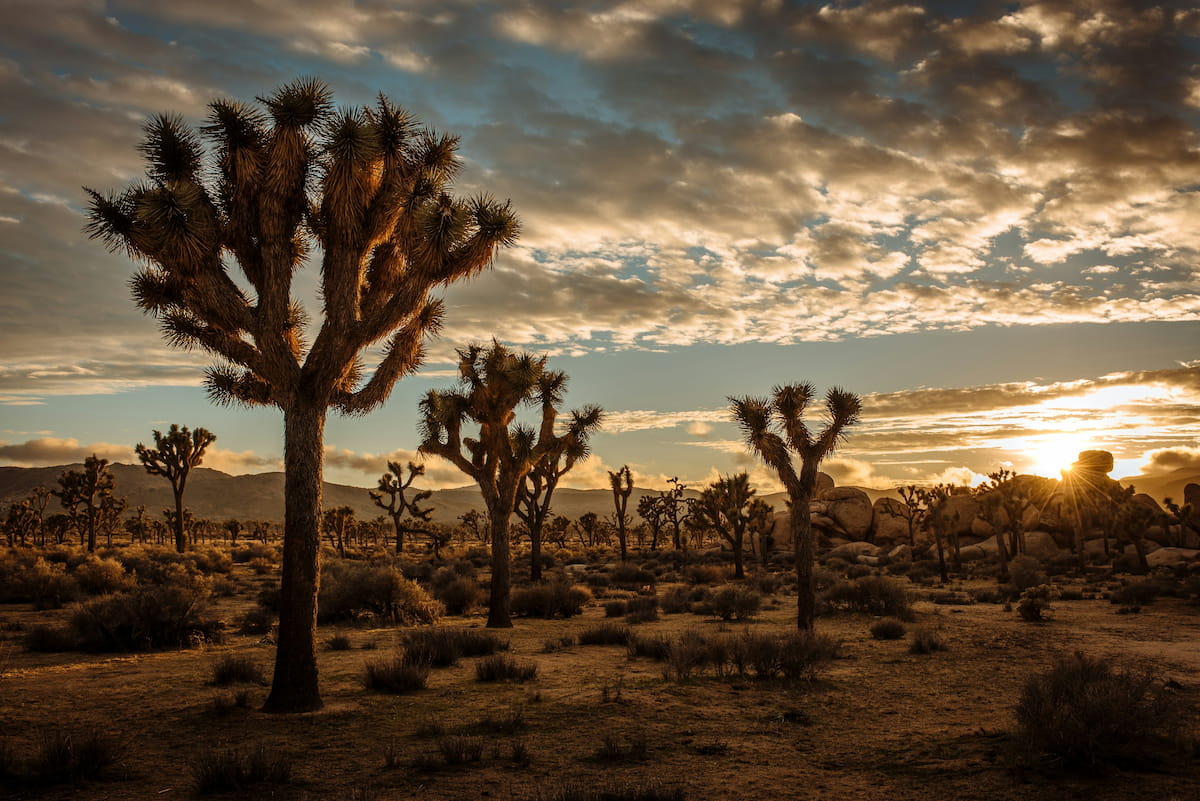
Stand at Skull Rock at sunrise and the whole weird, beautiful logic of Joshua Tree reveals itself — boulders the size of houses stacked like someone’s discarded toys, Joshua trees twisting in every direction, and a silence so complete you can hear your own pulse.
Joshua Tree sits at the convergence of two distinct desert ecosystems — the Mojave and the Colorado — which is why the landscape feels unlike anywhere else in the American West. The spiny, angular Joshua trees exist here and almost nowhere else. The boulder fields draw rock climbers from across the world. And the night sky, sitting in one of Southern California’s largest dark sky preserves, is the kind of thing that genuinely changes your perspective on the universe. The best part: once you’ve paid the $30 vehicle entry fee, most of what makes Joshua Tree extraordinary costs nothing at all.
What’s In This Guide
📅 Best Time to Visit Joshua Tree
Sweet spot: October or March–April. October gives you near-perfect temperatures, thinner crowds than spring, and some of the best stargazing of the year. Spring blooms are spectacular but require advance planning — campsite reservations should be made months out for March and April weekends.
Where to Stay Near Joshua Tree
The park has no lodging inside its boundaries, so you’ll base yourself in one of three towns: Joshua Tree (artsy, closest to the west entrance), Twentynine Palms (gateway to the north entrance, most affordable), or Yucca Valley (most services, slightly further out). There’s no sales or tourism tax to worry about beyond standard California sales tax on lodging, which runs approximately 12–14%. All rates verified April 2026. Live verification needed before publishing — rates pulled from training data.
The Harmony Motel is a high-desert institution — a small, unpretentious roadside motel founded in 1952 that has housed rock climbers and desert wanderers for decades. The rock band U2 stayed here while recording their Joshua Tree album. Rooms are basic but clean, the pool and hot tub are a genuine lifesaver after a long day on the trails, and the location on Highway 62 puts you less than a mile from the Fortynine Palms Oasis trailhead and minutes from the park’s north entrance. Don’t expect luxury; expect a comfortable, atmospheric base that fits the spirit of the place perfectly.
Set around a genuine desert oasis with mature Washingtonia fan palms, the 29 Palms Inn is a genuinely special property that has been welcoming guests since 1928. Adobe bungalows and wood-frame cabins from the 1920s–1950s are scattered across 70 acres of grounds — no two rooms are alike. The on-site restaurant (open Wednesday through Sunday) is one of the better dining options in the area, and the pool is just steps from the park’s Oasis of Mara. The property doesn’t list on OTAs and is direct-book only at 29palmsinn.com or by calling (760) 367-3505.
AutoCamp turns the glamping concept into something genuinely compelling — custom Airstream trailers and canvas suites with hotel-grade beds, climate control, and beautifully designed bathrooms, set against an open desert backdrop. The heated pool and communal spaces are meticulously styled, the spa offers massage and body treatments, and the whole property feels like a design magazine shoot that you’re actually staying inside. It’s about 20 minutes from the park’s west entrance, which is a reasonable tradeoff for this level of comfort.
Desert Trip Planning, Simplified
Get our free packing checklist, campsite booking strategy, and the trails that are actually worth the effort — straight to your inbox.
15 Best Joshua Tree Experiences
Most of what makes Joshua Tree worth the drive doesn’t cost a cent beyond the $30/vehicle park entry fee — and that single payment covers seven days of unlimited access. The park has 800+ hiking trails, 8,000+ documented rock climbing routes, and some of the most accessible dark sky viewing in the continental US. Beyond the park boundary, the surrounding high desert towns add galleries, live music, and some genuinely strange, wonderful cultural detours to the mix.
Built in 1946 as a permanent movie set for Western films, Pioneertown is a genuine time capsule — a functioning 1940s frontier town where the facades are real buildings rather than facades. Roy Rogers and Gene Autry were among its early investors. Mane Street (spelled deliberately wrong) is the main drag, lined with a blacksmith shop, a bowling alley, and storefronts that have appeared in hundreds of films. The whole place is free to walk and photograph, and the surrounding high desert landscape makes for dramatic backdrop photography especially in the late afternoon.
💡 Combine with an evening at Pappy & Harriet’s Pioneertown Palace next door — it’s a legendary music venue and roadhouse that has hosted major artists and draws an eccentric, wonderful crowd on weekends.
One of the most remarkable and least-known free cultural experiences in Southern California. Noah Purifoy, a founder of the California assemblage art movement, spent the last 15 years of his life creating an extraordinary seven-acre outdoor sculpture museum in the high desert just outside Joshua Tree. Over 100 large-scale works made entirely from found materials and debris are scattered across the site, ranging from the poignant to the surreal. The Noah Purifoy Foundation maintains it as a free, open-access space that feels genuinely unlike anything else.
💡 Visit in the morning when the light is lateral and shadows define the sculptures. There’s no shade and it’s physically large — plan an hour minimum and bring water.
The stretch of Highway 62 running through Joshua Tree town and into Twentynine Palms has quietly become one of the most interesting gallery corridors in the American West. Dozens of independent galleries, studios, and art spaces line the corridor — everything from ceramics and photography to large-format desert painting and installation work. The Joshua Tree Art Gallery, Coyote Corner, and Cactus Mart are well-known anchors, but the real pleasure is wandering into spaces you don’t know. Many artists live in the high desert specifically because the space and isolation foster a kind of creative focus that’s hard to find elsewhere.
💡 The 29 Palms Art Gallery operates as a community cooperative and always has something interesting on. The Hi-Desert Cultural Center in Twentynine Palms hosts rotating exhibitions worth checking before you visit.
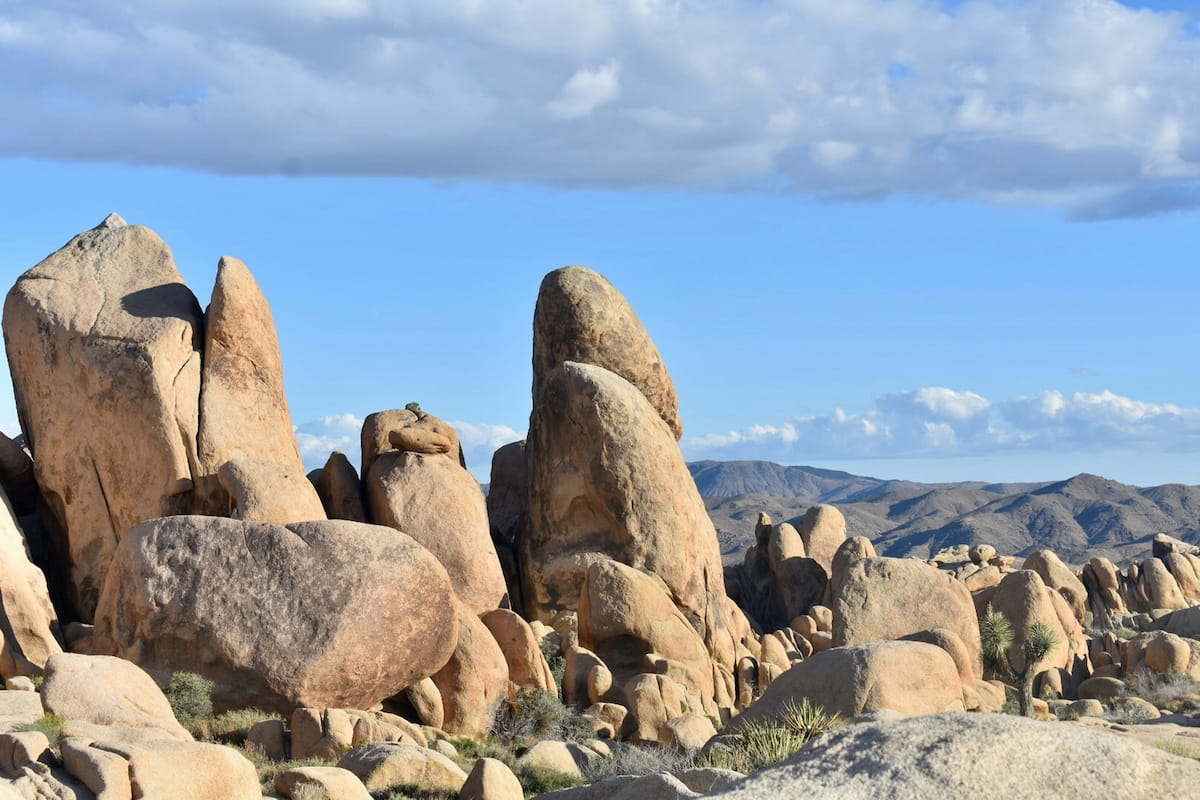
The 1.7-mile Skull Rock Nature Trail is probably the single most iconic short hike in Joshua Tree — an easy loop through one of the park’s most dramatic boulder formations that culminates at Skull Rock itself, a massive granite boulder that erosion has shaped into a genuinely unsettling face. The trail is well-marked, accessible to almost any fitness level, and passes through some of the park’s most photogenic terrain. Self-guided nature trail brochures are available at the trailhead and explain the geology and plant life you’re passing through.
💡 Arrive at sunrise to have Skull Rock to yourself — by 9am on weekends this trailhead is busy. The golden light hitting those boulders early in the morning is the version of this experience worth planning for.
The 3.1-mile Barker Dam Loop is arguably the park’s most rewarding single trail for the effort — a moderate loop through dramatic boulder country that passes a historic cattle dam, a small seasonal lake that attracts surprising amounts of wildlife, and the crumbling ruins of the Wall Street Mill, a gold processing facility dating to the 1930s. Bighorn sheep are occasionally spotted on the surrounding ridgelines. Native American rock art (petroglyphs) is visible near the dam, though the site has been affected by vandalism over the decades. The combination of geological drama, wildlife, and human history makes this a standout even on a park full of excellent trails.
💡 After rain (which can happen at any time of year), the Barker Dam lake fills and reflects the surrounding boulders — one of the more spectacular sights the park offers. Check recent trail reports before visiting to catch it full.
Keys View sits at 5,185 feet at the crest of the Little San Bernardino Mountains and offers one of the most panoramic viewpoints in Southern California — on a clear day you can see the Salton Sea, the San Andreas Fault line cutting directly below you, and on exceptional days, the peak of Signal Mountain across the Mexican border. Sunrise is the practical choice: temperatures are pleasant, the light is extraordinary, and you’re looking directly at the mountains where the rising sun first hits. It’s a short, paved 0.25-mile walk from the parking area.
💡 Bring a telephoto lens or binoculars — the view of the Coachella Valley and the fault is easier to interpret with magnification, and on exceptionally clear winter mornings you can spot the Pacific’s light haze on the horizon.
At 5,457 feet, Ryan Mountain is the park’s most rewarding summit hike — a moderately challenging 3-mile round trip with 1,000 feet of elevation gain that delivers a 360-degree view across both the Mojave and Colorado Desert sections of the park. You can see the entirety of Lost Horse Valley below, the boulder fields of Hidden Valley, and on clear days, Mount San Jacinto and Mount San Gorgonio rising to more than 11,000 feet to the west. The trail is rocky and requires some attention to footing but is well within range for most reasonably fit visitors.
💡 Early morning on a weekday gives you the summit largely to yourself. From up here, the scale of the park becomes genuinely comprehensible — it’s the best way to understand the geography before you start exploring at ground level.
Located at the transition zone between the Mojave and Colorado Deserts, the Cholla Cactus Garden is a half-mile interpretive loop through a dense, otherworldly concentration of teddy bear cholla cactus that glows silver and gold in angled light. This is the Colorado Desert section of the park — lower elevation, hotter, and botanically distinct from the Joshua tree country to the north. The density of cholla here is unusual even by desert standards, and the garden has a quality that feels more surreal than natural, especially when morning light catches thousands of spines simultaneously.
💡 Do not touch or approach cholla closely — the segments detach at a whisker’s width and the spines are barbed and deeply painful to remove. They will jump onto clothing or skin with almost no physical contact. The half-mile loop keeps you at a safe distance if you stay on the path.
Keys Ranch is the most intact historic homestead in the California desert — a working cattle and mining operation that Bill Keys and his family ran from 1917 to 1969, and which remains nearly unchanged from when they left it. The NPS-led 90-minute guided tour walks you through the ranch house, the store, the workshop, a schoolhouse, and the orchard, building a portrait of an entirely self-sufficient desert life that’s alternately admirable and bewildering. Keys himself was a larger-than-life figure who once shot and killed a neighbor in a dispute over a road, served time at San Quentin, and was ultimately pardoned through the advocacy of Erle Stanley Gardner — the man who created Perry Mason. Verify current fee and tour availability at nps.gov/jotr.
💡 Tours are limited in size and frequently sell out weeks in advance, especially in spring. Book through Recreation.gov as early as possible — walk-up availability is rare during peak season.
The 3-mile round-trip Fortynine Palms Oasis trail is the best introduction to a feature that most Joshua Tree visitors don’t know exists: genuine oasis environments fed by underground springs, where California fan palms grow to 40 feet in the middle of desert terrain that otherwise supports nothing taller than a Joshua tree. The trail gains 300 feet to a ridge before dropping into the oasis, which feels startlingly cool and green against the surrounding landscape. Bighorn sheep, coyotes, and a wide variety of birds use the oasis as a water source — early morning visits in spring and fall often produce wildlife sightings.
💡 This trailhead is accessed from Indian Cove Road off Highway 62, not from the main park entrance — make sure you’ve planned your route before heading out, as the access road adds time to your drive.
Joshua Tree is one of the premier rock climbing destinations in the world — 8,000+ documented routes across all skill levels, on granite that has been worn smooth and gripped by climbers for decades. JTNP-licensed guide companies offer half-day introduction sessions that take complete beginners through safety basics, equipment use, and several beginner routes on real rock. It’s a genuine introduction to the sport rather than a tourist activity, and the guides are uniformly experienced and deeply knowledgeable about the park. Even if you never climb again, one session gives you a completely different relationship with the landscape.
💡 Vertical Adventures and Joshua Tree Rock Climbing School are two of the most established operators, both NPS-licensed. Book at least two weeks ahead during peak season — intro sessions fill quickly in March, April, and October.
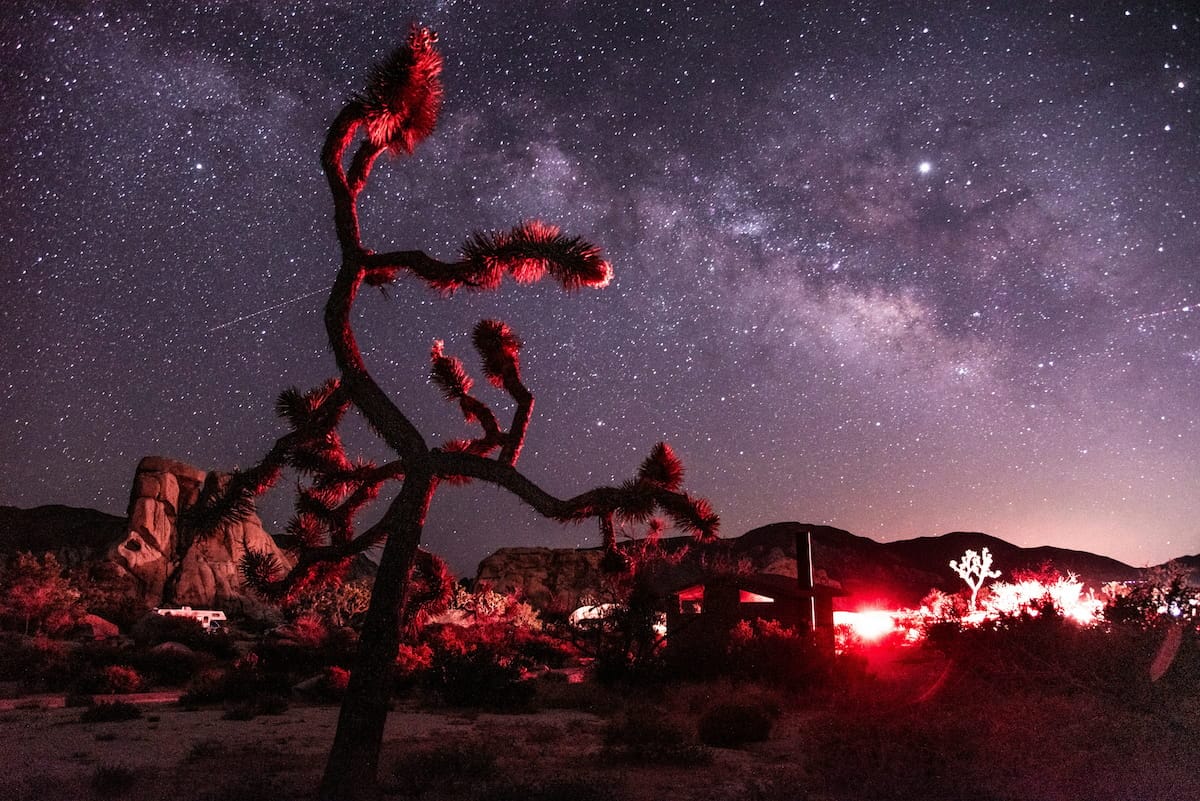
Joshua Tree sits within one of the largest dark sky preserves in the continental United States — the Bortle Scale rating here is among the lowest achievable within four hours of a major US city. On a moonless night, the Milky Way is visible as a structural object rather than a faint smear. Guided stargazing tours combine telescope time with naked-eye observation and storytelling that deepens what you’re seeing considerably. Stargazing JTree (stargazingjtree.com) is the top-rated operator, charging $175/adult for a 2–3 hour group experience with telescopes, bean bag loungers, blankets, and snacks included. Sky’s the Limit Observatory in Twentynine Palms hosts free telescope nights on Saturday mornings near each new moon for those who prefer self-guided viewing.
💡 New moon nights are the priority — plan your trip dates around the lunar calendar if stargazing is a primary goal. Stargazing JTree frequently sells out 30+ days in advance during peak season.
Hot air balloon flights over the Coachella Valley and high desert operate year-round (weather permitting) and offer a perspective on the Joshua Tree landscape that’s genuinely unavailable any other way. At altitude, the full transition between the Colorado and Mojave Deserts becomes visually legible, the boulder formations read as geological features rather than obstacles, and the scale of the park finally makes sense. Flights typically depart at dawn, last 60–90 minutes, and conclude with a champagne toast. The experience is expensive but transforms your understanding of everything you’ve been hiking through.
💡 Desert Balloon Adventures and Fantasy Balloon Flights are established operators in the region. Flights are frequently cancelled due to wind — book early in your trip to allow rebooking if your first flight is scrubbed.
Knob Hill Ranch and Mountain View Ranch both offer guided horseback rides through the park’s 253 miles of designated equestrian trails — canyon bottoms, dry washes, and open desert terrain most park visitors never reach. Knob Hill Ranch’s 2.5-hour Scenic California Trail ride runs $175/person through Joshua Tree National Park backcountry; shorter rides start lower. Sunset departures are the premium option — the light across open desert at that hour is extraordinary, temperatures drop to something genuinely comfortable, and the pace of a horse gives you a relationship with the landscape that no amount of hiking quite replicates. Both operators welcome beginners and all experience levels.
💡 Knob Hill Ranch books through their website at knobhillranch.com. Book at least a week ahead during spring peak — sunset rides sell out quickly in March, April, and October.
For those ready to step beyond day hiking, Joshua Tree’s backcountry offers a qualitatively different experience of the park. The Boy Scout Trail to Willow Hole — a 16-mile round trip through boulder fields, dry washes, and open desert — is one of the most rewarding overnight routes in the Southern California parks system. You’ll need a backcountry permit (free, self-issued at backcountry boards), pack in all water, and camp in designated zones at least a mile from any road or trail. In exchange, you get the park after dark — coyotes, the full starfield, and a silence that most visitors never access.
💡 Water is the non-negotiable — there are no water sources in the backcountry. One gallon per person per day is the absolute minimum; two is safer in any season except deep winter. Check the NPS backcountry page for current regulations before you go.
Worth It / Skip It
Don’t Make These Mistakes
Carrying less than one gallon of water per person per day. This is the single most common reason visitors end up in medical emergencies at Joshua Tree. The park sits between 1,000 and 5,000 feet in elevation, dry desert air accelerates dehydration invisibly, and most visitors don’t feel thirsty until they’re already behind on fluids. The one-gallon minimum is the NPS recommendation for temperatures below 85°F — on hot days, two gallons is appropriate. Bring more than you think you need and refill at the park’s water stations at Cottonwood Spring, Black Rock, and the Oasis of Mara.
Attempting moderate or difficult hikes between 10am and 4pm from May through September. In the shoulder warm months, even trails that feel comfortable at 8am can become genuinely dangerous by midday. The desert absorbs and radiates heat in ways that make air temperature readings misleading — rock surfaces can exceed 150°F and radiate upward at your body even when the shade temperature seems manageable. Time your hikes for early morning or late afternoon and be back at your car with full water reserves by 9:30am if temperatures are forecast above 85°F.
Not reserving campsites months in advance for spring and fall visits. Cottonwood, Black Rock, and Indian Cove campgrounds open for reservations on Recreation.gov six months ahead — and the best sites in peak season are gone within minutes of becoming bookable. First-come, first-served sites at Jumbo Rocks and Belle are released daily but fill completely by late morning on weekends in March, April, and October. If camping is part of your plan, set a calendar reminder to book at the six-month mark. Showing up without a reservation on a spring weekend and expecting to find a site is a gamble you will lose.
Entering the park with less than a half tank of gas. There are no gas stations inside Joshua Tree National Park, and the park covers 1,235 square miles — it’s easy to drive 50+ miles between trailheads in a single day. The nearest stations are in Twentynine Palms (Highway 62) and Cottonwood Spring Road approaching the south entrance. California desert gas prices run 30–50 cents per gallon above national averages at most remote stations near the park. Fill up in Yucca Valley before entering — it has the most competitive prices and largest selection of stations of any town in the area.
VacayValue Scorecard — Joshua Tree
Packing List — Joshua Tree
Never Overpay for a National Park Trip Again
Join thousands of readers getting our weekly park guides, seasonal alerts, and money-saving trip strategies — free.
Extraordinary Landscapes at Entry-Level Prices — With a Few Catches
Joshua Tree earns its 8.4 score by delivering a genuinely world-class natural landscape — one of the most distinctive ecosystems in North America, combined with some of the best dark-sky stargazing accessible from a major American city — for a cost structure that rewards self-sufficiency. The $30 vehicle entry fee unlocks seven days of unlimited access to hundreds of trails, and once you’re in, most of what matters is free.
The catches are real but manageable. Dining options are genuinely limited and a plan for food is non-negotiable. Campsite reservations require advance booking that many travelers don’t anticipate. And the rental car isn’t optional — this is not a park you can navigate by transit or rideshare. Budget for the car, plan your food ahead, and pay attention to the heat guidance, and Joshua Tree becomes one of the most compelling value propositions in the entire national park system.
What the park delivers that no budget can fully account for is the combination of geological drama, near-total silence, and a night sky that makes even jaded city dwellers stop and stare. Those are experiences that don’t scale with spending. The camper with a $25/night site and the glamping guest paying $350/night are looking at the same stars.