
New Zealand Travel Guide 2026 — Fjords, Bungy & What It Really Costs
The world’s adventure capital lives up to the legend — but it has a price tag to match. Here’s exactly what you’ll spend, what’s worth every dollar, and what to skip on the South Island.
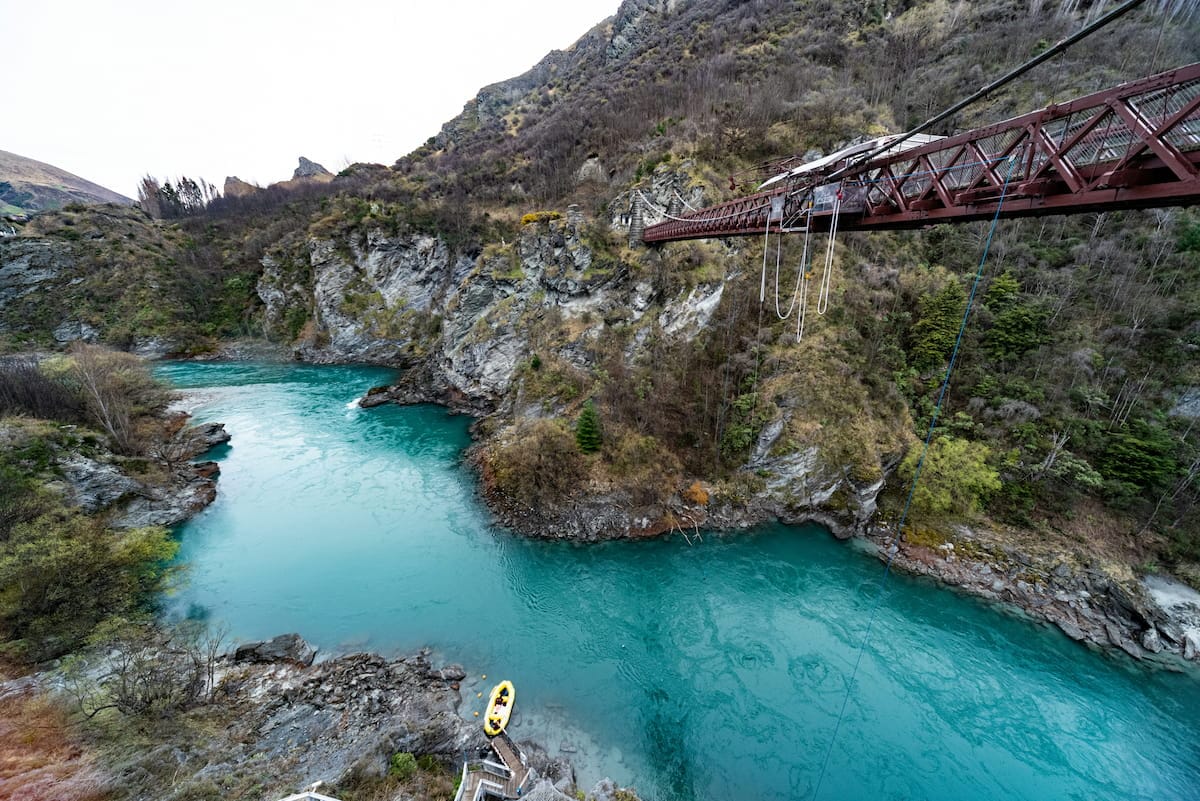
Standing on the edge of the Kawarau Bridge with the glacier-fed river 43 meters below, I understood why New Zealand gave the world bungy jumping. This landscape was made for it — the kind of scale that makes you feel small enough to leap.
New Zealand’s South Island — anchored by Queenstown — is the undisputed adventure capital of the planet. Bungy jumping was invented here. Jet boating through canyon walls, tandem skydiving over fjords, heli-skiing on volcanic peaks — it’s all here, and none of it is cheap. But Queenstown is also surrounded by some of the most accessible free beauty on earth: glacial lake walks, mountain drives through Lord of the Rings landscapes, and fiords that would leave you speechless even without spending a cent. The trip costs real money, but the free-to-see backdrop is as dramatic as anything on the planet.
What’s In This Guide
📅 Best Time to Visit New Zealand
April–May and September–October are the clearest value windows. You’ll find autumn color or spring wildflowers, far fewer people at Milford Sound, and hotel rates 20–35% below summer peaks. Avoid December–February unless you’ve booked everything months in advance and have full flexibility on price.
Where to Stay in Queenstown
Queenstown is the undisputed adventure hub of the South Island, and staying central puts you within walking distance of the gondola, the lake, and the booking offices for every major activity. The Frankton area near the airport offers slightly lower rates. Budget travelers should note that NZ accommodation runs higher than comparable options in Southeast Asia or Eastern Europe — this is an expensive country. All rates verified March 2026.
Haka House punches well above its price point with a lakefront location that most mid-range hotels can’t match. Private rooms are clean and genuinely comfortable — not just a step above dorm beds. The shared social spaces have a mountain-lodge feel that makes meeting other adventure-minded travelers easy. Located steps from the main activity booking offices and a short walk to the gondola base.
The Novotel’s lakefront position is genuinely hard to beat at this price tier — you wake up to Remarkables views and walk out the lobby straight to the waterfront promenade. Rooms are well-appointed, modern, and sized for returning from a long adventure day. The on-site activity concierge knows the booking landscape well and can often secure last-minute spots at high-demand experiences.
Set along the lake at Kawarau Village — a short drive from central Queenstown — the Hilton combines full resort amenities with direct water access. Rooms are generous in size with unobstructed Remarkables views and some of the best-appointed bathrooms in the region. The spa is a legitimate recovery asset after a day of skydiving and jet boats. Rated 8.6 out of 10 by verified guests and consistently one of Queenstown’s most-awarded properties.
New Zealand Trip Planning, Simplified
Get our South Island itinerary checklist, verified price updates, and adventure booking order guide — straight to your inbox.
15 Best New Zealand Experiences
New Zealand is one of the few destinations where the free-to-access scenery rivals the paid experiences in impact. Four of these fifteen require nothing but a car and a full tank. The paid tier covers the adrenaline classics that define Queenstown. And the signature tier includes experiences that simply cannot be replicated anywhere else on earth — though your wallet will feel it.
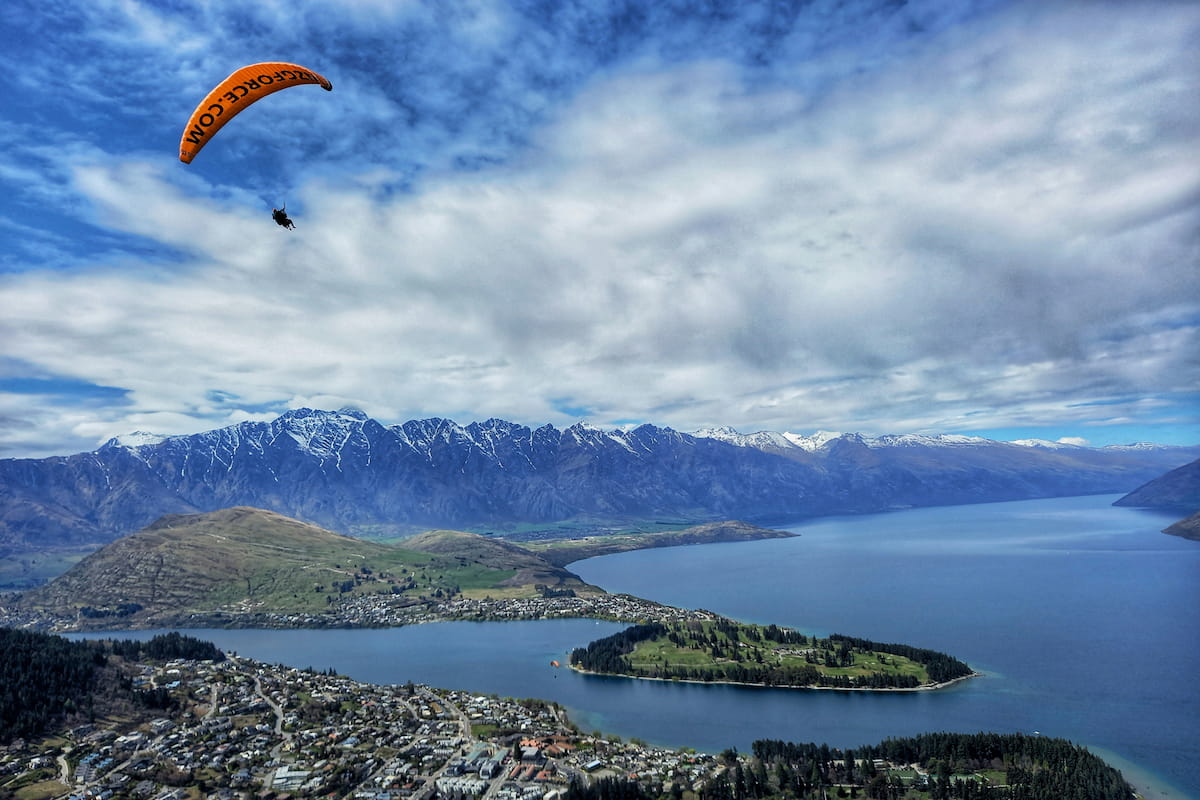
Lake Wakatipu is one of the longest glacial lakes on earth and it sits directly at Queenstown’s doorstep. The lakefront promenade connects the town center through Queenstown Gardens — a beautifully maintained peninsula of pine and beech trees with open lawns and rose gardens. The views of The Remarkables mountain range across the water are the kind of backdrop that makes people stop mid-step. Sunrise and sunset here are both genuinely spectacular, particularly in autumn when the surrounding hillsides go gold and red.
💡 The Gardens’ bowling club has a free lawn outside the fence where locals play pétanque. Join in or watch — it’s a slice of Queenstown that has nothing to do with adrenaline.
The Queenstown Hill trail gains about 500 meters in elevation through mixed beech forest, finishing at a viewpoint that overlooks the entire Wakatipu basin — the town, the lake, and the full panorama of The Remarkables and Cecil Peak. The ascent takes roughly 1.5–2 hours at a comfortable pace and the path is well-marked and maintained. This is the walk that separates the gondola crowd from the people who actually want to understand the geography of the place. The views from the top genuinely surpass what you get from the paid gondola, and the silence is total.
💡 Start early before the sun gets behind the western hills. The trailhead is on Lomond Crescent — use Google Maps for the exact start point as it’s easy to miss from town.
Arrowtown is 20 minutes from Queenstown by car and one of the most genuinely charming towns in New Zealand — an old gold-rush settlement with well-preserved Victorian storefronts, a sycamore-lined main avenue that turns amber and red in April, and an Arrow River trail that winds through a gorge of schist rock and willows. Walk the river for free, explore the Chinese settlement remains on the northern bank, and wander through town without feeling like a tourist attraction. In autumn this is among the most photogenic valleys in the country.
💡 The Lakes District Museum at the southern end of Buckingham Street covers the gold rush history well — small entrance fee, worth 45 minutes of your time.
The 45-minute drive from Queenstown along the western shore of Lake Wakatipu to Glenorchy is one of the great road drives of the South Island. The lake changes color with the light — deep teal in cloud, bright turquoise in sun — and the mountains crowding the far shore grow more dramatic with every kilometer. Glenorchy itself is a tiny lakeside village at the foot of the Mt. Aspiring National Park. Continue the extra 25 minutes on a gravel road to the Paradise area — filming location for Lothlórien and Isengard in Lord of the Rings — and you’ll understand why the films were made here.
💡 The dirt road to Paradise is fine for a standard rental car in dry conditions. Check road conditions with your hire company before going in winter or after heavy rain.
The Skyline gondola ascends 450 meters up Bob’s Peak to deliver a panoramic view across the Wakatipu basin, Cecil Peak, and the full sweep of The Remarkables. At the top you’ll find the Stratosfare restaurant, a mountain bike park, and the luge — three descending tracks that are considerably more fun than they sound. The gondola ride alone is worth the price for the view, and adding a few luge runs makes for a full afternoon. The view of Queenstown glowing at dusk from this height is one of the trip’s best moments.
💡 The gondola opens early and the first rides of the morning are crowd-free. If you’re doing luge, buy a multi-ride pack at the top — per-ride pricing adds up quickly.
The Kawarau Bridge is where commercial bungy jumping was born in 1988. Forty-three meters above the aquamarine Kawarau River, the historic suspension bridge has hosted millions of first-timers and seasoned jumpers since AJ Hackett and Henry van Asch first proved the concept here. The jump itself is spectacular — the option to touch or dunk in the glacier-fed river below adds an element that higher bungy sites simply cannot offer. Includes photo and video package and a free transfer bus from central Queenstown. This is the one bungy you do whether you’re a thrill-seeker or not.
💡 Book online 48+ hours ahead — walk-up spots are limited and summer weekends sell out. Spectating is free if you want to watch the group before committing.
The Shotover Jet takes a specially designed flat-bottomed boat through the narrow canyons of the Shotover River at up to 90 km/h — threading gorge walls with what feels like centimeters of clearance while the driver executes 360-degree spins at full speed. The ride is 25 minutes from boarding to docking, and it’s genuinely terrifying and exhilarating in equal measure. New Zealand invented jet boat tourism on this river in the 1950s and Shotover Jet has been operating it since 1970. This is not a theme park ride — the canyon is real and the speed is real.
💡 A free shuttle transfers you from the Shotover Street office to the river base. Secure any loose items in the provided bags — the spins will launch a phone out of a pocket instantly.
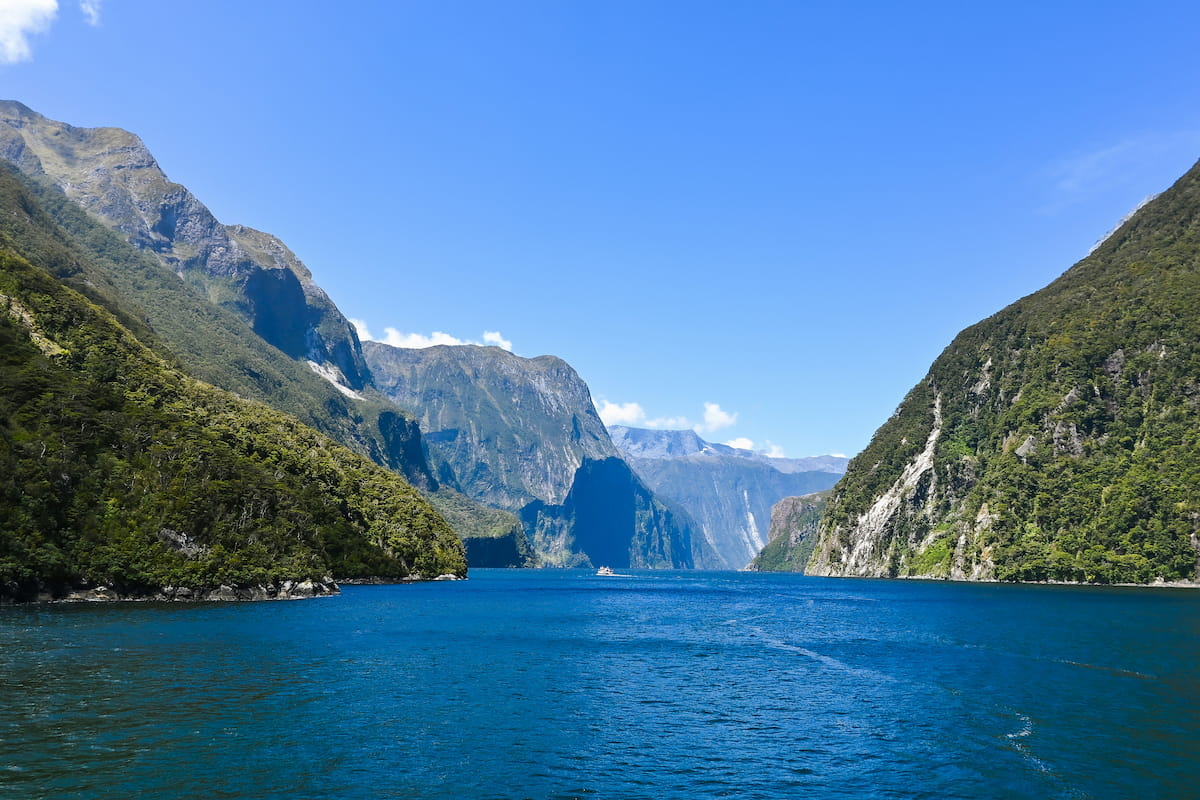
Milford Sound — Piopiotahi in Māori — is New Zealand’s most visited destination and it earns that status. The fiord stretches 15 kilometers inland from the Tasman Sea, hemmed by sheer granite walls rising 1,200 meters on either side, with Mitre Peak dominating the entrance. A standalone cruise runs about $87 USD; a full coach-and-cruise day trip from Queenstown adds the scenic 4-hour drive through Fiordland National Park, which is itself extraordinary. The drive through the Homer Tunnel and the descent into the valley is genuinely one of the world’s great road journeys. Fur seals, bottlenose dolphins, and Fiordland crested penguins appear year-round.
💡 Rain doesn’t ruin Milford — it creates dozens of temporary waterfalls cascading down cliff faces that don’t exist on dry days. Some of the best Milford photos come from overcast, wet visits.
The Shotover River’s Canyon section offers Grade 3–5 white water through a series of rapid-filled gorges, including a run through the pitch-black Oxenbridge Tunnel — 170 meters of churning water in total darkness. Multiple operators run half-day and full-day rafting trips from Queenstown with all gear, wetsuit, and return transport included. The rafting pairs exceptionally well with a morning skydive or bungy for a full adventure day. The minimum age is typically 13, and guides are experienced and safety-focused.
💡 Full-day rafting routes add the Rangitata River for those wanting a longer experience. The Shotover half-day is the better value introduction — dramatic canyon scenery without an overly long driving commitment.
The TSS Earnslaw has been crossing Lake Wakatipu since 1912 — a coal-fired twin-screw steamer that still runs daily service across the lake to the Walter Peak High Country Farm on the western shore. The 50-minute crossing has views of the Remarkables and Cecil Peak you simply cannot get from the lakefront. At the farm, working sheepdogs perform mustering demonstrations, and you can watch shearing, hand-feed deer, and explore the Colonel’s Homestead grounds. This is the most relaxed and accessible experience on this list, well-suited to anyone who needs a low-adrenaline afternoon.
💡 The sunset dinner cruise on the Earnslaw (separate booking, significantly higher price) is a Queenstown bucket-list item for couples. Book weeks ahead for the summer season.
The Gibbston Valley — 20 minutes from Queenstown along the Kawarau Gorge — is one of the world’s southernmost wine regions and produces some of New Zealand’s finest Pinot Noir. Gibbston Valley Winery is the most prominent producer, with a remarkable cave cellar carved 80 meters into the mountainside where you can taste wines aged in natural temperature-stable conditions. Multiple wineries along the valley road offer tastings with stunning schist-and-river scenery. The region is best explored by bike or with a dedicated wine tour — driving between tastings on the narrow gorge road is inadvisable.
💡 The on-site restaurant at Gibbston Valley Winery is excellent for lunch. The cave tour adds about $20 and is one of the more unusual wine experiences you’ll have anywhere in the world.
From June through September, The Remarkables ski field — rising to 2,343 meters directly above Queenstown — transforms the adventure menu entirely. The field suits beginners through advanced skiers with varied terrain across three main bowls, and the on-mountain views of Lake Wakatipu and the surrounding range are extraordinary. Coronet Peak, 15 minutes in the opposite direction, offers better runs for strong intermediates and experts. Both fields are accessible by dedicated shuttle buses from Queenstown. Equipment rental is available on-mountain for visitors who don’t travel with gear.
💡 Multi-day passes offer meaningful discounts over single-day lift tickets. Coronet Peak is generally better for advanced skiers; The Remarkables for families and intermediates. Both ski areas often sell out during school holiday weeks — book passes in advance.
Skydiving over Queenstown from 15,000 feet delivers a freefall of up to 60 seconds at 200 km/h above one of the most visually arresting landscapes on earth — Lake Wakatipu directly below, The Remarkables spreading across the horizon, and the jagged peaks of Fiordland in the far distance. The tandem format means no training required beyond a safety briefing; you’re harnessed to an experienced instructor for the entire jump. NZONE operates from a drop zone near The Remarkables, and jump altitude choices range from 9,000 to 15,000 feet. The 15,000-foot jump is worth the premium.
💡 Weather can delay or cancel jumps — book for one of your first days in Queenstown so you have flexibility to reschedule. If you’ve already done Kawarau bungy, the skydive delivers a completely different sensation — the scale of the view is incomparable.
The Nevis is a different category of experience from the Kawarau. A gondola ride above the Nevis Valley carries you out to a pod suspended on high-wire cables above a river 134 meters below. The freefall lasts 8.5 seconds — the longest in New Zealand. There is no scenic historic bridge, no casual crowd of spectators; just a cable car, a pod, a drop, and an abyss. The approach alone — driving into the high country above Queenstown and then transferring to the gondola — makes this feel like a genuine expedition rather than a tourist activity. The full experience runs about 4 hours round trip from Queenstown.
💡 If budget allows only one bungy, Kawarau is the more iconic and scenic choice. If you can do both, do Kawarau first — the Nevis is the escalation you’ll be glad you saved for later.
Flying to Milford Sound rather than driving eliminates the 4-hour road commitment in each direction and transforms the trip into one of the world’s great half-day experiences. A small fixed-wing aircraft departs Queenstown, crosses the Main Divide of the Southern Alps at close range — hanging glaciers, remote alpine lakes, and Sutherland Falls (580 meters) visible from the window — and descends into Milford for a 2-hour cruise. The return flight takes a different route over Fiordland’s western ranges. The combination of aerial perspective and water-level experience gives you Milford Sound at its most complete.
💡 Book for early in your stay and choose a day with any forecast other than strong winds — rain at Milford Sound is fine and often beautiful, but turbulence on the alpine crossing can affect small aircraft schedules. Fly Milford and Air Milford are the main operators; both have strong safety records.
Worth It / Skip It
Don’t Make These Mistakes
Booking adventure activities on arrival day rather than in advance. Queenstown’s most popular experiences — skydiving, the Nevis Bungy, and Milford Sound fly-cruise-fly — routinely sell out days and sometimes weeks ahead, especially in summer. Weather-dependent activities (skydiving, scenic flights) are often shifted earlier in your stay to allow for rescheduling. Book adventure activities before you arrive and schedule weather-sensitive experiences for your first 1–2 days in town.
Underestimating South Island distances. Queenstown to Milford Sound is a 4-hour drive each way. Queenstown to Franz Josef Glacier is nearly 5 hours. Christchurch to Queenstown is 4.5 hours. The South Island is not a place where you spontaneously decide to see something three hours away and make it back for dinner. Build realistic driving time into each day and plan overnight stops for routes longer than 3 hours.
Forgetting that New Zealand drives on the left. For American visitors especially, left-hand traffic requires conscious adjustment — particularly at roundabouts, where the default instinct is consistently wrong. The high-speed scenic roads of the South Island are unforgiving. Take a few minutes on a quiet stretch before attempting mountain passes or narrow gorge roads. Rental companies will note this but it bears repeating: every year, tourist accidents on the South Island are attributed to this adjustment.
Not applying for the NZeTA before departure. New Zealand requires most international visitors (including US, UK, EU, and Australian passport holders) to obtain an NZeTA — a New Zealand Electronic Travel Authority — before boarding flights to New Zealand. The application costs $17 NZD and is processed via the official Immigration New Zealand app or website. Applications are typically approved within 72 hours but delays can occur. Attempting to obtain it at the airport on departure day will likely result in missing your flight.
VacayValue Scorecard — New Zealand (Queenstown)
Packing List — New Zealand Adventure
Get the South Island Itinerary
Our free guide covers the optimal 7-day Queenstown-to-Milford route with verified prices, activity booking order, and the roads most visitors miss.
New Zealand Is Expensive. It’s Also Irreplaceable.
No other destination on this planet concentrates so much adventure, scenery, and sheer physical scale into such a compact and accessible region. Queenstown is the world’s adventure capital for earned reasons — bungy jumping, jet boating, skydiving, and Milford Sound all happen within 4 hours of each other, set against mountain and fjord backdrops that don’t exist anywhere else at this accessibility level. The price tag is real: New Zealand is not cheap by any measure, and the distance from the United States makes the flight one of the most expensive variables in the budget.
But four of the fifteen experiences on this list cost nothing beyond car fuel. The Glenorchy drive, the Queenstown Hill track, Arrowtown in autumn, and Lake Wakatipu at any hour are free, extraordinary, and comparable to anything you’ll pay for. Budget travelers who plan carefully — flying with deal-hunting flexibility, staying in quality budget accommodations, and prioritizing 2–3 paid adventures over the full menu — can make New Zealand work for a genuinely reasonable all-in cost. The mid-range trip is where most visitors land: economy flights, a solid hotel, one bungy, the Shotover Jet, and the Milford Sound day trip. That combination is the definitive Queenstown experience.
New Zealand doesn’t punch above its VacayValue score of 6.8 on affordability — it earns every point of its experience quality rating. If the flights are within your budget, the rest of the trip delivers a quality ceiling that almost nothing on earth can match.