
Patagonia Adventure Guide 2026: Real Costs, the W Trek Uncovered & When to Actually Go
Getting to Torres del Paine from the US is expensive and takes a full day of travel. Here’s whether the payoff justifies the journey — with verified prices, a real cost calculator, and the honest case for going in November instead of January.
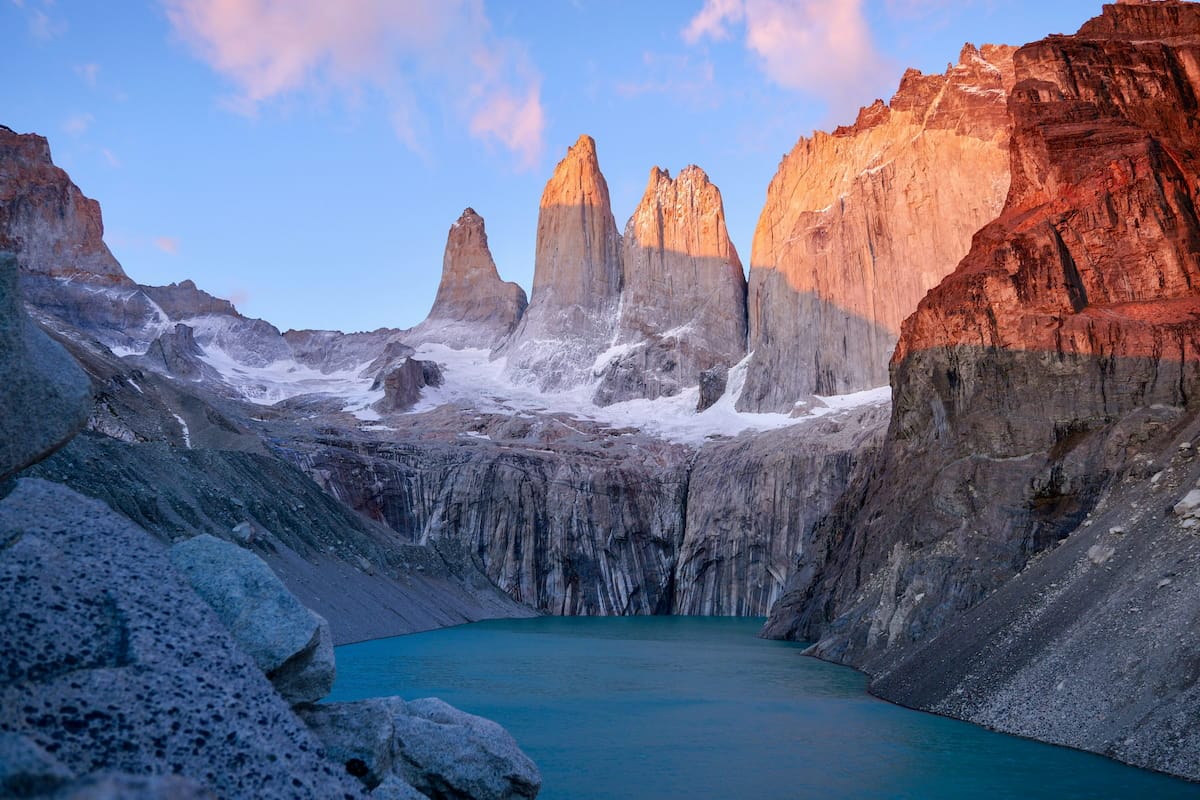
“The wind hit me like a wall the moment I stepped out of the car. Ahead, the granite towers of Torres del Paine split the sky — three shafts of ancient rock lit gold in the morning sun, with a glacial lake burning blue at their feet. My hiking poles vibrated. I had flown 14 hours and driven two more to stand here, and I understood, immediately, why people do it.”
Patagonia is the destination that travelers describe as “life-changing” more consistently than almost anywhere else on Earth. It’s also one of the most expensive places to reach from the United States — no budget carriers, no shortcut past LATAM via Santiago, no getting around the 14-plus-hour minimum door-to-door journey from New York or Los Angeles. The flights alone price out casual visitors. But for people who make the trip, regret is nearly unheard of. Torres del Paine delivers exactly what the photographs promise — in fact, the photographs undersell it. The question worth asking before you book isn’t whether Patagonia is worth it. It’s how to allocate your budget so the experience is maximized, not squandered on middling hotels and overpriced guided excursions when the best hikes in the world are already waiting inside the park entrance fee.
What’s In This Guide
📅 Best Time to Visit Patagonia
The sweet spot: November and March. November gives you full services, spring clarity, and 15–25% lower prices before the December peak. March brings autumn colors and a dramatic reduction in trail traffic. Avoid December 15–January 20 unless you’ve booked W Trek refugios four to six months in advance — they sell out completely.
Where to Stay in Patagonia
Puerto Natales (90 minutes from Torres del Paine) is the natural base for most visitors — it has far more accommodation options at every price point than inside the park, plus restaurants, gear rental shops, and the logistics hub for bus and catamaran tickets. Stay at least two nights before entering the park to sort transfers, purchase your CONAF park pass online, and stock up on provisions. Rates below are high season (Nov–Mar); expect 15–25% lower in shoulder periods. All rates verified April 2026.
A well-regarded guesthouse in the heart of Puerto Natales, Hostal Dickson offers clean private rooms with heating — non-negotiable in southern Patagonia — plus a shared kitchen for cooking in, which shaves real money off a trip where restaurants add up fast. The location is an easy walk from the town’s main bus terminal, the catamaran booking offices, and the gear rental shops along Bulnes. Staff know the park schedules cold and help with park pass logistics, which first-timers genuinely need.
Named for the German missionary who documented Patagonian indigenous cultures in the early 1900s, Martín Gusinde sits a few hundred feet from the Última Esperanza Sound waterfront, with mountain views that remind you daily where you are. Rooms are comfortably appointed and heated properly, which matters when you’re coming back cold and wet from a day in the park. A generous breakfast sets you up for long hiking days, and the front desk maintains close relationships with local tour operators for last-minute excursion bookings.
The Singular occupies a converted 1915 cold-storage plant that Chile declared a National Historic Landmark in 1996 — the industrial machinery is preserved inside a museum that guests wander between meals. The setting four kilometers outside Puerto Natales, right on the Fjord of Last Hope, gives you mountain panoramas that mid-range properties in town simply can’t match. The spa, the restaurant (which uses hyper-local Patagonian sourcing), and the consistently exceptional service make this the standout luxury option in the entire region for travelers who want to be comfortable after hard days in the park.
Get the Patagonia Planning Checklist
Park pass timing, rental car tips, refugio booking windows, and what to pack for Patagonian wind — all in one free guide.
15 Best Patagonia Experiences
Patagonia’s experience range runs from genuinely free roadside condor sightings to multi-day backcountry circuits that rival any trek on Earth. The park entry fee ($35/person high season) is the key that unlocks the best trails — once inside, most hikes are included. Plan at least three full days in the Torres del Paine area; four or five is better. A brief Argentine Patagonia extension (Perito Moreno Glacier, El Chaltén) is worth considering if you have the days.
Most Patagonia visitors land in Punta Arenas and immediately head north toward Puerto Natales, missing one of the region’s most atmospheric free stops. The hilltop cross at Cerro de la Cruz sits 15 minutes’ walk from the city center and delivers a sweeping panorama over the Strait of Magellan — the same water Ferdinand Magellan first navigated in 1520. On clear days the Argentine coast is visible across the channel, and the scale of the strait puts the entire region’s geography into perspective before you’ve seen a single granite tower.
💡 Visit at golden hour before your drive north — the light on the strait turns extraordinary, and the walk back through Punta Arenas’s colorful historic center is a pleasant way to stretch your legs after a long flight.
The sound that forms Puerto Natales’s backdrop — Última Esperanza, or “Last Hope Sound” — is dramatic even at sea level. The waterfront promenade runs along the fjord’s edge, with Andean peaks rising directly across the water and condors occasionally visible riding the thermals above the ridgelines. The town’s small artisan market and central plaza are a 15-minute loop from any hotel, and the Last Hope Distillery produces the southernmost spirits in Chile, well worth a tasting stop before or after the park.
💡 Spend one full afternoon in Puerto Natales itself — after days of hardcore hiking, the strolling pace of the waterfront and a slow dinner at one of the local lamb-focused restaurants is a genuine pleasure.
The drive from Puerto Natales to Torres del Paine on Route 9 passes through open Patagonian steppe that Andean condors — the world’s largest flying birds, with wingspans up to 10 feet — patrol from dawn to mid-morning. Pull over at any roadside viewpoint where you see birds circling on thermals and you’re likely watching a condor gliding without a wingbeat at 2,000 feet. No tour, no fee, no planning required. The sighting is one of the most memorable of any Patagonia trip and costs nothing but 20 minutes of your drive time.
💡 Binoculars are worth their weight here — pack a compact pair. Condors often rest on the low ridges along the road in the early morning before the thermals build, making for close and unhurried views.
Punta Arenas’s central plaza is one of the most beautifully preserved colonial squares in southern Chile, anchored by a bronze monument to Ferdinand Magellan — the explorer whose circumnavigation put this stretch of ocean on European maps in 1520. At the monument’s base, a crouching Selknam indigenous figure has a notably polished toe: legend holds that rubbing it guarantees a return to Patagonia. The surrounding buildings — including the historic Palacio Sara Braun, now a hotel and museum — form a remarkable intact period streetscape worth exploring for an hour before heading anywhere else.
💡 The Sara Braun Palace museum inside the building is free to wander — the preserved dining rooms and living quarters give a vivid sense of how the sheep-farming elite lived at the turn of the last century.
The hike to the base of the three granite towers is the reason most people come to Patagonia. Starting from the Las Torres trailhead, the route climbs through lenga beech forest, past cascading waterfalls, and up a final boulder-field scramble to a glacial lake that sits directly below the towering spires of dark granite. The towers rise 2,800 feet above the water’s surface. The round-trip hike takes 7–9 hours and demands solid fitness, but the payoff at the top is unlike anything else in the Southern Hemisphere. The $35 park entry covers the full day.
💡 Start no later than 6am to beat the crowds at the lake and guarantee the best light. The towers face east — morning sun illuminates them directly, and by noon, shadows shift the scene significantly.
The French Valley is the dramatic centerpiece of the W Trek’s middle section, but it rewards day visitors too. The trail runs between the jagged peaks of Los Cuernos on one side and a line of hanging glaciers on the other, with condors riding the thermals overhead in the narrow canyon. The ascent to the upper mirador is steep but delivers an enclosed alpine grandeur that feels completely different from the open panoramas at Base Las Torres — like being inside the mountain rather than looking up at it. Budget 6–8 hours for a proper French Valley day.
💡 Take the Lake Pehoe catamaran in to Paine Grande refugio at 8:30am and hike French Valley as a day trip — this avoids a long drive on unpaved road to the Italiano trailhead and puts you in position for the best light in the valley.
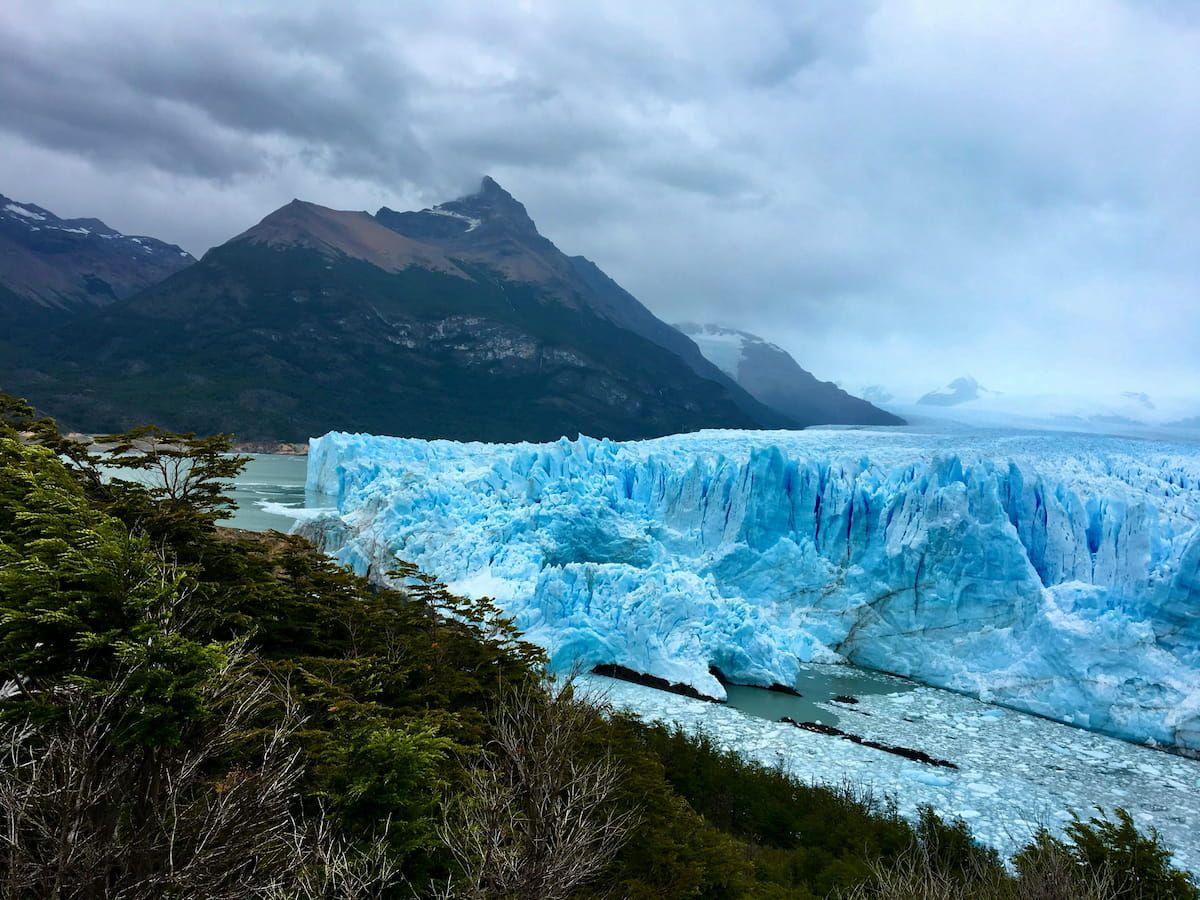
The western leg of the W Trek delivers one of the park’s most hypnotic sights: a pale turquoise lake filled with icebergs calved from the massive Grey Glacier, which flows down from the Southern Patagonian Ice Field at the park’s northwestern edge. The hike from Paine Grande to Refugio Grey — about 11 kilometers each way — runs through forests and along the shore of Lago Grey, with increasingly dramatic iceberg views and the glacier’s blue-white ice walls growing closer with every kilometer. It’s achievable as a long day hike from a Paine Grande base.
💡 Bring a telephoto lens or a zoom attachment for your phone — the icebergs vary from small blue chunks to house-sized blocks, and their color shifts depending on cloud cover and sun angle throughout the day.
Twenty-four kilometers north of Puerto Natales, this cathedral-scale cave — 200 meters deep, 80 meters wide, and 30 meters high — is where German explorer Hermann Eberhard discovered the preserved skin and bones of a Mylodon in 1895. The Mylodon was a giant ground sloth that stood 10 feet tall and weighed over a ton, vanishing from Patagonia around 10,000 years ago. A life-size replica greets you at the entrance. Beyond the main cave, a moderately challenging trail climbs to the cave’s roof for sweeping views of the fjord, and two smaller caves contain evidence of human habitation from over 11,000 years ago.
💡 The Cueva makes a natural stop between Puerto Natales and Torres del Paine on driving days — plan 2–3 hours including the upper viewpoint and cave trails, and time your visit to avoid the midday tour bus surge (arrive before 10am or after 3pm).
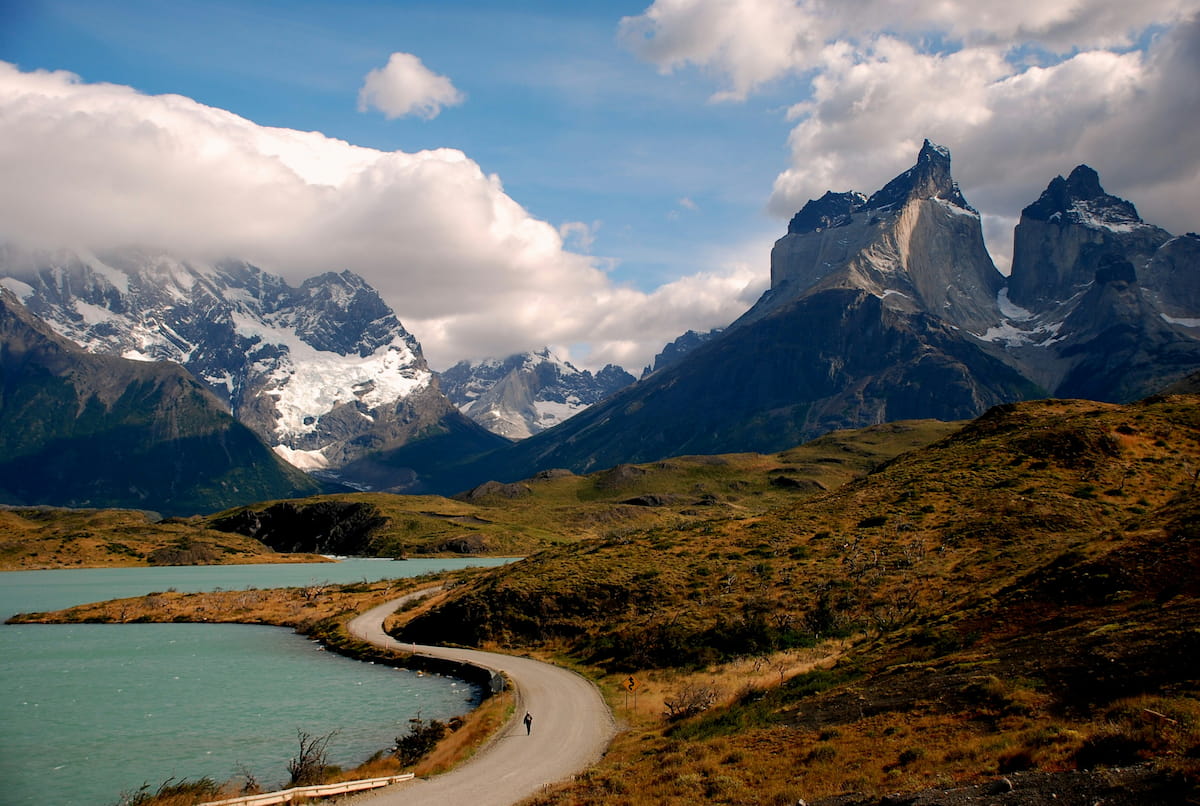
The 30-minute catamaran crossing of Lake Pehoe puts you on the water in front of the full Paine Massif — with the Cuernos, the towers, and the glaciated peaks arrayed across the skyline while the turquoise lake stretches around you. It’s operationally useful (connects Pudeto Pier to Paine Grande refugio, from where French Valley and Grey Glacier hikes begin), but it’s also one of the most scenically spectacular boat rides in South America. Aim for the 8:30am departure, which gets you to the trailhead with maximum daylight and the best morning light on the towers.
💡 Book catamaran tickets online before you arrive in Chile — during peak season (December–February) the 8:30am crossing regularly sells out several days in advance. Park pass must also be purchased separately at pasesparques.cl.
The open grasslands and river valleys surrounding Torres del Paine were shaped by generations of Patagonian estancias — sheep ranches that relied entirely on horses to cover country too vast for any other method. Several operators offer half-day rides through this territory, accessing viewpoints and valley routes that are inaccessible to hikers and feel unchanged from the gaucho era. The landscape — rolling steppe, guanaco herds, and mountain backdrop — is different in character from the high park trails and provides a valuable change of pace and perspective.
💡 No riding experience is required for most standard half-day tours — the horses are calm, the terrain is gentle, and guides tailor the pace to the group. Let the operator know your experience level when booking.
This full-day boat tour departing Puerto Natales navigates through the Serrano Fjord to reach two glaciers inaccessible by road — the Balmaceda Glacier and the Serrano Glacier, which descends directly to the shore where you can approach by inflatable zodiac. The fjord itself is remarkable: narrow channels flanked by mountains, Magellanic penguins visible on rocky outcroppings, and the silence of deep wilderness in every direction. The tour typically also includes a stop at a working estancia for lunch and a pisco sour with glacial ice chipped directly from the lake. One of the best pure-spectacle days in Patagonia.
💡 Dress for full exposure — the fjord channels can be significantly colder than Puerto Natales, and the boat ride involves extended outdoor time. Waterproof layers over insulating mid-layers, regardless of the morning forecast.
The only guided ice trek on Grey Glacier operates through a single operator with exclusive access, keeping group sizes to 10 and maintaining a genuinely uncrowded experience on the ice. After a 15-minute zodiac ride from Bigfoot Base Camp to the glacier’s Nunatak Island approach point, guides fit you with crampons, harness, helmet, and ice axe, then lead a 2.5-hour walk through crevasse fields, meltwater streams, and ice tunnels in impossible shades of blue and white. The glacier itself is silent except for the occasional deep crack of ice shifting — a sound that vibrates through the soles of your boots. Requires at least one overnight at Refugio Grey or Camping Grey to access the meeting point.
💡 The $100 fee does not include park entry ($35). Book several weeks ahead in peak season — only 10 people per departure — and confirm weather cancellation policy, which results in a full refund if conditions are unsafe.
The W Trek is the defining adventure of Chilean Patagonia — a 4 to 5-day, 75-kilometer route through the park’s three iconic landscapes: the base of the towers, the French Valley, and the Grey Glacier shore. The route follows the shape of a W on the map, and most hikers complete it west-to-east or east-to-west, staying each night in a refugio where meals, beds, and hot showers are provided. All-inclusive packages (park entry, transfers, refugio accommodation with full-board meals, catamaran) run $1,200–$1,500 per person. Budget camping approaches can reduce this to $400–$600, carrying your own tent and cooking supplies.
💡 Book 4–6 months ahead for any December–February dates — refugio beds along the W sell out completely. For November or March, 6–10 weeks is usually sufficient. The easternmost leg (Base Las Torres) is the most crowded; start west (Grey) if you want the crowd gradient to work in your favor.
Where the ice hike takes you onto the glacier, kayaking puts you among the icebergs it calves into Lago Grey — house-sized chunks of ancient ice glowing an electric blue from below the waterline. The half-day paddle covers the iceberg field at lake level, with guides pointing out the varying ages and densities of ice visible through the translucent chunks alongside your kayak. The silence of the activity — paddles dipping quietly, icebergs occasionally groaning as they roll — is a striking contrast to the roaring wind and physical exertion of the high trails. Requires staying at Refugio Grey or Paine Grande to access the put-in.
💡 Kayaking and the ice hike can be combined on a two-day Grey sector stay — kayak one afternoon, ice hike the following morning. This is genuinely the full Grey Glacier experience and worth the extra night at the refugio.
A handful of properties in the Torres del Paine region operate as all-inclusive estancias — historic sheep ranches converted into high-end lodges where rates include accommodation, meals sourced almost entirely from the surrounding land and sea, guided excursions into the park, and often spa services. Explora Patagonia, inside the park itself, is the most famous, with rates beginning above $1,000 per person per night. Hotel Simple Patagonia outside Puerto Natales delivers comparable food quality and fjord views at a somewhat lower entry point. For travelers willing to spend, these properties represent the best convergence of comfort and wild access available anywhere in South America.
💡 Explora operates exclusive trekking routes within the park not open to general visitors — including walks to ridgelines above the towers with perspectives inaccessible to self-guided hikers. For luxury travelers, the access alone justifies a significant portion of the cost.
Worth It / Skip It
Don’t Make These Mistakes
Booking W Trek refugios fewer than 6 weeks out for peak season. Paine Grande, Refugio Grey, and Refugio Torres Central sell out completely for December and January dates by October — often September. If you’re planning a peak season W Trek and haven’t booked by the time you’re reading this guide, your options are open camping (bring all gear) or November and March, when availability returns. Check availability at Vertice Patagonia and Las Torres reservation systems directly rather than assuming tours will sort it out.
Underestimating Patagonian wind — especially on the W Trek’s Grey and French Valley sections. The Patagonian steppe produces sustained winds of 50–80 mph that are not unusual; they can knock hikers sideways, make standing impossible on exposed ridges, and turn a pleasant hiking day into survival mode. A full hardshell jacket (not a fleece, not a windbreaker — a waterproof hardshell) is not optional gear. Pack one regardless of what the forecast says when you leave Puerto Natales that morning.
Arriving without a CONAF park pass purchased online. The official entry system at pasesparques.cl only accepts Chilean-issued banking cards through Webpay. Foreign credit cards often fail. Passes can be purchased at limited physical locations (Punta Arenas and Puerto Natales bus terminals), but stock runs short in peak season. The solution: ask your hotel or hostel to purchase on your behalf the day before entry — many offer this as a free service or for a small fee, and it eliminates the single most stressful logistical point of any Patagonia trip.
Planning every day for the park with no rest or buffer days built in. Weather closures happen. Trail conditions change. A 6am start for Base Las Torres after a red-eye connection and a four-hour drive ends in suffering, not summit views. Build at least one full rest day in Puerto Natales into any 5-day itinerary — use it to explore town, do laundry, book last-minute excursions, and recover from the cumulative physical toll of high-altitude hiking. The best days in the park follow the worst days of rest, not the other way around.
VacayValue Scorecard — Patagonia (Torres del Paine)
Packing List — Patagonia
New Guides, Verified Prices, Zero Hype
Join VacayValue travelers who plan smarter. New destination guides and price updates delivered free — no spam, unsubscribe anytime.
Expensive to Reach. Impossible to Regret. Plan Smarter and Patagonia Delivers Everything It Promises.
The flight cost keeps Patagonia’s overall score from the 8s and 9s its on-the-ground experience merits — and that flight cost is real. Getting from anywhere in the US to Punta Arenas requires at minimum one connection through Santiago, 14-plus hours of air travel, and budget planning that starts at $850 per person economy and climbs from there. There is no workaround. Budget this accurately and the trip makes sense. Pretend it’s a cheap destination and you’ll be caught off-guard every step of the journey.
Once you’re there, the money story improves substantially. Puerto Natales offers genuinely solid accommodation at every price tier, local restaurants are reasonably priced by any international measure, and the single $35 park entry fee unlocks the three best day hikes in South America. The activities that cost extra — the glacier ice hike, the boat tour, the W Trek refugio package — are priced relative to their quality, which is exceptional. A mid-range Patagonia trip for two is achievable around $4,500–$6,500 all-in for a week; a W Trek-centered adventure requires $6,000–$9,000 depending on how you do it. These aren’t budget figures, but they’re not mysterious either.
The experience quality score of 5.0 is the only perfect score in VacayValue’s Adventure Travel directory. It reflects a consistent, documented reality: almost nobody who makes it to Torres del Paine leaves disappointed. The granite towers are as dramatic as the photographs. The glaciers are larger than you expect. The silence in the backcountry is absolute. Some destinations reward careful management of expectations. Patagonia exceeds them.