
Iceland Wellness Travel Guide 2026: Hot Springs, Northern Lights & Real Costs
Iceland is the only place on earth where you can soak in a volcanic lagoon at midnight under a green sky, hike an ancient glacier in the afternoon, and eat a $6 hot dog for lunch. It’s expensive — and every krona is worth it.
You step off the plane at Keflavik, jet-lagged and stiff, and forty minutes later you’re floating in 102°F geothermal water with a silica mud mask drying on your face and the North Atlantic stretching to the horizon. Iceland doesn’t ease you in. It resets you completely.
No destination on earth does wellness quite the way Iceland does — not as an industry, but as a way of life. Locals slip into communal hot pots after work the way others scroll through their phones. Geothermal water heats nearly every building. Waterfalls that would be headline attractions anywhere else appear as casual roadside stops. This guide cuts through the hype: here’s exactly what Iceland costs in 2026, which lagoons are worth the premium, and how to experience this extraordinary country without spending like a film crew.
What’s In This Guide
📅 Best Time to Visit Iceland
The ideal windows are April–May and September–October. You get Iceland’s most dramatic landscape conditions — peak waterfalls in spring, Northern Lights and ice cave access in fall — at 20–35% below summer pricing. August 2026 requires special attention: a total solar eclipse passes over Iceland on August 12, driving bookings and prices to extraordinary levels. Plan 6+ months out if traveling that month.
Where to Stay in Reykjavik
For a wellness-focused Iceland trip, staying in central Reykjavik makes the most sense — you’re 15 minutes from Sky Lagoon, 45 minutes from the Blue Lagoon, and within easy reach of the Golden Circle. The 101 Reykjavik postcode puts you walking distance from Laugavegur, the harbor, and most tour departure points. All rates are approximate summer season figures verified March 2026; Iceland’s VAT (25%) applies to accommodation and is typically included in quoted rates at booking sites.
KEX (“Biscuit” in Icelandic — it was a biscuit factory) is the best-executed budget lodging in Reykjavik, housed in a converted factory building with high ceilings, a buzzing ground-floor bar and restaurant, and private rooms that punch well above their price point. The location on Skulagata, a five-minute walk from the main Laugavegur strip and a block from the harbor, keeps you within walking distance of most Reykjavik sights. Private rooms are simple but well-maintained; the hostel social energy suits solo travelers and couples who’d rather spend their money on lagoons than on hotel rooms.
Storm Hotel sits at the intersection of downtown convenience and genuine style — a modern 4-star property with Nordic-minimalist design, comfortable rooms with rainfall showers, and a location that puts Harpa Concert Hall and the Old Harbor a short walk away. The name isn’t metaphorical; rooms are designed as a “shelter from the storm,” which takes on literal meaning when you step out into Iceland’s infamous horizontal rain. The on-site fitness center is solid, the breakfast is worth the upgrade, and the Laugavegur shopping strip is five minutes on foot.
Iceland’s first luxury hotel, built in 1930 by a famous Olympic wrestler and circus performer, Hotel Borg has never stopped being Reykjavik’s most storied address. The Art Deco interiors — all polished wood, period furnishings, and black-and-white historical photographs — are immaculately maintained, and the in-house spa with sauna and heated pool offers a quieter geothermal fix on nights when lagoon travel isn’t practical. The location overlooking Austurvöllur Square, Reykjavik’s democratic heart, puts you within walking distance of everything. The restaurant is legitimately excellent, and service is formal without being stiff.
Don’t Leave Iceland’s Best Spots to Chance
Blue Lagoon slots sell out weeks in advance. Get our Iceland planning checklist — timing, booking order, and the lagoon comparison you actually need — delivered straight to your inbox.
15 Best Iceland Wellness Experiences
Iceland splits beautifully for a wellness traveler: a foundation of free natural wonders — waterfalls you can walk behind, geysers that erupt on schedule, beaches paved in volcanic black sand — alongside a remarkable collection of paid geothermal experiences that range from $11 city pools to $95+ bucket-list lagoons. Five of the fifteen experiences here cost nothing. The paid tier covers Iceland’s famous geothermal circuit and a Northern Lights chase. The Signature tier is where the trip becomes something you’ll describe to people for years.
Few places on earth let you physically stand between two tectonic plates. At Þingvellir, the North American and Eurasian plates are visibly pulling apart — the rift valley widens by roughly 2 centimeters per year — and the walking paths along the fissures offer a genuinely otherworldly perspective on geological time. The site carries equal historical weight: Iceland’s ancient parliament, the Alþing, met here continuously from 930 AD. The Öxará River cuts through the site, and on clear days the mountain reflections on Þingvallavatn, Iceland’s largest lake, are extraordinary. No entry fee; parking requires a paid permit (~$7) but the park itself is free to walk.
💡 Enter through the northern Hakid parking area and walk south along the Almannagjá fissure — the rift walls close in dramatically and it feels like a cathedral of geology. Allow at least 2–3 hours.
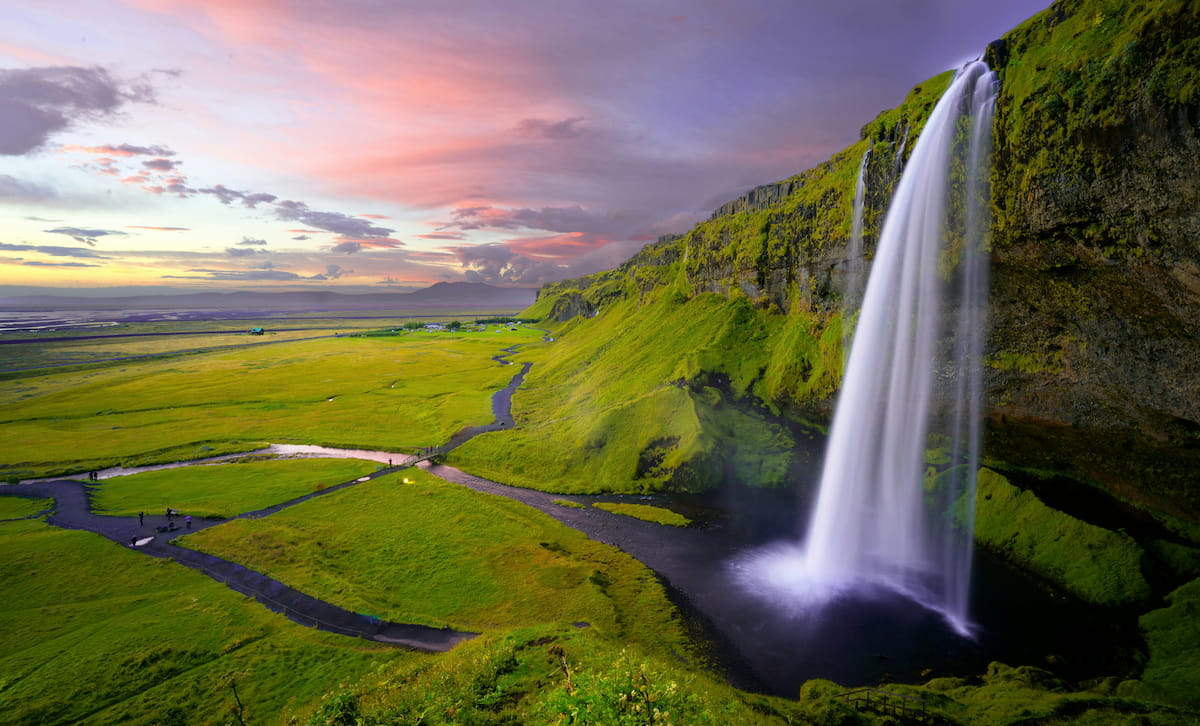
Most waterfalls are something you stand in front of and photograph. Seljalandsfoss is something you walk behind. A narrow path circles the entire falls, putting you inside the curtain of water — surrounded by roaring, spray-filled air and the green moss-covered cliff face — before emerging on the other side. The falls drop roughly 200 feet off a former sea cliff, and the path is open most of the year (icy conditions can close it in winter). Ten minutes down the trail, the hidden Gljúfrabúi waterfall is tucked inside a canyon you enter by wading ankle-deep through a stream. It’s completely free and completely unmissable.
💡 Wear waterproof clothing and boots — you will get wet even on a sunny day. The path closes November–March when iced; check conditions at road.is before visiting.
The Geysir geothermal area gave the English language the word “geyser,” and while the Great Geysir itself is largely dormant, its neighbor Strokkur erupts every 5–10 minutes — a column of boiling water shooting 60–100 feet into the air with no warning other than a brief blue bubble at the surface. There’s no fee to stand at the edge and watch as many times as you like. The surrounding geothermal field hisses and steams, the ground is warm to the touch in places, and the smell of sulfur reminds you that you’re standing on the skin of something alive. Budget at least an hour to catch multiple eruptions and walk the broader field.
💡 Position yourself upwind and slightly to the side rather than directly in front — the column drifts with the breeze and you don’t want a face full of boiling water. A 10-second-exposure photo timed at dusk is stunning.
The South Coast’s black sand beach at Reynisfjara is one of Iceland’s most visually striking landscapes — jet-black volcanic sand, towering basalt column formations called Reynisdrangar jutting from the ocean, and Atlantic waves that arrive with the force of open-water rollers. The contrast between black sand, gray sky, white foam, and dark sea stacks is stark and genuinely memorable. The nearby Hálsanefshellir cave, formed by basalt columns stacking into a vaulted space, is free to explore. A small café with soup operates at the car park. This is a short detour off the Ring Road between Vík and Skógafoss — budget 45–60 minutes.
💡 The waves here are genuinely dangerous — “sneaker waves” arrive without warning and have killed visitors who stood too close. Stay above the high-tide line, never turn your back to the water, and take the warning signs seriously.
Skógafoss drops 200 feet in a single wide curtain, producing so much spray that a perpetual rainbow forms at its base on sunny days. But the real payoff is the staircase up the cliff beside the falls — 527 steps that deposit you at a viewing platform directly above the cascade, with the Skóga River threading through the valley below and the Eyjafjallajökull glacier on the horizon. From the top, a hiking trail continues along the river for 25+ kilometers if you want to keep going. At the base, the spray-drenched air carries a coolness that feels like a natural aromatherapy treatment. Completely free, open year-round.
💡 Visit early morning (before 9 AM) to have the base essentially to yourself — by midday in summer it’s shoulder-to-shoulder. The steps get icy in winter; poles help.
This is how Icelanders actually bathe — not in architecturally designed destination lagoons, but in municipal pools that function as community living rooms. Laugardalslaug is Reykjavik’s largest, featuring a 50-meter outdoor lap pool, multiple hot tubs graded from warm to extremely hot (~108°F), a cold saltwater plunge pool, steam rooms, waterslides, and an Olympic-sized indoor pool. Admission is 1,430 ISK (~$11) for adults, under-16s free. What you get for that price is 2–3 hours of genuine geothermal immersion alongside locals who use this place the way other cities use coffee shops — for conversation, decompression, and reconnection. The hot tub etiquette is relaxed and easy; bring a swimsuit and plan to stay a while.
💡 Iceland pool culture requires a full nude shower before entering — no swimsuit. This is non-negotiable, deeply normal, and not worth overthinking. Towel rental is available if you forget yours.
Built in 1891 and tucked behind the village of Flúðir, the Secret Lagoon is the antithesis of the Blue Lagoon experience — no Instagram infrastructure, no infinity edges, no velvet ropes. Just a natural geothermal pool at a constant 38–40°C (100–104°F), fed by a hot spring that replenishes at 10 liters per second without chemicals. Surrounding the main pool: steaming fumaroles, a small geyser that erupts every five minutes, and bubbling mud pools. The changing facilities are modern and clean; the crowd is relaxed. Combined with a Golden Circle loop, this is the best value geothermal experience in Iceland — a fraction of the Blue Lagoon price with a more genuine atmosphere. Verify current pricing at secretlagoon.is before visiting.
💡 The Secret Lagoon sits directly on the Golden Circle route, 5 km off Route 35 near Flúðir. Add it as an afternoon stop after Geysir — it’s uncrowded in the evenings and feels almost private.
Sky Lagoon opened in 2021 and immediately raised the bar for what a geothermal spa experience could be. Located 15 minutes from Reykjavik in Kópavogur, its 70-meter-long infinity pool ends at the ocean’s edge — on clear days, the horizon is pure North Atlantic, and in winter you can see the Northern Lights from the water. The Skjól Ritual (included with both pass types) takes you through seven stages: the lagoon itself, cold plunge, oceanview sauna, cold mist, signature body scrub, steam room, and a crowberry elixir to finish. Unlike the Blue Lagoon, the water won’t bleach your hair. The Saman Pass uses shared changing rooms; the Sér Pass upgrades to private facilities (recommended given Iceland’s communal shower norms). Dynamic pricing — book early morning or late evening slots for lower rates. Verify current pricing at skylagoon.com.
💡 Sunset slots (especially in winter, when the sun sets over the ocean from the lagoon edge) are the most sought-after times. Book at least 2 weeks ahead — availability at 30 minutes notice is essentially zero on weekends.
Formed by accident in 1976 when runoff from the nearby Svartsengi geothermal power plant pooled in a lava field, the Blue Lagoon has become Iceland’s most recognized attraction — and for good reason. The milky-blue water, rich in silica, algae, and minerals, sits at a consistent 98–104°F against the stark black lava landscape. The Comfort package (~$95/adult, 11,990 ISK) includes unlimited lagoon access, a silica mud mask from the in-water bar, a non-alcoholic drink, towel, and locker. The Premium upgrade (~$119) adds a bathrobe, slippers, and two additional face masks. The lagoon is genuinely large — you can float away from the main crowds — and the in-water bar, steam caves, and waterfall massage stations add layers. Pre-booking is not optional; it sells out weeks in advance. Located 45 minutes from Reykjavik, conveniently between the airport and the city.
💡 Book the first slot of the morning (9 AM opening) or the last evening slot for a fraction of the midday crowds. The lagoon clears significantly 30 minutes after opening. Also: tie your hair back or use the complimentary conditioner before entering — the silica is excellent for skin but can tangle hair.
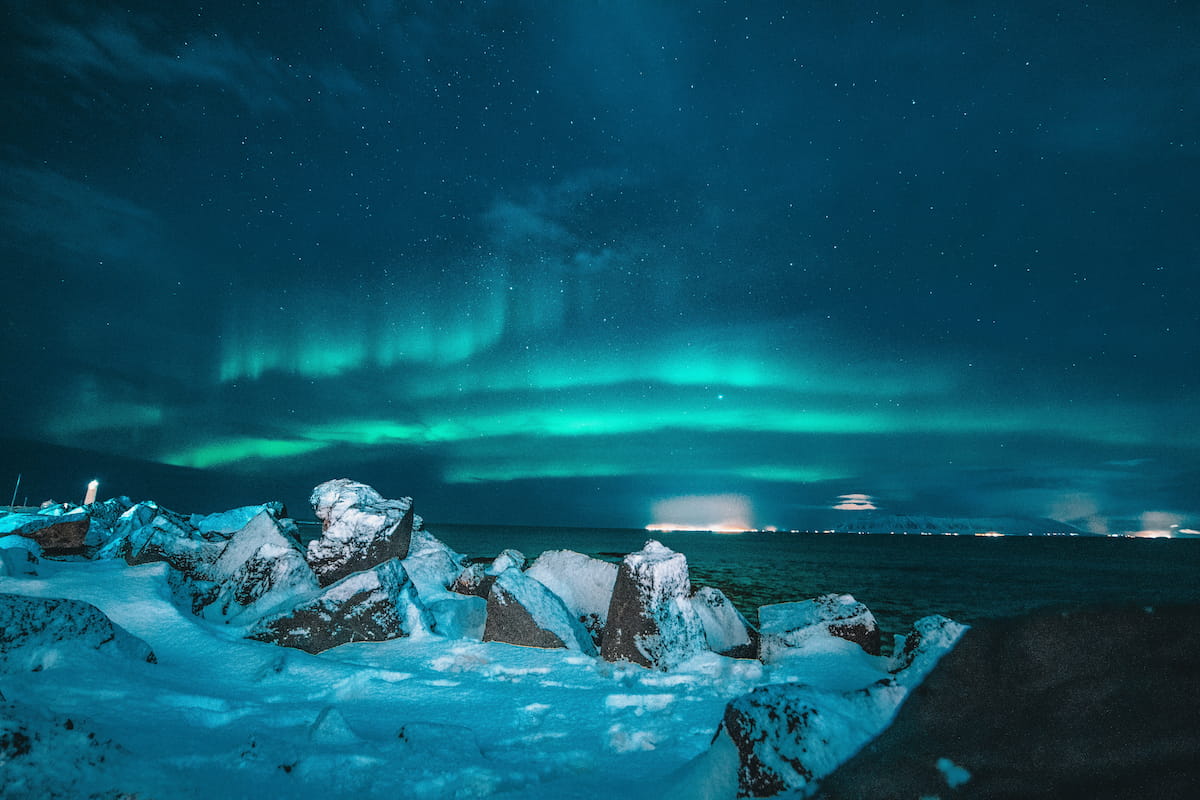
Between September and April, Iceland’s dark skies and frequent solar activity make it one of the best places in the world to see the Northern Lights. A guided tour matters here — local guides monitor real-time aurora forecasts and cloud cover maps and drive you 30–60 minutes outside Reykjavik’s light pollution to the night’s best viewing locations. Standard small-group tours (2–4 hours, minibus departure from city center) run $65–$80/person and typically include hot chocolate, blankets, and a free rebook guarantee if no aurora appears that night. Most operators now offer super-jeep tours with smaller groups and larger off-road capability for $100–$150/person. 2026 is a particularly active year in the solar cycle — conditions for aurora displays are elevated above average, making this a stronger bet than most years.
💡 Download the Vedur app (Iceland Met Office) to check aurora forecast strength (1–9 scale) and cloud cover. Book a tour for nights when the forecast is 4+ and the sky is expected to clear — guides know the local weather patterns well enough to sometimes find windows tourists would miss on their own.
Sólheimajökull is an outlet glacier of the Mýrdalsjökull ice cap on Iceland’s South Coast, accessible year-round and positioned about 2.5 hours from Reykjavik. A certified glacier guide equips you with crampons, helmet, and ice axe at the base camp — no experience required — and leads you onto the glacier itself, where the landscape shifts to deep blue crevasses, volcanic ash striations in the ice, and silence that feels geological in scale. A standard 3-hour guided group hike (meet-on-location) runs from $120/person; combined South Coast tours from Reykjavik with waterfall stops included start around $160/person. The glacier is visibly retreating due to climate change — the terminus has moved significantly in recent decades, which makes the experience both beautiful and poignant.
💡 Book the meet-on-location version and drive yourself from Reykjavik — you’ll save $40–$60/person versus the pick-up tour and can stop at Seljalandsfoss and Skógafoss on the way. Wear moisture-wicking base layers; jeans are explicitly not recommended and guides will mention this.
Vatnajökull is Europe’s largest glacier, covering roughly 8% of Iceland, and between October and March its outlet glaciers form blue ice caves — cathedral spaces of compressed ancient ice where the light filters through in shades of electric blue and teal that defy description. Natural ice caves change every year (and can close without warning if conditions make them unsafe), so tours are genuinely seasonal and require a certified guide with super-jeep transport from the nearest base town. Standard guided group tours from near Jökulsárlón run $150–$250/person depending on cave access and group size. The blue ice caves at Breiðamerkurjökull are the most visited; private tours access deeper, quieter formations. Plan this during October–March only — caves close when temperatures rise.
💡 Book immediately once you have confirmed dates — ice cave tours sell out months in advance for weekend slots in December and January. Book weekdays in November or February for the best availability and value.
Reykjavik’s Old Harbor sits on Faxaflói Bay, one of the best whale-watching grounds in the North Atlantic. From April through October, minke whales, humpbacks, and — increasingly — blue whales and orcas are spotted on regular excursions departing from the harbor. Tour boats run 2–3 hours, and most operators combine whale watching with puffin colony sightings in summer (puffins nest on Lundey Island, visible from the boat). The combination of mountain backdrop, harbor light, and open water — occasionally punctuated by a humpback breaching 50 meters off the bow — is the kind of scene that recalibrates perspective in the way that wellness destinations promise and rarely deliver. Best success rates are June–August; some operators offer free rebooking if no cetaceans are spotted.
💡 Dress warmer than you think you need to — even in July, Faxaflói Bay wind makes a 70°F day feel like 45°F on the water. Most operators provide thermal suits but wearing your own base layers underneath makes a significant difference.
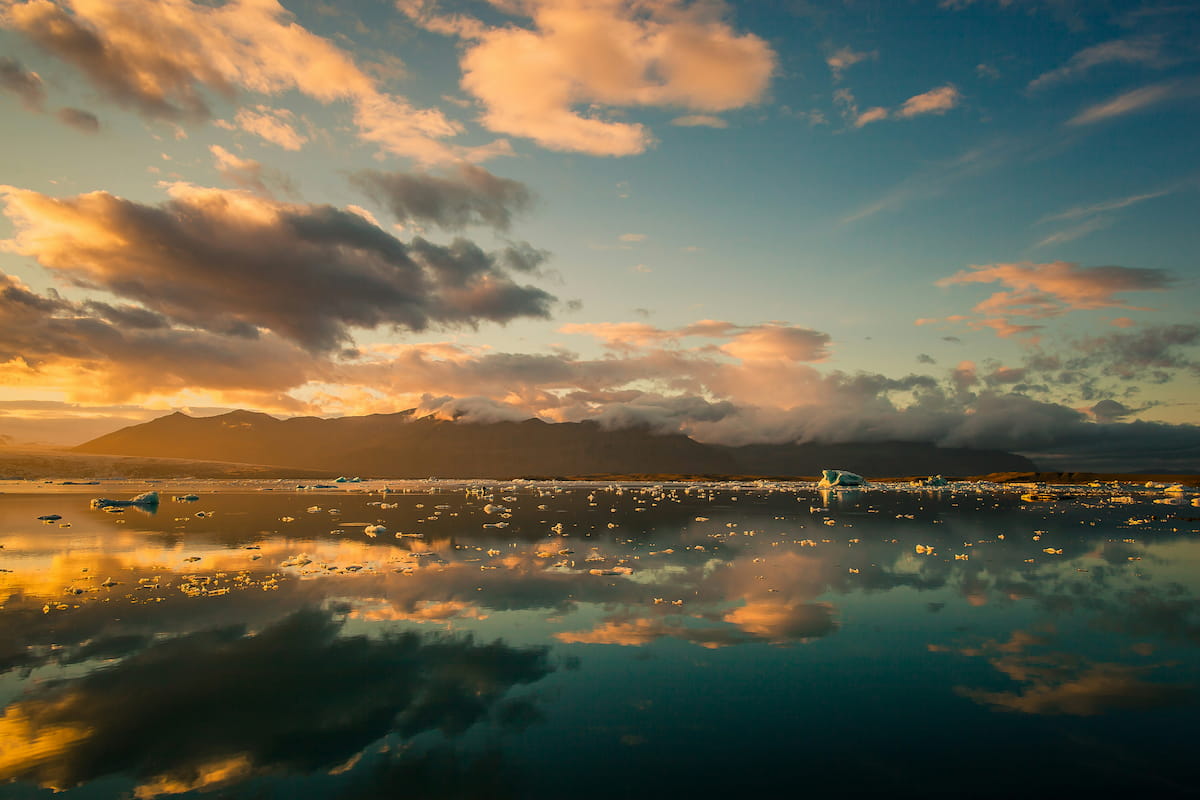
At the edge of Vatnajökull, a tidal lagoon fills with icebergs calved directly from the glacier face — some the size of houses, glowing in shades of white, blue, and occasionally black from volcanic ash. Jökulsárlón sits about 5 hours from Reykjavik on the Ring Road, making it a destination you build a journey around rather than a day trip, but the scale and silence of drifting ice in a glacial lagoon is worth every kilometer. The lagoon is free to walk around; amphibious boat tours (~$65/person) take you out among the bergs. Immediately adjacent, Diamond Beach is a black sand shore where smaller icebergs wash up and sit translucent in the surf — entirely free and entirely surreal. A regular feature in nature photography, it’s even more extraordinary in person.
💡 Schedule Jökulsárlón as the anchor of a 2-night South Coast road trip rather than trying to reach it and return to Reykjavik in one day. Guesthouses in Höfn and Skaftafell make natural stopping points, and the drive back via Vík the following morning offers the best of the South Coast in both directions.
For a honeymoon, milestone anniversary, or bucket-list immersion, the Blue Lagoon Retreat Hotel represents perhaps the most complete luxury wellness stay in the world. The hotel sits inside the lava field, connected directly to its own private Retreat Lagoon (separate from the public Blue Lagoon, accessible only to hotel guests). Rooms are carved into the lava landscape with floor-to-ceiling windows facing the steam. A stay includes à la carte breakfast, access to the subterranean Retreat Spa, unlimited private lagoon access at any hour including midnight, yoga sessions, and a morning coffee ritual. The public Blue Lagoon is a short walk away and accessible as part of your stay. The Silica Hotel, a more modest on-site option, connects via a path and offers the same lagoon access at a slightly lower price point. Neither requires advance planning for the lagoon itself once you’re a guest — you simply walk out at 3 AM and float in hot geothermal water under the stars.
💡 Book 4–6 months ahead for summer and 2–3 months for shoulder season — the Retreat sells out entirely. The November to February window offers the best chance of Northern Lights from the lagoon at a slightly lower rate than summer.
Worth It / Skip It
Don’t Make These Mistakes
Trying to book the Blue Lagoon last-minute. The Blue Lagoon operates on timed-entry slots and sells out weeks — sometimes months — in advance for peak season dates. Showing up unbooked will result in being turned away at the gate. Book before you book flights, especially for July–August travel. If you’ve already arrived and missed your window, the Sky Lagoon (15 minutes from Reykjavik) is the far more accessible alternative and arguably the better experience in 2026.
Underestimating Iceland’s true driving costs. Rental car rates for a standard economy car look reasonable at $40–$55/day, but the full cost includes mandatory insurance (gravel damage, sand/ash coverage, and wind protection are separate add-ons that can double the base rate), fuel at ~$7–8/gallon equivalent, and the 2026 kilometer road fee. Budget realistically: a 5-day economy car rental including full insurance and fuel for moderate driving often runs $600–$900 total. A 4WD SUV in summer can reach $1,500+. Use the calculator above and verify specific insurance package pricing with your rental company before arrival.
Skipping the local pool in favor of only tourist lagoons. The Blue Lagoon and Sky Lagoon are exceptional, but so is spending $11 at Laugardalslaug surrounded by Icelanders who treat geothermal bathing as a Tuesday afternoon activity. Missing the local pool culture — the communal hot tubs, the conversations, the lack of Instagram infrastructure — means missing a core part of what makes Iceland genuinely different. The lagoons give you the spectacle; the city pools give you the culture. Both belong on the itinerary.
Planning a Northern Lights trip in June or July. The Northern Lights require darkness — the sky needs to be genuinely dark for aurora to be visible. In Iceland’s peak summer, the sky never fully darkens between May and August. No amount of tour booking or aurora forecast checking will produce Northern Lights in a white night sky. If seeing the aurora is a primary goal, your trip window must be September through April, full stop. Plan accordingly and check forecasts at vedur.is in the days before your tour night.
VacayValue Scorecard — Iceland
Packing List — Iceland
Want More Destinations Worth Every Dollar?
Join thousands of travelers getting VacayValue guides — verified prices, no sponsored content, just destinations we can actually recommend.
Iceland Costs More Than It Should and Delivers More Than You Expect
Iceland sits near the bottom of our VV Score range for a simple reason: it’s genuinely expensive. Food costs more, fuel costs more, hotel rooms cost more, and the paid experiences — the lagoons, the glacier hikes, the guided tours — all carry a price premium that reflects both the quality and the remoteness of what Iceland is doing. A couple spending $3,000–$5,000 on a 5-night trip isn’t being extravagant; that’s the mid-range reality.
And yet Iceland repeatedly tops lists of destinations that travelers say changed them. The landscape is genuinely alien — a living geological experiment where the ground steams, waterfalls pour off ancient sea cliffs, and glaciers carve valleys in real time. The wellness angle isn’t marketing here; it’s infrastructure. Hot water flows from geothermal springs to the taps, the pools, the lagoons. Soaking in geothermal water at midnight under the aurora is not a commodity experience you can replicate by spending more at a different destination.
Budget travelers who shop at Bónus, self-drive to free waterfalls, and limit themselves to the Secret Lagoon and Laugardalslaug can experience an extraordinary Iceland for $2,000–$3,000 per couple. Mid-range travelers who add Sky Lagoon, the Blue Lagoon, and a guided glacier hike will spend $3,000–$5,000 but return with experiences they’ll describe for a decade. The luxury tier exists for those who want the Retreat Hotel and ice caves and a private super-jeep aurora hunt — and it delivers accordingly. What Iceland never offers is mediocrity. You pay more, and you get more. The score is 6.4 — not because Iceland disappoints, but because it makes you pay for the privilege.