
Bora Bora: The Complete Guide to French Polynesia’s Most Iconic Island
The lagoon is indisputably the world’s most beautiful — and indisputably expensive. Here’s every cost, every shortcut, and every experience worth your money in the Pearl of the Pacific.
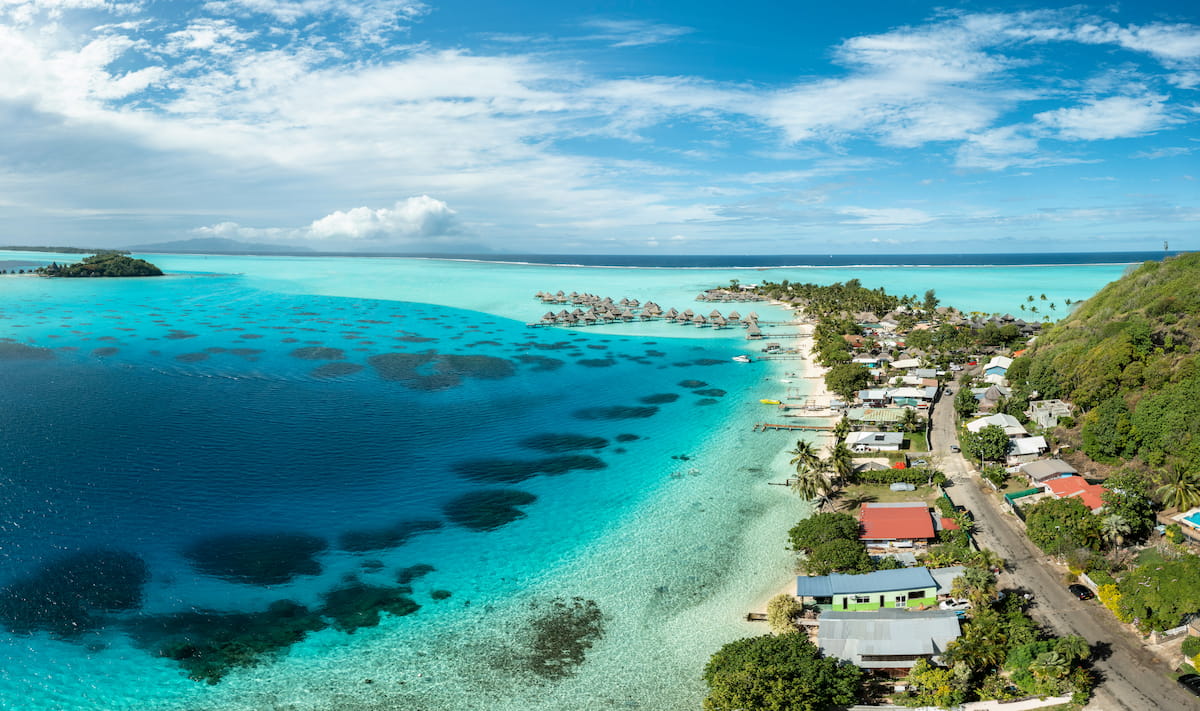
The moment the Air Tahiti turboprop drops below the clouds and the lagoon appears below — every shade of blue arranged in concentric rings around a volcanic peak — something clicks into place. You understand, instantly and completely, why Bora Bora has anchored the world’s imagination for decades.
The challenge, of course, is that understanding why Bora Bora is special and affording Bora Bora are two very different things. This island runs on a separate economic reality from anywhere else you’ve traveled. Budget hotels start at $150 a night, dinner at a resort restaurant can top $100 per person, and the overwater bungalow you’ve been dreaming about starts at $1,100 per night before taxes. Our job here is to help you navigate all of it — what’s genuinely worth the premium, what to skip, and how to build a trip that makes financial sense even in the most expensive destination in the Pacific.
What’s In This Guide
📅 Best Time to Visit Bora Bora
Sweet spot: April, May, and October deliver the best combination of dry-season weather and pre/post-peak pricing. Avoid July and August unless you’ve planned twelve months ahead — overwater bungalows at top properties sell out completely. The wet season (January–March) is genuinely viable if rain doesn’t bother you and you want the lowest possible rates on one of the world’s most expensive destinations.
Where to Stay in Bora Bora
Accommodation in Bora Bora operates on a different planet from the rest of the VacayValue destination portfolio. Even the “budget” options cost more per night than mid-range hotels in Paris. What separates the tiers here isn’t whether you’re comfortable — it’s whether you’re sleeping above the water. All rates below are verified March 2026 before taxes. A French Polynesia tourist tax (taxe de séjour) of approximately $2–$3/night/room applies at most properties and is added at checkout. All major resort motu properties organize water transfers from Bora Bora’s public dock — confirm whether your property includes these or charges separately before you book.
The Maitai Polynesia is the closest thing Bora Bora has to an accessible resort — and “accessible” is relative, because even garden bungalows run $220+/night. The payoff is immediate: the property sits practically on Matira Beach, the most beautiful public beach in French Polynesia, and free kayak rentals let you paddle directly into the lagoon from shore. Garden bungalows are simple but well-maintained with air conditioning and private terraces; overwater units are available here too starting around $600/night if you want the experience without paying Four Seasons prices. Dining on-site skews expensive, so budget guests are better served walking five minutes to the roulottes (food trucks) along the beach road for dinner.
Fully renovated in 2020 and frequently praised as the best-value overwater experience in French Polynesia, Le Bora Bora by Pearl Resorts offers the classic overwater bungalow with natural coral directly below the decks — which means exceptional snorkeling right from your villa. It runs at roughly a quarter of the nightly rate of the St. Regis for a genuinely comparable lagoon view experience. The free shuttle to Vaitape on the main island is a meaningful advantage, giving you access to local restaurants without the $74/couple per trip that Four Seasons guests absorb. Service is warm and the Polynesian feel is authentic throughout.
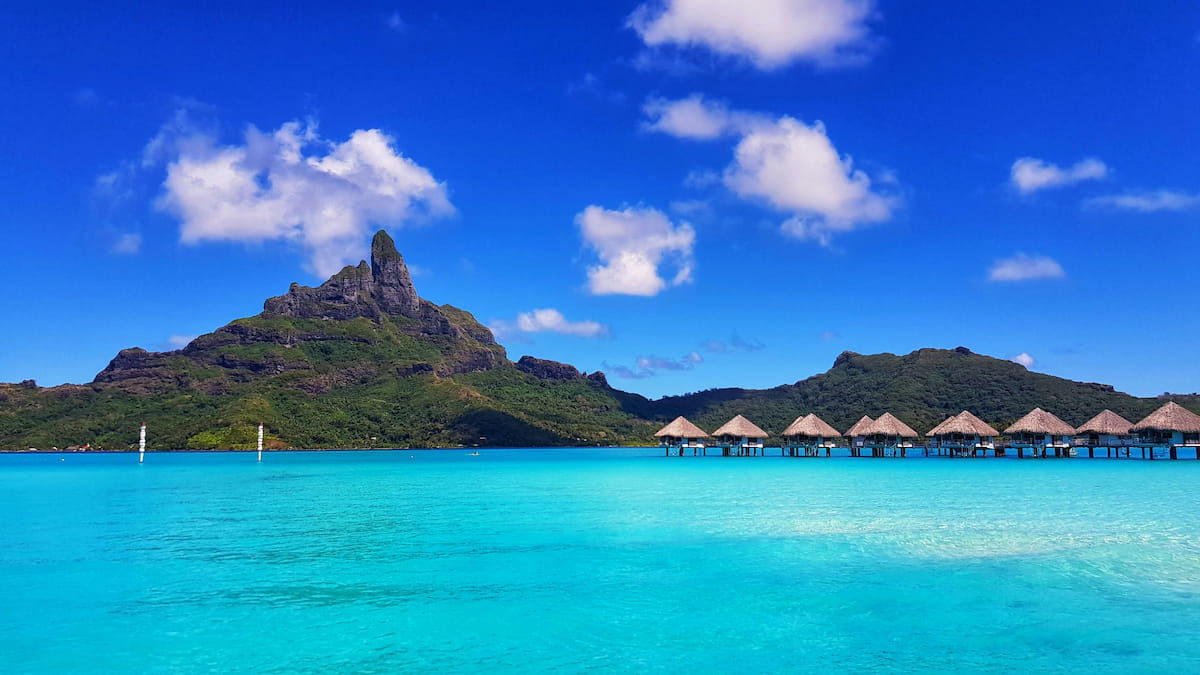
The Conrad Bora Bora Nui sits on its own private motu with direct views of Mount Otemanu — the framing is as close to perfect as overwater hospitality gets. Deluxe Overwater Villas are positioned further out on the pontoon for deeper water and maximum privacy, and the glass floors in select bungalows let you watch reef fish from the comfort of your bed. Three restaurants cover everything from casual lagoon-view lunches to refined Polynesian cuisine. The resort includes complimentary snorkeling equipment and organizes the full menu of excursions on-site. Free shuttle boats run to the main island regularly, which meaningfully reduces captive dining costs compared to more remote properties.
Planning Your Bora Bora Trip?
Get our free trip-planning tools, destination guides, and money-saving strategies — delivered before you book.
15 Best Bora Bora Experiences
Bora Bora surprises most visitors with how much you can do here for free. The island’s public beach is world-class and completely open, the lagoon is accessible from shore without a boat, and the road that rings the main island is one of the most scenic bicycle rides anywhere. The paid and signature tiers are where the island’s legendary status earns its price tag — lagoon snorkel safaris and helicopter flights that simply don’t exist anywhere else in the world.
Consistently ranked among the finest beaches on the planet, Matira Beach is Bora Bora’s great equalizer — completely free and open to everyone, regardless of which resort they’re staying at. The white sand is powdery and the water graduates from ankle-deep turquoise into deeper blue so gradually that you can wade fifty meters from shore and still see your feet clearly. Blacktip reef sharks cruise the shallows in small numbers, entirely harmless and entirely extraordinary. Unlike the private motu resorts, Matira is public land with no charge, no gate, and no reservation required. Sunsets here rival anything in the Pacific.
💡 Arrive before 9am or after 4pm to have significant stretches of beach to yourself. Midday the sand fills with tour groups — beautiful still, but less serene. The southern tip of the point offers the best snorkeling directly from shore.
Bora Bora’s main town is a half-hour walk or five-minute taxi ride from Matira Beach. Vaitape’s harbor is where the ferry docks, where locals gather, and where you’ll find the island’s most authentic pulse — including small family restaurants, food stalls, grocery stores with provisions far cheaper than any resort shop, and a row of pearl boutiques selling French Polynesia’s famous black Tahitian pearls. Even if you don’t intend to buy, the pearls are extraordinary to see up close: hues of aubergine, peacock green, champagne, and midnight black that don’t photograph accurately until you’re holding them. The covered market area is worth a slow walk for local fruit, vanilla beans, and monoi (coconut-based oils) at prices closer to what locals pay.
💡 Grocery shopping in Vaitape is the biggest single budget move in Bora Bora. Fill a dry bag with baguettes, fruit, cheese, and drinks before heading back to your accommodation — resort snacks and drinks carry 300–500% markups.
Scattered along the main island’s ring road are several marae — ancient stone temple platforms built by Bora Bora’s original Polynesian inhabitants for religious ceremonies, ancestor worship, and community gathering. Marae Fare-Opu near Faanui Bay is among the most accessible and best-preserved, with large coral-stone platforms still standing in a jungle clearing with lagoon views beyond. These sites were the spiritual heart of Polynesian civilization long before European contact in the 18th century, and standing among them brings a dimension to the island that the overwater bungalow brochures rarely mention. Entry is free; the ring road passes directly by the site.
💡 Context makes everything — download resources on marae culture before you arrive, or ask your hotel for any guided marae options. Approaching these sites with knowledge of their significance transforms them from “old rocks” to genuinely affecting places.
With your own mask and snorkel — rental gear runs about $10/day at shops near the beach — the stretch of reef just off Matira Point offers encounters that rival organized boat tours in quality. Blacktip reef sharks cruise the shallows at the south tip of the beach at almost any hour of the day, completely accustomed to human presence and entirely harmless. Colorful reef fish congregate around the coral formations, and on lucky days you’ll spot green sea turtles resting in the sandy patches between formations. This is one of those genuinely rare moments in travel when free is better than paid — no crowds, no boat noise, no schedule.
💡 Enter from the south end of Matira Point for the richest reef coverage. Bring your own snorkel mask if possible — even a $25 travel mask fits far better than rental equipment and eliminates constant leaking and fogging. Reef-safe sunscreen is essential; avoid any product containing oxybenzone, which damages coral.
Every evening at Matira Point, the same scene plays out: a loose assembly of travelers, resort guests, honeymooners, and local families line the beach to watch the sun drop behind the lagoon while Mount Otemanu turns amber and violet in the background. The resort photographers charge for this composition; from the public beach, it costs nothing and looks identical. Post-sunset, the sky goes through fifteen minutes of deep pink and coral that most travelers miss by leaving too early. Stay for it.
💡 Bring something to sit on — even a sarong or a travel towel — because the best viewing spot involves wet sand at the water’s edge, and you’ll want to linger well past sunset into the afterglow. The sky on a clear evening can still be actively changing color forty minutes after the sun has gone.
Renting a bicycle and riding the 32-kilometer ring road around Bora Bora’s main island is one of the great bargains in Pacific travel. The road is mostly flat, passes through villages, alongside lagoon views from every angle, past the WWII American cannon emplacements on the hillside, around vanilla farms and pineapple fields, and through the quiet neighborhoods of Anau and Faanui where daily island life plays out without resort packaging. On a still morning it takes three to four hours with stops; unhurried riders stretch it to a full day. Bicycles rent from shops near Vaitape harbor and from several accommodation properties.
💡 Start clockwise from Vaitape to ride the mountain-facing side in morning light and arrive at Matira Beach in the afternoon when the sun is optimal for swimming. Bring two full water bottles — there are shops along the route but they’re spaced out, and the humidity on a warm day will surprise you.
The organized lagoon snorkel safari is the activity that defines Bora Bora for most visitors, and for good reason — in the space of 2.5 hours aboard a traditional outrigger canoe, a knowledgeable guide takes you to three distinct marine environments: shallow water where blacktip reef sharks glide past at knee height, the coral garden teeming with parrotfish, butterflyfish, and moray eels, and a deeper zone where spotted eagle rays and occasionally manta rays cruise the pass. Operators like Moana Adventure Tours and Reef Discovery run these daily with groups capped at 8–12 people. No feeding occurs on the reputable eco-focused tours, which means the behavior you observe is genuine and the ecosystem is protected. The $120–$160 per person price point for a three-stop guided marine encounter is, by any standard, exceptional value for the experience delivered.
💡 Bloody Mary’s restaurant — where many combo tours previously included lunch — is closed for renovation in 2026. Tours now redirect lunch to Lucky House (Fare Manuia) restaurant, which is actually a better local meal at a more affordable price point. Confirm lunch details when booking.
The full-day version of the lagoon experience adds a barbecue lunch served on a private motu (islet) — a stretch of white sand with a coconut palm canopy and shallow lagoon access in every direction. After the morning snorkel stops, you’re anchored off a motu for an hour and a half while local guides serve grilled fish, chicken, tropical salads, and fruit with cold drinks. Then a final afternoon snorkel before returning to your resort. The format allows for spontaneity — guides sing Polynesian songs, demonstrate coconut-opening techniques, and will detour to find manta rays if conditions and timing align. Companies like Lagoon Service and Vavau 4×4 Adventures run this format, typically limited to 12–16 guests.
💡 Book the full-day tour for at least one day of your trip, and the half-day lagoon snorkel on another — they visit different zones and use different boat types. Together they give you a comprehensive view of the lagoon’s marine life that neither experience covers alone.
The interior of Bora Bora’s main island is a dramatically different world from the lagoon and beach — steep volcanic terrain covered in jungle, with American WWII-era artillery cannons still positioned in the hillside from when the island served as a major US military base during World War II. The 4×4 safari takes you up unpaved tracks through vanilla and pineapple farms (with tasting stops), past the cannon emplacements, and to ridgeline viewpoints overlooking the entire lagoon in both directions — the panorama that makes the aerial and helicopter shots famous, accessible by jeep. Several operators run this as a half-day, and the price is among the most reasonable for a guided excursion on the island.
💡 The 4×4 combo tours that pair the mountain safari with the lagoon snorkel cover both in a single day and are often better value than booking separately. Vavau 4×4 Adventures and Bora Bora Explorer both run this format with strong traveler reviews.
Bora Bora’s underwater visibility is reliably exceptional, and the outer reef supports healthy coral ecosystems that survived the cyclone activity that damaged shallower zones. Certified divers can explore the outer pass where lemon sharks — larger and more dramatic than the lagoon’s resident blacktips — congregate in deeper water, and the coral gardens host Napoleon wrasse, schools of barracuda, and the occasional hammerhead on early morning dives. Dive operators including Bora Bora Diving Center and Nemo World Dive run morning and afternoon trips; a single fun dive averages $80–$100 and a two-tank dive day runs $130–$160. Open water certification is available for beginners but at $400–$500, Bora Bora is an expensive place to learn.
💡 If you’re a certified diver, book at least one outer-reef dive timed for early morning — the marine activity peaks before 9am, and the morning light creates extraordinary underwater visibility in the clear Pacific water. Most operators offer hotel pickup included in the price.
Circumnavigating Bora Bora by jet ski in a guided group of four is the most kinetic and frankly joyful way to experience the scale of the lagoon at speed. You cover the same geography as the bicycle circuit in a fraction of the time, but from the water — flying past overwater bungalow resorts, around the motus, past the outer reef pass, and back through the deep channel with Mount Otemanu looming in every direction. Stops on small sand bars and brief snorkel pauses break up the two-hour circuit. Two riders share a jet ski, which makes this one of the more couple-friendly activities on the island. Minimum driver age is typically 16; passenger minimum 11.
💡 Combo packages that pair the jet ski circuit with the shark and ray snorkel safari into a full-day excursion represent meaningfully better value than booking each separately. Moana Adventure Tours runs this format most days — one of their highest-rated offerings.
The aerial perspective converts Bora Bora’s abstract reputation into something visceral. From a helicopter at 1,500 feet, the concentric rings of lagoon color — cream near the reef, electric turquoise in the shallows, deepening to midnight blue in the pass — become a single coherent visual that no photograph can fully capture. The volcanic spine of Mount Otemanu fills the windshield as you bank around the peak. Tahiti Nui Helicopters operates the island’s aerial tours, with a 20-minute shared flight (~$200–$280/person) and a 30-minute circuit (~$350–$400/couple shared) both offering full coverage of the island. Private flights with motu landings are available for considerably more, but the shared format delivers the same views at a fraction of the cost.
💡 A minimum of four passengers is typically required for the shared rate — if your group is smaller, you’ll be paired with other guests on a scheduled departure. Book through Tahiti Nui Helicopters directly rather than through resort concierge to avoid the markup. Morning departures typically offer the clearest visibility before afternoon cloud buildup around the mountain.
A private lagoon charter — a speedboat with a captain and guide dedicated entirely to your party for a half or full day — unlocks everything the group tours can’t offer: lingering as long as you want at a particular snorkel spot, choosing your own motu for a private lunch, redirecting mid-trip if the guide spots a manta ray in a different zone. Charter operators like Reef Discovery and Lagoon Service both run private formats, and the per-person cost for a group of four or more often lands reasonably close to a premium group tour. For couples on a honeymoon or anniversary trip, this is the experience that tends to appear in the trip report twenty years later. Many operators include champagne, a prepared lunch of local fish and tropical fruit, and unlimited beverages.
💡 The best private charters often include the same guides who run the group tours — which means the same local knowledge and marine intuition, with the added flexibility of a custom itinerary. Read individual captain reviews before booking and ask for the same guide by name if one appears repeatedly in five-star reviews.
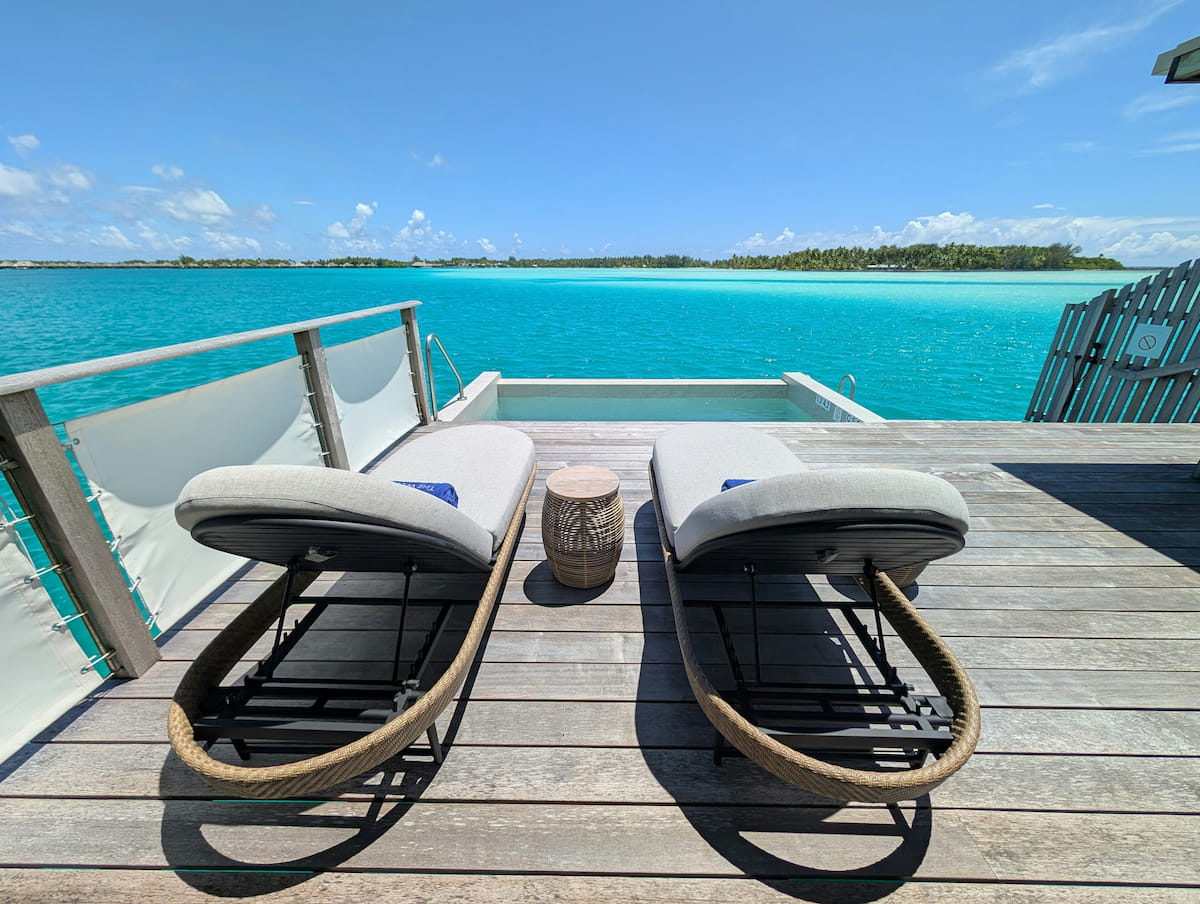
There is no way to hedge this one: the overwater bungalow is why people come to Bora Bora, and the experience of waking up above turquoise water — stepping from your bed to a glass floor panel revealing reef fish below, lowering the ladder directly into the lagoon, watching the sun rise over Mount Otemanu from a private deck with coffee — is exactly as good as you imagined it would be. The practical question is how many nights to spend this way. One or two nights in an overwater bungalow at the Conrad Bora Bora Nui or Four Seasons, bookending a longer stay at the Maitai or a guesthouse, is the most financially rational approach — you get the experience without the sticker shock of committing an entire week at $1,500–$2,500 per night.
💡 At the Conrad, the Deluxe Overwater Villas are positioned further out on the pontoon in deeper, cleaner water. At the Four Seasons, all overwater pricing includes daily breakfast. At InterContinental Le Moana, the overwater bungalows sit directly above Matira Point with the best lagoon channel access on any property. Choose based on what you prioritize: breakfast included, location, or coral visibility below.
Several resort concierge teams — and independent operators like Bora Bora Explorer — arrange private sunset dinners on a secluded motu: a boat delivers you to a private sand islet, where a table is set with Polynesian-style dishes (grilled fish, poisson cru, tropical fruit), champagne, and soft lighting as the sun drops behind the reef. The setup is as theatrical as travel gets, and it functions as the culminating experience that makes Bora Bora the go-to destination for honeymoons and significant anniversaries. The price varies considerably based on who arranges it — resort-arranged versions tend to run $500–$600/couple; booking directly through independent operators can bring this to $300–$400 for comparable quality.
💡 If your resort is on a motu, ask your concierge to arrange this through an independent operator rather than through the resort directly — you’ll typically save 30–40% for an identical experience. Confirm the specific motu location in advance; some “private” picnic dinners are on shared sand bars visible from passing tour boats, which defeats the purpose entirely.
Worth It / Skip It
Don’t Make These Mistakes
Not booking the Air Tahiti inter-island flight early. All international flights arrive in Papeete, Tahiti (PPT) — not Bora Bora. You must then book a separate Air Tahiti or Air Moana inter-island flight to Bora Bora (BOB), which adds $300–$400 per person round-trip and frequently sells out weeks in advance in peak season. Travelers who assume they can sort this flight on arrival or after booking the main long-haul leg find themselves stuck in Papeete or paying last-minute premium prices. Book the inter-island leg simultaneously with your main flight, treat it as mandatory, and include it in your budget from day one.
Not factoring in motu resort boat transfers. If you’re staying at any of the motu resorts — Four Seasons, St. Regis, Conrad, InterContinental Thalasso — and want to eat at local restaurants, you’re getting on a boat to do it. The Four Seasons charges approximately $37/person each way for their mainland shuttle; some other properties run free shuttles but on fixed schedules that may not align with dinner reservations. For a couple having dinner off-resort three nights during a six-night stay, these transfer costs add $220–$445 to a budget that wasn’t expecting them. Either choose a main-island property like Maitai or Le Moana, factor transfers into your food budget, or commit to resort dining and budget accordingly.
Waiting until six months out to book overwater bungalows. The top-tier overwater bungalows at the Conrad, Four Seasons, and St. Regis book out 12–18 months in advance for July, August, and December. Even shoulder season dates at these properties sell out six to nine months out. Travelers who assume the standard leisure booking window applies here — four to eight weeks — arrive to find their preferred room unavailable at any price. If a specific property or room type is part of your Bora Bora vision, book it the day you decide you’re going, then coordinate flights and everything else around the accommodation confirmation.
Skipping Matira Beach because you’re paying for a motu resort. Every resort’s beach is beautiful, but Matira Beach — free and public — is genuinely better than most of them, and many guests never leave their motu to see it. The logic of “I’m paying $1,500/night for this beach experience, so why leave?” is understandable but misses the island’s finest stretch of sand entirely. Take the boat shuttle to the main island at least one afternoon, walk south to Matira Point, snorkel the reef at the tip, and have dinner at a roulotte on the way back. It’s the day most guests wish they’d done on day one instead of day five.
VacayValue Scorecard — Bora Bora
Packing List — Bora Bora
Get Our Free Trip-Planning Resources
Destination breakdowns, budget tools, and guides — straight to your inbox before you book.
Bora Bora Scores a 6.0 — and That’s Not a Reason to Stay Home
Bora Bora’s VV Score of 6.0 is the lowest in our destination portfolio, and it’s completely accurate. Flights are expensive, accommodation is among the most expensive anywhere on Earth, and resort dining can devour a week’s budget before you’ve had a second cocktail. On pure value-for-dollar metrics, few places in the world perform worse. And yet, the island has been packed with visitors for decades — for the obvious reason that the experience it delivers is unlike any other destination in the world.
The lagoon is genuinely extraordinary — not internet-famous-extraordinary, but actually extraordinary in a way that recalibrates your sense of what natural beauty can be. The overwater bungalow experience is what everyone said it would be. The marine life — manta rays, reef sharks, eagle rays visible from the surface of the water — is astonishing. Experience Quality scores 5.0/5 here because it earns it. The VV Score isn’t a verdict on whether Bora Bora is worth visiting; it’s a map of where the money goes and what deserves it.
The travelers who leave Bora Bora most satisfied aren’t those who spent the most — they’re the ones who understood what makes it irreplaceable (the lagoon, the overwater experience, the marine encounters) and spent strategically on those things while ignoring the $50 burger and the resort gift shop markup. Plan with that clarity, and a 6.0 destination delivers a 10.0 trip.