
San Juan, Puerto Rico: Forts, Rainforest & a Bay That Glows at Night
A 500-year-old fort, the only tropical rainforest in the US National Forest system, a bay that glows blue at night, and beaches that rival any in the Caribbean. All on US soil — no passport, no currency exchange, no international fees.
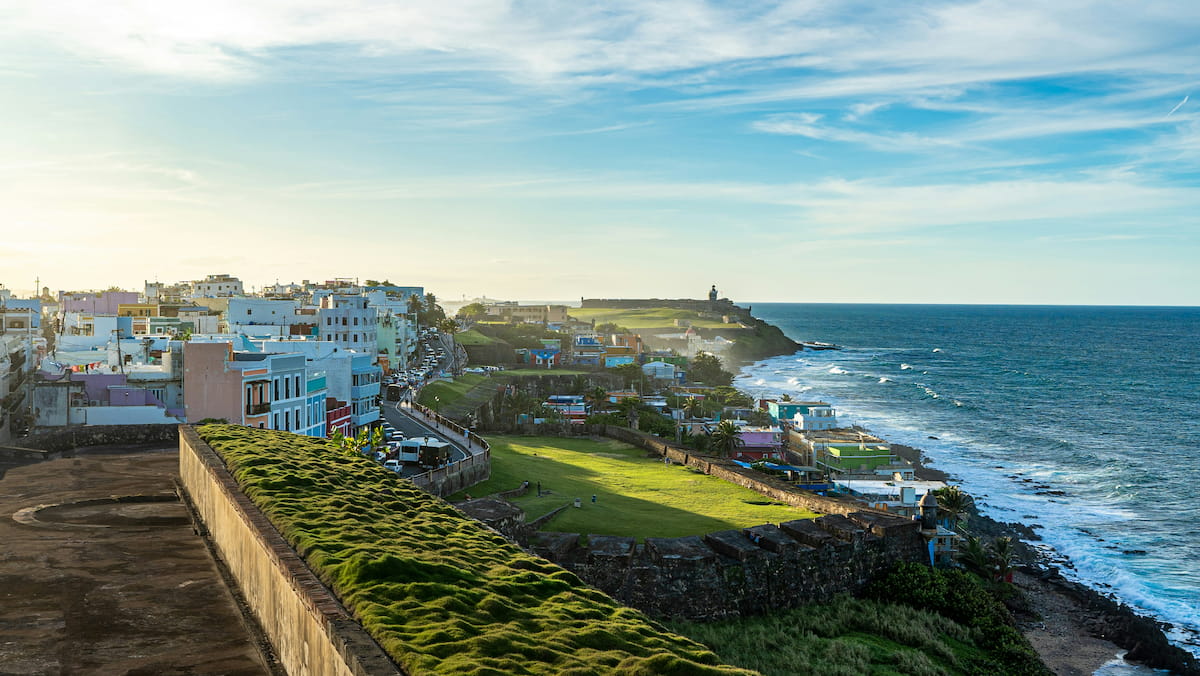
The moment I realized San Juan was different from every other Caribbean destination: I was eating a $9 bowl of mofongo at a sidewalk kiosk in Santurce, watching a street art mural the size of a building go by, and I hadn’t needed to exchange a single dollar or show anything but my driver’s license to board the flight.
Puerto Rico sits in a category of its own. It’s a US territory, meaning no passport, no currency friction, and domestic flight prices — yet it delivers genuinely Caribbean experiences that rival destinations costing twice as much to reach. The forts of Old San Juan are UNESCO World Heritage Sites. El Yunque is the only tropical rainforest managed by the US Forest Service. Laguna Grande in Fajardo is one of the five brightest bioluminescent bays on Earth. And you can eat extraordinarily well for $8–15 a meal if you know where to look. This guide tells you exactly where that is.
What’s In This Guide
📅 Best Time to Visit San Juan
The sweet spot: January through March — dry season, comfortable 83–85°F, and prices that haven’t spiked to spring break levels. The hidden value window: May and November — weather is still excellent, tourist crowds thin dramatically, and hotel rates drop 20–35% from peak. Avoid late August and September unless you’re extremely flexible and carry solid travel insurance.
Where to Stay in San Juan
San Juan has three main tourist zones: Old San Juan (historic, walkable, boutique hotels, no beach but everything else); Condado (upscale neighborhood, beachfront, restaurants, nightlife); and Isla Verde (closest to the airport, widest beaches, resort strip). Condado and Isla Verde are both solid bases — Condado is more walkable and vibrant, Isla Verde has calmer water and better beach access. Rates verified March 2026.
A charming boutique property in Isla Verde with genuine character — colonial architecture, balconied rooms with ocean glimpses, and a price point that leaves budget for everything else. The beach is a short walk; the airport is convenient for early departures. Rooms are clean and well maintained, and the staff earns consistent praise for going out of their way. It’s genuinely budget without feeling like a sacrifice.
Modern design, a warm Caribbean color palette, and a location in the heart of Condado that puts you within walking distance of San Juan’s best restaurant and nightlife strip. The pool area is a genuine highlight — well maintained and not overcrowded. Rooms are sized well for the price point, and the neighborhood walkability means you’ll spend less on rideshare than you would from more isolated properties. A strong mid-range pick that consistently outperforms its rate.
The legendary Art Deco resort that defined San Juan’s golden age, now fully restored and operating as a Fairmont property. The mahogany-paneled lobby alone is worth the visit. Three outdoor pools step toward the Caribbean, a full casino hums from afternoon into the early hours, and the beachfront dining at sunset is genuinely spectacular. This is the rare luxury property that earns its rate — not just because of the rooms but because of the entire experience of being in the building.
Get Our San Juan Trip Planner
The neighborhoods, the beach order, which kiosks to hit first — we’ll send you the full breakdown so you don’t waste a single day figuring it out on arrival.
15 Best San Juan Experiences
San Juan splits into three experience tiers almost perfectly. The free side is extraordinary — the cobblestone streets, the beaches, the promenades, and a rainforest you can hike for $0 — and it’s genuinely world-class, not a consolation prize. The paid tier layers in two forts that take half a day to explore properly and a bio bay that will likely be the most surreal hour of your entire trip. The Signature Experiences require some planning and are worth every bit of the effort.
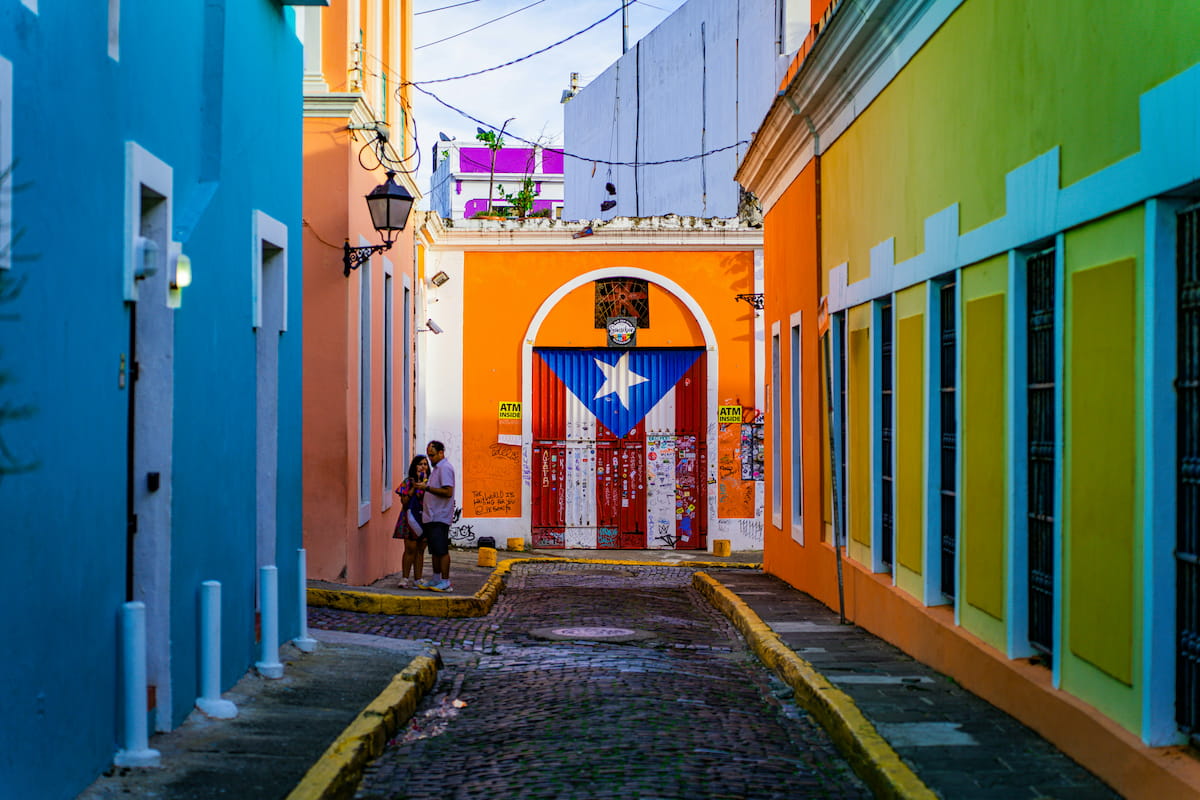
The pastel-painted colonial buildings, the blue cobblestones (actually ballast stones brought from Spain in the 1500s), the sea walls dropping straight into the Atlantic — Old San Juan is one of the most visually extraordinary neighborhoods in the Western Hemisphere, and it costs nothing to walk through. Start at Plaza de Armas, wind up through Calle del Cristo to the San Juan Gate, then follow the city walls toward El Morro. The historic district is compact enough to cover in two to three hours, but most people linger for a full half-day.
💡 Go early morning for the best light and empty streets — cruise ship passengers don’t arrive until 9–10am. The free Old San Juan trolley loops the historic district and runs throughout the day if your legs need a break.
Condado Beach faces the Atlantic with turquoise water and a beautiful backdrop of the Condado skyline — it’s wide, well-maintained, and five minutes’ walk from some of the island’s best restaurants. Isla Verde, further east near the airport, has calmer and cleaner water with a more resort-beach feel. Both are completely public and free. The sand at Isla Verde is consistently ranked among the finest in the Caribbean, and the water temperature stays around 80°F year-round.
💡 Condado has strong rip currents — swim between the flags and watch children carefully near the water. Isla Verde is calmer for families. Both have free beach access; vendors sell coconuts, piraguas (shaved ice), and cold beer from about $3–5.
This 19th-century promenade runs along the base of the Old San Juan city walls, lined with royal palms, sculptures, and the sound of the ocean. It ends at the Raíces Fountain — a massive bronze depicting the Spanish, African, and Taíno roots of Puerto Rican culture. It’s beautiful at any time of day, but the golden hour right before sunset is particularly good for photos with the walls lit in warm light and the bay glowing behind them.
💡 Combine this with the San Juan Gate and the Santa María Magdalena de Pazzis Cemetery (free to view from outside) for a complete seaside walking loop of about 45 minutes.
La Placita is a farmers’ market by day that transforms Thursday and Friday nights into one of the most electric street scenes in the Caribbean. The market stalls give way to open-air bars spilling onto the plaza, live music competes from every corner, and locals outnumber tourists three to one. Grab a cold Medalla beer ($2–3) from a kiosk and let the salsa find you. This is the San Juan most visitors never see — and it’s completely free to walk in and enjoy.
💡 Come after 9pm when it really gets going. Drink prices at the kiosk bars are a fraction of what you’d pay in Old San Juan or at a hotel bar — this is one of the best value evenings you can have anywhere in the Caribbean.
Santurce is San Juan’s arts neighborhood, and the murals here are not an afterthought — they’re building-scale works by Puerto Rican artists commissioned after Hurricane Maria as part of a cultural recovery effort. Calle Loíza runs through it all: indie coffee shops, record stores, and local restaurants that charge half of what Old San Juan does for the same quality. Grab a mofongo at La Alcapurria Quemá ($9–12) and walk the murals before or after.
💡 Calle Loíza is about a 15-minute Uber from Old San Juan. The art walk is self-guided — no map needed, just start walking south from Santurce and the murals are impossible to miss.
The only tropical rainforest in the US National Forest system sits about 45 minutes east of San Juan, and the hiking corridor on PR-191 North is free with no reservations required. Trails wind through bamboo, ferns the size of small trees, and cloud-shrouded peaks rising to El Yunque Peak at 3,494 feet. The forest has been recovering steadily from Hurricane Maria damage — multiple trails including Big Tree Trail and the El Yunque Peak Trail are open and spectacular.
💡 Entry to the hiking corridor is free, but arrival at opening (8am) is strongly advised — the parking lots fill and the gate closes once capacity is reached. No rideshare is permitted to drop off inside the forest; rent a car, join a tour, or take a licensed taxi.
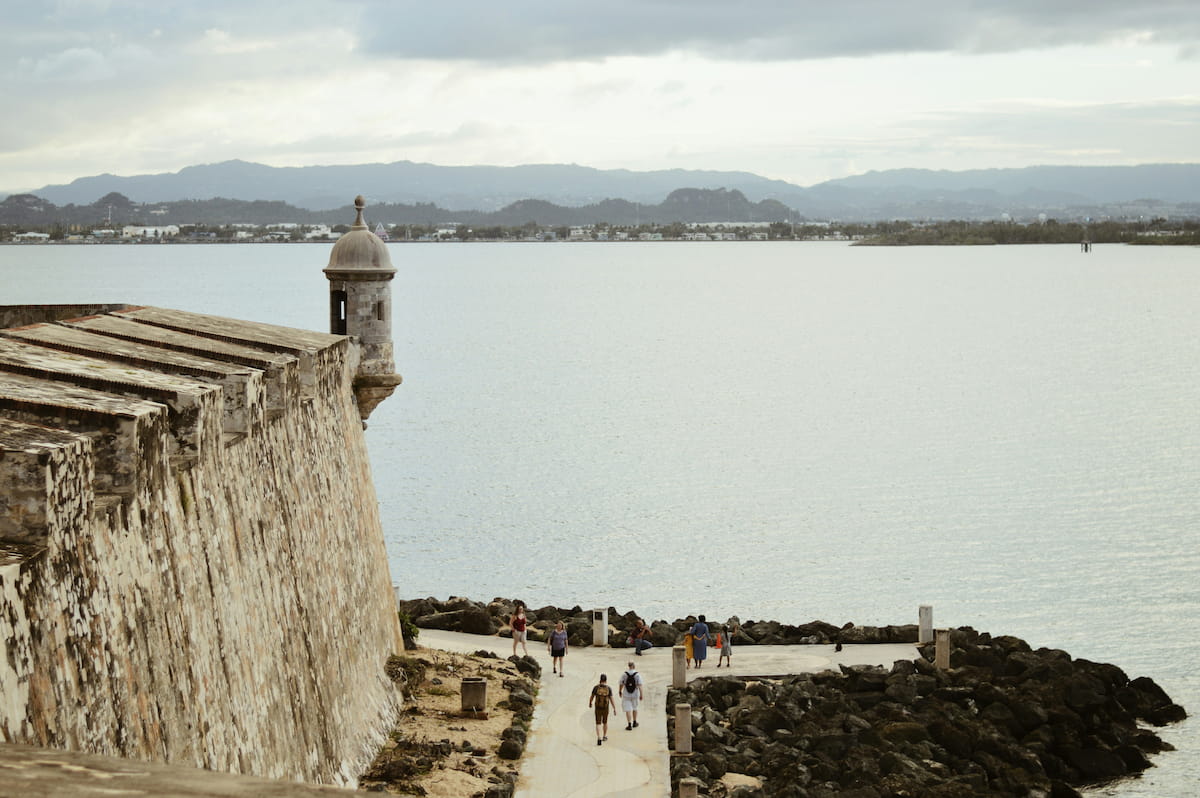
One $10 ticket covers both Castillo San Felipe del Morro and Castillo San Cristóbal for two consecutive days — a remarkable deal for two of the best-preserved Spanish colonial fortifications in the Americas. El Morro juts out at the northwestern tip of Old San Juan, rising six stories from sea level with walls 18–25 feet thick. San Cristóbal, on the northeastern side, is actually the larger of the two. Both are UNESCO World Heritage Sites and NPS properties, and both are genuinely absorbing places to spend two to three hours each. Children under 15 enter free.
💡 America the Beautiful National Parks Pass covers entry to both forts — if you’re visiting any other national parks that year, the $80 annual pass pays for itself quickly. Start at El Morro for morning light on the ocean side, then do San Cristóbal in the afternoon.
The El Portal visitor center — separate from the free hiking corridor — houses exhibits on the forest’s unique ecology, a live Puerto Rican parrot exhibit (three resident parrots from the endangered flock), an excellent 18-minute film about the rainforest, and a restaurant serving local food. Children under 15 enter free. It’s not required to understand or enjoy El Yunque, but it meaningfully enriches the experience and is genuinely well done for a government visitor center.
💡 El Portal’s operating hours are 8am–4pm daily except Thanksgiving, Christmas, New Year’s Day, and Three Kings Day (January 6). The parrot exhibit alone is worth the $8 — the Puerto Rican parrot is one of the most endangered birds in the world, with fewer than 500 surviving in the wild.
Laguna Grande in Fajardo is one of only five year-round bioluminescent bodies of water on Earth — and the brightest on Puerto Rico’s main island. At night, every stroke of your paddle lights up the water in blue-green fire as millions of dinoflagellates respond to movement. Kayaking through the mangrove channel to reach the lagoon, in complete darkness, while stars fill the sky above and the water glows below, is one of those genuinely rare travel experiences that lives up to every description. The tour is beginner-friendly; guides provide instructions.
💡 The $55/person rate applies if you drive or arrange transport to Fajardo yourself. Most tour operators offer San Juan hotel pickup for approximately $80/person. Book during new moon or the days surrounding it — the full moon washes out the glow significantly. Note: bioluminescence intensity varies by natural conditions and is never guaranteed.
About 20 minutes east of Isla Verde on the coast road, Piñones is where San Juan locals actually go to the beach on weekends. The kiosk row along the shore sells some of the most authentic Puerto Rican beach food in the metro area: alcapurrias (fried masa stuffed with crab or beef) for $2–3 each, whole fried fish with tostones for $12–16, fresh coconut water straight from the shell for $3–5. The beach itself is free, the kiosk food is exceptional, and the atmosphere is genuinely local rather than tourist-facing.
💡 Go on a Saturday or Sunday when the kiosks are fully operating and the energy is most festive. The beach has a strong current in some areas — check conditions before swimming. Best done as a half-day trip combined with Isla Verde.
Skip the $45 guided food tours and build your own. Start with breakfast at Kasalta Bakery in Ocean Park (sandwich and pastry from $5–8), then hit the Old San Juan lunch scene for mofongo at Café Puerto Rico ($18–24 — pricey but the setting is worth it once). In the afternoon, walk into any of the small rum shops and distilleries along Calle Fortaleza — many offer tastings from $8–15. End at La Barrachina on Calle Fortaleza, which claims to be the birthplace of the piña colada, and at $12 it’s a legitimate excuse to drink one.
💡 If you want structure, guided food tours of Old San Juan start from approximately $45/person and are worth it for the historical context they provide between stops. A self-guided loop with good restaurant research hits 80% of the same places for the cost of the food itself.
The most popular day trip structure from San Juan: spend the morning hiking El Yunque with a guide who takes you off-trail to swimming holes and hidden waterfalls, eat a local lunch in Fajardo, then spend the evening kayaking the bioluminescent bay. Multiple operators run this combo with hotel pickup and drop-off included. It’s a genuinely extraordinary 12-hour day that puts two of Puerto Rico’s most iconic natural experiences back to back. Book ahead — these fill weeks out during peak season.
💡 Verify current pricing with operators at time of booking — rates vary by operator and season. The combo with transportation from San Juan typically runs $120–150/person. Choose a departure date aligned with the new moon for the best bio bay visibility.
Half-day and full-day catamaran tours depart from San Juan and Fajardo to snorkeling spots, coral reefs, and uninhabited cays with white sand beaches. Several operators include Cayo Icacos — a tiny, postcard-perfect uninhabited island east of Fajardo where the water is the kind of blue you assume is photo-edited until you’re standing in it. Snorkeling equipment is included, and the fish density around the reef systems is excellent.
💡 Full-day tours to Culebra Island are more adventurous — the ferry from Ceiba reaches Flamenco Beach, consistently ranked among the most beautiful beaches in the world. Verify current ferry schedules and prices at the Puerto Rico Maritime Authority website before booking.
Ocean Park, the neighborhood between Condado and Isla Verde, has consistent surf breaks that make it the best spot in metropolitan San Juan for beginner lessons. The water is warm year-round, the breaks are forgiving, and several surf schools operate directly from the beach with boards, rash guards, and instruction included. Puerto Rico has world-class surf on the west coast at Rincón, but Ocean Park is the most convenient from San Juan for a quick half-day session.
💡 November through March brings the best surf conditions in Puerto Rico. If you get hooked and want to experience Rincón’s famous breaks, it’s a 2.5-hour drive west — worth building in as an overnight trip if you have the time.
Old San Juan after dark is a different city. The cruise ship tourists have gone, the cobblestone streets glow under the streetlamps, and the bars on Calle San Sebastián fill with locals alongside visitors. The evening circuit: drinks at a rooftop bar overlooking the bay, then down to the street bars of SanSe (the neighborhood around Calle San Sebastián), and finally a walk to the overlook above La Perla — the colorful neighborhood made famous by Despacito, painted in murals and lit by strings of lights, visible from the city walls. Budget for 2–3 drinks ($8–15 each at bars) and the evening is yours.
💡 The Despacito mural facing La Perla is one of the most photographed spots in Puerto Rico — visit it in the early evening before the light is completely gone. La Perla itself is best admired from the city walls above; the neighborhood is residential and not a tourist destination to walk through.
Worth It / Skip It
Don’t Make These Mistakes
Thinking you need a passport. Puerto Rico is a US territory — American citizens fly there on a domestic ticket and need only a driver’s license or Real ID to board. No passport, no customs, no currency exchange. This is the single biggest misconception that keeps people from booking, and it’s completely wrong. If you have a US passport, bring it as backup ID, but it is not required.
Spending your entire trip in the tourist zone without exploring the neighborhoods. Old San Juan, Condado, and Isla Verde are excellent bases, but Santurce has better food and nightlife at half the price. Most visitors leave Puerto Rico having eaten only in tourist-facing restaurants, missing the kiosk culture, Calle Loíza, and La Placita entirely. Build in at least two meals and one evening in Santurce — it will probably be the highlight of the trip.
Showing up at El Yunque at 10am. The PR-191 corridor is managed on a first-come, first-served basis due to limited parking, and the gate closes once capacity is reached. Arriving after 9am on a weekend during peak season often means you’re turned away at the gate. Arrive at opening — 8am — or join a guided tour that manages transport independently from the public parking lots.
Skipping the bio bay because “it might not glow.” The bioluminescence is always present — dinoflagellates are in the water year-round. The question is intensity, which varies with moon phase, weather, and season. The experience of kayaking through a mangrove forest at night in Puerto Rico is worth doing regardless of how bright the glow is. Book during new moon, accept that nature is unpredictable, and go anyway.
VacayValue Scorecard — San Juan, Puerto Rico
Packing List — San Juan, Puerto Rico
Don’t Plan San Juan Without This
We’ll send you the neighborhood breakdown, the kiosk names, the bio bay booking timing guide, and the two neighborhoods most visitors never find. One email, no fluff.
San Juan Is the Caribbean’s Best-Kept Budget Secret — and Everyone’s About to Find Out
No destination in the Caribbean offers San Juan’s combination of accessibility and depth. No passport barrier means the friction that keeps most Americans from considering international travel simply doesn’t exist here. US dollars spend as they always do. Flights from the East Coast cost less than a weekend trip to Nashville. And when you land, you find a 500-year-old city, a working rainforest, a glowing bay, and beaches that compete with anything in the tropics.
The food story is what surprises most visitors most. Yes, Old San Juan has $30-entrée restaurants with million-dollar views, and they’re worth visiting for the experience. But the $9 mofongo at a Santurce kiosk, the $2 alcapurria at Piñones, the cold Medalla at La Placita on a Thursday night — that’s where Puerto Rico actually lives, and it costs almost nothing to access if you know to look.
Hotels are the one category where San Juan isn’t a budget screamer — $90–130/night for a decent Isla Verde guesthouse is higher than Southeast Asia and comparable to major US cities. Everything else, though, tips heavily in your favor. The forts are $10. The rainforest is free. The beach is free. And the bioluminescent bay at $55/person is the most spectacular $55 you can spend on any Caribbean island, bar none.