
Glacier National Park: Going-to-the-Sun Road, Grinnell Glacier & Honest Trip Costs
One million acres of glaciated wilderness, the most celebrated mountain road in North America, and mountain goats on the Logan Pass boardwalk at sunrise. Here’s exactly what a Glacier trip costs — and why September changes everything.
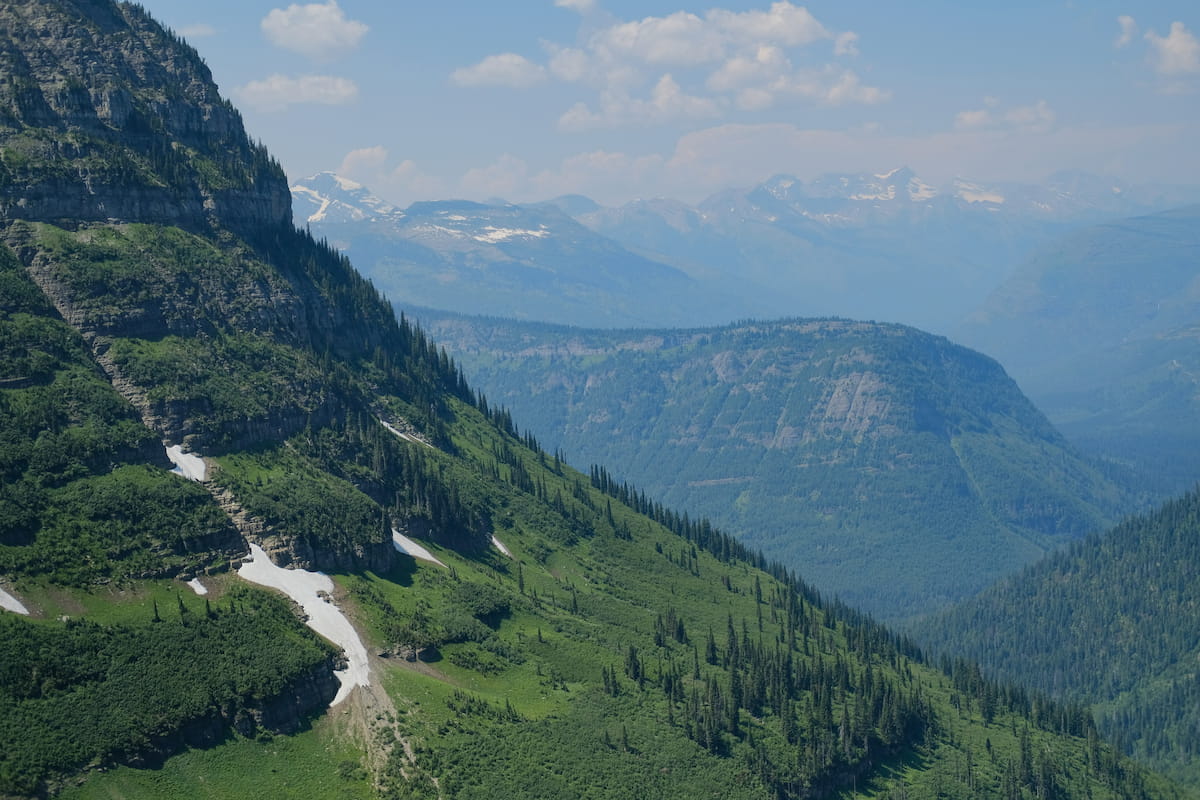
Standing at Logan Pass at 6,646 feet, with mountain goats grazing ten feet from the boardwalk and the Going-to-the-Sun Road threading the ridgeline below, I finally understood why rangers have called Glacier “the Crown of the Continent” for a century. Then I checked my watch: it was 7 a.m. and we were already the fifth car in the lot.
Glacier National Park rewards the prepared traveler and humbles the spontaneous one. The park’s 700 miles of trails range from accessible boardwalks to demanding backcountry routes that require permits and bear spray, but the single biggest cost mistake most visitors make has nothing to do with footwear or gear — it’s showing up without a Going-to-the-Sun Road vehicle reservation in peak season and driving three hours from Billings only to turn around at the gate. Plan the logistics, aim for September over August, and Glacier delivers one of the most spectacular experiences in North American travel for $35 in park entry and a rental car.
What’s In This Guide
Best Time to Visit Glacier National Park
September is Glacier’s best-kept secret. Crowds evaporate after Labor Day weekend, the Going-to-the-Sun Road remains fully open through late September, larch trees in the backcountry turn golden, and lodging rates drop noticeably. June runs a close second — waterfalls are thundering, wildflowers are building toward peak, and you can beat the reservation crunch if you plan the GTSR vehicle permit a month ahead.
Where to Stay Near Glacier
Lodging near Glacier divides cleanly into three zones: inside the park (expensive, atmospheric, books out months ahead), the West Glacier corridor (convenient, mid-range), and the Flathead Valley towns of Whitefish and Kalispell (widest selection, 30–45 minutes from the West Entrance). For July and August, anywhere bookable is a good pick — the park fills completely. For September visitors, zone flexibility opens up real savings. All rates verified April 2026 for summer dates.
Sitting directly at the park’s West Entrance, West Glacier Motel & Cabins eliminates the morning commute entirely — a real advantage when you’re trying to reach Logan Pass before the vehicle reservation surge. Rooms are functional and clean rather than polished, with basic cabin options that work well for families or groups wanting a bit more space. The tradeoff is proximity to both the Burlington Northern rail line and highway noise; pack earplugs if you’re a light sleeper. You’re paying for location, and in peak season that location is genuinely worth the premium over a Kalispell chain.
Kalispell sits 30 minutes south of the West Entrance on US-2 — and that morning drive through the Flathead Valley, with mountains framing the horizon and deer in the roadside fields, is a genuinely pleasant start to a park day. Hampton delivers consistent quality: free hot breakfast that can meaningfully cut your daily food budget, a pool that earns its keep after a long day on the Highline Trail, and rates that track 30–40% below comparable park-adjacent properties in peak season. Predictable and reliable in the best sense.
Built in 1915, Many Glacier Hotel is one of the great wilderness lodges of the American West — a sprawling Swiss chalet-style building perched at the end of a dead-end road with Swiftcurrent Lake out front and the Grinnell and Salamander glaciers visible from the dining room. Staying here means hiking straight from the front door to some of the park’s most spectacular terrain, watching mountain goats from the balcony at dusk, and having a whiskey as the evening light turns the peaks amber. Rooms are historic rather than luxurious — expect charm and character over thread counts — but the setting renders every other consideration secondary.
Get the Glacier Itinerary That Saves Days of Planning
Trail-ready day-by-day breakdown, our Going-to-the-Sun Road reservation cheat sheet, and the September vs. August decision guide — free in your inbox.
15 Best Glacier National Park Experiences
Glacier’s headline experiences are mostly included in the $35/vehicle park entry pass — about $17.50 per adult for a full week of access to some of the most dramatic mountain terrain on the continent. The paid add-ons are genuine enhancements rather than necessities: the boat tour into the Many Glacier valley is legitimately world-class, and the helicopter flightseeing is the kind of thing you’ll still be talking about ten years from now. Free experiences below are included with park admission. Verify the $35 entry fee and any reservation requirements at nps.gov/glac before your visit.
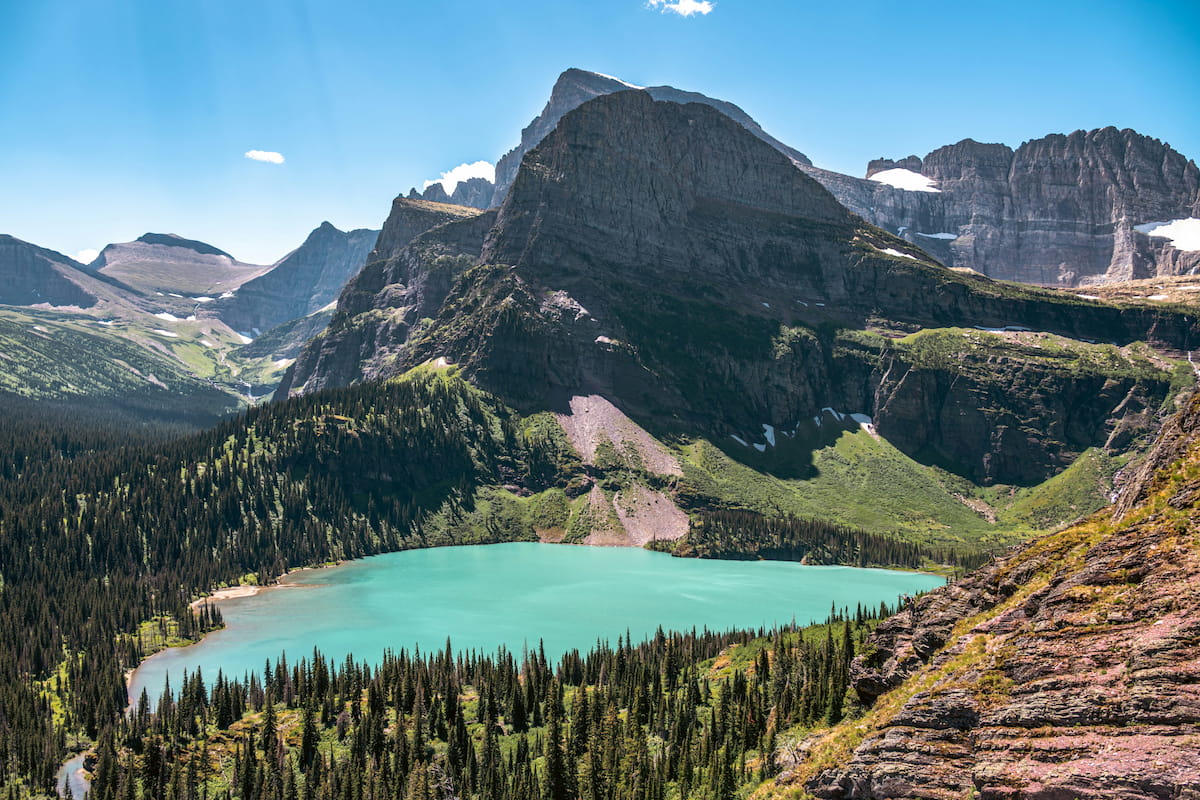
Starting at Logan Pass and traversing 7.6 miles along a knife-edge ridge with the Going-to-the-Sun Road thousands of feet below, the Highline Trail is regularly called one of the finest day hikes on the continent — and it costs nothing beyond the park pass. The trail clings to the Garden Wall, passing through alpine meadows loaded with wildflowers in July and shifting to golden larch country in September. Granite Park Chalet at the far end makes a compelling turnaround point, and the shuttle back to Logan Pass handles the return for visitors who’d prefer not to retrace their steps.
💡 Start no later than 8 a.m. to hit the exposed ridge sections before afternoon thunderstorms build. The trail gets a handhold cable near the start — don’t let it intimidate you; it’s there for psychological comfort on a section that’s entirely walkable.
At 6,646 feet, Logan Pass sits atop the Continental Divide and delivers the most concentrated wildlife-per-square-foot experience in the park. Mountain goats graze within arm’s reach of the boardwalk, bighorn sheep are routine, and the 1.5-mile hike to Hidden Lake Overlook rewards with a turquoise alpine lake backed by snowfields and rugged peaks. This is the most-visited spot in the park for a reason — arrive before 8 a.m. to have the boardwalk to yourself and find parking at the Pass lot rather than queuing.
💡 The vehicle reservation window for Logan Pass covers 6 a.m. to 3 p.m. — arriving before 6 a.m. or after 3 p.m. sidesteps the reservation requirement. The early-morning light is better anyway.
The Trail of the Cedars is a half-mile accessible boardwalk loop through old-growth western red cedars on the wet west side of the park — a genuinely different ecosystem from the alpine terrain most Glacier visitors expect. Continuing another two miles uphill leads to Avalanche Lake, a glacier-carved cirque lake fed by waterfalls cascading off the cliffs above. The combination is one of the park’s most accessible big-reward hikes: 5.8 miles round-trip with 730 feet of elevation gain, suitable for most fitness levels.
💡 Avalanche Lake trailhead fills completely by 9 a.m. in July and August. Use the shuttle system from Apgar or St. Mary rather than driving — it runs frequently and removes the parking anxiety entirely.
The southeast corner of the park, Two Medicine Valley draws a fraction of the Going-to-the-Sun Road crowd despite matching it scenically. A serene two-lake system backed by dramatic peaks, Running Eagle Falls (a dual waterfall that flows from two levels simultaneously), and trails ranging from flat lakeside walks to challenging backcountry routes make it the park’s best quiet alternative. The Blackfeet Nation considers this landscape sacred — Sun Tours operates cultural interpretation programs in the area that add significant context to any visit.
💡 Two Medicine is roughly 35 miles from West Glacier by road — plan it as a standalone half-day rather than trying to combine it with Logan Pass on the same day.
The most photographed view in Glacier — a tiny island in a deep blue lake with the Lewis Range soaring behind it — sits along the Going-to-the-Sun Road on the east side of the Continental Divide. St. Mary Lake stretches for 10 miles through an arid, wind-scoured landscape that feels dramatically different from the lush west side of the park. Sunrift Gorge, a narrow slot canyon accessible via a short walk from the road, and St. Mary Falls round out an east-side half-day that almost nobody doing a single-day GTSR drive does properly.
💡 Wind off St. Mary Lake can be fierce even on warm summer days — bring a windproof layer regardless of the forecast. The lake generates its own weather.
Operating from Lake McDonald on the west side and several lakes in the Many Glacier and Two Medicine areas, the Glacier Boat Company runs narrated cruises that push deep into valleys that would otherwise require full-day hikes to access. The Many Glacier boat tour is the standout — a 45-minute cruise on Swiftcurrent Lake and Lake Josephine that deposits hikers at a dock where the Grinnell Glacier Trail begins, effectively cutting the round-trip approach distance in half. Prices vary by route; verify current fares directly at glaciernationalparklodges.com before your trip.
💡 Book boat tours well ahead for July and August — popular departure times fill up within days of the season opening. The morning-to-Grinnell-Glacier boat combination is the most sought-after pairing in the park.
The only concessionaire permitted to operate horseback rides inside Glacier National Park, Swan Mountain Outfitters runs trips ranging from one-hour introductory rides to full-day backcountry excursions departing from corrals near Apgar, Lake McDonald Lodge, and Many Glacier. The two-hour option hits a sweet spot between cost and experience — long enough to reach terrain inaccessible by the main trails, short enough to fit into a full park day. Prices verified at swanmountainoutfitters.com; advance reservations strongly recommended for any summer date.
💡 The Many Glacier departures cover the most dramatic terrain. If you’re choosing between corrals, the extra drive to Many Glacier is worth it for the backdrop alone.
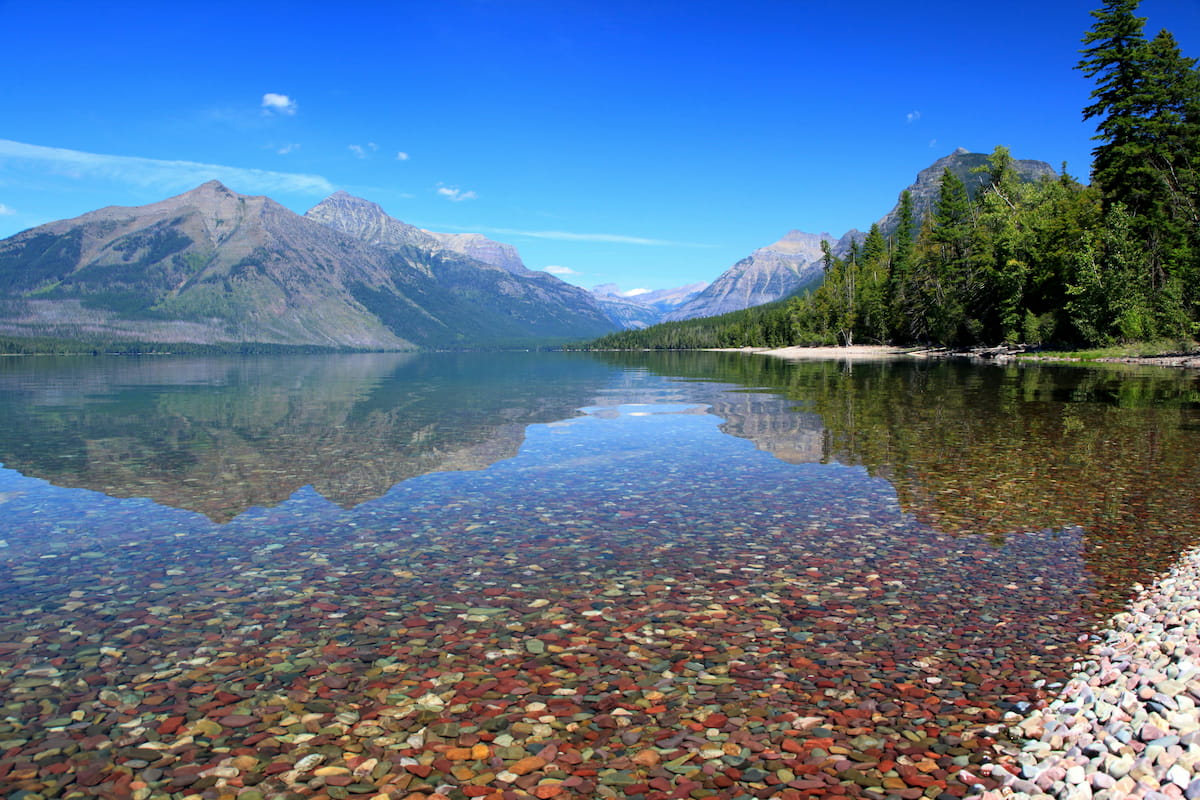
Lake McDonald’s famously multicolored rocks — visible through crystal-clear water to depths of 20 feet — make a kayak or paddleboard one of the most visually rewarding few hours you can spend in the park. The lake stretches 10 miles into the mountains and sits at 3,150 feet elevation, which keeps water temperatures brisk even in August. Rentals operate from the Lake McDonald Lodge dock; exact current pricing is available through Glacier National Park Lodges. No paddling experience required for the sheltered near-shore area.
💡 Morning is the calmest window — afternoon winds channeling down from the mountains can make paddling back to the dock a genuine workout. Aim for 9–11 a.m.
Running along the park’s southern boundary, the Middle Fork of the Flathead River offers Class III whitewater with the park’s peaks as a backdrop — a strong option for visitors wanting one high-adrenaline day mixed into a hiking-heavy trip. Several outfitters operate out of West Glacier, with half-day floats being the most popular format. The river’s wild and scenic designation keeps the surrounding landscape pristine; wildlife sightings from the water, including bears and osprey, are not unusual. Verify current pricing with outfitters directly as rates vary by operator and season.
💡 Early June offers the highest water and fastest rapids; late summer brings calmer flows better suited to families with younger children. Match the trip to your group’s appetite for intensity.
The Blackfeet Nation has called this landscape home for thousands of years, and Sun Tours — operated by Blackfeet tribal members — offers the most contextually rich GTSR experience available. A full day along the Going-to-the-Sun Road with a Blackfeet guide transforms the drive from a scenic ride into a layered story about land, seasons, ceremony, and the relationship between the Blackfeet people and what they’ve always called the Backbone of the World. The $60 rate represents exceptional value for a guided full-day experience. Book at glaciersuntours.com; tours run June through September.
💡 Sun Tours handles the vehicle reservation logistics — if you’re planning a GTSR day and the $2 reservation feels uncertain, booking a Sun Tour eliminates the guesswork entirely.
Before the GTSR opens to vehicles in mid-June each year, there’s a brief window in May and early June when cyclists can ride the freshly plowed road completely car-free — one of the most coveted cycling experiences in the country. Even after vehicle traffic resumes, riding any portion of the Going-to-the-Sun Road offers a physical relationship with the landscape that a car window can’t replicate. Bike rentals are available in Whitefish (Glacier Cyclery) and at select park properties. Cycling is restricted on the GTSR during peak vehicle reservation hours; verify current cycling regulations at nps.gov/glac before planning your ride.
💡 The car-free cycling window in late May — when the road is plowed but not yet open to vehicles — books up extremely fast. If this is a priority, plan the entire trip around that specific window rather than trying to fit it in.
Spending a night in Glacier’s backcountry — where grizzly bear encounters are a genuine planning consideration and the sky above your tent shows more stars than you thought existed — is qualitatively different from any day hike. The Grinnell Glacier area draws the most backcountry interest; permits for popular sites like the Granite Park Chalet area typically require reservation through recreation.gov months in advance. The $7/night permit fee is arguably the best value in the park. Backcountry experience, bear canister, and bear spray are mandatory, not optional.
💡 Permit reservations for peak backcountry sites open on recreation.gov in mid-March for the full season. Set a reminder and be at your computer at release time — the most sought-after sites go within minutes.
Glacier National Park encompasses over 1,000 square miles of terrain — far more than any hiker can cover on foot. A helicopter flightseeing tour reframes the entire landscape in a way that’s viscerally different from a ground-level experience: the scale of the mountain ranges, the recession lines carved into the rock where glaciers once extended, and the interconnected system of lakes and valleys all snap into perspective from altitude. Several operators run flights out of the Kalispell/Glacier Park International area; tours typically run 30–60 minutes. Verify current operators and pricing directly, as this market changes seasonally.
💡 Morning flights offer the clearest air — afternoon haze and thermal turbulence increase as the day warms. Book the earliest available slot if visibility matters to you.
For visitors who want to access Glacier’s remotest terrain — the Belly River drainage, the Nyack wilderness area, or multi-day traverses between the park’s far corners — a licensed guide service provides both the expertise and the permit logistics that make the difference between a stressful experience and a transformative one. Knowledgeable guides handle navigation, bear protocol, water filtration, and emergency preparation while covering terrain that most visitors never reach. Several permitted guide services operate in the park; verify current operators and rates at nps.gov/glac under commercial services.
💡 Multi-day guided trips into the Belly River area in September offer the rarest Glacier experience: golden larches, active grizzlies preparing for hibernation, and the full backcountry in peak fall condition with almost no other parties around.
Built in 1913 by the Great Northern Railway and rebuilt following a 2017 fire, Sperry Chalet is a backcountry lodge accessible only by a 6.7-mile hike or horseback ride from Lake McDonald — earning it the title of the most deliberately remote accommodation in the American park system. The price includes dinner, breakfast, and a bunk in the historic stone building at 6,500 feet, with views of Sperry Glacier and the surrounding wilderness that no road-accessible property can match. Availability is extremely limited; bookings open on glaciernationalparklodges.com in January for the full summer season.
💡 The Sperry Glacier Trail begins directly from the chalet — staying overnight is the only practical way to reach the glacier and return before afternoon storm activity. It converts a logistically challenging day-hike into a comfortable two-day experience.
Worth It / Skip It
Don’t Make These Mistakes
Arriving in peak season without a Going-to-the-Sun Road vehicle reservation. From mid-June through Labor Day, the reservation window runs 6 a.m. to 3 p.m. daily and requires advance booking through recreation.gov. The $2 fee is not the issue — selling out is. Visitors who skip this step and drive hours to reach the park can be turned away at the Logan Pass corridor entirely. Reservations typically open in April; book yours the day they become available.
Underestimating driving distances inside the park. Glacier covers over 1,000 square miles, and the road system is intentionally limited. West Glacier to the Many Glacier Hotel is more than 2 hours by road — you cannot do both in a morning. Visitors routinely plan two major park destinations back-to-back without accounting for the drive between them and end up missing one entirely. Map your specific trailheads before you arrive and plan one primary zone per day.
Bringing trail runners or casual sneakers on technical trails. Glacier’s most spectacular hikes — the Highline Trail, Grinnell Glacier Trail, Sperry Trail — involve sustained rocky, sometimes wet terrain where ankle support matters. Trail runners feel fine at the start and become a liability on the descent of a long day. Waterproof hiking boots are worth the weight for any hike exceeding 5 miles in this park, and especially for anything involving sustained elevation gain.
Hiking in Glacier without bear spray — not just carrying it, but knowing how to use it. Glacier has one of the highest grizzly bear densities in the lower 48 states. Bear spray is more effective than a firearm in a surprise encounter at close range, and it is non-negotiable on any trail longer than a mile. Rent or purchase it before entering the park (Kalispell Costco or any Whitefish outfitter), attach it to your hip so it’s accessible in under three seconds, and take five minutes to read the deployment instructions before hitting the trailhead.
VacayValue Scorecard — Glacier National Park
Packing List — Glacier National Park
Before You Book, Grab Our National Parks Cost Guide
Side-by-side trip breakdowns for Glacier, Zion, Yosemite, Grand Canyon, and Banff — so you can compare what each park actually costs before committing to flights and lodging.
A Million Acres of Crown Jewel Wilderness — and September Is Your Secret Weapon
Glacier National Park sits in a category occupied by very few places on earth: a destination that genuinely delivers on every piece of its reputation. The Going-to-the-Sun Road is as dramatic as advertised. The wildlife is close, abundant, and startlingly nonchalant about human presence. The hiking is world-class from the moment you step out of the car. And the entry fee — $35 for a week of unlimited access to all of it — remains one of the great bargains in North American travel.
The costs that add up are predictable: lodging near or inside the park commands a premium, rental cars are non-optional, and the food situation improves dramatically when you plan your own provisions rather than relying on park concessions. Flights into Glacier Park International (FCA) run slightly higher than major-hub destinations — building in a day in Kalispell or Whitefish on each end helps with both cost and acclimatization. The activities that carry a real price tag — the boat tours, the helicopter, the Sperry Chalet overnight — are priced for an experience you genuinely can’t replicate by just hiking harder.
The single factor separating a transcendent Glacier trip from a frustrating one isn’t budget — it’s preparation. Reserve the GTSR permit. Book the lodge or the Kalispell hotel well ahead of summer. Pack the bear spray. Show up at Logan Pass before the parking lot fills. Do those four things and the park will do the rest.