
Istanbul 2026: Three Empires, Two Continents, One City
A city of 15 million that somehow feels intimate. World-class food for $3. Hotels steps from Hagia Sophia from $45. Just know what you’re getting into with the attraction fees before you land.
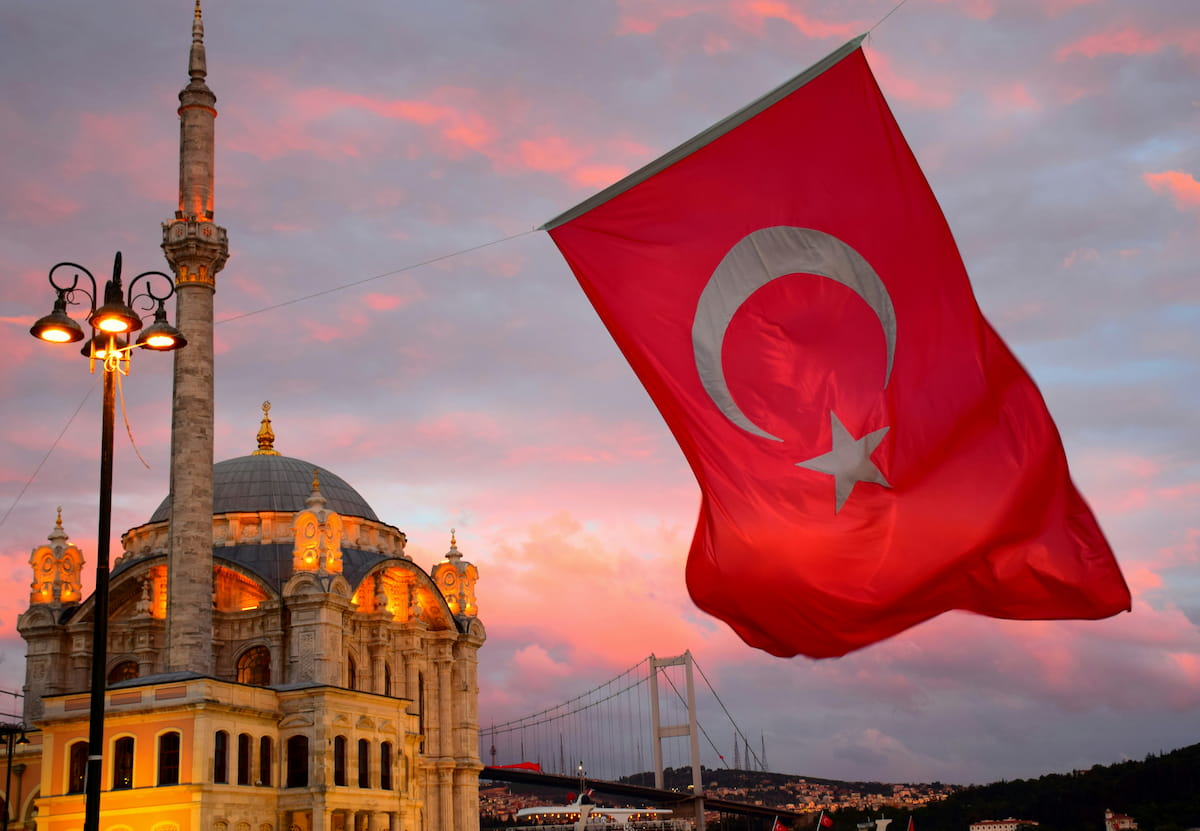
You take the tram across Galata Bridge and suddenly you’re between two worlds — Europe behind you, Asia ahead, the Bosphorus below, the Blue Mosque’s minarets rising above the roofline, and a fisherman at your elbow dangling a line into the strait. Istanbul is the only city in the world that sits on two continents, and it feels like it.
Istanbul is historically, culturally, and gastronomically one of the most extraordinary cities on the planet. And for most of the trip, it’s remarkably affordable — a simit from a street cart for $0.50, a proper lokanta lunch for $4, a boutique hotel in Sultanahmet steps from Hagia Sophia for $85/night. The honest caveat: Turkey moved its major attractions to euro-denominated pricing in 2024, and the top monuments are now genuinely expensive — Topkapi Palace runs $55 (€50) and Hagia Sophia is $27. We’ll break down exactly where your money goes and where you can save it.
What’s In This Guide
📅 Best Time to Visit Istanbul
Best months: May and September–October. May offers perfect temperatures before summer crowds peak. September and October deliver ideal weather, lower prices, and dramatically thinner queues at major sites — Hagia Sophia in October versus July is a completely different experience. Avoid late July and August if crowds and heat concern you; peak season queues at Topkapi and Hagia Sophia can easily consume an hour before you’re even inside.
Where to Stay in Istanbul
Sultanahmet is where first-time visitors belong — you’re walking distance from Hagia Sophia, Topkapi, the Blue Mosque, the Basilica Cistern, and the Grand Bazaar. The neighborhood is dense with history and the hotels here range from genuine budget gems to splurge-worthy boutique properties. Beyoğlu and Galata are worth considering for repeat visitors who want a hipper, more local-feeling base with easy tram access to the historic peninsula. Turkish VAT (KDV) is typically included in advertised hotel rates. All prices verified March 2026.
Exactly 230 feet from Sultanahmet tram station and steps from Hagia Sophia, the Grand Bazaar, and the Basilica Cistern. Rooms are clean and functional — this is not a luxury stay, but the location is flawless for first-time Istanbul visitors who want to spend their days walking to every major monument. The rooftop terrace delivers views that properties charging three times as much would advertise heavily. One of the most consistent budget picks in the city for years running.
Rated 9.9/10 for location by over 1,200 guests — which is genuinely difficult to achieve in a city this competitive for lodging. The open-air dining terrace overlooks all four minarets of Hagia Sophia and frames the Blue Mosque on the left and the Bosphorus behind it. The buffet breakfast served on that terrace is one of the better starts to a day you’ll have in Istanbul. Rooms are neatly appointed with satellite TV and private bathrooms; the property skews to couples who want the historic peninsula experience without hostel-level compromises.
A 19th-century Ottoman imperial palace on the European shore of the Bosphorus — the kind of property where the building itself is the attraction. The outdoor pool sits directly on the water, with the Asian shore across the strait and the Fatih Sultan Mehmet Bridge in the background. Rooms in the modern tower wing run $180–$250; palace suites climb sharply from there. The Bosphorus-facing breakfast room may be the finest morning meal in Istanbul — a full Turkish spread with a view that’s genuinely unforgettable. Worth every lira if the trip calls for a splurge.
Get Our Free Istanbul Trip Planner
Day-by-day itineraries, honest price breakdowns, and the local tips that travel guides skip. Straight to your inbox — free.
15 Best Istanbul Experiences
Istanbul’s free experiences are genuinely extraordinary — wandering the Grand Bazaar costs nothing, the Blue Mosque is free outside prayer times, and Süleymaniye Mosque, one of the most magnificent Ottoman buildings in existence, charges no admission at all. The paid tier is where the math gets more honest: Turkey’s 2024 move to euro-denominated attraction pricing means the major monuments are now expensive relative to the rest of the trip. Hagia Sophia is $27. Topkapi is $55. The Basilica Cistern is $27. Budget accordingly. The signature tier is where Istanbul truly earns its bucket-list status.
One of the world’s oldest and largest covered markets — 61 streets, more than 4,000 shops, and 500 years of continuous trading history. The scale is disorienting in the best possible way. Spice merchants, carpet dealers, jewelers, leather workers, ceramic artists, and tea vendors are all packed into an enormous vaulted labyrinth in the Fatih district. You don’t need to buy anything; the experience of wandering through it is its own reward. Many visitors spend a full morning here and leave without spending a dirham.
💡 Enter through Beyazıt Gate and let yourself get lost. Keep your bags in front of you in busy sections. If you’re shopping seriously, return on a weekday morning — the hustle is lower and vendors are more willing to negotiate.
The only mosque in Turkey with six minarets — a design that caused controversy when it was built in 1616 because it matched the number at the Grand Mosque in Mecca. Inside, more than 20,000 hand-painted Iznik tiles cover the walls in cascading blues and greens, while 260 windows bring natural light through the dome. It remains an active mosque, so tourist entry is restricted to non-prayer times. Dress modestly and bring a scarf for covering your hair. The experience is completely free and genuinely among Istanbul’s highlights.
💡 Visit between prayer times (check the schedule posted outside). The quietest visits are in the early morning or late afternoon between the Asr and Maghrib prayers. Scarves and wraps are available to borrow at the entrance.
Sinan’s masterwork. Built between 1550 and 1557 for Suleiman the Magnificent by the greatest Ottoman architect who ever lived — the same Mimar Sinan who, by the numbers alone, designed or supervised more than 300 structures across the empire. The mosque sits on one of Istanbul’s seven hills with views across the Golden Horn that are genuinely breathtaking. It gets significantly fewer tourists than the Blue Mosque despite being architecturally superior in many ways. The tombs of Suleiman and his wife Hürrem Sultan are in the garden.
💡 Walk the full perimeter of the complex and find the eastern terrace overlooking the Golden Horn — one of the best free views in Istanbul, and consistently overlooked by guidebooks focused on Sultanahmet.
Smaller and more sensory than the Grand Bazaar — the scent alone is worth the detour. Built in 1664, the L-shaped covered market near the Golden Horn waterfront trades in saffron, sumac, dried fruit, nuts, Turkish delight, lokum, and spices in quantities that make Western supermarkets look austere. The stalls outside the main building are where locals actually shop, at prices roughly half those inside. A great place to pick up edible souvenirs — saffron, pistachios, pomegranate molasses — at fair prices if you shop the exterior stalls.
💡 The stalls along the outside perimeter sell the same products for significantly less than the interior vendors. For saffron especially, inspect quality and compare a few stalls before buying — a small amount goes a long way.
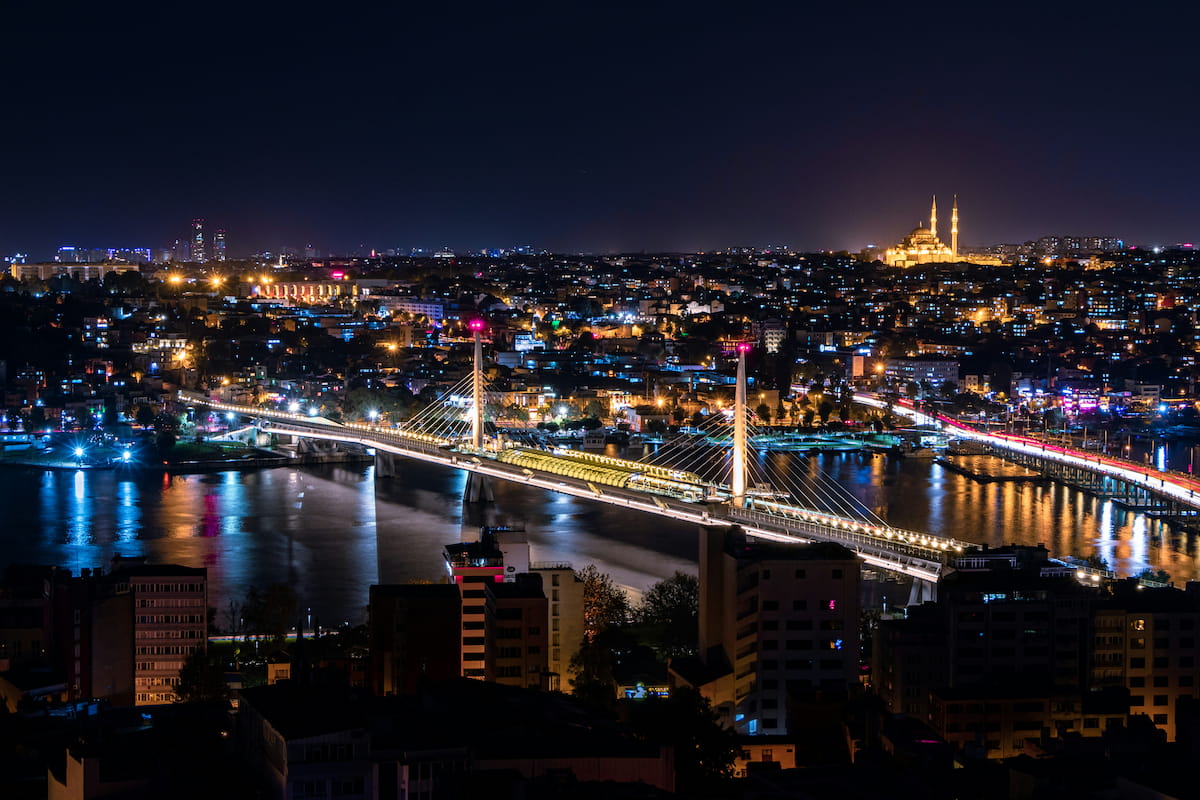
The bridge connecting the old city and Beyoğlu over the Golden Horn is perpetually lined with fishermen at every hour of the day, dangling lines into the water below while ferries churn past underneath. Walking it at dusk with the minarets illuminated and the call to prayer rolling across the water is one of Istanbul’s defining experiences. The lower level of the bridge has a row of fish restaurants that are tourist-priced but atmospheric; the fishermen above sell fresh grilled balık ekmek (fish sandwich) from boats at the Eminönü dock for about $3.
💡 Walk the bridge at both dawn and dusk if you can — the light and atmosphere are completely different at each end of the day. The golden-hour views from the bridge toward Sultanahmet at sunset are extraordinary.
Istanbul’s most famous pedestrian street — 1.4km of bookshops, record stores, historic churches, Turkish coffee houses, street musicians, and a restored 1914 tram that still runs its original route. Beyoğlu is the cosmopolitan, creative Istanbul that sits alongside the ancient one: independent galleries, rooftop bars, Galata Tower, and the fish restaurants of Karaköy below. The neighborhood is completely free to explore and offers a different side of the city from the historic peninsula — more contemporary, more local, equally compelling.
💡 The Galata Tower entry ($33) is optional — the views are excellent but the tower itself is small and crowds inside are dense. A free alternative: walk to the terrace outside Galata Mevlevi Museum a few minutes south for comparable views without the queue.
Nearly 1,500 years old, Hagia Sophia has been a cathedral, a mosque, a museum, and now a mosque again — each transition layered visibly on top of the last. The 31-meter central dome is held up by engineering so advanced it wasn’t fully understood until the 20th century. Byzantine mosaics and Ottoman calligraphy exist in the same space, and the effect is unlike anything else in architecture. Foreign tourists enter via a dedicated entrance and pay $27 for the upper gallery. It is open daily 9am–7:30pm with brief closures during prayer times. Arrive at opening to avoid the worst queues.
💡 Book your skip-the-line entry online before arriving — peak-season queues without a pre-booked ticket can run 45–60 minutes just to enter. The premium is small and the time saving is significant. Dress code is strictly enforced: shoulders and knees covered, head covering for women.
The nerve center of the Ottoman Empire for 400 years — 31 sultans ruled from this sprawling complex on the tip of the historical peninsula. The combined ticket ($55) covers the main palace, the Harem (400 rooms of political intrigue, genuine opulence, and fascinating history), and Hagia Irene church. The Treasury alone, housing the Topkapi Dagger and Spoonmaker’s Diamond, is worth the admission. Budget three to four hours minimum; the complex is enormous and the collections dense. Closed Tuesdays. Yes, $55 is expensive by any standard — but this is genuinely one of the great museum experiences in the world.
💡 Go straight to the Harem when you enter — queue times there build quickly and it’s the most time-sensitive section. The ticket office closes one hour before the palace, so don’t arrive late expecting a leisurely entry.
An underground Byzantine water reservoir built in 532 AD, supported by 336 columns — many of them repurposed from older Roman structures. The two Medusa head column bases (one upside-down, one sideways) are the famous focal point, but the entire space is atmospheric: dim lighting, the sound of dripping water, and reflections across the flooded floor. It takes about 45 minutes to walk through properly. The daytime entry is $27; evening entry is priced higher (~$40) and offers a quieter, more atmospheric experience. Book online to skip the ticket queue.
💡 The evening visit is genuinely worth the premium if you’ve already done Hagia Sophia and Topkapi in the daytime — the reduced crowds and mood lighting make the Medusa heads far more impactful than they are in the midday rush.
The Ottoman hammam tradition has been going continuously since the 15th century. The classic circuit — steam room, full-body exfoliation with a kese mitt and black soap, then a rinse — takes about an hour and leaves your skin genuinely different. The historic baths near Sultanahmet (Çemberlitaş Hamamı, built in 1584 by Sinan, is the most famous) are tourist-oriented but legitimately beautiful in their own right. Neighborhood hammams used by locals are cheaper and more authentic; your hotel can point you toward a reliable one nearby.
💡 Çemberlitaş Hamamı is the classic choice — the 16th-century architecture is part of the experience. Book online to avoid walk-in wait times, especially on weekends. Bring flip-flops and expect a strong scrub; the kese treatment is not gentle.
The palace that replaced Topkapi as the Ottoman court’s residence in 1856, and the building where Atatürk died in 1938 — his clocks throughout the palace are all stopped at 9:05am, the moment of his death. The scale is almost absurd: the world’s largest Bohemian crystal chandelier (4.5 tons), gold-plated ceilings, 285 rooms, and 43 halls along 600 meters of Bosphorus waterfront. It’s a very different architectural story from Topkapi — more European Baroque than Ottoman — and genuinely spectacular in its own right. Guided tour entry only (included in price, roughly 90 minutes).
💡 Combine with a waterfront walk along the Beşiktaş shore after your tour — the exterior view of the palace from the Bosphorus is arguably more impressive than the interior. A short ferry ride from Eminönü makes the approach properly cinematic.
The cheapest remarkable thing you can do in Istanbul: ride the public Istanbulkart ferry from Eminönü or Karaköy to Kadıköy or Üsküdar on the Asian side for about 50 cents. The 20-minute crossing gives you Istanbul’s skyline from the water — Topkapi, Hagia Sophia, the Blue Mosque, the Galata Tower — framed against the strait. Kadıköy itself is a lively, largely tourist-free neighborhood with excellent food markets, a fish market, cafes, and some of the most affordable authentic eating in the city. A half-day here before returning to the European side is well worth it.
💡 You literally step from Europe onto Asia. Take a moment with that. Kadıköy’s Moda neighborhood is particularly pleasant for a slow afternoon coffee — find the Moda coastal promenade and walk it south toward the old ferry dock for waterfront views without tourist crowds.
As the sun sets behind the European shore, the minarets illuminate, the Bosphorus bridges light up, and the city’s silhouette becomes one of travel’s most famous images. A dinner cruise in these conditions — Turkish meze, live music, the strait passing underneath — is genuinely memorable. Quality varies significantly between operators; the better dinner cruises include a multi-course Turkish meal, a traditional music and folk dance performance, and a two-hour circuit past the Dolmabahçe and Beylerbeyi palaces. Budget cruises exist from $50; the experience improves considerably at $75–$90 per person.
💡 Book through your hotel or a vetted agency rather than the waterfront hawkers at Eminönü, who tend to oversell and underdeliver. Read recent reviews carefully — the gap between a good and a poor Bosphorus cruise experience is significant.
The Mevlevi Sema ceremony — the ritual whirling meditation practice of Sufi dervishes — is one of the most hypnotic and genuinely moving things you can witness in Istanbul. The white-robed practitioners spin continuously for extended periods in a state of moving prayer, accompanied by ney flute and traditional Ottoman music. Performances are held regularly at Hodjapasha Cultural Center in Sirkeci and at the Galata Mevlevi Museum, the latter being the more authentic setting in a 15th-century tekke (Sufi lodge). A truly memorable cultural experience that has no equivalent anywhere else.
💡 Book in advance — both venues sell out regularly, especially the Galata Mevlevi Museum performances which are limited to the building’s capacity. Arrive a few minutes early to understand the ritual’s context before it begins.
Turkish cuisine is among the world’s finest — and learning it properly requires understanding the layers: Ottoman court cooking, Anatolian village tradition, the Black Sea, the Aegean, the southeast. A good Istanbul cooking class typically starts with a Spice Bazaar walk to source ingredients, then moves to hands-on preparation of meze, a main, and something sweet. Many classes include a full lunch of whatever you’ve made, a Turkish tea ceremony, and genuine insight into food traditions. Alternatively, a guided food tour through Karaköy, Balık Pazarı, and Eminönü covers a different kind of depth — tasting rather than cooking, with local context built in.
💡 Look for classes with fewer than 8 participants for real hands-on time. The Karaköy and Kadıköy food market tours are particularly good for understanding the gap between tourist-facing Istanbul and how the city actually eats.
Worth It / Skip It
Don’t Make These Mistakes
Arriving without pre-booked tickets for Hagia Sophia and Topkapi Palace. In peak season (June–August), same-day ticket queues at both sites can run 45–60 minutes — before you even reach the entrance. Both sites sell skip-the-line entry online for a small surcharge that pays for itself immediately. For Topkapi, note that it’s closed every Tuesday. Plan your itinerary day-by-day to avoid arriving at a closed monument.
Not verifying taxi fare before getting in. Metered taxis are legitimate and common in Istanbul, but meter-running scams — driving a longer route, adding a multiplier, or claiming a late-night rate during the day — are real. Always confirm the meter is running, agree verbally on the destination, and use the Bitaksi or iTaksi apps to track your route and fare in real time. For airport transfers especially, agree on a price or use the official airport taxi queue.
Budgeting for Istanbul attractions as if they were still lira-priced. Turkey moved major tourist sites to euro-denominated pricing in March 2024. Two people doing Hagia Sophia ($27 each), Topkapi ($55 each), and the Basilica Cistern ($27 each) will spend about $220 total — just on those three sites. It’s still worth it, but travelers who arrive expecting $5 admission prices based on old blog posts will be genuinely surprised. Budget accordingly.
Skipping the Asian side. Most first-time visitors spend their entire trip on the European side and leave without ever crossing the Bosphorus. The 20-minute public ferry to Kadıköy for $0.50 each way delivers a completely different Istanbul — local neighborhoods, excellent food markets, a fish market, waterfront promenades, and a city that hasn’t been organized around tourists. Even a single afternoon there meaningfully enriches an Istanbul trip.
VacayValue Scorecard — Istanbul
Packing List — Istanbul
The Best Finds, Before Everyone Else
New destination guides, honest price updates, and the value-travel finds we can’t stop talking about — weekly, free.
Istanbul Is One of the World’s Great Cities — With One Important Budget Caveat
When people say Istanbul is incredible value, they’re mostly right — but they’re usually talking about the food, the hotels, and the transit. A proper lokanta lunch for $4. A boutique hotel steps from Hagia Sophia for $85. A public ferry between two continents for fifty cents. On those dimensions, Istanbul genuinely delivers. Turkish cuisine is world-class and the everyday price is extraordinary.
The caveat is the monuments. Turkey’s 2024 shift to euro-denominated attraction pricing means the top three sites alone — Hagia Sophia ($27 each), Topkapi ($55 each), and the Basilica Cistern ($27 each) — will cost a couple roughly $220 combined. That’s not a dealbreaker, but it does mean Istanbul’s “budget destination” reputation needs an asterisk. Build the attraction budget into your math from the start, not after you’ve landed.
The experience quality at every tier remains exceptional. Hagia Sophia is extraordinary at any price. The Bosphorus at sunset from a ferry deck is free. The city’s scale — 15 million people, two continents, 2,500 years of continuous civilization — is entirely its own. Budget smart, and Istanbul will exceed every expectation you bring to it.