
Cancun 2026: The Caribbean’s Best Value Beach Destination
The most turquoise water in the Western Hemisphere. A World Wonder 2.5 hours away. Cenotes. Isla Mujeres. $1 tacos. Cancun’s reputation as a spring-break destination undersells what’s actually here — if you look beyond the Hotel Zone.
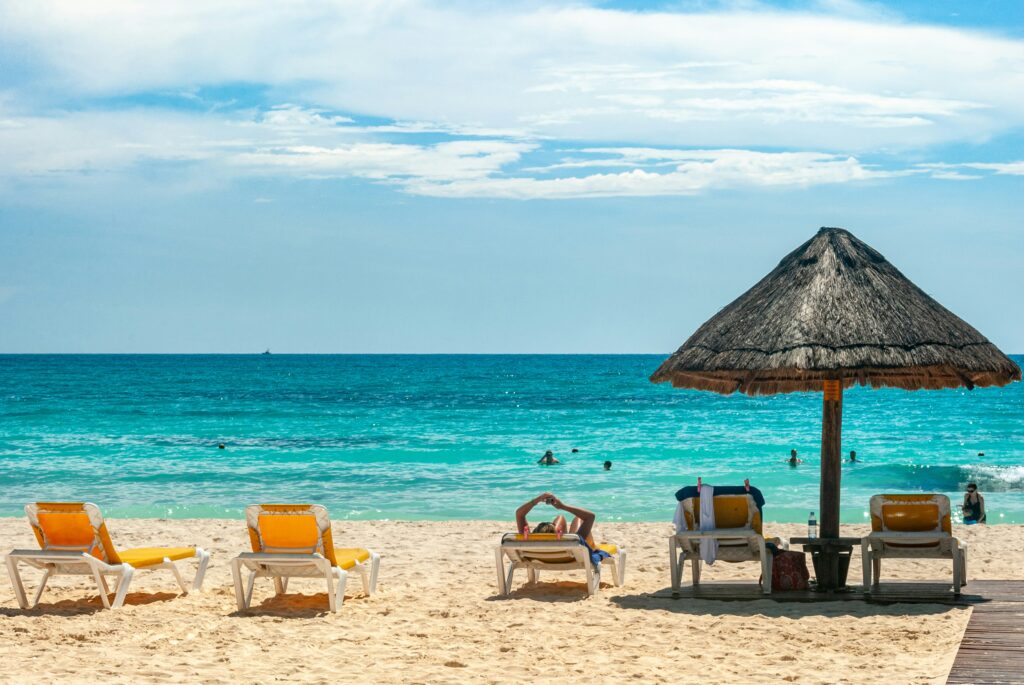
It’s 7am and you’re on the Ultramar ferry to Isla Mujeres — $12 each way, 20 minutes across the Caribbean — and the water on this crossing is so absurdly turquoise it looks like someone dyed it. The island ahead has $2 fish tacos at a shack on the north beach, a golf cart rental for $50 that will take you around the entire island twice, and sea turtles in a sanctuary at the southern tip. You’ll be back in Cancun by 5pm having spent $45 on one of the finest Caribbean day trips available at any price. This is why people keep coming back to Cancun. It’s not the Hotel Zone. It’s everything around it.
Cancun has two identities and they coexist within the same zip code. The Hotel Zone — a narrow sandbar strip lined with all-inclusive resorts, chain restaurants, and nightclubs — is expensive and represents a version of the Caribbean that could be anywhere. Downtown Cancun and everything beyond it — the ferries, the cenotes, the Mayan ruins, the real Mexican street food — represents something extraordinary at prices 30–60% below any comparable Caribbean destination. The water is the same Caribbean regardless of which side of that decision you make. This guide helps you make the right one.
What’s In This Guide
📅 Best Time to Visit Cancun
Sweet spot: February, April, May, and November deliver excellent beach weather with prices 20–40% below peak. Avoid March spring break unless you specifically want that energy, and avoid August–September — the savings don’t justify real hurricane risk unless your dates are entirely flexible.
Where to Stay — The Hotel Zone Decision
The Hotel Zone vs. Downtown debate is Cancun’s most consequential choice. The Hotel Zone puts you on the beach with direct Caribbean access — worth the premium if beach time is the entire point. Downtown (El Centro) saves 40–60% on accommodation and puts you in actual Mexico, 10 minutes from the same beaches by the $0.70 local bus. All rates verified March 2026 for shoulder season dates.
The most consistently recommended budget property in Cancun — a well-run hostel in Downtown El Centro with private rooms for $35–$45, a pool, and access to the best street food in the city from the doorstep. The $0.70 R1/R2 local bus to the Hotel Zone beach strip runs constantly and takes 10–15 minutes. Staying downtown means $3 tacos instead of $15 ones, local tequila bars instead of tourist clubs, and the version of Cancun that residents actually inhabit. The savings over a Hotel Zone room for a 5-night trip run $150–$300 — money that buys a Chichen Itza tour and two cenote days.
A well-located Hotel Zone property at the northern bend where the lagoon and Caribbean come closest together — beaches here are calmer than the windy southern stretch and upper floor rooms take in both the Caribbean and Nichupté Lagoon simultaneously. At $90–$150 in shoulder season it delivers the Hotel Zone beach experience without the all-inclusive premium. Multiple pools, direct Caribbean beach access, and a central location make it the most practical base for visitors whose itinerary centers on beachfront accommodation. The surrounding boulevard has grocery stores, pharmacies, and the best-value restaurants on the strip.
At the southern tip of the Hotel Zone where the strip quiets and the reef is closest to shore — Nizuc operates on 29 acres of private beachfront with nine pools, six restaurants, an ESPA spa, and access to the best snorkeling in the Hotel Zone directly from the beach. The property manages to feel genuinely removed from the tourist strip despite being technically within it. At $450–$900+, it is expensive by any measure and extraordinary by Caribbean standards — a comparable property in the Maldives or Bora Bora costs twice as much for a lesser experience.
Get the Budget Travel Cheat Sheet
Booking shortcuts, packing hacks, and money-saving moves our readers use on every trip — free when you subscribe.
15 Best Cancun Experiences
Cancun’s best experiences extend well beyond the Hotel Zone beach — into the Caribbean’s most beautiful small island, some of the world’s most extraordinary natural swimming holes, and one of the seven wonders of the modern world a half-day’s drive away. The beach is excellent. Everything surrounding it is what makes the destination.
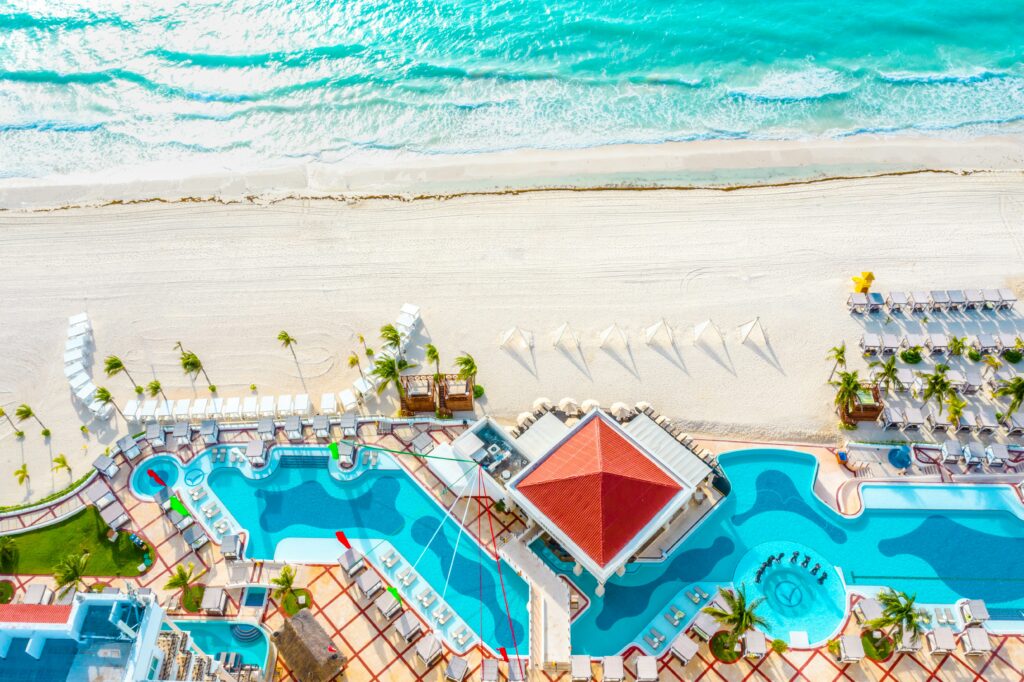
At the southern end of the Hotel Zone where the strip curves onto the open Caribbean, Playa Delfines is the widest, least crowded, and most photogenic public beach in Cancun — a sweeping arc of white sand with the famous Cancun sign and unobstructed turquoise water views without a resort fence in sight. It sits on the ocean-facing side of the Hotel Zone’s narrow sandbar, meaning the waves are bigger here than at lagoon-facing resort beaches — good for bodysurfing. Access is free and public. This is where Cancun locals go to the beach; most hotel guests don’t know it exists.
💡 The R1/R2 bus stops directly at Playa Delfines for $0.70 from anywhere in the Hotel Zone or Downtown. Arrive before 9am or after 3pm for the best light and fewest people. Beach vendors are present but not aggressive — fresh coconuts for $2 are the right purchase.
Mercado 28 in downtown El Centro is where the real Cancun happens — a covered market hall with dozens of Yucatecan food stalls serving cochinita pibil, poc chuc, sopa de lima, and marquesitas (crunchy crepes filled with cheese and Nutella, uniquely Yucatecan) at prices disconnected from the Hotel Zone. A full comida corrida lunch — soup, rice, main dish, tortillas — runs $6–$10. The surrounding streets have taco trucks serving suadero, pastor, and carnitas for $1–$2 each. The Parque Las Palapas food market, active from 6pm daily, is the best evening street food gathering in the city.
💡 The taco de suadero trucks near Parque Las Palapas in the evening are the specific must-eat in Cancun — three tacos and a Jarritos for $5–$6, better than anything on the Hotel Zone boulevard at any price. Order from the trucks with the longest line of locals.
The Hotel Zone sits on a narrow sandbar between the Caribbean Sea and the Laguna Nichupté — a 70-square-kilometer mangrove lagoon that turns extraordinary colors at sunset. The lagoon-facing side of the Hotel Zone has public viewing areas where the water reflects the sunset in shades the ocean side doesn’t produce. Crocodiles inhabit the lagoon (genuinely — 3–4 feet long, not a threat if you stay out of the water) and spotting one from the bridge at dusk is one of the stranger free experiences available in a major resort town. The Punta Cancún pier area offers views of both bodies of water simultaneously.
💡 Stand on the walkway between the two bodies of water at 6pm and you have the Caribbean on one side going orange and the lagoon on the other turning pink simultaneously. It’s a five-minute walk from the Hotel Zone’s main hotel cluster.
Isla Mujeres — a 5-mile-long island 7 miles off the Cancun coast — is the finest easy day trip from any Caribbean resort town. The ferry from Puerto Juárez takes 20 minutes and costs $12 each way. The island has the calmest, clearest water in the Cancun region, a pedestrian-only town center of painted shophouses, $2 fish tacos at beachside stands, a sea turtle sanctuary where guests can swim with rescued turtles, and golf cart rentals ($48–$60/day) that make circuiting the entire island a 2-hour loop. Budget $60–$80 all-in for one of the best Caribbean day trips at any price point.
💡 Take the 8am Ultramar ferry from Puerto Juárez (not the expensive catamaran tour boats from the Hotel Zone — the same ferry, much cheaper). Rent a golf cart immediately at the terminal before shops fill up. Head straight to Playa Norte before 10am, then circuit the island clockwise. Last ferry back by 5pm.
The Yucatan Peninsula sits on top of one of the world’s largest underground river systems — a network of flooded limestone caves surfacing as cenotes, natural swimming holes of extraordinary clarity. Cenote Dos Ojos near Tulum is a cave system with underwater visibility to 300 feet. Cenote Ik Kil near Chichen Itza is the most photogenic — a circular open cenote with vines cascading down the walls, a waterfall entering from above, 88 feet deep with vivid blue water. Entry at Dos Ojos runs $23; Ik Kil $18. Both are accessible on day tours or independently by ADO bus. Swimming in a cenote is one of the genuinely unmissable experiences of the Yucatan.
💡 Use reef-safe mineral sunscreen only — cenotes are part of the underground river system and chemical sunscreen causes direct ecological damage. Most cenotes check and require mineral sunscreen. Buy it before your trip, not at the entrance where a small bottle costs $15.
The Mesoamerican Barrier Reef — the second-largest coral reef system in the world — runs along the entire Yucatan Caribbean coast, making the waters off Cancun home to one of the most biodiverse marine ecosystems in the Western Hemisphere. Group catamaran snorkeling tours cover 2–3 sites in 4–5 hours, typically including the reef off Punta Nizuc, a site near Isla Mujeres, and an open bar. At $42–$90 per person all-inclusive, it represents strong value for the quality of the marine experience. Sea turtles, eagle rays, parrotfish, and nurse sharks are regular sightings. Visibility on good days extends to 60–80 feet.
💡 Book through downtown agencies or your hotel desk rather than Hotel Zone pier booths — same tour, $15–$20 cheaper. Morning departures (8am) have calmer water and better visibility than afternoon tours. Bring your own snorkel and mask if you have them — tour equipment is functional but basic.
Chichen Itza — a UNESCO World Heritage Site and one of the Seven Wonders of the Modern World — is 2.5 hours from Cancun and contains the most extraordinary pre-Columbian architecture in Mexico: the El Castillo pyramid, the Great Ball Court (the largest ancient ball court in the Americas), the Temple of Warriors, and the Sacred Cenote. The $40 foreign visitor entry fee is one of the best single-site admissions in the world. Day tours from Cancun include transport, a bilingual guide, a cenote swim stop, and lunch — all for $65–$90. One of the most complete day trip experiences available from any Caribbean resort.
💡 Arrive at the site by 8am when it opens — heat and crowds build rapidly and by noon it’s genuinely overwhelming. Wear light, breathable clothing and bring far more water than you think you need. Tour guides offering “upgrades” at the entrance are not official.
The Tulum archaeological zone is the only major Maya site perched on a cliff directly above the Caribbean — ancient walled city with turquoise sea below is one of the most striking juxtapositions in Mexican archaeology. Entry is $6 and the site combines readily with Tulum town’s beach clubs, cenotes, and food scene into a full day. The 2-hour ADO bus from Cancun costs $25 each way. The ruins take 90 minutes to explore; the combination of cliff-top temples, Caribbean views, and swimming at the small beach below the ruins makes it one of the best $56 days in the Caribbean.
💡 Arrive at the ruins by 8am before the tour buses. The small beach accessible from inside the archaeological zone is one of the best free swims in the Tulum area — bring snorkeling gear if you have it. Combine with a cenote visit on the return to Cancun.
The Hotel Zone nightlife strip around the Coco Bongo and Mandala clubs on Kukulcán Boulevard is one of the most energetic nightlife corridors in the Caribbean, and experiencing it once is a legitimate part of the Cancun experience. Coco Bongo ($25–$50 cover) is a Las Vegas-style entertainment venue with live acts and aerial performers. The Señor Frog’s formula ($30–$50 all-inclusive entry) delivers exactly what it promises. The $2 street tequilas from vendors along the boulevard as you walk between venues are better than the $15 cocktails inside — stock up accordingly.
💡 Pre-purchase club tickets online for 20–30% below door prices. Eat a full downtown Mexican dinner beforehand — food in these venues is expensive and incidental. The proper ending to a Hotel Zone night is a 2am taco from the street truck outside.
The Laguna Nichupté’s mangrove channels — navigable by kayak and flat-bottomed boat — contain one of the most intact mangrove ecosystems in the Caribbean. Half-day kayak tours departing from the Hotel Zone run $35–$60 and provide a completely different perspective on Cancun’s geography — paddling through 10-foot-high mangrove corridors while the resort towers are barely visible above the canopy. Birdwatching in early morning is excellent: roseate spoonbills, frigatebirds, and herons are common year-round. Crocodiles are occasionally sighted from the water.
💡 Book the 7am departure for the best wildlife activity and lowest temperatures. Look for “mangrove kayak” or “ecoturismo” in the marketing rather than “boat party” — the latter operators go to the open lagoon, not the mangrove channels.
At the southern tip of Isla Mujeres, Garrafón Natural Reef Park combines snorkeling over a live coral reef, kayaking, zip-line, hammocks over the water, and unlimited food and drinks into an all-day beach club experience. The reef at Garrafón is in better condition than most Hotel Zone snorkeling sites and park facilities are well-maintained. At $50–$85 per person all-inclusive, it’s more expensive than a straight Isla Mujeres day trip but competitive with a standalone catamaran snorkel tour for what it delivers. Best for visitors who want a full-day organized experience without planning each element separately.
💡 Book directly through the Garrafón website rather than Hotel Zone agencies — you’ll save $10–$20 and the ferry to Isla Mujeres is included in most packages. Bring your own reef-safe sunscreen — the onsite option is chemical-based.
Valladolid — a 16th-century Spanish colonial city 2 hours from Cancun on the road to Chichen Itza — is the most overlooked experience in the Yucatan for Cancun visitors. The town has a genuinely beautiful main plaza, a stunning convent church, and Cenote Zaci right in the center of town for swimming ($5 entry). Valladolid’s restaurants serve authentic Yucatecan food — cochinita pibil, longaniza, sopa de lima — at prices 60–70% below anything in Cancun. A full traditional lunch with drinks costs $8–$12/person. Most Chichen Itza tours include a 30-minute stop; it deserves an hour minimum.
💡 Cenote Zaci in the center of Valladolid is $5 to enter and surrounded by a small park. A swim in clear cenote water in the middle of a colonial city followed by $8 cochinita pibil tacos from the market stalls is one of the best low-cost experiences in the Yucatan.
Xcaret and Xel-Há are the Riviera Maya’s signature eco-parks — enormous natural water theme parks built around cenote rivers, underground caves, Caribbean inlets, and (at Xcaret) a spectacular 90-minute evening show covering 3,000 years of Mexican history through dance, music, and acrobatics. Xel-Há near Tulum is the more natural of the two — a protected inlet snorkeling experience with wild fish and sea turtles in a mangrove environment. Both are all-inclusive ($120–$180 including food, drinks, and activities) and both require a full day. Among the most memorable full-day experiences in the Yucatan.
💡 Book online 2–3 weeks ahead — Xcaret’s online rate is typically $20–$30 below the door price. The Xcaret Mexico Espectacular evening show is included in admission. Arrive at opening (8am) to complete the snorkeling and underground river sections before afternoon crowds build.
Isla Contoy — a protected national park island 30 miles north of Cancun accessible only by licensed operator — is one of the most pristine uninhabited Caribbean islands in Mexico: 5 miles of protected beach, a nesting colony of frigatebirds and brown boobies, and a snorkeling area with whale sharks during May–September. Private catamaran charters seat 6–10 people for $800–$1,200 total, including all snorkeling equipment, food, and drinks. At $120–$200 per person split across a group, it accesses an island that group tours also visit but at a pace that the group boat can’t match.
💡 The whale shark season (May–September) transforms an Isla Contoy charter into one of the most extraordinary wildlife experiences in the Caribbean — swimming alongside 20–30-foot whale sharks in open water. Book through a licensed operator at least 2 weeks ahead during shark season.
The Mesoamerican Barrier Reef directly off Cancun’s coast is one of the finest learn-to-dive environments on earth: warm water (80–84°F year-round), excellent visibility (60–80 feet on good days), and abundant marine life at accessible depths. The PADI Open Water certification takes 3 days, costs $300–$380 in Cancun, is recognized globally for life, and unlocks the reef in a completely different dimension from snorkeling. Dive shops including Cancun Scuba, So Divers, and Scuba Cancun run well-regarded PADI courses with small group sizes. The Great Maya Reef is the correct place to earn this certification.
💡 Complete the PADI eLearning online theory before arriving — it saves a half-day in the classroom and means your first day starts in the water. The eLearning cost is typically credited against the dive shop’s course fee. Your certification is valid at every dive site in the world for life.
Worth It / Skip It
Don’t Make These Mistakes
Visiting during spring break (March) without planning for it. The Hotel Zone in the last two weeks of March is a different destination — prices spike 50–80%, beaches are overwhelmingly crowded, and nightlife intensity is at maximum. If your dates include late March and the spring break atmosphere is not what you came for, shift to April — prices normalize immediately, beaches empty, and the weather is identical.
Not paying the Visitax before arrival. The Quintana Roo state tourist tax (~$18/person) is mandatory for all visitors and is easiest paid online at the official Visitax website before your flight. At the airport, “helpers” charge $25–$35 for the same $18 payment with a service fee built in. Pay it at visitax.gob.mx before you leave — the process takes 3 minutes, you receive a QR code, and you avoid any confusion or overcharge at the kiosk.
Using airport taxi “official” booths instead of authorized shuttles or apps. The taxi booths immediately outside Cancun arrivals charge fixed rates running $35–$60 to the Hotel Zone. The authorized ADO airport bus to the Hotel Zone costs $10. Uber works in Cancun (though availability near the airport varies). The ADO bus from the airport to downtown costs $7. The taxi booth exists because arriving travelers are disoriented and accept the first price offered — don’t be that traveler.
Visiting in August or September. Hurricane season in Cancun peaks August–September. This isn’t theoretical — the Yucatan receives direct hurricane hits in this period with real regularity. Tour operators cancel frequently, some weeks are genuinely unsafe for water activities, and travel insurance is mandatory. The savings (hotels run 40–50% below peak) do not justify the risk unless you have fully flexible dates and can leave on short notice. November is a far better choice for budget travel — dry season starting, low prices, low crowds.
VacayValue Scorecard — Cancun
Packing List — Cancun
Every Sunday: One Destination. One Honest Take.
Join travelers who plan smarter. One email per week — real costs, specific advice, no filler.
Cancun Is Two Destinations. The One Worth Visiting Is Mostly Outside the Hotel Zone.
The Hotel Zone delivers on its core promise: turquoise water, white sand, and a resort infrastructure that makes a week of beach inertia entirely possible. There’s nothing wrong with that version of the trip — the water is that color and the beaches are that good.
But the Cancun that produces the best travel memories is the one you access from outside the Hotel Zone: the $12 ferry to Isla Mujeres, the cenote 90 minutes south with visibility to 300 feet, the Kukulkan pyramid at Chichen Itza that took 300 years to build and was aligned to the exact angle of the equinox sunrise, the $2 tacos at the truck in Parque Las Palapas that you’ll describe when you get home. These aren’t substitute activities for travelers who couldn’t afford the resort. They’re the reasons the Yucatan Peninsula is one of the most interesting places on earth.
Go in February, April, or November. Pay your Visitax online before you fly. Take the ferry to Isla Mujeres on day two. Swim in at least one cenote. Eat tacos at Mercado 28 every evening. Get to Chichen Itza before the tour buses arrive. The rest will take care of itself.