
Chiang Mai 2026: Northern Thailand’s Best Wellness Destination (And Most Underrated City)
The ancient walled city with 300 temples, $2 bowls of khao soi, ethical elephant sanctuaries, and more yoga studios per square mile than almost anywhere on earth. Chiang Mai earns its reputation — and still costs almost nothing.
It’s 6am and you’re sitting on a temple staircase in the Old City as saffron-robed monks walk past in the half-light, collecting alms. A bowl of khao soi — rich coconut curry broth, crispy noodles, a squeeze of lime — cost you $2 from the market stall on the corner. This afternoon you’ll be in the jungle with rescued elephants. Tonight, a Thai massage for $8. You’ve spent $35 today. This is what wellness travel looks like when it hasn’t been priced out of reach.
Chiang Mai sits in a mountain valley in northern Thailand — a different country within a country from the beach resorts of the south. It’s a UNESCO-listed old city surrounded by a moat, wrapped in jungle, anchored by 300 Buddhist temples, and completely saturated with the infrastructure of spiritual and physical wellness: meditation retreats, cooking schools, ethical elephant sanctuaries, yoga studios, Thai massage at every corner. And unlike Bali or Tulum, Chiang Mai hasn’t figured out how to charge Bali or Tulum prices. A budget traveler spends $33–$50/day here. A mid-range traveler spends $60–$100/day. For the quality and depth of experience, there is nothing like it on earth at this price.
What’s In This Guide
📅 Best Time to Visit Chiang Mai
Sweet spot: November–February for perfect conditions. October for exceptional value with great weather. Avoid March–April — this isn’t a minor inconvenience, it’s a genuine public health concern. Burning season smoke can reduce visibility to a few hundred meters and cause serious respiratory symptoms even in healthy adults.
Where to Stay in Chiang Mai
The Old City — the walled, moated square at the city’s center — is the best base for a first visit. Walkable to temples, close to night markets, surrounded by guesthouses at every price point. Nimman Road offers a more modern, café-heavy alternative if you want more of a boutique hotel scene. Avoid booking near the Night Bazaar unless you want a louder, more tourist-heavy experience. All rates verified March 2026.
A boutique hotel that takes Lanna architecture seriously — carved teak wood, hand-painted tiles, genuine Northern Thai design in a property that sits within walking distance of Wat Chedi Luang and the Sunday Walking Street. The rooftop pool is one of the best amenities at this price point in the Old City. Breakfast is included and worth eating. This is the kind of hotel that would cost $180+ anywhere in Bali; here it’s under $90 most of the year.
Built around a 200-year-old tamarind tree in the heart of the Old City, Tamarind Village is the most complete wellness hotel in Chiang Mai at a non-absurd price. The property feels genuinely removed from the city despite being a five-minute walk from major temples — the garden, the pool, and the thoughtfully designed rooms create an atmosphere of calm that most Bali retreat hotels charge $300+ for. The onsite restaurant serves excellent Northern Thai food and the spa is properly therapeutic.
Designed by one of Thailand’s most respected architects, Rachamankha is structured around a series of open-air courtyards lined with Burmese and Northern Thai antiques, ancient stupas, and hand-carved teakwood details. There are only 25 rooms. The restaurant is as good as any in the city. The library is worth an afternoon alone. This is the category of hotel that exists nowhere else in the world at anything close to this price.
Get the Budget Travel Cheat Sheet
Booking shortcuts, packing hacks, and money-saving moves our readers use on every trip — free when you subscribe.
15 Best Chiang Mai Experiences
Chiang Mai’s greatest strength as a wellness destination is density — the full range of spiritual, physical, and culinary experiences is compressed into a walkable city that costs almost nothing to be in. Grouped by cost so you can plan your budget and understand exactly where the money goes.
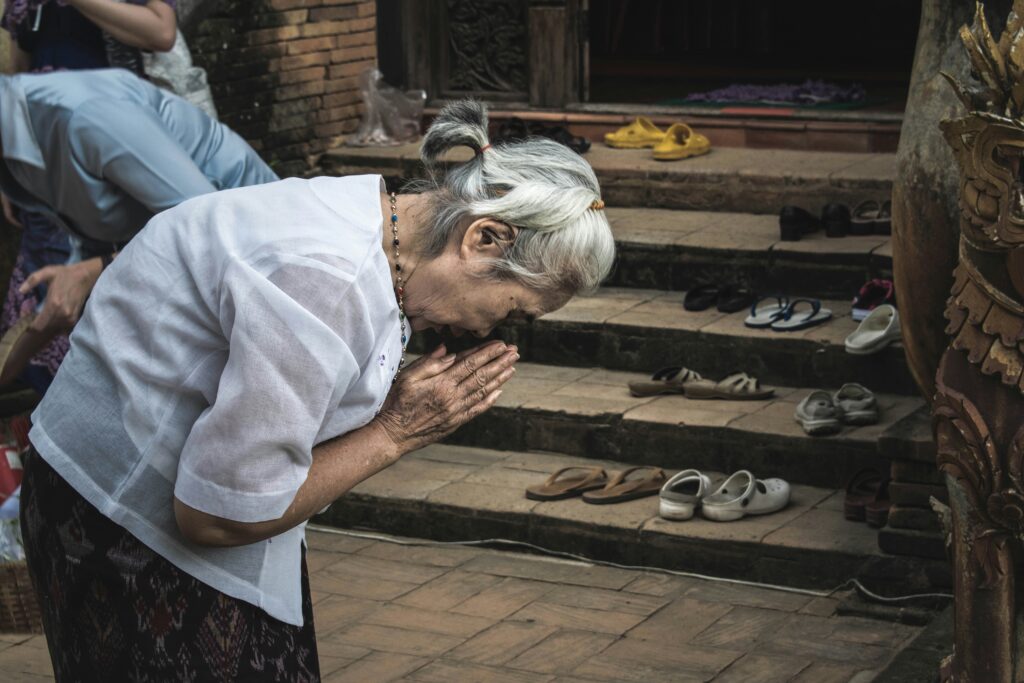
Every Monday, Wednesday, and Friday from 5–7pm, novice monks at Wat Suan Dok host informal conversations with visitors as a way to practice their English. You ask them questions, they ask you questions — about your life, your country, your beliefs — and the exchange is genuine on both sides. It’s not a performance or a tourist trap. The monks are curious and the conversations go wherever they go. This is the most direct and honest cultural exchange available in Chiang Mai, and it costs absolutely nothing.
💡 Come with actual questions. What do they believe happens after death? What did they give up when they ordained? What do they miss most? The conversations are far more interesting when you treat it as a real exchange rather than a cultural photo opportunity.
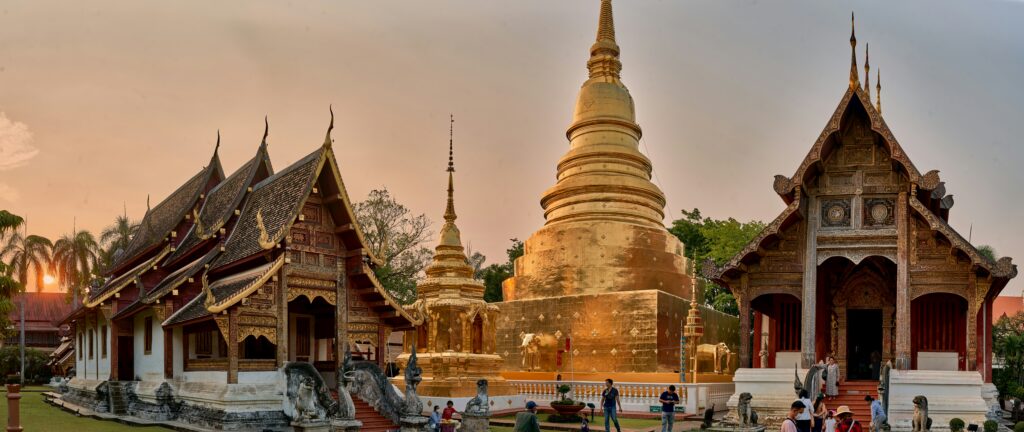
Chiang Mai has over 300 Buddhist temples and the highest concentration are packed into and around the Old City’s walled square. Three you shouldn’t miss: Wat Chedi Luang (home to a massive 14th-century chedi, partially collapsed by an earthquake in 1545 and never rebuilt — the scale is staggering), Wat Phra Singh (Chiang Mai’s most important temple, housing a revered Buddha image), and Wat Chiang Man (the oldest in the city, from 1296). Most charge ฿20–50 ($0.60–$1.50) entry if anything at all. A morning walking circuit of all three takes two to three hours and costs almost nothing.
💡 Arrive at Wat Chedi Luang before 8am to watch monks receive morning alms. The courtyard in early light, without the midday tourist crowds, is the Chiang Mai experience most people come for and few actually get.
Every Sunday evening, Wualai Road — the traditional silversmith district south of the Old City — transforms into Chiang Mai’s best night market. Half a kilometer of food stalls, craft vendors, street performers, and local artisans selling Northern Thai silverwork, textiles, ceramics, and carved wood. The food quality is higher here than at the more tourist-heavy Night Bazaar — sticky rice with mango, sai oua (Northern Thai sausage), coconut ice cream served in a fresh coconut shell. Budget $10–$15 to eat your way down the street properly.
💡 The Saturday Walking Street near Tha Phae Gate (same concept, different location) is slightly less crowded and equally good. Sunday on Wualai Road is the better pick for crafts and silverwork; Saturday near Tha Phae Gate is better for food variety.
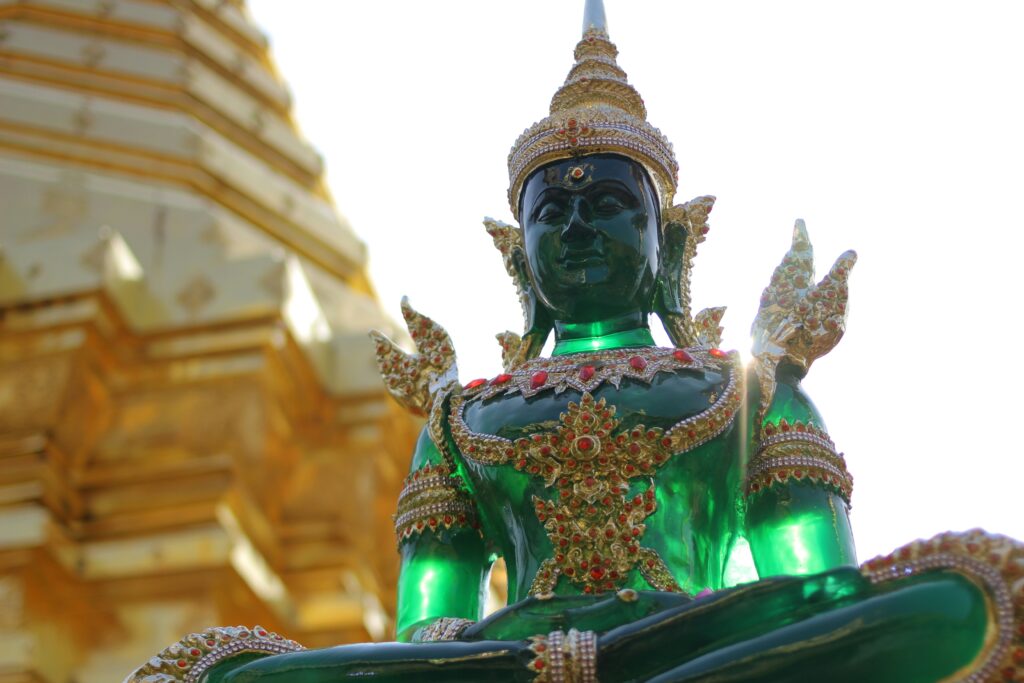
Wat Phra That Doi Suthep sits on a mountain 13km from the Old City at 1,073 meters elevation, overlooking Chiang Mai through a haze of incense smoke and jungle mist. It’s the most important temple in Northern Thailand — gold chedis, copper bells, sacred Buddha relics, sweeping mountain views. The standard approach is 306 steps up a naga-flanked staircase. A songthaew from the Old City runs about ฿100–150 ($3–$4.50) each way. The temple entry costs ฿50. A sunrise visit to one of Thailand’s most sacred sites for under $10 total is a ratio that doesn’t exist anywhere else.
💡 Sunrise visits (before 7am) are worth the early alarm — the light on the gold spires, the quiet before tour groups arrive, and the city below in morning mist are collectively the most photographed moment in Chiang Mai for a reason. Dress modestly: shoulders and knees covered, no exceptions.
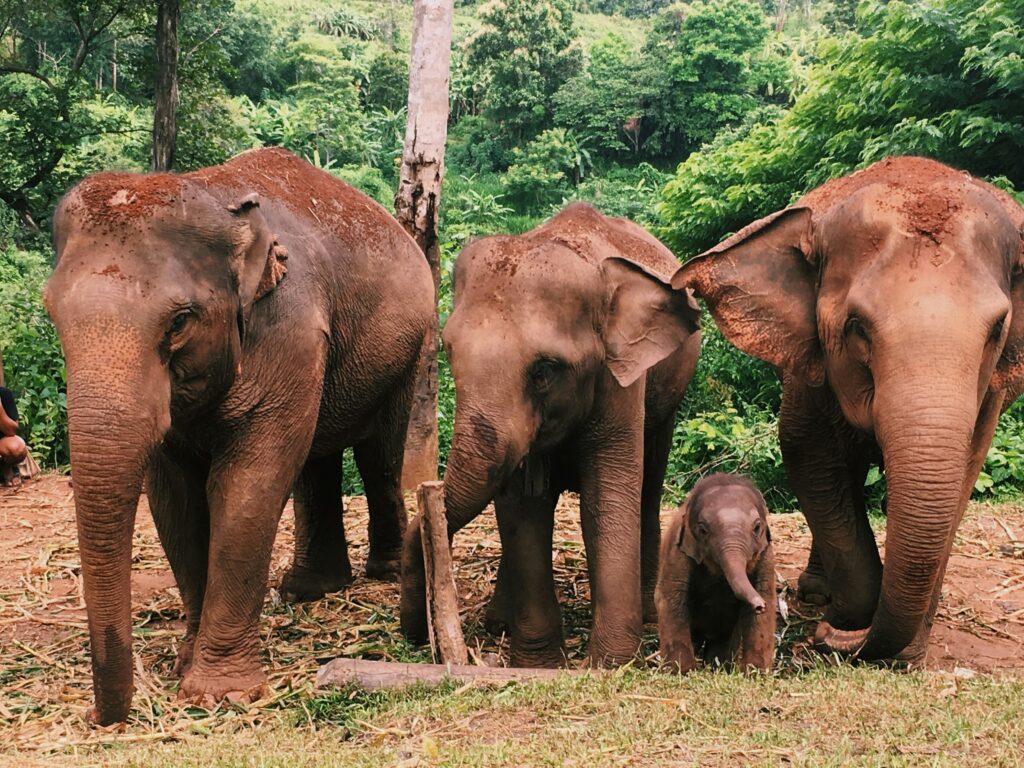
Chiang Mai is the ethical elephant sanctuary capital of Asia — more sanctuaries offering genuine rescue and rehabilitation programs here than anywhere else in the world. The experience is a half or full day: you walk with the elephants in the jungle, feed them, observe them in their natural social groups, and learn their individual rescue stories. The best sanctuaries — Elephant Nature Park, Elephant Jungle Sanctuary, and Ran-Tong — do not offer elephant riding, shows, or any interaction that requires domination. This distinction matters enormously. The difference between a riding camp and an ethical sanctuary is the difference between watching an animal perform and watching an animal be itself.
💡 Elephant Nature Park ($85–$97) is the most established and transparent about its rescue operations. Book 2–3 weeks ahead in peak season — it fills fast. Smaller sanctuaries like Elephant Jungle Sanctuary ($70–$85) offer smaller group sizes and more time per person with the elephants.
A half or full-day cooking class in Chiang Mai is one of the highest-value experiences in Southeast Asia — you leave with skills that will change how you cook at home, not just a memory. The best classes start with a market visit to Warorot Market to source ingredients, then move to a traditional wooden house kitchen for four to six dishes: khao soi, pad thai, tom kha gai, green curry paste from scratch, mango sticky rice. The instruction is genuinely hands-on — you make everything yourself under guidance, not demonstration-only. Chiang Thai Cookery School and Asia Scenic Thai Cooking are consistently rated the best in the city.
💡 Book the morning class rather than the afternoon. You go to the market while it’s still alive and cook before the midday heat. You’re done by 1pm with the skill in hand and the afternoon free.
Traditional Thai massage in Chiang Mai is not the spa product sold at resort hotels — it’s a therapeutic practice rooted in Ayurvedic medicine, involving deep pressure, joint mobilization, and assisted stretching. At licensed schools in the Old City, a 90-minute session costs ฿300–500 ($8–$14). The most respected school in Chiang Mai is the Old Medicine Hospital (Shivagakomarpaj Traditional Medicine Hospital), which offers both treatments and multi-day professional training courses. A single session here costs ฿300 for 60 minutes — one of the finest therapeutic experiences available anywhere in the world at any price.
💡 Avoid the cheapest storefronts around the Night Bazaar (฿150–200/hour) — quality is inconsistent. The Old Medicine Hospital at ฿300/hour is the best price-to-quality ratio in the city. Getting a massage every day of your trip is a reasonable and genuinely healthy choice at this price.
Doi Inthanon is Thailand’s highest peak (2,565 meters) and sits 85km southwest of Chiang Mai — about two hours by tour vehicle. The park contains stunning twin royal chedis built for the King and Queen, Karen hilltribe villages, multiple waterfalls, and a cloud forest summit that feels completely different from anything in the lowlands. Entry is ฿300 ($8.50) for foreigners. A guided day tour ($20–$35 all-in from Chiang Mai) covers the main chedis, Wachirathan Waterfall, and the summit viewpoint in a single loop.
💡 Bring a jacket even in the hot season — the summit can be 15°F cooler than Chiang Mai. The twin chedis at 2,200 meters are surrounded by manicured gardens that look otherworldly in the mountain mist.
Khao soi is Northern Thailand’s signature dish — a rich, deeply spiced coconut curry broth with both soft and crispy egg noodles, your choice of protein, pickled mustard greens, shallots, and lime on the side. It doesn’t exist in quite this form anywhere else in Thailand, and Chiang Mai is where you eat it. The best bowls in the city are at Khao Soi Islam (near Charoen Prathet Road), Khao Soi Khun Yai, and the stalls at Warorot Market. Cost: ฿50–130 ($1.50–$3.50). Eating it well is one of the strongest arguments for visiting Chiang Mai over any other city in Southeast Asia.
💡 Khao Soi Islam uses chicken or beef slow-cooked until it falls off the bone. The broth is slightly less sweet and more savory than Buddhist-run stalls — and it’s the version most Thai food writers consider the standard. Cash only, often queues, worth both.
Unlike Bangkok’s tourist-priced fight shows, Muay Thai in Chiang Mai is still watched primarily by locals and priced accordingly. Kalare Boxing Stadium near the Night Market runs fights on Tuesday and Friday evenings — typically eight to ten bouts across different weight classes, starting around 9pm. Ringside seats run ฿400–600 ($11–$17). The atmosphere is authentic — trainers coaching loudly at ringside, bettors working the crowd, traditional Muay Thai music playing throughout. This is one of the most culturally specific experiences available in the city for almost no money.
💡 Arrive 20 minutes early to watch the pre-fight wai kru — the respect ceremony where fighters pay homage to their teachers through choreographed movement. It’s genuinely beautiful and lasts 10–15 minutes before each bout.
Nimman Road is Chiang Mai’s most cosmopolitan neighborhood — a walkable grid of independent coffee shops, yoga studios, organic restaurants, and boutique hotels that functions as the city’s wellness and digital nomad center. The coffee scene is genuinely exceptional: Thailand produces some of the world’s best arabica beans from the northern highlands and the specialty cafés on Nimman use them properly. Drop-in yoga classes run ฿200–400 ($5–$11) at studios like Yoga Tree and One Yoga. A full morning — coffee, yoga class, breakfast at a health café — costs $15–$20 and takes three hours.
💡 The Nimmanhaemin Road area, especially the soi side streets off the main road, has the best café concentration. Start at the intersection with Soi 9 and walk both directions — ten excellent coffee options within 10 minutes on foot.
Bo Sang, 9km east of the Old City, is Thailand’s umbrella-making village — a community of craftspeople who have been producing hand-painted sa paper and mulberry paper umbrellas, fans, and lacquerware for generations. The workshops are open to visitors and the craftspeople work while you watch. Several offer short hands-on painting sessions where you decorate your own parasol or fan ($5–$15). The village is a rare example of a Thai craft tradition that is entirely functional and unstagey — these umbrellas are used throughout Southeast Asia, not just sold to tourists.
💡 A songthaew from the Old City to Bo Sang costs ฿150 ($4.50) one way. Combine it with a stop at the San Kamphaeng hot springs on the same road for a full day east of the city.
Several temples in and around Chiang Mai offer multi-day silent meditation retreats open to foreign visitors — Wat Suan Dok, Wat Ram Poeng, and Wat Umong are the most established. Programs typically run 3–10 days, involve waking at 4am, alternating sitting and walking meditation sessions, simple vegetarian meals, and complete silence. Costs range from purely donation-based to a modest ฿300–600/day ($8–$17) covering room and meals. The instruction is in English and the teachers — ordained monks with decades of practice — are the real thing. This is arguably the most complete wellness experience available anywhere in Southeast Asia at any price, and in Chiang Mai it costs almost nothing.
💡 Wat Ram Poeng (Tapotaram) is the most structured and beginner-accessible program — the instruction follows a clear Vipassana framework and the teachers are experienced with first-time meditators. Book 2–4 weeks ahead; programs fill during peak season.
Chiang Mai has a deep, well-established yoga retreat infrastructure — not the manufactured luxury retreat model of Tulum or Bali, but actual teaching programs run by long-term practitioners. Yoga Tree, Om Yoga, and several retreat centers in the mountains surrounding the city offer 3–5 day immersions covering daily practice, philosophy, breathwork, and Thai massage integration. Costs run $80–$150 for a 3-day program including accommodation and meals — a fraction of comparable retreat content in Sedona or Ubud. For serious practitioners, Chiang Mai offers Vipassana, Ashtanga, Yin, and Trauma-Informed Yoga instruction at a quality-to-price ratio that exists nowhere else.
💡 The mountain resort area north of the city (Mae Rim, Mae Taeng) has several retreat centers set in jungle and rice field settings. The 45-minute drive from the Old City is worth it for the environment — being in forest rather than city completely changes the quality of extended practice.
Yi Peng is Chiang Mai’s lantern festival — held on the full moon of the second month of the Lanna lunar calendar, typically in November. Thousands of khom loi (sky lanterns) are released simultaneously across the city, filling the night sky above the moat and the Ping River with rising points of orange light. The public celebration costs nothing — you watch from anywhere in the Old City as the sky fills above you. Organized ceremonies at temple venues (Maejo University is the most famous) charge $50–$120 per person and include your own lantern to release. Both versions are extraordinary.
💡 Yi Peng coincides with Loi Krathong (the national lantern and floating basket festival), making the combination the most visually spectacular night in the Thai festival calendar. Book hotels 3+ months ahead — the entire city fills up and prices roughly double in the surrounding week.
Worth It / Skip It
Don’t Make These Mistakes
Booking your trip in March or April without checking the air quality index. Burning season in northern Thailand is a genuine public health event, not a “bit smoky” situation. Farmers clearing rice fields and forests with fire creates a smoke layer that sits in the Chiang Mai valley for weeks. AQI readings regularly exceed 200–300 during peak burning — equivalent to smoking multiple cigarettes per day. If you arrive expecting temple walks and jungle treks and find yourself unable to breathe outside, the trip is effectively over. Check historical AQI data for your travel dates at iqair.com before booking anything.
Booking an elephant experience without researching the specific sanctuary. “Ethical elephant sanctuary” has become a marketing term and not every property using it deserves to. Red flags: any form of riding (even bareback), elephant painting demonstrations, elephants chained or in confined spaces, mahouts carrying bullhooks. The verification process is simple: read independent reviews on TripAdvisor and Google specifically for mentions of riding, chains, or bullhooks — not just the overall star rating. Elephant Nature Park’s transparency about its rescue operations is the standard everything else should be measured against.
Entering temples without appropriate dress and not carrying a cover-up. Chiang Mai’s temples are active places of worship. Temples require covered shoulders and knees without exception — no shorts, no tank tops, no sleeveless dresses. Many temples provide wraps at the entrance, but counting on supply means risking a turn-away at the gate. Carry a lightweight sarong or scarf in your bag whenever you’re temple-hopping — it weighs nothing, costs ฿50 ($1.50) at the market, and means you can enter anywhere without a problem.
Renting a scooter without experience and walking into the motorbike rental scam. Two separate risks. First: Thailand has one of the highest road fatality rates in Asia and Chiang Mai’s mountain switchbacks up to Doi Suthep are not beginner terrain. If you’ve never ridden, don’t start here. Second: the motorbike scam is common — you rent a bike, return it in perfect condition, and the vendor charges you for pre-existing damage you didn’t cause and can’t disprove. Before renting, photograph every scratch and dent with time-stamped photos and ensure the company acknowledges them in writing on the rental contract.
VacayValue Scorecard — Chiang Mai
Packing List — Chiang Mai
Every Sunday: One Destination. One Honest Take.
Join travelers who plan smarter. One email per week — real costs, specific advice, no filler.
Chiang Mai Is the World’s Most Complete Budget Wellness Destination. Nothing Else Is Close at This Price.
The wellness travel industry has spent a decade convincing people that spiritual depth, physical renewal, and genuine cultural immersion cost what Bali and Tulum charge. Chiang Mai disproves this entirely. Buddhist temple retreats taught by ordained monks. Ethical elephant sanctuaries with genuine rescue operations. Thai massage at therapeutic depth for $8 an hour. A food tradition — khao soi, sai oua, mango sticky rice — that rivals any culinary culture on earth, available from street stalls for $2 a bowl. All of it in an ancient walled city surrounded by jungle and mountains that has been a center of Northern Thai civilization for 700 years.
The one candid caveat: the long-haul flight from the US is the real cost here, and burning season in March–April is a genuine problem that requires planning around. Those two constraints aside, Chiang Mai delivers more value per dollar of wellness travel than any other destination we cover on this site — including destinations that cost twice as much to reach and three times as much to stay in once you arrive.
Fly into Bangkok, add the domestic connection to Chiang Mai. Stay in the Old City. Eat at the night market first night. Book the elephant sanctuary and cooking class before you arrive. Do the monk chat. Get the massage every day. Stay longer than you planned.