Asheville Wellness Travel Guide 2026: Spa Retreats, Forest Bathing & Mountain Healing
The Blue Ridge Mountains make Asheville one of the most naturally therapeutic destinations in the eastern US — and it costs far less than most wellness travelers expect, once you know where to look.
People come to Asheville for the Biltmore and leave talking about the mountains. They come for the breweries and leave changed by a morning in the fog above the Parkway. The city has built a reputation on its arts scene and its food culture — but its deepest draw is something quieter: 6,684 feet of elevation at the highest point, 469 miles of scenic road through intact forest, and a wellness community that has been building seriously for decades.
Sedona has its vortexes, Ojai has its retreats, and Asheville has the Blue Ridge — a mountain ecosystem that delivers forest bathing, natural mineral springs, underground spas, and healing arts practitioners within a 45-minute radius of downtown. The wellness angle here is not marketing language. It’s the actual reason many people return year after year. This guide focuses on what the experience genuinely costs and where the most meaningful value lives.
What’s In This Guide
📅 Best Time to Visit Asheville for Wellness
For wellness travel specifically, April and September are the clear standouts — the forest is at its most vivid, hiking temperatures are ideal, and spa availability is manageable without the desperate advance booking required in summer. January and February reward cold-tolerant visitors with the easiest spa access and lowest rates of the year, and a hot springs soak in near-freezing mountain air is an experience unto itself.
Where to Stay in Asheville
For a wellness trip, proximity to trailheads and spa facilities matters more than the standard downtown-versus-Biltmore question. Downtown Asheville puts you within walking distance of the French Broad Greenway and the yoga studio concentration on Merrimon Avenue. North Asheville positions you closest to the Grove Park Inn. Either neighborhood requires a car for the Parkway and hot springs. North Carolina lodging tax runs 13–15% above advertised nightly rates once state and county assessments are added. All rates verified March 2026.
The strategic argument for this property on a wellness trip is straightforward: keeping your accommodation costs low frees up meaningful budget for the experiences that actually matter — a float therapy session, a hot springs soak in Hot Springs, NC, or a yoga class at one of Asheville’s established studios. The HIE’s free hot breakfast cuts one daily meal expense, free parking eliminates a recurring charge, and the location puts you within walking range of Pack Square’s health-food options. It won’t immerse you in the wellness aesthetic, but it’ll let you spend money where that aesthetic lives.
The Restoration occupies a restored downtown building where the design language — botanical motifs, natural materials, light-flooded suites — genuinely aligns with a wellness mindset rather than just gesturing at it. The rooftop bar delivers unobstructed Blue Ridge Mountain views that make a morning coffee or an evening wind-down feel intentional. Suites are spacious and bathed in natural light. Four on-site dining spaces include options calibrated to health-conscious eating without the preciousness that sometimes accompanies wellness properties. This is where the mid-range accommodation and the mid-range wellness experience meet cleanly.
Built in 1913 from hand-laid mountain boulders, the Grove Park Inn’s underground spa complex is the reason this property anchors virtually every serious Asheville wellness itinerary. Forty-three thousand square feet of grottos, mineral pools, steam caves, and treatment rooms occupy the mountain below the main building — all available to hotel guests as part of their stay, with no additional day-pass fee. The grottos alone, with their cascading water features and subterranean stone architecture, justify the room rate as a wellness experience rather than just accommodation. Combine that with sunset mountain views from guest rooms and four dining options, and the per-night cost stops feeling like an indulgence.
The Wellness Traveler’s Cheat Sheet
Free weekly guides covering the best value destinations for wellness travel — verified pricing, no fluff, honest assessments.
15 Best Asheville Wellness Experiences
Asheville’s wellness offering divides into three tiers that track spending closely: a genuinely rich free tier built on mountains, forests, and community practice; a mid-range paid tier covering hot springs, floating, yoga, and botanical immersion; and a signature tier anchored by one of the country’s most distinctive underground spa complexes and America’s most extraordinary private estate and gardens. Five free, six paid, four signature.
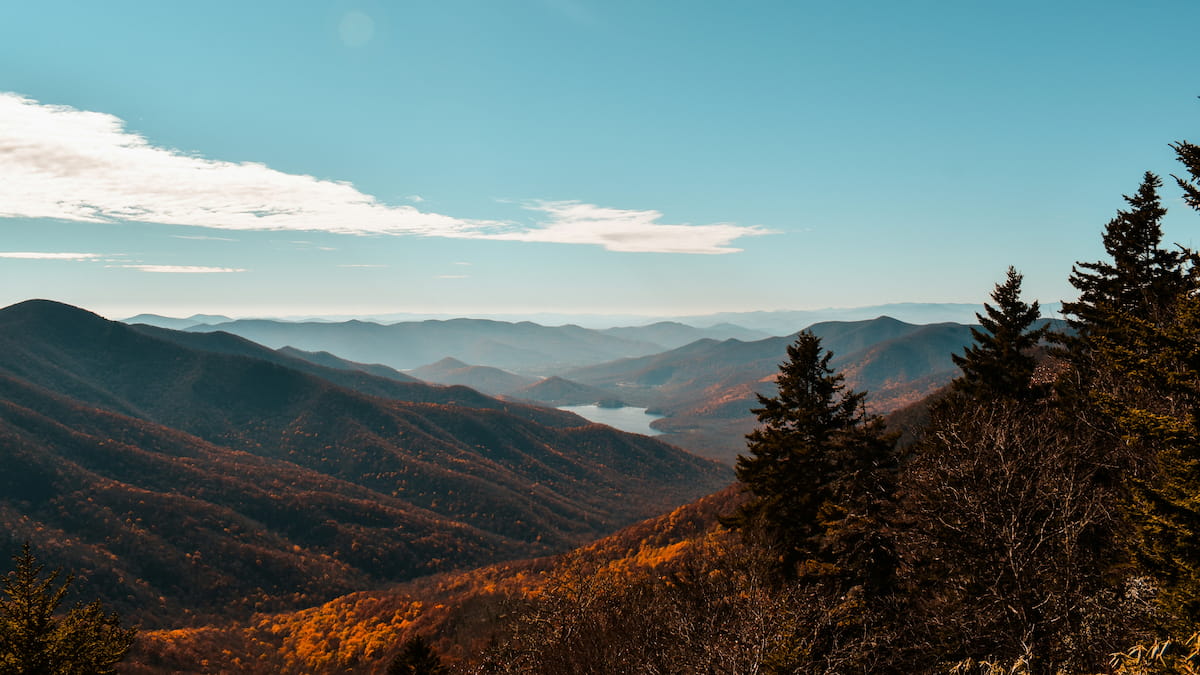
The Japanese practice of shinrin-yoku — immersive, slow-paced time in a forest with the specific purpose of allowing the nervous system to recalibrate — has a natural home along the Blue Ridge Parkway. Several trailheads near Asheville access intact old-growth and second-growth forest at elevations where the air is measurably cleaner and cooler than the city below. The Craggy Gardens area at milepost 364 offers a mile-long ridgeline trail through heath balds and spruce-fir forest; the Graveyard Fields loop at milepost 418 adds two waterfalls to the immersion. Neither requires anything beyond time and comfortable footwear. The Parkway itself has no admission fee for the entire 469 miles.
💡 Start before 8am when morning mist is still in the valleys and the forest sounds have not yet been overrun by midday traffic. Download an offline BRP map before departure — cell service drops significantly above 4,000 feet.
The French Broad River Greenway is a paved riverside path running through downtown Asheville along one of the oldest rivers in North America — the French Broad predates the Appalachian Mountains it flows through, making it a geological anomaly and a historically significant waterway. The greenway connects Hominy Creek Riverpark through the River Arts District and beyond, offering a flat, accessible route for morning walking meditation without the elevation challenge of Parkway trails. The river itself runs below grade from downtown, giving walkers a sense of removal from the city despite being in the middle of it. The Salvage Station and several RAD studios are visible from the path and make natural stopping points.
💡 The greenway is at its most peaceful between 6–8am before the River Arts District foot traffic picks up. Bring earbuds if you want a guided meditation soundtrack; the river background noise is an excellent complement.
About 35 miles south of Asheville, DuPont State Recreational Forest encompasses 10,000 acres of protected Blue Ridge terrain containing five significant waterfalls accessible via 80 miles of trails — all free, all open daily. The classic circuit hits Hooker Falls, Triple Falls, and High Falls in under five miles of hiking with minimal elevation gain. Triple Falls is the one you’ve seen if you’ve seen The Hunger Games — it was a filming location for the franchise, which gives a sense of the scale and photographic drama involved. The forest canopy is dense and diverse enough to deliver genuine forest bathing effects without the more technical terrain of higher Parkway trailheads.
💡 Arrive before 9am on weekends — the Triple Falls trail can become congested by mid-morning. The Hooker Falls section is paved and accessible, making it appropriate for visitors with mobility limitations.
Sound therapy is an established wellness modality — and Asheville has been practicing a community version of it every Friday evening for decades. The gathering at Pritchard Park brings together drummers, dancers, and participants in a freeform circle that functions as collective nervous system release whether or not anyone in attendance is thinking about it that way. There is no stage, no charge, no barrier between participants. Djembe players set up in the center; dancers move in the surrounding space; onlookers become participants as the evening progresses. From a pure wellness-value standpoint, this is among the highest-value hours available in the city.
💡 The circle typically runs 6–10pm on Fridays in decent weather, year-round when conditions allow. Arrive by 6:30pm when the energy is building but before the space becomes crowded. Participation is always welcome.
Tucked into North Asheville’s residential neighborhoods, Beaver Lake Bird Sanctuary is a 3-acre protected urban wetland managed by the Elisha Mitchell Audubon Society that feels considerably more removed from the city than its location suggests. A short loop trail circles the lake through a mature riparian forest, passing through habitats that support over 180 bird species across the year. Morning light on the lake surface, the density of bird activity in the first hour after sunrise, and the complete absence of car noise make this a reliable decompression experience that requires nothing but early rising and a 10-minute drive from downtown. The sanctuary is free and open daily.
💡 Peak bird activity is the first hour after sunrise from April through October. Bring binoculars if you have them — the sanctuary hosts warblers, herons, and occasionally nesting osprey depending on the season.
Forty-five minutes northwest of Asheville on US-25/70, the small town of Hot Springs sits at the only place in North Carolina where natural hot springs emerge at the surface — historically 100–104°F water flowing directly from the mountain into private riverside soaking tubs operated by Hot Springs Resort & Spa. Guests reserve outdoor tubs positioned along the French Broad River, soak for 90-minute sessions, and can hear the river below while the mountain rises above. The setting is elemental in a way that purpose-built wellness centers can’t replicate. Per-person pricing runs $28–$45 for a 90-minute soak depending on tub type and season, making this the best value mineral hot spring experience on the East Coast by a meaningful margin.
💡 Reserve your tub in advance online — weekend sessions fill 2–3 weeks ahead in peak season. Evening soaks after dark are a different experience entirely; book the last slot of the day for the most privacy and the best sky above.
Float therapy — 60–90 minutes in a skin-temperature Epsom salt solution in a private pod or room, in near-total darkness and silence — has strong research support for reducing cortisol, relieving musculoskeletal pain, and inducing a deep meditative state that many practitioners find difficult to achieve through conventional meditation alone. Asheville supports several dedicated float centers; Float Asheville is among the most established, with purpose-built rooms that allow sound and light customization. At $70–90 per session, it’s the highest per-hour wellness expenditure on this list, but for those who respond to it, the effect is disproportionate to the price.
💡 First-time floaters should communicate any anxiety about enclosed spaces in advance — rooms rather than enclosed pods are available and eliminate the main source of discomfort. Avoid caffeine for several hours before your session.
Asheville’s yoga community is proportionally large for a city of its size — the combination of a health-conscious population, a wellness tourism economy, and a significant practitioner-teacher community has produced a dense concentration of studios across every style. West Asheville Yoga, Asheville Yoga Center, and several independent studios on Merrimon Avenue offer drop-in classes across Vinyasa, Yin, Restorative, and hot yoga formats at $18–28 per session. Taking a class from a local teacher — rather than a streaming service or an app — connects you to the community context that makes Asheville’s wellness scene substantively different from the national wellness-industry average.
💡 Many studios offer first-visit deals — a week of unlimited classes for $30–40 is common and makes extended trips considerably more economical. Check individual studio websites for current new-student specials before you book individual drop-ins.
Group and private sound bath sessions — using crystal singing bowls, Tibetan bowls, gongs, and chimes in combination — are available through several Asheville practitioners and wellness studios. The practice works through acoustic resonance to induce deep parasympathetic relaxation; participants typically lie on mats with blankets and eye coverings while the practitioner moves through a 45–90 minute sound sequence. Several studios in the West Asheville and downtown areas run group sessions at $25–40 per person; private sessions run $80–150 for a tailored experience. At the group price point, this is among the most cost-effective structured wellness experiences available anywhere in the city.
💡 Arrive 10 minutes early to settle in and minimize the cortisol spike of rushing — it counteracts the session’s entire purpose. Wear comfortable, warm layers; lying still for an hour in air conditioning gets cold quickly.
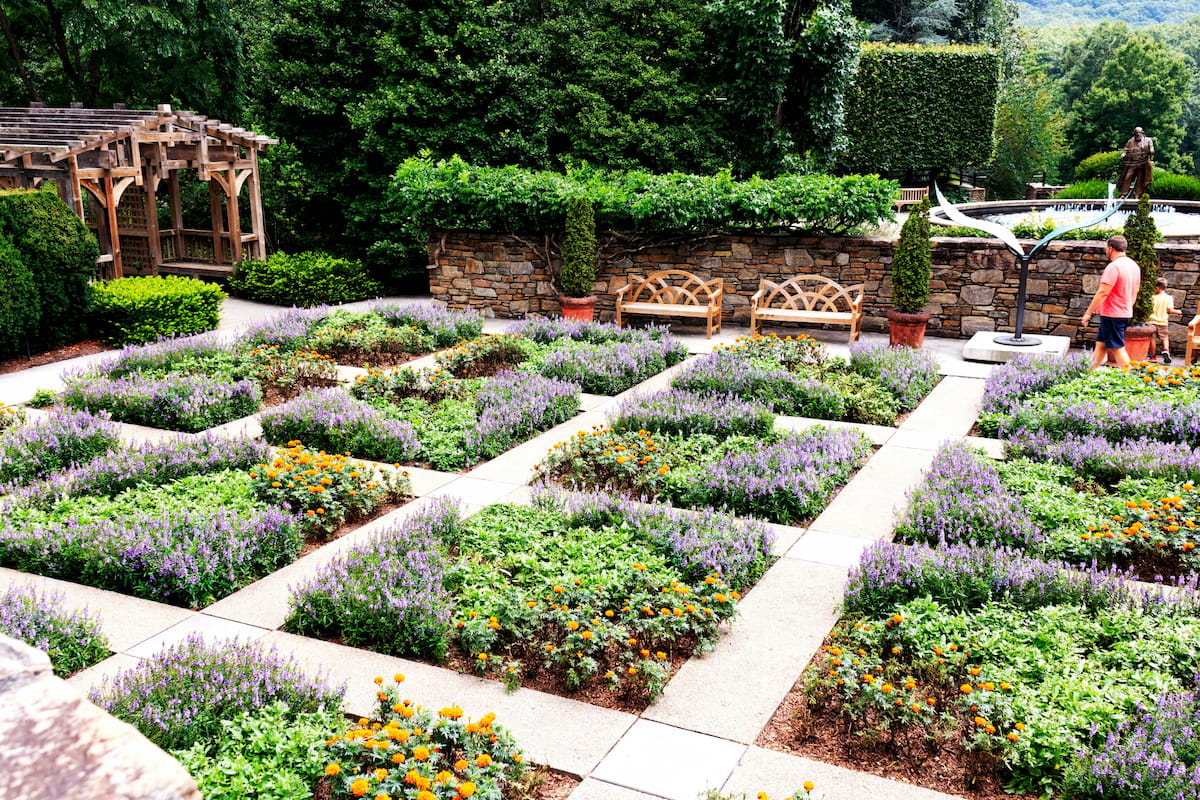
The 434-acre North Carolina Arboretum sits at the entrance to Pisgah National Forest, south of downtown, within an environment that blends formal botanical cultivation with the surrounding Blue Ridge forest. For wellness travelers, the combination of structured gardens and wild forest edge creates an ideal setting for slow, mindful walking — the kind of deliberate nature exposure that researchers associate with measurable reductions in stress hormones. The bonsai exhibition garden alone is worth the visit: over 100 specimens demonstrate the intersection of horticultural patience and aesthetic intention in a way that feels inherently contemplative. Parking is $20 per vehicle; no additional admission is charged.
💡 The first Tuesday of each month brings 50% off parking — $10 per car. Visit in spring (April–May) for the peak garden and wildflower display, or fall for the color transition against the cultivated sections.
The Western North Carolina Nature Center’s 42-acre campus serves as a refuge for injured and non-releasable native animals — red wolves, otters, mountain lions, red pandas, and farm animals including heritage breeds. The therapeutic benefit of interacting with or simply observing animals in well-maintained habitats is well-documented; the Nature Center delivers that access in a setting that combines the intimacy of a sanctuary with the ecological depth of a wildlife education facility. The red wolf habitat is a rare opportunity to see one of the most critically endangered canids in the world in a managed environment. At $13.95 for adults, it’s the most affordable structured animal experience in the region.
💡 Check the daily schedule before you visit — feeding times for the red wolves and river otters generate the most active and engaging observations. Tickets are card-only; no cash accepted at the admissions window.
Forty-three thousand square feet of subterranean wellness space occupies the mountain below the Grove Park Inn’s 1913 stone building — a complex of grottos, cascading water features, mineral pools, steam caves, and treatment rooms that constitutes the most architecturally distinctive spa environment in the American Southeast. Hotel guests access the grotto pools as part of their stay; non-guests purchase day passes that include full pool and grotto access ($175+ depending on season) with treatment packages added on top. Massages, facials, body wraps, and hydrotherapy treatments run $150–250 per session depending on length and type. This is the kind of facility that earns the word sanctuary without overstating it.
💡 If you’re not staying at the hotel, non-guest day passes are limited in number and sell out weeks ahead on weekends. Call the spa directly — online availability is often misleading. Staying at the hotel eliminates this anxiety entirely and makes the nightly rate more defensible.
Forest therapy guided by a practitioner certified through the Association of Nature and Forest Therapy is a materially different experience from walking in the woods without guidance — the pace slows to a fraction of hiking pace, the guide structures a sequence of sensory invitations that progressively deepen awareness of the surrounding environment, and the session typically concludes with a tea ceremony using local plants. Several certified guides operate in the Asheville area and lead sessions in the Bent Creek forest adjacent to the Arboretum, Pisgah National Forest, and along the Blue Ridge Parkway corridor. Private sessions accommodate 1–4 people at $120–200 per person; small-group sessions run $60–90 per person.
💡 The ANFT website maintains a directory of certified guides searchable by location — look for guides with 2+ years of practice in the Asheville area who can customize the forest setting to match your group’s physical ability and intention.
Frederick Law Olmsted designed the Biltmore Estate’s landscape — the same mind behind Central Park and dozens of urban parks that shaped American public life — and the result is 75 acres of formal gardens containing a Walled Garden, Rose Garden, Azalea Garden, and a Conservatory filled with rare tropicals, all set against 8,000 acres of intact mountain terrain with 20+ miles of hiking and biking trails. Admission includes a complimentary wine tasting at the working Biltmore Winery. Approached as a wellness experience rather than a mansion-as-spectacle visit, the Biltmore offers sustained botanical immersion at a scale that no botanical garden or arboretum in the region can match. The 250-room house is extraordinary, but the landscape is the therapeutic core.
💡 Book 7+ days in advance online for the best available rate — advance booking saves approximately $10/ticket and secures your timed entry. Visiting in the morning before noon leaves the afternoon free for the trails and winery without feeling rushed by closing time.
Wellness doesn’t stop at the trailhead, and Asheville’s food culture understands this more explicitly than most American cities. The local farm-to-table movement here has moved well beyond marketing positioning into genuine sourcing relationships, and nowhere is that more visible than at Cúrate (Spanish tapas built on a house charcuterie program and a wine list curated with the same intentionality applied to the kitchen) and The Admiral (a West Asheville institution with an inventive, produce-driven menu that changes with season and supply). Both treat the meal as a restorative act rather than just consumption — the service pace, the ingredient transparency, and the quality of sourcing support that read. Budget $75–90 per person at The Admiral; $95–120 for a full Cúrate experience with wine.
💡 Both venues book out 3–4 weeks ahead for weekend seatings. If neither is available, Biscuit Head’s farm-sourced breakfast menu ($15–22/person) represents Asheville’s food philosophy with equal conviction at a fraction of the price.
Worth It / Skip It
Don’t Make These Mistakes
Skipping Hot Springs, NC because it’s “out of the way.” At 45 minutes from downtown Asheville, Hot Springs Resort is the single most underutilized attraction on most visitor itineraries. Natural mineral springs at 100–104°F in riverside tubs for $28–$45 per person is an experience that doesn’t exist anywhere else on the East Coast at this price point. Build a morning or afternoon around it — it’s the trip highlight for most visitors who go.
Booking Grove Park Inn spa treatments without checking hotel vs. day-pass math first. Hotel guests access the grotto pools, mineral pools, and steam caves as part of their stay. Non-guests pay $175+ for day pass access before any treatments. If you’re planning a spa day that runs $300+ total, compare that against a hotel room rate — often the nightly rate is the more economical path to the same experience, with the added benefit of a room.
Hiking the Blue Ridge Parkway on a packed midday schedule. The wellness benefit of forest bathing is significantly reduced by pace, company density, and urgency — the same trails that feel restorative at 7am feel like exercise at noon. Build Parkway time into the early morning, move slowly with no distance target, and leave the afternoon for paid experiences that don’t require a particular mental state to enjoy.
Visiting in October without advance bookings for everything. October is Asheville’s peak month by every metric — hotel rates, spa availability, restaurant wait times, and Parkway crowding all reach their annual maximums simultaneously. If October is your window, book hotels and spa treatments before July. If flexibility is possible, September delivers comparable natural beauty at significantly lower cost and considerably less logistical friction.
VacayValue Scorecard — Asheville, NC Wellness
Packing List — Asheville Wellness Trip
More Wellness Destinations Worth Your Time
Free weekly guides with verified pricing, honest assessments, and the wellness travel intel most sites won’t give you.
Asheville Is One of the Most Complete Wellness Destinations in the US — and Most Visitors Only Scratch the Surface
The free tier alone — Blue Ridge forest bathing, the French Broad Greenway, DuPont State Forest waterfalls, the drum circle — constitutes a more substantive wellness itinerary than many purpose-built retreat destinations charge thousands of dollars to provide. Add Hot Springs, NC at $28–45 per soak, a yoga studio drop-in at $18–28, and a sound bath at $25–45, and you’ve assembled a week of genuine wellness programming for well under $300 in activity spending per person. The mountain ecosystem does the heavy lifting.
The paid tier matters most when you’re ready for the Grove Park Inn spa — one of the few facilities in the country that genuinely earns the word transformative without irony. Stay at the hotel and the per-night economics improve significantly. The Biltmore’s Olmsted-designed landscape delivers botanical immersion at a scale no other Southern estate can approach; approach it slowly and it functions as a wellness experience rather than a sightseeing stop. The farm-to-table restaurant scene is nationally recognized and rooted in the same land-connection ethic that runs through the rest of the city’s wellness culture.
Asheville’s score reflects what it delivers across every price point: extraordinary natural infrastructure, a legitimate wellness community rather than a wellness marketing operation, and proximity to one of the most distinctive spa facilities in the country. The regional airport creates friction on the flight side, and hotel rates in peak season can surprise — but the core experience holds up at every budget level.