
Denver & Rocky Mountain National Park: From Mile High City to Alpine Tundra
Where an elk wandering through your campsite costs nothing, the highest paved road in North America is $35 for the whole car, and the scenery genuinely rivals anything you’d pay $500 a head to see elsewhere.
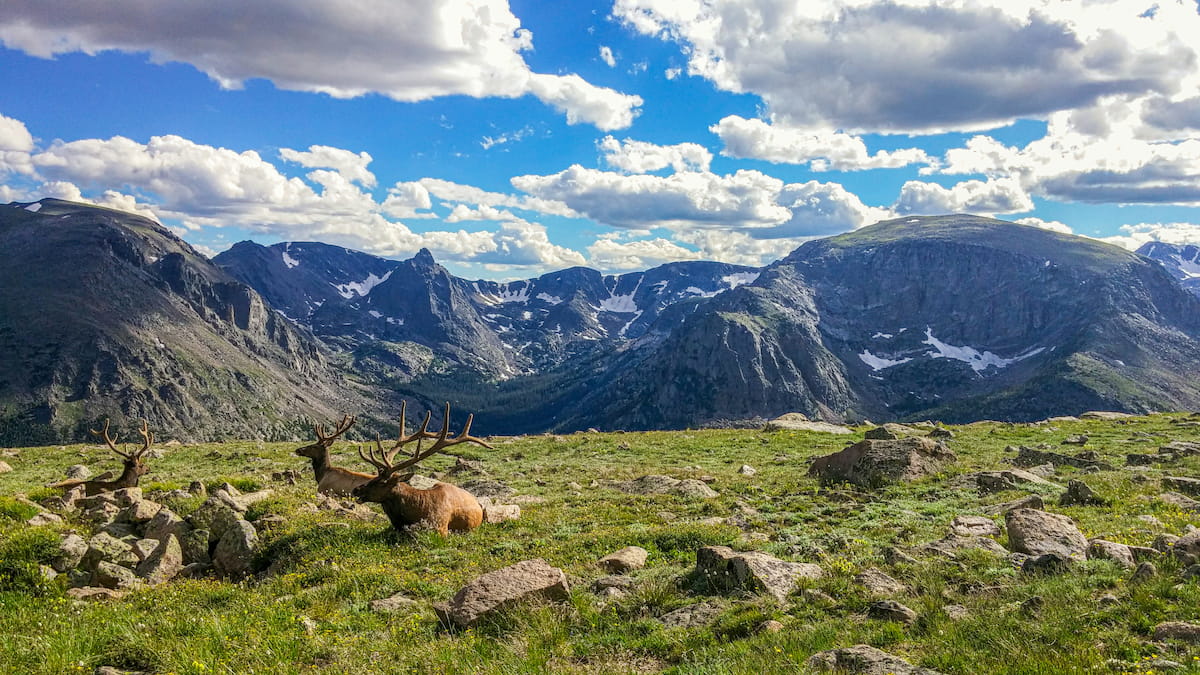
The moment a bull elk wandered across the road and stopped twenty feet from our bumper — just stared at us, completely unbothered — I realized we’d been saving for the wrong family vacation. No theme park charges $400 for a moment like that. Rocky Mountain National Park charges $35 for the whole car.
Denver sits at exactly 5,280 feet — one mile above sea level. An hour’s drive puts you above 12,000 feet, watching pikas scramble across granite talus while the kids eat trail mix and argue about who spotted more wildlife. The value case for a Colorado family trip is genuinely compelling: the headline experiences here are either free or remarkably cheap per person, while the city of Denver serves as an affordable, well-connected base with enough museums and neighborhoods to keep every age group happy for days. A family of four can have an authentically unforgettable week in the Rockies for the price of a single day at a major theme park — if you plan ahead.
What’s In This Guide
Best Time to Visit Denver & the Rocky Mountains
The sweet spot for families is September — school has just started, the elk rut transforms wildlife watching into something extraordinary, aspen trees go gold, and hotel rates can drop 20–30% from their August highs. If skiing is on the agenda, early March offers late-season snow with shoulder-season deals before spring break hits.
Where to Stay in Denver & the Rockies
For most families, basing in Denver and day-tripping to the mountains gives the best combination of flexibility and affordability — city hotels run significantly cheaper than mountain lodges, and the drive to Rocky Mountain National Park is a scenic 1.5 hours. Families planning to spend multiple nights in the park may prefer Estes Park lodging, but expect a 30–40% premium over comparable Denver properties. All rates verified June 2026 for standard double or family rooms.
Positioned just west of Denver in Lakewood, this Hampton sits minutes from the I-70 on-ramp — meaning you’re cutting 20 minutes off every mountain drive compared to staying downtown. The free hot breakfast genuinely feeds a family without the usual cereal-bar letdown, and the indoor pool gives kids somewhere to decompress after a long day of hiking. Rooms are clean and spacious without surprises. This is what budget family travel in a high-cost-of-living mountain city actually looks like — straightforward, reliable, and well-placed.
The Rally is Denver’s baseball-adjacent boutique hotel, sitting steps from Coors Field in the RiNo arts district — the city’s most energetic neighborhood for food, murals, and craft beer. Rooms are genuinely designed rather than just furnished, with mountain views from upper floors. Families get access to one of Denver’s better hotel pools and a restaurant that doesn’t embarrass itself. The RiNo location puts you a short rideshare from both downtown and the highway west — good balance of city experience and mountain accessibility.
Operating since 1918, The Broadmoor is Colorado’s legendary grand resort — a pink-stucco palazzo draped across the foot of Cheyenne Mountain, twelve minutes from Garden of the Gods and 75 minutes from RMNP. For families, the resort is its own destination: seven pools (including a lazy river), a waterslide, tennis, bowling, and enough dining options to eat differently every night. Seven Forbes stars isn’t a number thrown around lightly; the service and grounds are immaculate. If there’s a special occasion — a milestone birthday, an anniversary trip, the vacation you’ve been planning for two years — this is where you spend it.
Get the Denver Rocky Mountains Family Cheat Sheet
We’ll send you a printable one-pager: timed entry booking links, best wildlife viewing spots by season, and the exact RMNP entry reservations you need to grab months in advance.
15 Best Denver & Rocky Mountains Family Experiences
The experience portfolio here is genuinely unusual: four of the fifteen best things you can do with your family cost absolutely nothing, and the single most memorable one — Rocky Mountain National Park — runs $35 for the whole car no matter how many kids you’re piling in. The expensive options (ski days, balloon rides) are signature experiences worth saving for, not baseline expectations. A family that plans ahead can have a legitimately extraordinary week spending less on activities than most destinations charge for a single afternoon.
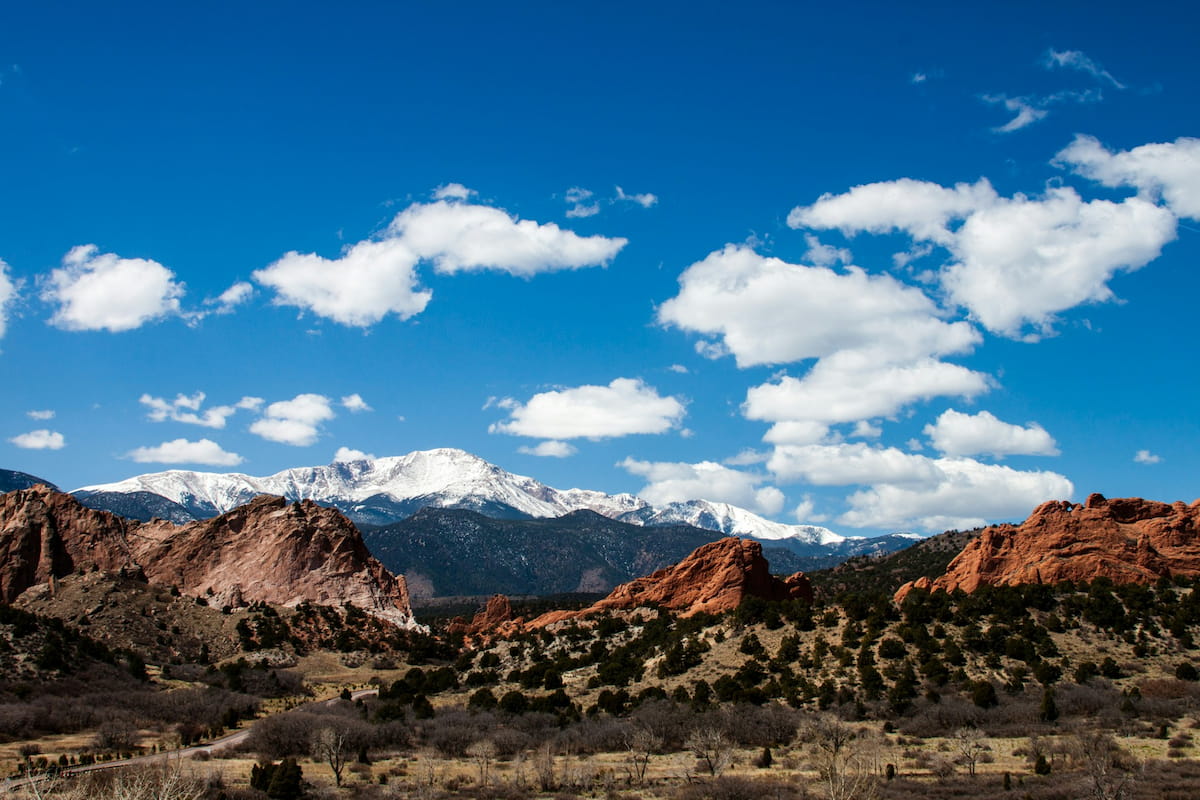
One of the most photogenic landscapes in North America — towering red sandstone fins, balanced rocks, and flat-topped formations rising from nowhere against a backdrop of snow-capped Pikes Peak — and it’s entirely, genuinely free. The park has paved walkways suitable for strollers, multiple short trails ranging from a 15-minute loop to a 2-hour full circuit, and a visitor center with exhibits kids actually engage with. Colorado Springs is 75 minutes south of Denver and pairs naturally with a Pikes Peak or Broadmoor day.
💡 Arrive before 9am or after 4pm in summer — the parking lots hit capacity mid-morning. The Siamese Twins formation (a natural rock arch framing Pikes Peak) is a 1.5-mile round trip and worth the detour.
The amphitheater itself is one of the most recognizable concert venues in the world — 300-foot red sandstone monoliths framing a stage with Denver’s skyline visible in the distance. When there’s no show, the park is open and free, and the Trading Post Loop Trail (1.4 miles) weaves through the formations at eye level, past dinosaur fossils embedded in the rock and overlooks that stop adults mid-sentence. The 868-step staircase up the seating bowl is a beloved local workout, and kids treat it like a climbing gym.
💡 Check the concert schedule before your visit — the park closes to the public 3–4 hours before shows. Non-show mornings between 6–9am are when locals come for their workout; the energy is welcoming and the light is spectacular.
Where Cherry Creek meets the South Platte River in the heart of Denver, Confluence Park is the city’s outdoor living room — kayakers running the urban whitewater feature, kids splashing on the concrete beach, cyclists passing on the multi-use path, and the whole city operating with the ease of a place that treats outdoor space seriously. The River Walk extends several miles in both directions through neighborhoods, connecting parks, breweries, and murals. It’s the best free hour in Denver if you have young kids burning off energy.
💡 Rent a bike from a Denver B-Cycle dock near the park and ride north through RiNo to see the city’s mural district — about 45 minutes round trip and completely flat. The dock network is dense enough that you can return the bikes anywhere along the route.
Eleven miles from downtown Denver, on land that spent decades as a chemical weapons manufacturing site and is now one of the most remarkable conservation success stories in the country, you’ll find bison herds, bald eagles, deer, coyotes, and prairie dog towns sprawled across 15,000 acres. Free entry, free guided tram tours on weekends, and a visitor center with exhibits that explain the transformation from Superfund site to wildlife sanctuary in terms kids can grasp and find genuinely surprising. It’s the most underrated family stop in the metro area.
💡 The auto tour route (10 miles, self-guided) is particularly good in winter when the bald eagles congregate near the lake in large numbers. Weekend tram tours book up — reserve online at recreation.gov before you arrive.
The park covers 415 square miles of alpine terrain — glacial lakes, spruce-fir forests, tundra meadows, and peaks exceeding 14,000 feet — and the $35 vehicle fee covers the whole family for seven days. Wildlife encounters happen at a rate that will permanently alter how your kids perceive the word “wildlife”: elk grazing fifty feet from the parking lot, marmots sunning on trailside boulders, and if you’re patient near dawn or dusk, moose in the willows along the Kawuneeche Valley. The park has trails for every ability level, from the paved Bear Lake loop (0.6 miles, stroller-friendly) to challenging alpine hikes above treeline.
💡 The timed entry permit system is active May through October — book your entry window at recreation.gov the moment it opens (often 6am, weeks in advance). Without it, you cannot drive into the main corridor during peak hours. This is the single most critical advance booking in the entire trip.
One of the top-ranked zoos in the country, set in City Park with skyline views visible from the African savanna exhibit — 4,500 animals across 84 acres, with particular strength in big cats, primates, and its Toyota Elephant Passage, one of the largest elephant habitats in North America. The zoo moves at a comfortable family pace, has good food options, and rarely feels overwhelming the way massive urban zoos can. Plan three to four hours; the playground areas give young kids a break between animal exhibits.
💡 Denver Zoo offers discounted admission on select “Affordable Access” days — check their website before visiting. Arriving at opening time (9am) means you’ll see the large cats and primates most active before the midday heat settles in.
The Museum of Nature & Science sits at the eastern edge of City Park (same neighborhood as the zoo — combine both in one day) and houses one of the most impressive dinosaur fossil collections in the western hemisphere, including an Allosaurus and Stegosaurus discovered within the state. The Gems and Minerals hall is legitimately beautiful, the Egyptian mummy exhibit runs reliably well, and the planetarium shows offer a separate but worthwhile additional purchase. For kids interested in natural history, this is several hours of genuine engagement rather than managed boredom.
💡 Parking at City Park is free — arrive by 9am on weekends to secure a spot before the zoo and museum crowds converge. The shared City Park location makes a zoo-morning plus museum-afternoon a logical and efficient family day.
Golden is where Coors is brewed, where Buffalo Bill is buried, and where the Colorado Railroad Museum maintains one of the most comprehensive narrow-gauge locomotive collections in the world — 150 pieces of rolling stock spread across 15 acres of outdoor track and an indoor replica roundhouse. Children who have never shown any particular interest in trains frequently spend two hours here without checking in. On select operating days, you can actually ride a steam or diesel locomotive around the grounds. Golden itself is a charming mountain town worth an hour of wandering after the museum.
💡 Check the museum’s steam-up calendar before visiting — the operating days when locomotives run are significantly more exciting than static displays alone. Golden is 20 minutes west of Denver on US-6 and pairs well with a morning stop at Red Rocks Amphitheater (15 minutes south).
Clear Creek runs through a narrow canyon 30 miles west of Denver, offering some of the most accessible Class II–III white water in the state. Multiple outfitters operate half-day trips out of Idaho Springs — the route is energetic enough to generate genuine screaming from kids but technically forgiving enough for families with children as young as seven or eight. The canyon scenery is dramatic, the guides are uniformly strong, and the whole half-day experience — transportation, gear, guide, and memories — comes in well under $80 per person. This is the Rockies activity that consistently overdelivers.
💡 Book through a licensed outfitter rather than showing up — good operators sell out on summer weekends by mid-June. Idaho Springs itself is worth a stop afterward: the Beau Jo’s Colorado-style pizza (mountain pies) and the Indian Hot Springs have both been there since the mining days and operate with appropriate swagger.
Twenty-four acres of curated gardens in the Cheesman Park neighborhood, with particular strength in alpine and Colorado native plants that contextualize everything you see on mountain hikes. The children’s garden section runs activities and sensory experiences specifically designed for younger visitors, while the summer concert series (separate ticket) draws national acts to an outdoor venue that somehow manages to feel intimate. In October, the Pumpkin Festival transforms the gardens into a family afternoon that’s hard to replicate. A slower, quieter counterpoint to the kinetic energy of everything else on this list.
💡 Denver residents get free or discounted admission — you don’t. But the Botanic Gardens participate in the Blue Star Museums program for active military and the Museums for All program for SNAP recipients, so worth checking eligibility before paying full price.
Buffalo Bill Cody requested burial at the summit of Lookout Mountain, which means his grave and a dedicated museum sit at 7,377 feet above Golden with panoramic views of the Denver metro and Great Plains stretching to Kansas. The museum is small but well-curated — the Wild West show posters alone are worth the drive. The summit is free to access; the museum charges a nominal admission. For children who’ve recently covered American westward expansion, this makes abstract history tangibly real in about 45 minutes. The mountain drive itself is scenic enough to justify the trip even without the museum.
💡 Combine with the Colorado Railroad Museum in Golden below — the two together make a complete mountain-town half-day. Pack lunch and eat at the summit picnic area overlooking the plains: on a clear day you can see roughly 50 miles east.
Trail Ridge Road is the highest continuous paved road in the United States — 48 miles across, peaking at 12,183 feet above sea level, with eleven miles above treeline where the landscape looks like a landscape from another planet: vast, windswept tundra with pikas and ptarmigans and views of peaks that go on until they stop. The Alpine Visitor Center at 11,796 feet is the highest visitor center in the National Park system; the 20-minute tundra nature trail from the center is one of the most surreal short walks in any national park. Driving this road with kids old enough to understand what they’re seeing is one of those family experiences that sits differently than anything else you’ve done together.
💡 Allow six to seven hours for the full Trail Ridge Road experience — the road is slow, the pullouts are frequent, and the wildlife stops are unpredictable. Afternoon thunderstorms build quickly above treeline; plan to be descending by 1pm. Bring layers — it can be 85°F in Estes Park and 45°F at the summit on the same afternoon.
Built in the 1880s to connect two silver-mining towns separated by 640 feet of vertical elevation, the Georgetown Loop solved its engineering problem with a series of dramatic spiraling curves and a devil’s gate bridge that made contemporary newspapers question whether it was possible. The steam and diesel narrow-gauge trains still run this same route, 45 minutes each way through Clear Creek Canyon, with an optional silver mine tour at the halfway point. For families who’ve seen the standard Rockies mountain scenery, this shifts the frame to industrial history — the audacity of moving ore by rail through terrain that resisted every other approach.
💡 Georgetown, the upper terminal, is a remarkably preserved Victorian silver-boom town worth 30 minutes of wandering. The town’s Hotel de Paris — now a museum — operated as one of the finest hotels in the American West and is open for tours at modest admission. Reserve train tickets in advance online; sold-out departures are common in peak season.
Colorado skiing has a legitimate claim to being the best in North America — the altitude means light, dry powder, the resorts are large and well-maintained, and the après infrastructure has been honed by fifty years of people who take this seriously. Breckenridge (1.5 hours from Denver) is the classic family choice: 187 trails spanning a huge range of abilities, a historic Victorian downtown for lunch or an afternoon beer, and enough terrain parks to keep teenagers occupied independently. Keystone (similar drive, usually cheaper lift tickets) skews toward families with younger kids due to its wide cruiser runs and dedicated learning zones. For skiing families, one day in the Colorado Rockies pays for the whole trip in memories.
💡 The Ikon and Epic passes cover both resorts and represent dramatically better value than day tickets if you’re skiing multiple days. Lift tickets purchased on the mountain at the window are always the most expensive option — book online well in advance. Ski rentals in resort towns are generally pricier than Denver shops; consider renting gear in Idaho Springs or Silverthorne on the drive up.
Launching at sunrise from the eastern edge of the Rockies and drifting quietly over farmland, foothills, and reservoir country with the entire Front Range arrayed to the west — the Continental Divide snow-capped, the plains rolling east into Kansas — is the kind of experience that creates the same silence in children that the best views from mountain peaks do. Several operators offer champagne flights out of Boulder and the northern Denver suburbs, with experienced pilots and professional chase crews. It’s expensive in absolute terms and exactly worth it in relative terms. Plan for three to four hours total including ground time, and dress warmer than the weather forecast suggests.
💡 Book directly with a licensed operator rather than through a reseller — you want the same company responsible for the flight also responsible for the booking. Launches are weather-dependent and may reschedule; choose operators who have clear rescheduling policies and a demonstrated safety record. Morning launches (sunrise) offer the most stable air and the most dramatic light.
Worth It / Skip It
Don’t Make These Mistakes
Rocky Mountain National Park’s timed entry permits open weeks in advance and sell out within minutes of becoming available. Families who wait until the week before — or worse, show up expecting to drive in — find themselves parked at the boundary watching the window close. The reservation system is active May through October for peak entry hours. Check the NPS website for the exact release date for your travel month, set an alarm for the release time (often 6am Mountain Time), and treat this with the same urgency you’d give concert tickets. Without this, the centerpiece experience of the trip doesn’t happen on your schedule.
Denver sits at 5,280 feet, and RMNP’s main corridors reach 8,000–12,000 feet — elevations that cause real symptoms in healthy adults who aren’t acclimatized. Headaches, fatigue, and nausea are common in the first 24–48 hours, especially in children. The standard advice: drink twice as much water as you think you need, avoid alcohol your first day (especially adults), plan lighter activities for day one, and if anyone develops a severe headache or confusion, descend immediately. Altitude sickness is not dramatic until suddenly it is — take it seriously from arrival.
The temperature differential between Denver (85°F) and Trail Ridge Road (45°F) on the same afternoon is not exaggerated. Families who pack summer clothes and nothing else spend the alpine portion of their trip cold and cutting the experience short. Every member of the group needs a fleece or puffy layer, a waterproof outer shell, and a hat — even in July. Afternoon thunderstorms build above treeline almost daily in summer; if you’re above 11,000 feet at 2pm without rain gear, you’ll find out what “caught above treeline in a lightning storm” actually means.
High-country trails in RMNP can remain snowpacked through June — a trail labeled “open” at the ranger station may require microspikes or present significant avalanche risk. The NPS posts current trail conditions on their website and at the visitor centers; check these the morning of any planned hike above 10,000 feet. Several trails that appear straightforward on the map involve stream crossings that become dangerous during snowmelt in May and June. Take 10 minutes the night before to check conditions — it’s the difference between a great day hike and a search-and-rescue situation.
VacayValue Scorecard — Denver & the Rocky Mountains
Packing List — Denver & the Rocky Mountains
Plan Smarter, Spend Less in the Rockies
Join VacayValue for verified cost guides, seasonal alerts for RMNP timed entry openings, and first-look access to new destination guides as they publish.
World-Class Scenery, Surprisingly Accessible Price Tag
Denver and the Rocky Mountains deliver one of the most compelling value propositions in American family travel. The headline experience — Rocky Mountain National Park — charges $35 per vehicle, covers every member of your group, and remains valid for seven days. Four of the best family activities in the region are entirely free. The city of Denver has genuine depth: good museums, a walkable food and brewery scene, and the kind of outdoor culture that makes kids see being outside as a pleasure rather than a compromise.
The areas where costs add up — lodging in mountain towns, ski lift tickets, signature experiences like hot air balloons — are easy to plan around because they’re optional rather than embedded in the destination itself. A family that does Trail Ridge Road, Garden of the Gods, two nights at the zoo and museum, Clear Creek rafting, and evening elk watching in RMNP has had an extraordinary trip and spent less on activities than a single day at most major theme parks. The expensive version of this trip — The Broadmoor, ski days at Breckenridge, a balloon ride at sunrise — is genuinely spectacular and still more grounded in the landscape than in manufactured experiences.
The 8.2 VV Score reflects a destination that punches above its weight class on experience quality while holding its own on accessibility. Denver’s flight market is one of the most competitive in the country — Frontier is headquartered here — making it reachable cheaply from most US cities. What you do once you land is limited primarily by the weather and your willingness to get up early. Both of those things are within your control.