
Tuscany Wellness Guide 2026: What the Hill Towns, Hot Springs & Harvests Actually Cost
Tuscany sells itself as a luxury destination — and it can be. But the same countryside that hosts $800-a-night villas also has free thermal springs, €12 pasta that outperforms restaurants charging four times as much, and agriturismos where breakfast arrives from the farm twenty meters away. Here’s where the value actually lives.
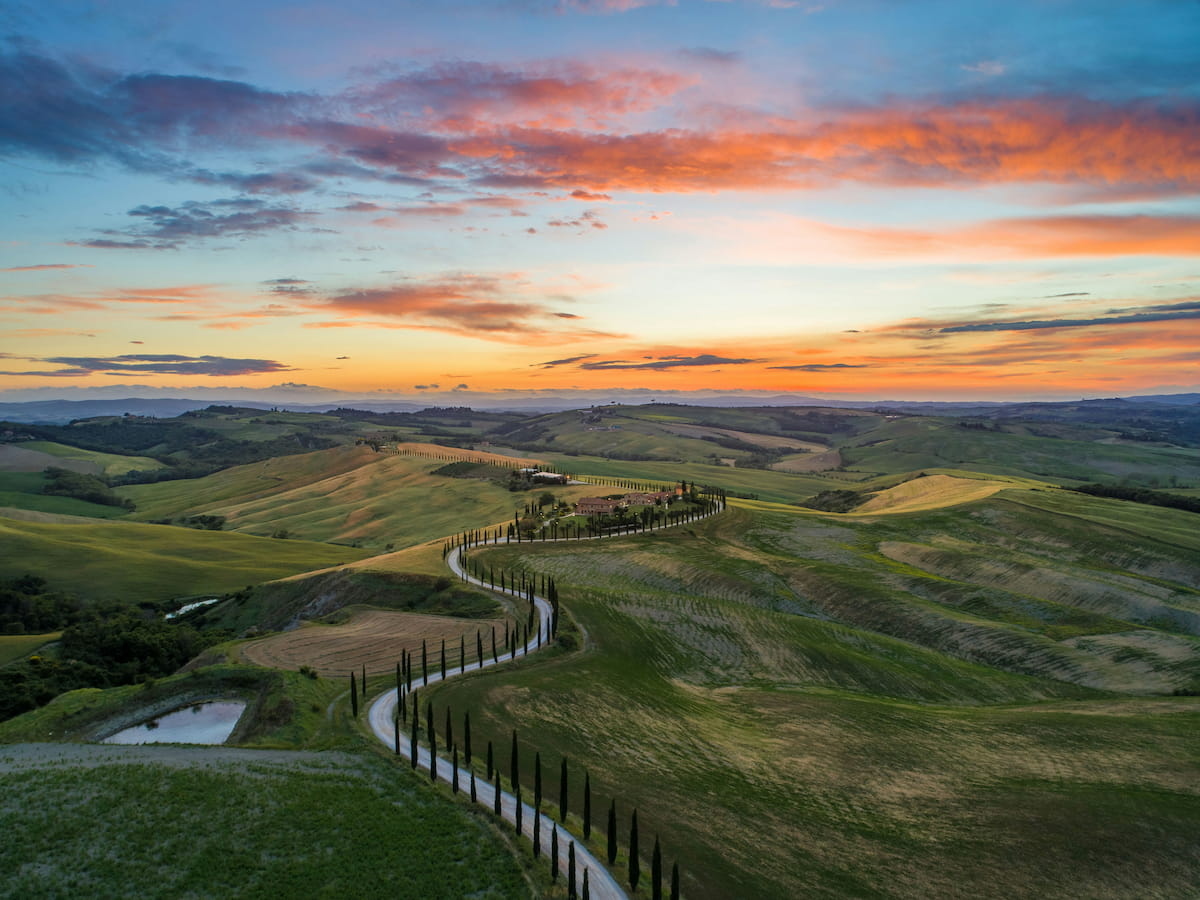
Nobody does slow travel like Tuscany. The kind where you wake to mist burning off the Val d’Orcia, drive twenty minutes to soak in thermal springs that have been warm since the Etruscans, and return to a farmhouse where the wine was pressed by the family sleeping upstairs.
Tuscany is consistently marketed as aspirational Italy — cypress-lined driveways, candlelit cellar dinners, truffle hunts with a private guide. And that version exists. But so does the version where two people spend five nights in the countryside, eat extraordinary food at every meal, soak in natural hot springs without paying a cent, and come home feeling genuinely restored — all for under $4,000. This guide maps both Tuscanys so you can build the version that fits your budget and your idea of wellness.
What’s In This Guide
📅 Best Time to Visit Tuscany
Sweet spot: April–May and September–October. Spring delivers blooming countryside and light crowds; autumn brings harvest energy and truffle season. Both windows offer comfortable driving weather, better agriturismo availability, and rates that haven’t hit summer peaks. Avoid August unless your tolerance for crowds and heat is high.
Where to Stay in Tuscany
For a wellness-focused Tuscany trip, base yourself in the countryside rather than Florence. The agriturismo system — working farms that rent rooms — is one of Italy’s great travel bargains: you get countryside views, farm-fresh breakfast, and a direct connection to the land for a fraction of what a comparable Florence hotel charges. The Val d’Orcia, Chianti, and Maremma zones all offer strong agriturismo options at different price points. All rates verified April 2026.
Il Rigo sits on a certified organic farm in the heart of the Val d’Orcia UNESCO landscape, within striking distance of Montalcino, Pienza, and the Saturnia thermal area. Rooms are simple and unfussy — stone walls, wooden beams, honest comfort — but the setting is exactly what Tuscany wellness travel is supposed to feel like. Breakfast features produce from the farm: house-made preserves, local cheese, eggs from the property’s hens. At these rates in this location, there’s nothing comparable.
Villa Fontelunga is a converted 19th-century farmhouse near Arezzo, positioned well for both Cortona and the Chianti Classico zone. The pool terrace with vineyard views is the anchor of the property — the kind of spot where an afternoon turns into an evening without you noticing. Rooms are individually decorated with antiques and local art, breakfast is substantial, and the staff genuinely knows the surrounding area. This is where the mid-range price delivers a luxury-adjacent experience.
Fonteverde was built around the same thermal springs that Lorenzo de’ Medici used to restore himself after illness — which tells you everything about the pedigree of the water. The resort occupies a former Medici villa above San Casciano dei Bagni, a hill town in southern Tuscany near the Umbrian border. Indoor and outdoor thermal pools stay at a constant 38–40°C year-round, the spa menu runs dozens of treatment options, and the restaurant is a serious destination in its own right. If you’re committing to a wellness splurge in Italy, this is the benchmark property.
Tuscany Trip Planning Made Easy
Get our free Italy packing checklist, seasonal timing guide, and agriturismo booking tips delivered straight to your inbox.
15 Best Tuscany Experiences
Tuscany distributes its pleasures across every budget tier. Five of the fifteen experiences below are completely free — including two natural thermal springs that rival anything you’d pay to access — and the paid experiences are priced well below what you’d expect for the quality delivered. The Signature tier requires planning and real spending, but each experience justifies the investment in ways that a hotel room upgrade never quite does.
A series of natural travertine terraces on the outskirts of Saturnia where 37°C (99°F) sulfurous water cascades into milky jade pools, year-round, with no fence and no fee. The Cascate del Mulino are distinct from the commercial Terme di Saturnia complex further up the road — these are the wild, roadside pools anyone can access at any hour. The scene ranges from quiet and meditative (early morning weekdays) to genuinely crowded (summer weekends), but the water itself is always extraordinary. Bring nothing more than a towel and a swimsuit.
💡 Arrive before 9am or after 5pm on weekdays for the most peaceful experience. The sulfur smell fades within minutes of entering the water and disappears entirely from your skin with a regular shower.
Less visited than Saturnia and arguably more dramatic, Bagni San Filippo sits within the Val d’Orcia forest — a UNESCO World Heritage landscape — where naturally heated water flows over ancient calcium carbonate formations, building up white mineral sculptures that look like something from a different planet. The main pool is warm rather than hot (around 32–34°C), making it comfortable for longer soaks. You reach it via a short forest trail from the roadside parking area. There’s a hotel and spa complex nearby, but the outdoor natural pools are entirely free and open to anyone.
💡 The best formations are the white travertine “waterfall” structures upstream from the main pool — follow the stream for five minutes past the first pool to find them. Wear old flip-flops you don’t mind getting mineral-stained.
Lucca’s Renaissance-era walls are among the best-preserved in Europe and — uniquely — have been converted into a 4.2-kilometer elevated promenade above the city, wide enough that locals use them for jogging, cycling, and picnics. Walking the full circuit takes about an hour at a gentle pace and delivers views across the rooftops toward the Apuan Alps. Below the walls, the city’s narrow medieval lanes and Romanesque churches are all free to explore. Lucca is often skipped in favor of Siena and Florence, which makes it one of Tuscany’s most underappreciated slow-travel stops.
💡 Rent a bicycle from one of the shops at the city gates (~$5/hour) and do the walls circuit on two wheels — it’s how locals do it. The bike path is wide, flat, and shaded by enormous plane trees.
The Val d’Orcia is a UNESCO World Heritage Cultural Landscape — meaning the entire valley, its farms, its cypress-lined roads, and its isolated chapels are recognized as a work of art shaped by centuries of human stewardship. The most famous viewpoint is the Cappella di Vitaleta, a tiny stone chapel on a ridge between Pienza and San Quirico d’Orcia, photographed obsessively at dawn when mist pools in the valley below. But the whole area rewards slow driving: pull over whenever the landscape demands it, which is often. There’s no entrance fee to any of it.
💡 The Cappella di Vitaleta faces east, making sunrise the best light. Park on the gravel lane off the SP146 and walk five minutes to the overlook. Spring (April–May) delivers wildflowers; autumn brings golden stubble fields that photograph just as beautifully.
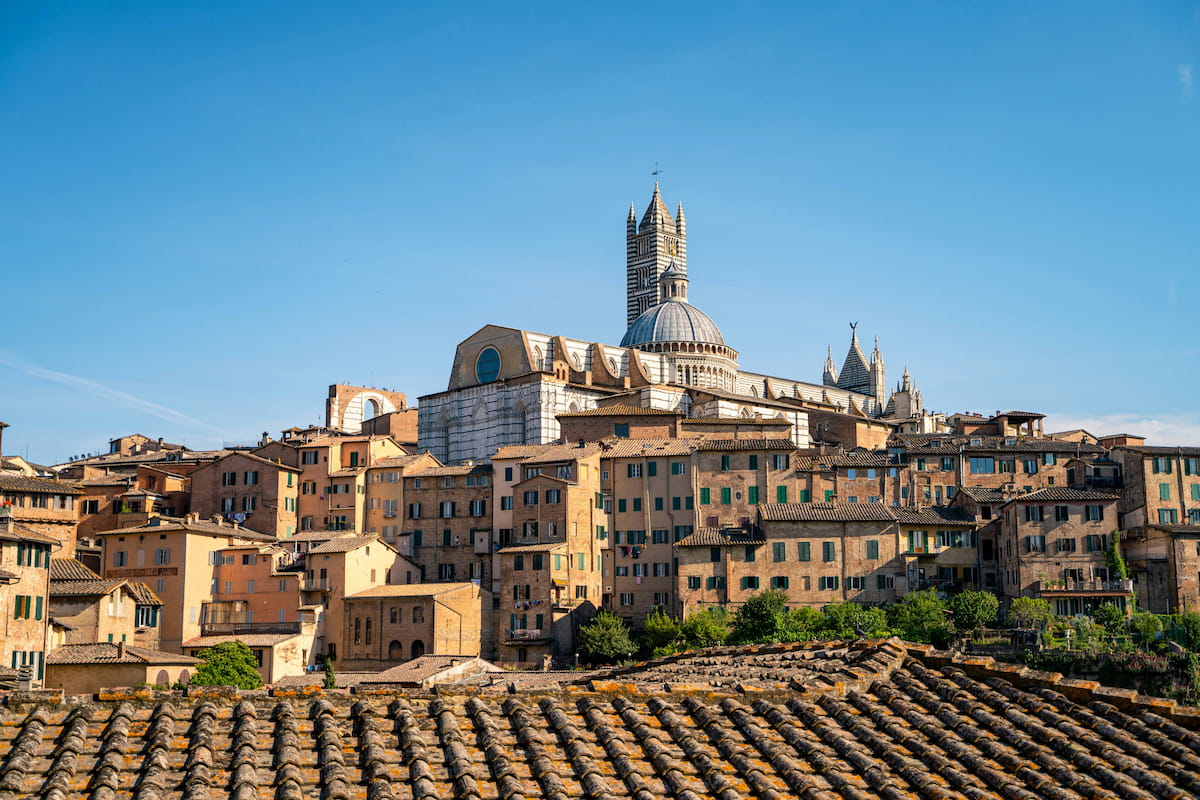
The Campo is genuinely one of the most beautiful public spaces in the world — a perfect shell-shaped medieval piazza that tilts gently toward the Palazzo Pubblico, bounded on all sides by ochre Gothic palaces. There’s no admission to walk in, sit down, or stay as long as you want. Locals treat it as an outdoor living room and have done so for centuries. The Palio horse race runs here twice a year (July 2 and August 16), but on an ordinary afternoon you can find a spot on the herringbone brickwork, watch the shadow of the Torre del Mangia move across the square, and experience the particular unhurried quality that makes Italian city life feel like an art form.
💡 Skip the overpriced cafes bordering the Campo entirely — grab a coffee standing at the bar inside any of them (paying table service triples the price) or buy supplies from the Mercato neighborhood behind the Palazzo Pubblico, which is still genuinely local.
The commercial spa complex adjacent to the free cascades offers a different proposition: manicured thermal pools, a proper spa menu, sunloungers, towel service, and the ability to spend a full day without worrying about parking or crowd surges. The water is the same sulfurous 37°C spring that feeds the cascades — the experience is just more controlled and comfortable. Day passes run $31 midweek and $42 on weekends and holidays, with pool access included; spa treatments are priced separately. Worth considering if you want the therapeutic soak without the logistical variables of the free pools.
💡 Weekday morning slots are significantly quieter than weekend afternoons. Book a day pass online rather than showing up and hoping for walk-in availability, particularly in summer.
The Uffizi houses one of the world’s great collections of Renaissance painting — Botticelli’s Birth of Venus and Primavera, Leonardo’s Adoration of the Magi, Michelangelo’s Doni Tondo, Caravaggio’s room — in a building designed by Vasari for the Medici. Standard admission is $27 purchased at the ticket office on the day, or $32 booked online in advance with a timed entry slot. This isn’t a wellness experience in the conventional sense, but standing in front of Botticelli’s Venus for ten minutes does something to your nervous system that no massage quite replicates. The museum is big enough that you can pace yourself — skip the exhaustive floor-by-floor approach and focus on two or three rooms you actually want to be in.
💡 Timed entry booking is essential — walk-in queues regularly exceed two hours. Book on the official uffizi.it site (not third-party resellers who add service fees) at least one to two weeks ahead in peak season.
Siena’s Duomo is one of the most visually overwhelming interiors in Italy — black-and-white striped marble columns, an extraordinary inlaid marble floor (often covered for protection but occasionally revealed), and a ceiling of gilded stars. The Opa Si pass combines the cathedral with access to the Museo dell’Opera, the Baptistery below, and the Facciatone panoramic terrace — offering a remarkable elevated view across the Val d’Orcia from what would have been the transept of an even larger, never-completed cathedral. Allow three hours for the full pass experience.
💡 The Facciatone terrace at the top of the Museo dell’Opera involves a steep staircase but delivers a view that most visitors completely miss — the combination of the valley below and the Duomo alongside you is extraordinary. Go early before heat builds on the terrace.
The Chianti Classico zone — the historic heartland between Florence and Siena, marked by the black rooster label on legitimate bottles — hosts dozens of estates offering cellar tours with tastings. At the $45–$75 range, you’re typically getting a guided visit through the production facilities, barrel rooms, and vineyards followed by a structured tasting of four to six wines with local accompaniments. Estates like Badia a Coltibuono, Castello di Brolio, and Antinori nel Chianti Classico all run well-organized public visits. This is where wine and wellness genuinely overlap — the slow attention of a proper tasting brings a meditative focus most people only find by accident.
💡 Book directly with the winery website rather than through tour aggregators. You’ll typically pay the same or less and the experience is more personal. Mid-morning slots avoid the lunch service rush when staff attention is split.
Tuscany’s agriturismo network offers one of Italy’s most authentic cooking class formats — a farmhouse kitchen, a local host who has made this pasta for sixty years, and a meal that you eat together at the end. The curriculum varies by season and farm: spring classes focus on fresh pasta, herb sauces, and artichoke preparations; autumn sessions shift to mushrooms, truffles, and hearty braises. Most include a tour of the farm or garden and a glass of the estate wine. The $85–$110 price range typically covers the class, all ingredients, and a full lunch or dinner. It’s a slow, generous, fundamentally restorative few hours.
💡 Search for classes through local agriturismo associations or platforms like Cookly rather than the major food tour aggregators — you’ll find smaller, more authentic operations that haven’t been optimized for TripAdvisor.
White truffle season runs October through December, peaking in November. An authentic truffle hunt — not a staged performance but a genuine early-morning search with a certified trifolau and their trained dog through oak and hazel forest — is one of those experiences that permanently changes how you understand a landscape. Most excursions last two to three hours in the field and conclude at a farmhouse where the morning’s finds (or supplementary stock, if the hunt is lean) are incorporated into a full lunch: shaved fresh over pasta, stirred into eggs, folded into risotto. At $160–$200 per person, it’s genuinely among the best value luxury experiences in Italy.
💡 San Miniato, in the Pisan hills, is the center of Tuscany’s white truffle trade and hosts a major fair in November. Book a hunt through a local guide rather than a tour company intermediary — the price is lower and the experience is more genuine.
Balloon flights over the Val d’Orcia take off at dawn from the valley floor and drift for sixty to ninety minutes above the cypress rows, medieval hilltop towns, and patchwork farmland that constitute one of the most photographed landscapes in the world. At altitude, the silence is absolute except for occasional burner blasts — an experience of stillness that has no real substitute. Flights depend on weather and wind conditions, and reputable operators will reschedule rather than fly in marginal conditions. Most include a sparkling wine toast after landing and a certificate. Price varies by group size and operator; private flights cost significantly more.
💡 Spring (April–May) and early autumn (September–October) offer the most reliable weather windows and the most photogenic landscapes below. Confirm the operator is licensed by the Italian Civil Aviation Authority before booking.
For non-guests, Fonteverde offers day access packages combining the indoor and outdoor thermal pool circuit with access to the spa facilities — steam rooms, relaxation pools, and the surrounding Medici villa gardens. The thermal water at San Casciano dei Bagni is naturally rich in sulfur, calcium, and magnesium, with documented therapeutic properties that the Medicis, the Popes, and generations of Tuscan locals have relied on for centuries. A day here bears no resemblance to a hotel pool day: the combination of the historic setting, the mineral-dense water, and the unhurried pace produces a particular quality of restoration that carries for days afterward.
💡 Day packages that include a treatment (massages, mud wrap) represent significantly better value than pool-only access — the per-treatment cost drops when bundled. Book directly with Fonteverde to confirm what the current day-guest package includes.
Brunello di Montalcino is Italy’s most age-worthy red wine — produced only from Sangiovese Grosso in the hills around Montalcino in southern Tuscany, aged for a minimum of five years before release, and capable of improving for decades. A private cellar tasting at a Brunello estate — Biondi-Santi, Poggio di Sotto, Canalicchio di Sopra, or one of several smaller producers — includes a tour of the cellar and vineyards followed by a seated tasting of current and library vintages that would be virtually inaccessible by the bottle. The $120–$180 price represents a fraction of what equivalent wines cost at retail.
💡 Contact estates directly by email three to four weeks in advance — most maintain a small allocation of private tasting appointments that don’t appear on any booking platform. A polite, specific inquiry almost always gets a response.
A step beyond the standard agriturismo class, a private chef experience typically takes place in the kitchen of a farmhouse villa or family home, runs four to six hours from market visit to table, and is built entirely around what you want to learn. Instruction is genuinely hands-on rather than demonstration-based — you make the pasta, you bone the quail, you learn to taste the sauce and understand what it needs. The meal at the end is the one you cooked, which changes how it tastes. These sessions are bookable through platforms like Eatwith, through local concierge networks in Siena and Florence, or through higher-end agriturismo properties that maintain relationships with private instructors.
💡 The best sessions are built around a morning market visit — Siena’s Mercato or the Florentine Mercato Centrale — before cooking. Request this format explicitly when booking; it adds significant depth to the experience and typically doesn’t change the price.
Worth It / Skip It
Don’t Make These Mistakes
Every historic center in Tuscany — Florence, Siena, Lucca, Arezzo, Montepulciano — has a Zona a Traffico Limitato (ZTL): a restricted traffic area where civilian vehicles are prohibited during certain hours. The entry points are monitored by cameras that automatically photograph plates. Fines arrive by mail weeks later and can run $100–$200 per infraction. Your rental car GPS will try to route you in. Don’t follow it. Park outside the historic center at designated lots (usually well-signposted) and walk in. Ask your accommodation exactly where to park before you arrive.
Florence hotels are significantly more expensive than countryside agriturismos, and the city itself is the opposite of slow-travel wellness. Florence is magnificent and worth a full day visit — but it’s crowded, noisy, and not the Tuscany most people come for. If your trip goal is thermal baths, vineyard drives, and hilltop villages, base yourself in the Val d’Orcia, Chianti, or Maremma and drive to Florence for one day. Your wallet and your nervous system will both benefit.
Popular Tuscany agriturismos routinely sell out four to six months in advance for July and August. The Uffizi requires advance booking to avoid multi-hour queues. Winery private tastings fill up weeks ahead in harvest season. If you’re traveling between June and September and haven’t planned ahead, you’ll find yourself assembling a trip from whatever’s left — which is often not representative of what Tuscany actually offers.
The biggest waste of a Tuscany trip is trying to tick every landmark in four days. Tuscany rewards the opposite approach: fewer places, more time in each. Spend a full morning at the Cascate del Mulino instead of thirty minutes. Sit in the Campo for an hour instead of photographing it from the entrance. Drive one valley road slowly instead of routing through six hill towns. The quality of what you experience is inversely related to the number of items on your itinerary.
VacayValue Scorecard — Tuscany
Packing List — Tuscany
Plan Your Tuscany Trip the Smart Way
Free seasonal timing guide, agriturismo checklist, and verified cost breakdowns for Italy — delivered once, useful forever.
Tuscany Delivers Extraordinary Wellness Value — If You Slow Down Enough to Receive It
The numbers make a reasonable case: free thermal springs in a UNESCO landscape, farm accommodation that costs less than a Florence hotel, and food that earns its price at nearly every level of spending. But Tuscany’s real argument for wellness travel is harder to quantify. There’s something about this particular combination — the landscape, the food culture, the pace — that produces a quality of restoration that feels categorically different from the relaxation you might find at a conventional resort.
The transatlantic flight is the genuine cost obstacle, and at 3.5 out of 5 for flight affordability, Tuscany isn’t a casual weekend decision from North America. But once you’ve landed, the daily costs are genuinely reasonable. Agriturismo stays run $90–$130 at the budget end. A full day of thermal spring bathing, countryside driving, and trattoria dining costs under $80 per person if you’re thoughtful about it. The Signature experiences — truffle hunts, balloon flights, private cellar tastings — are priced at a fraction of what equivalents would cost in California or the Cotswolds.
At a VacayValue Score of 8.4, Tuscany earns its place alongside Athens and Florence in the upper tier of value cultural and wellness destinations. The experience quality ceiling is genuinely perfect — this is one of the most beautiful places on earth, with one of the world’s great food and wine cultures and a wellness tradition that predates the modern spa industry by two millennia. The question is never whether Tuscany is worth it. It’s whether you’ve given yourself enough time to let it work.